The short answer: Hurghada is worth diving all year round. The Red Sea never drops below 22°C even in winter, reaches 27–29°C in summer, and visibility stays between 15 and 30 metres in every season.
So the real question is not when you can dive, but which season suits you best: the quiet reefs and cheaper flights of winter, the golden middle ground of spring and autumn, or the bath-warm sea of summer.
In this article we go month by month through water temperatures, the wetsuit you will need, the marine life calendar and practical tips for Hungarian travellers – so you know exactly what to expect, whenever you come.
The short answer: all year round!
The Red Sea is one of the few truly year-round dive destinations in the world. There is no rainy season, no monsoon, no closed sign: thanks to the desert climate almost every day of the year is sunny, and even in winter the sea is warmer than many European lakes in summer.
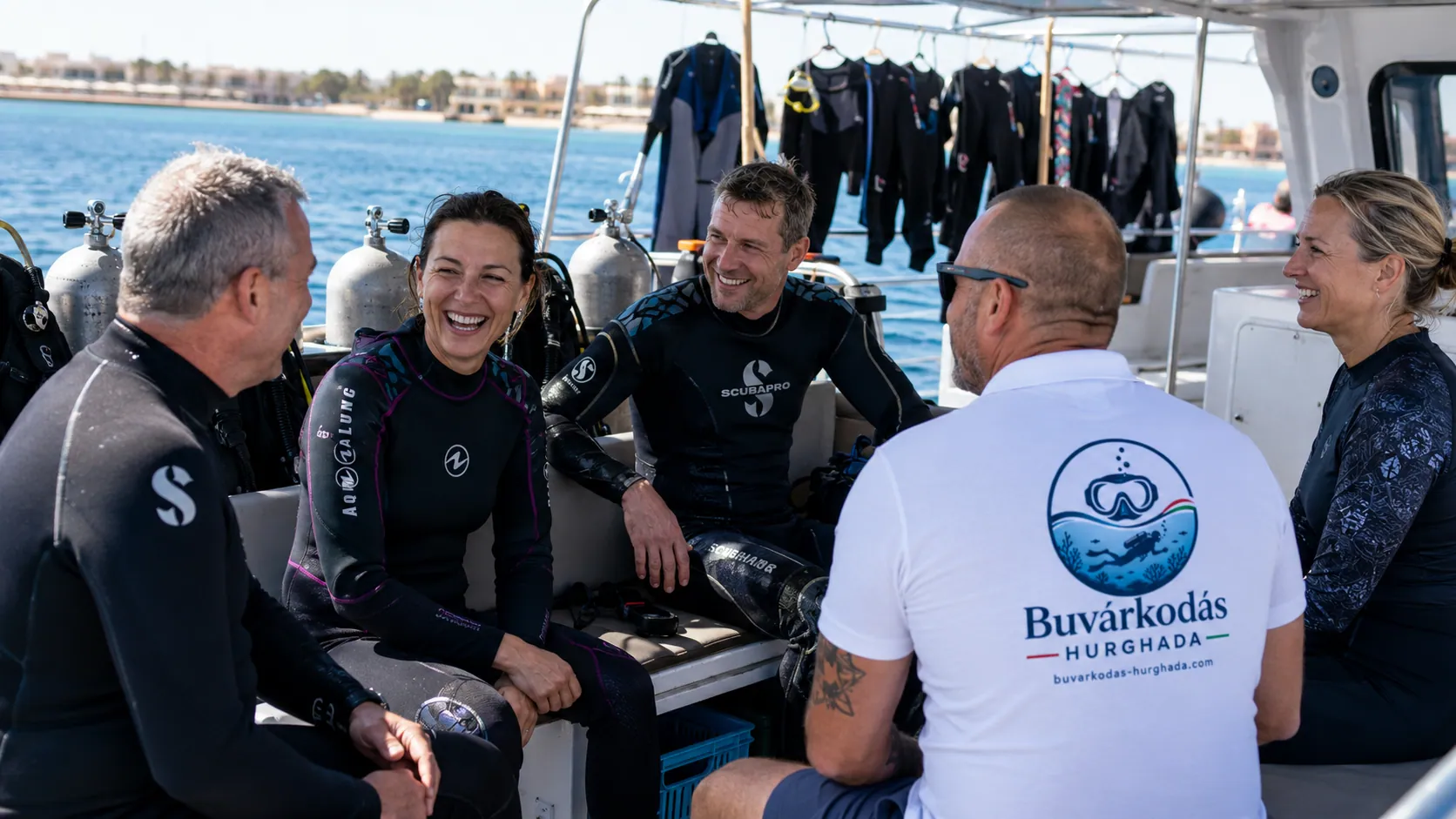
Water temperature stays between 22 and 29°C throughout the year, visibility between 15 and 30 metres – and our boat goes out every single day from 08:00 to 16:00 with two dives a day (a third dive is +€15).
So the difference between the seasons is not whether you can dive, but what wetsuit you wear, what the trip costs, and how likely you are to see certain animals. Let's look at the details.
Water temperature month by month
- December–February (winter): 22–24°C – a 5–7 mm full wetsuit recommended, with a hood if you feel the cold
- March–May (spring): 24–26°C – a 5 mm full suit is comfortable for most divers
- June–September (summer): 27–29°C – a 3 mm shorty is plenty, many dive in just a lycra
- October–November (autumn): 26–28°C – a 3–5 mm suit, going long by the end of November
- Visibility all year round: 15–30 metres
- The boat runs daily from 08:00 to 16:00 with 2 dives a day (3rd dive +€15)
What each season offers
Winter (December–February) is the season of quiet reefs: fewer tourists, fewer boats at the dive sites, and the cheapest flights and hotels of the year. The water is 22–24°C – perfectly comfortable in a thicker suit – while on shore you get sunny, 20–25°C days that feel like a Hungarian summer.
Spring (March–May) and autumn (October–November) are the golden middle ground and, honestly, our favourites: the water is warm (24–28°C), the air is pleasant and the crowds are moderate. If you can travel flexibly, these are the two windows to aim for.
Summer (June–September) brings the warmest water: at 27–29°C a thin shorty is enough, and on the long, calm days the sea is perfect for snorkellers too (€35). This is family high season – it is hot on land, but the sea breeze keeps the boat comfortable.
Marine life calendar: what can you see and when?
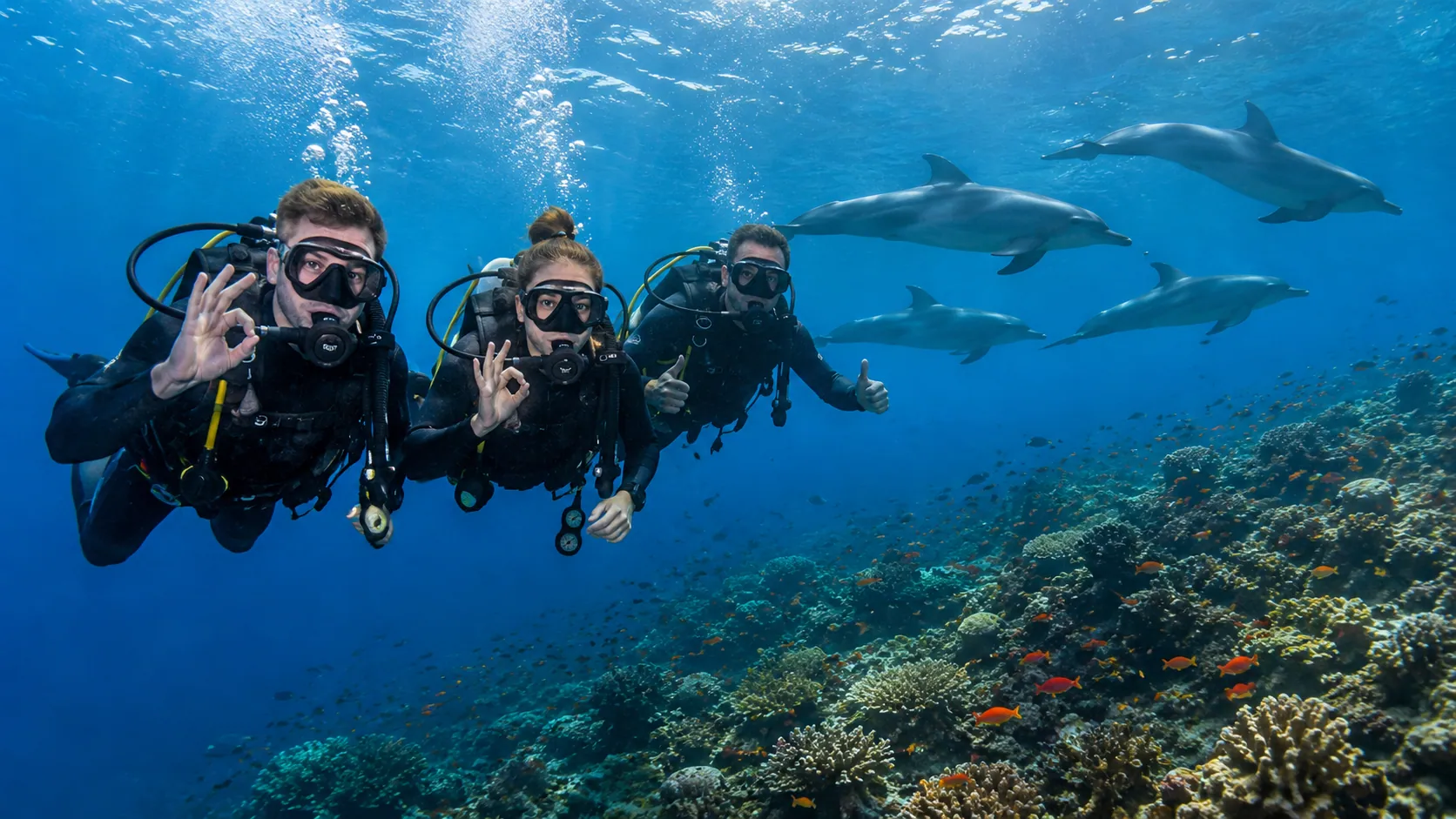
- Dolphins: all year round – permanent residents of the Hurghada reefs, sometimes showing up even during a dive
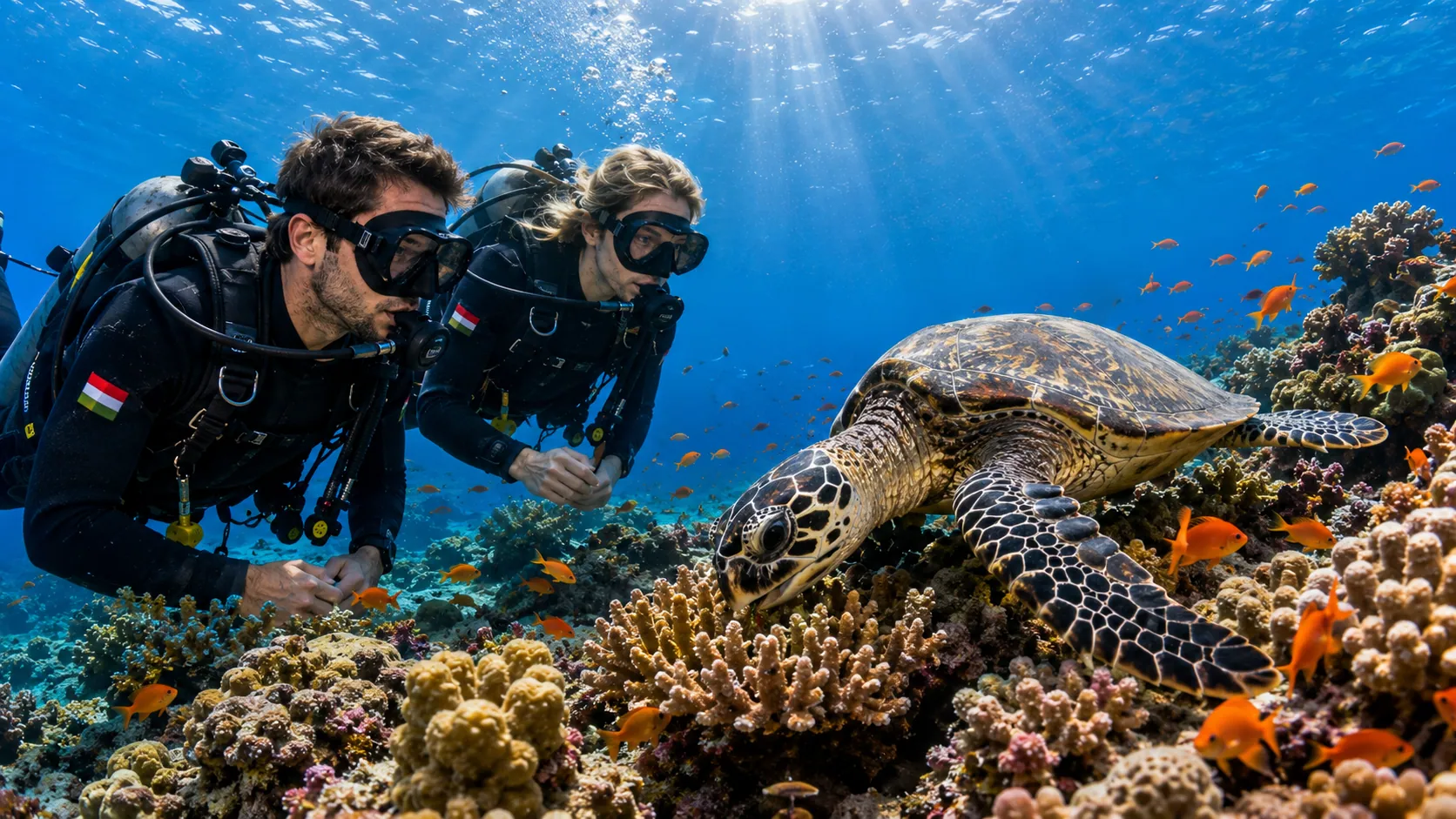
- Sea turtles: all year round – residents of the seagrass lagoons and coral gardens
- Eagle rays: more common in the cooler months, roughly November to April
- Dugong: a matter of luck – occasionally seen at the region's seagrass meadows, never guaranteed
- Corals and reef fish: in full glory all year – the Red Sea has no off-season
- Moray eels, clownfish, parrotfish: you can meet them on practically every dive
Air and wind: desert climate on the coast
Hurghada has a desert climate: rain is practically non-existent, while the sun shines almost every day of the year. In winter you stroll around in 20–25°C daytime warmth without a jacket, but evenings cool down to 12–15°C – definitely pack a jumper.
In summer it can reach 35–40°C on land, but at sea it is a different story: thanks to the constant north-northwesterly breeze, the boat almost never feels stifling. The sun, however, is strong all year round – never head out without high-SPF sunscreen.
Winds can pick up in winter – on those days the captain chooses sheltered reefs close to shore where the water stays calm. The dive itself happens below the surface anyway, where you feel nothing of the waves.
Wetsuit guide month by month
- December–February: 5–7 mm full suit, plus a hood or vest if you feel the cold
- March–April: 5 mm full suit
- May: 3–5 mm – a transition month, both a full suit and a shorty work well
- June–September: 3 mm shorty, the toughest divers are fine in just a lycra
- October: 3 mm shorty or a thin full suit
- November: 5 mm full suit – the water is still pleasant but the wind is cooler
- Full equipment rental with us (wetsuit included) is €15/day – €40 for 3 days, €10/day for 5 or more days
Flights and holiday planning for Hungarians
Direct charter flights from Budapest reach Hurghada in about 4 hours – making it one of the most accessible true diving paradises for Hungarians. Flights operate year-round and the destination features in most travel agencies' catalogues.
If you are hunting for deals: January–February is typically the cheapest period, while school holidays (summer, autumn and spring breaks, Christmas) are best booked months ahead. With us you can plan your dives alongside the holiday without any risk: booking is free and you only pay on site.
One important rule for the trip home: 18–24 hours must pass between your last dive and your flight. Plan your final day as a beach-and-snorkel rest day – snorkelling (€35) is fine even right before flying.
Verdict: which season for which traveller?
- Beginners and try-divers: May to November, when the water stays above 26°C – warm water makes relaxing much easier
- Combining diving with sightseeing and desert trips: November to March, when the shore is a pleasant 20–25°C
- Families: June to September – warm water, school holidays, and a sea that is perfect for snorkelling too (€35)
- Budget travellers: January–February – the cheapest flights and hotels, and the quietest reefs
- Underwater photographers: any time – the 15–30 metre visibility is excellent all year round
- Chasing big encounters: cooler months for eagle rays, while any day can be a dolphin day
Frequently asked questions
Diving is excellent all year, but if you can choose: spring (March–May) and autumn (October–November) are the most pleasant – warm water, comfortable air, moderate crowds. In winter the quiet reefs and cheap flights are the draw, in summer it is the 27–29°C water.
In winter it is 22–24°C – roughly like Lake Balaton on a good July day. You can dive comfortably in a 5–7 mm full wetsuit, while on shore sunny days of 20–25°C await.
The water is 27–29°C in summer, so a 3 mm shorty is enough – but it is still worth wearing something, because over two dives a day your body cools down without you noticing. Our equipment rental, wetsuit included, is €15/day, or €40 for 3 days.
All year round: dolphins are permanent residents of the Hurghada reefs and regularly show up around the boats or even during a dive. There is of course no guarantee – they are wild animals – but your chances are no worse in one month than another.
About 4 hours on a direct charter flight. Keep one thing in mind: 18–24 hours must pass between your last dive and the flight home, so plan beach time or snorkelling instead of diving for your final day.