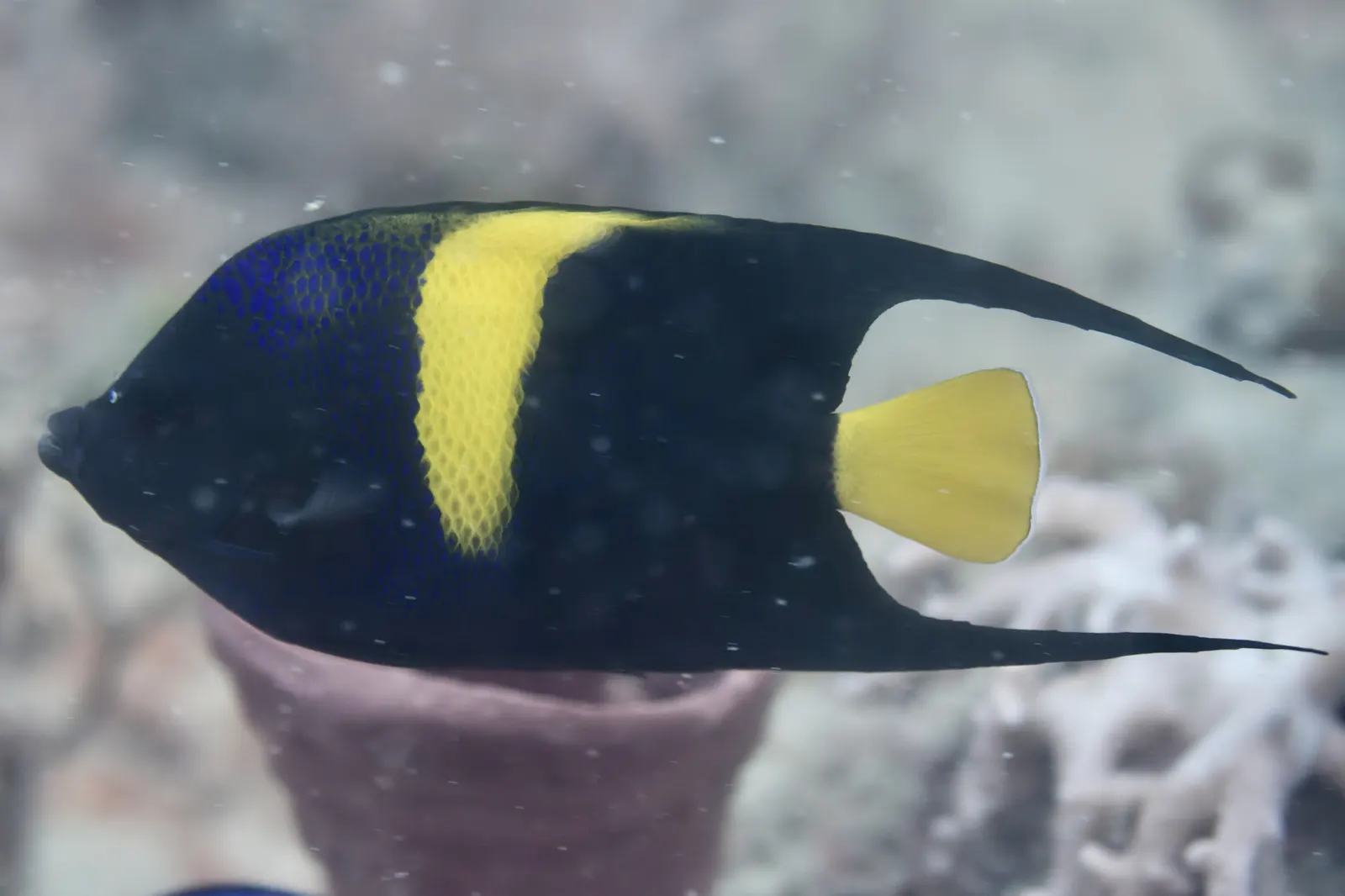
Arabian angelfish
Pomacanthus asfur
A golden crescent on a midnight-blue body and a bright yellow tail – the Arabian angelfish is the reef's hidden jewel, revealed only to patient divers.
The Arabian angelfish (Pomacanthus asfur) looks like its yellowbar cousin switched to night mode: the body is a deep, almost black blue, cut by a sharply glowing vertical golden crescent, and the tail is brilliant lemon yellow. That tail is the surest field mark – the similar yellowbar angelfish has a duller, marbled tail. The species is a speciality of the Red Sea and Gulf of Aden region, appearing elsewhere in the world only as a stray.
While its big relatives cruise open plateaus with confidence, the Arabian angelfish is decidedly shy: it favours densely coral-grown, sheltered walls, hollows and quiet bays, and retreats deep into crevices at the first suspicious move. It lives mostly alone, grazing on sponges, tunicates and algae. Juveniles wear a disguise here too: their dark-blue bodies with pale blue-and-white stripes are almost identical to young yellowbar angelfish.
Around Hurghada it is a scarcer treat than the yellowbar, which is exactly why divers celebrate each sighting: search the recesses of sheltered wall sections and the shade of overhangs, typically between 5 and 25 metres. Patience is the key: hold position a few metres off the wall, wait quietly, and the curious fish will eventually venture out – its yellow tail flashing in the blue gloom like a lantern.
Did you know?
The name asfur simply means "bird" in Arabic – local fishermen named it for its flashing yellow tail. The species is so sought-after in the aquarium trade that single specimens sell for hundreds of euros – yet at Hurghada you can admire it in its natural home for free.
Where can you meet it?
It favours sheltered, coral-rich walls: your best chances are at the recesses of Umm Gamar and Carless Reef and along the overhangs of the Small Giftun wall.
Frequently asked questions
Check three things: the Arabian's tail is bright yellow (the yellowbar's is dull and marbled), its body is darker, almost black-blue, and it is much shyer – you will see it near recesses, not out on open plateaus.
Rarely – this one is a diver's reward. It keeps to recesses on deeper, sheltered walls and is hard to spot from the surface. On a calm dive, with patient waiting, your odds are good.
Not at all: it is completely harmless and so wary that the real question is whether you will spot it. Never corner it in its hollow or reach toward it – it is most beautiful when it glides out into the light on its own.
Best sites for Arabian angelfish
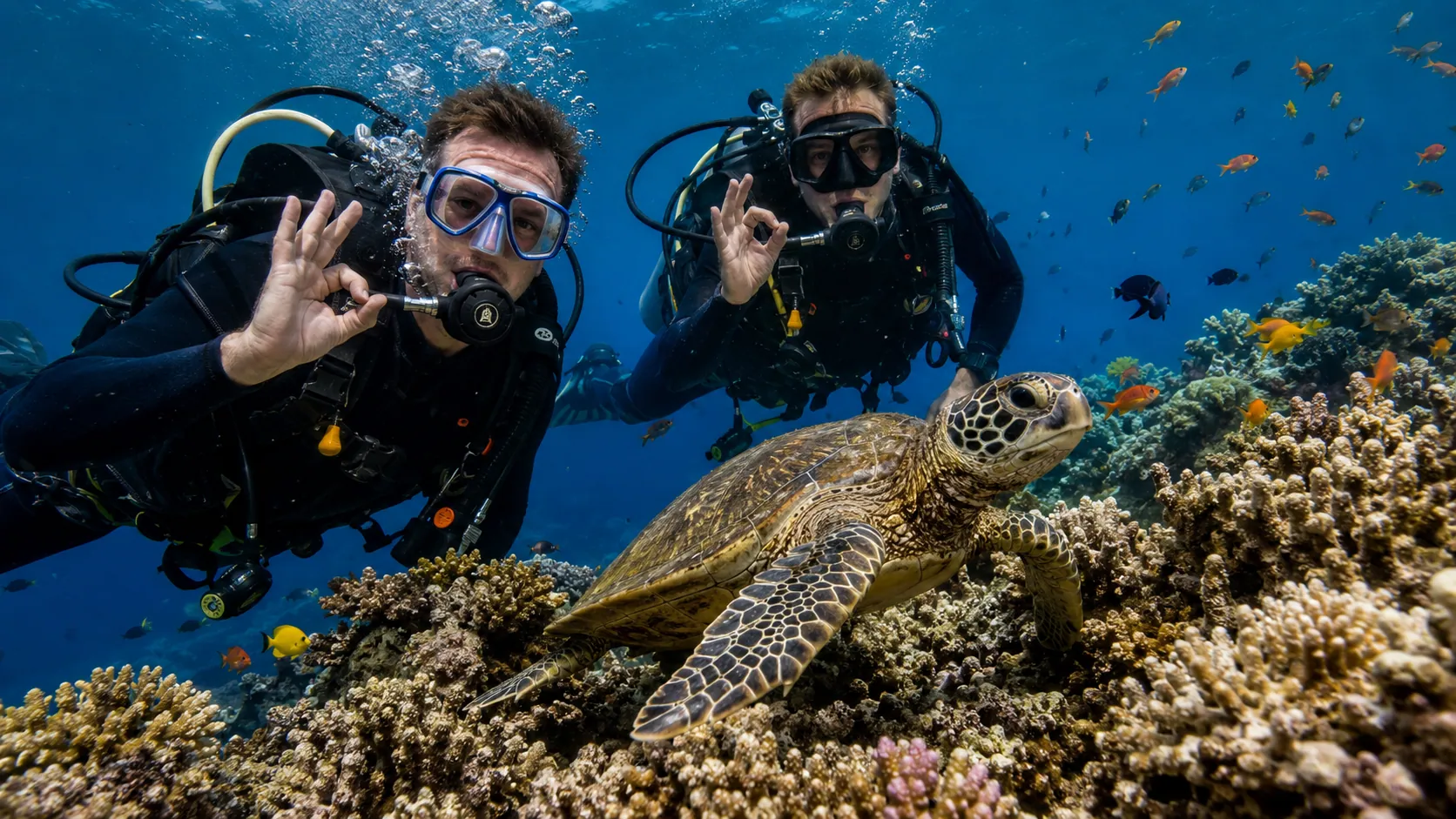
Umm Gamar
An elongated island in the north: a plateau with three coral towers, small caves and big predators out in the blue.
- Depth
- 10–30m
- Boat
- 75min
- Species
- 5
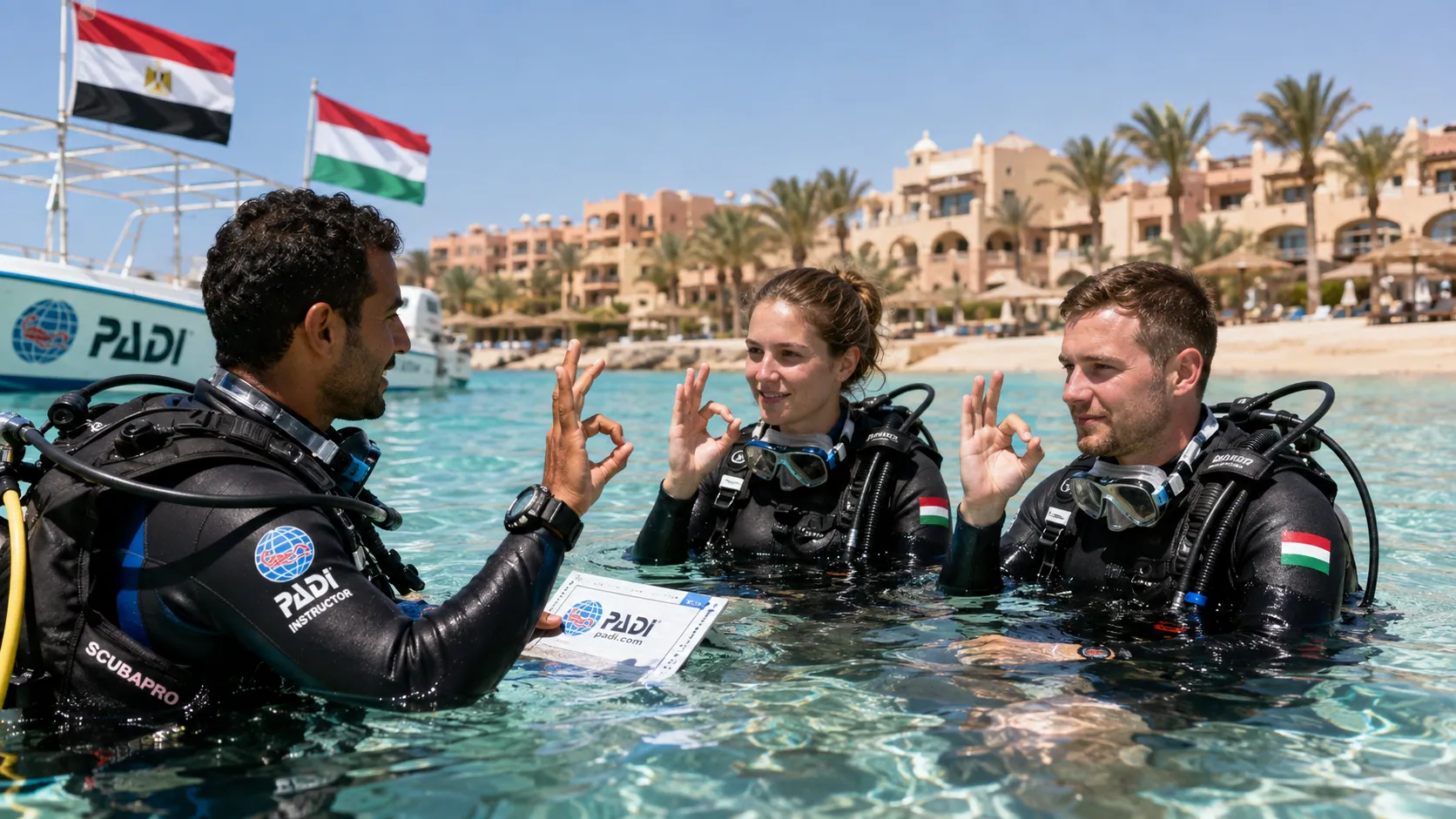
Carless Reef
An offshore twin-erg reef famous for its legendary moray colony – for experienced divers, weather permitting.
- Depth
- 12–30m
- Boat
- 70min
- Species
- 5
Small Giftun fal
Hurghada's classic drift dive: a sheer wall with gorgonian fans, eagle rays and a coral-tower plateau at 20–30 metres.
- Depth
- 8–30m
- Boat
- 50min
- Species
- 5
The Red Sea will not wait forever.
Book today – seats on the boat are limited, your excitement is not.