Bearded scorpionfish
Scorpaenopsis barbata
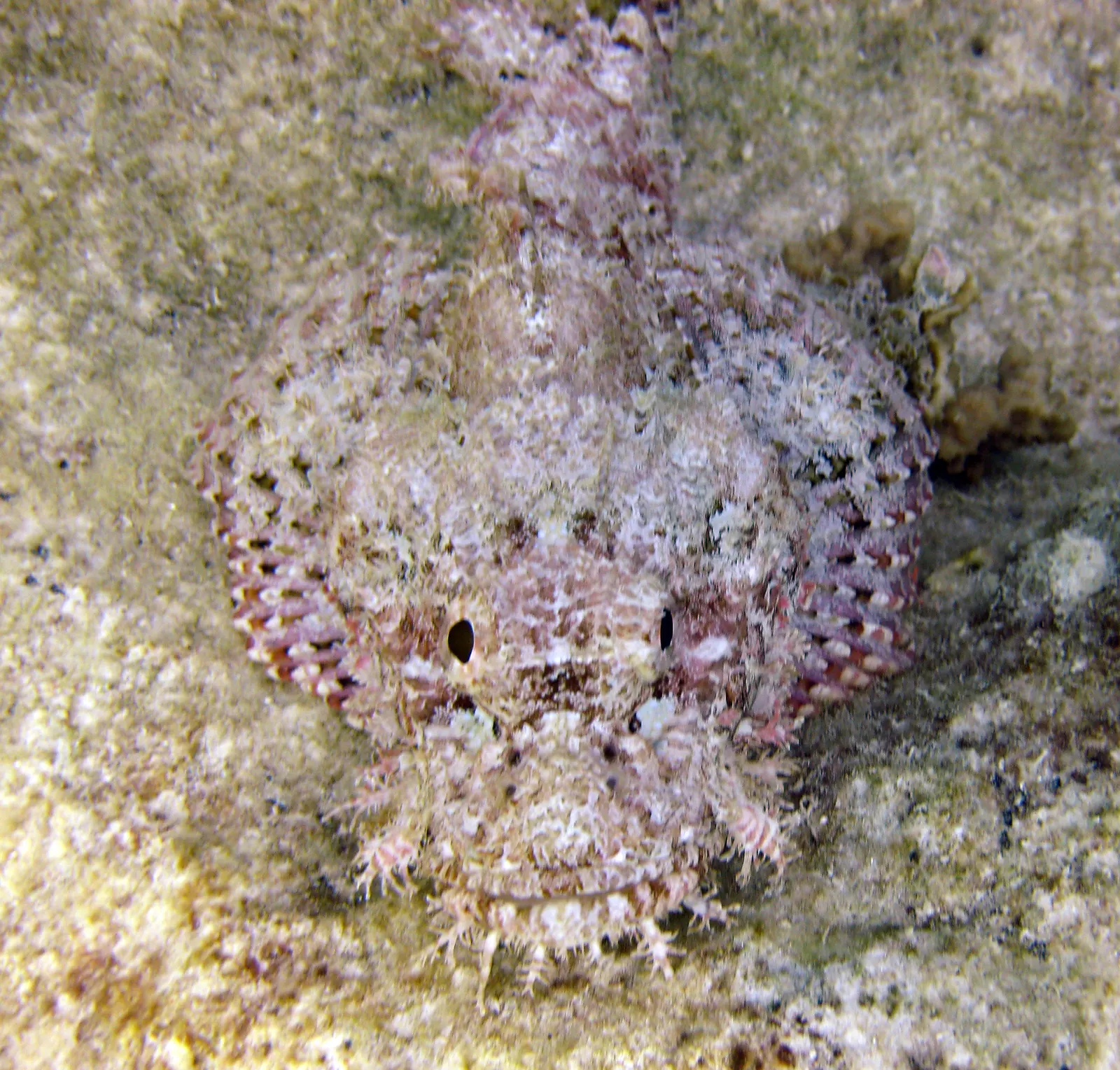
The reef's master of disguise: with its fringed "beard" it melts perfectly into the coral, revealed only when your torch beam sweeps across it.
The bearded scorpionfish (Scorpaenopsis barbata) is a grandmaster of camouflage: its stocky body is covered in skin flaps, fringes and algae-like growths, and under its chin grows a veritable "beard" – hence the name. Its colours match the surroundings, from reddish brown to grey-mossy tones, making it practically indistinguishable from a coral-encrusted rock. What you thought was a fish is a stone – and what you thought was a stone is sometimes a fish.
It hunts from ambush with one of the fastest moves in the sea: it waits motionless for hours, and when an unsuspecting little fish or shrimp drifts within range, its huge mouth springs open in a fraction of a second and the resulting suction simply inhales the victim. Venom glands sit in its dorsal spines – not a weapon of attack but of defence, punishing any predator (or careless human) that steps on it or grabs it.
It is common around Hurghada, yet most divers swim right past without noticing. Search the coral-encrusted ledges, rubble slopes and the reef base – your eye locks on when you discover the grumpy down-turned mouth or the mother-of-pearl eye within the pattern. Our dive guides love pointing it out: the "there's a fish here, can't you see it?" game is a highlight for every guest.
Did you know?
Because the scorpionfish hardly moves, algae and tiny organisms would gradually overgrow its body – so from time to time it "moults", shedding the outermost layer of its skin in one piece like a dirty T-shirt, and its camouflage suit is spotless again.
How to behave around it
A scorpionfish never attacks – stings almost always happen when someone grabs or kneels on the "rock". The rule is simple: keep good buoyancy, never touch the reef and do not settle on the bottom. If you are stung, the wound is very painful: immerse the limb in tolerably hot water (about 45 °C), which breaks down the venom, and see a doctor. Dive boots for shore entries and basic attentiveness make an accident practically impossible.
Where can you meet it?
It lurks on almost every reef – you just have to spot it: our guides regularly find it on the ledges of El Fanadir, the slopes of Abu Hashish and at the base of El Aruk's coral heads.
Frequently asked questions
Only if you touch it: its dorsal spines are venomous and the sting is very painful, but the fish itself never attacks. With good buoyancy and the "touch nothing" rule you can watch it in complete safety, even from arm's length.
Do not look for a fish, look for a shape: the broad, down-turned mouth line and the high-set eye are the two giveaways. Under torchlight its body often turns out to be surprisingly red – at depth that colour reads as grey, which is exactly why its camouflage works so well.
They are relatives, but the stonefish is even better camouflaged and carries considerably stronger venom. The bearded scorpionfish shows a more recognisable fish shape, and while its sting is painful, it responds well to proper treatment. The underwater rule is the same for both: look, never touch.
Best sites for Bearded scorpionfish
El Fanadir
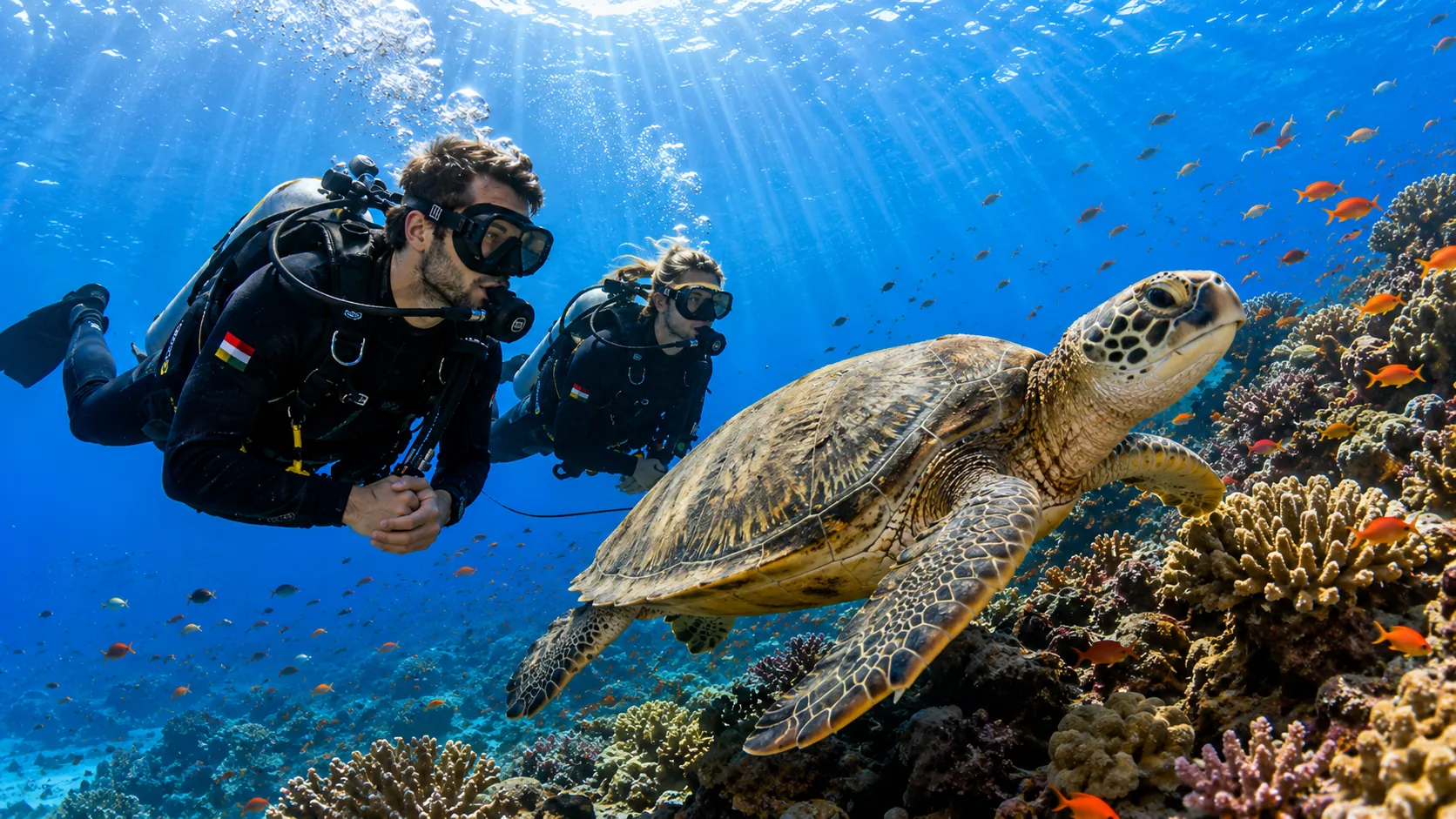
A long reef ridge barely half an hour from the marina: a gentle wall, blue-spotted rays and seagrass patches with turtles.
- Depth
- 6–25m
- Boat
- 30min
- Species
- 5
Abu Hashish-fok
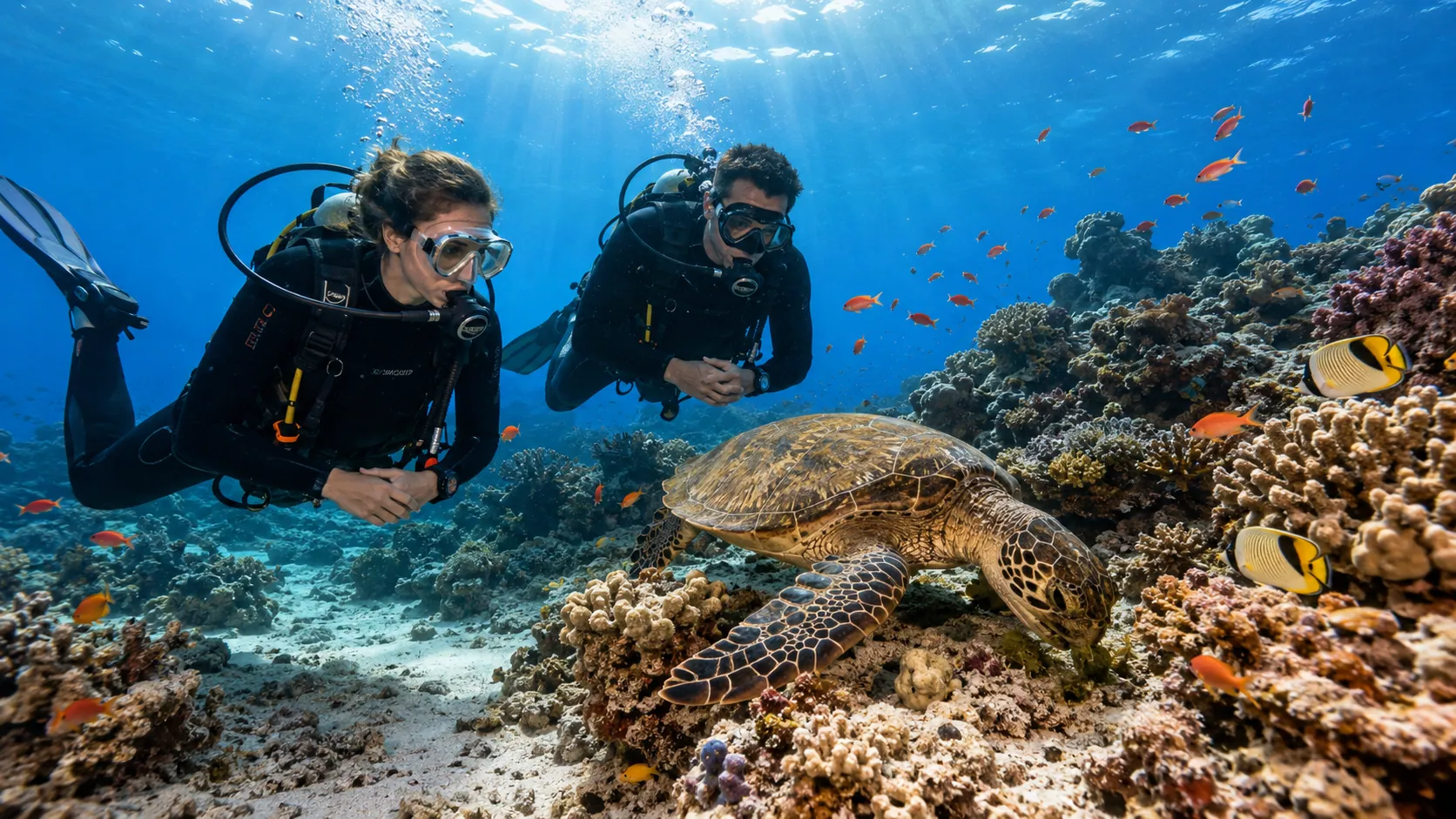
A quiet southern cape with seagrass meadows and an atmospheric cavern – turtles almost for sure, a dugong with some luck.
- Depth
- 5–20m
- Boat
- 60min
- Species
- 5
El Aruk (Gigi)
A playground of coral towers on white sand: easy navigation, clouds of glassfish and light made for photography.
- Depth
- 5–14m
- Boat
- 35min
- Species
- 5
The Red Sea will not wait forever.
Book today – seats on the boat are limited, your excitement is not.