Bicolour parrotfish
Cetoscarus bicolor
The Red Sea's giant parrotfish changes outfit three times in its life – from a snow-white, orange-banded baby to a green-patterned giant.
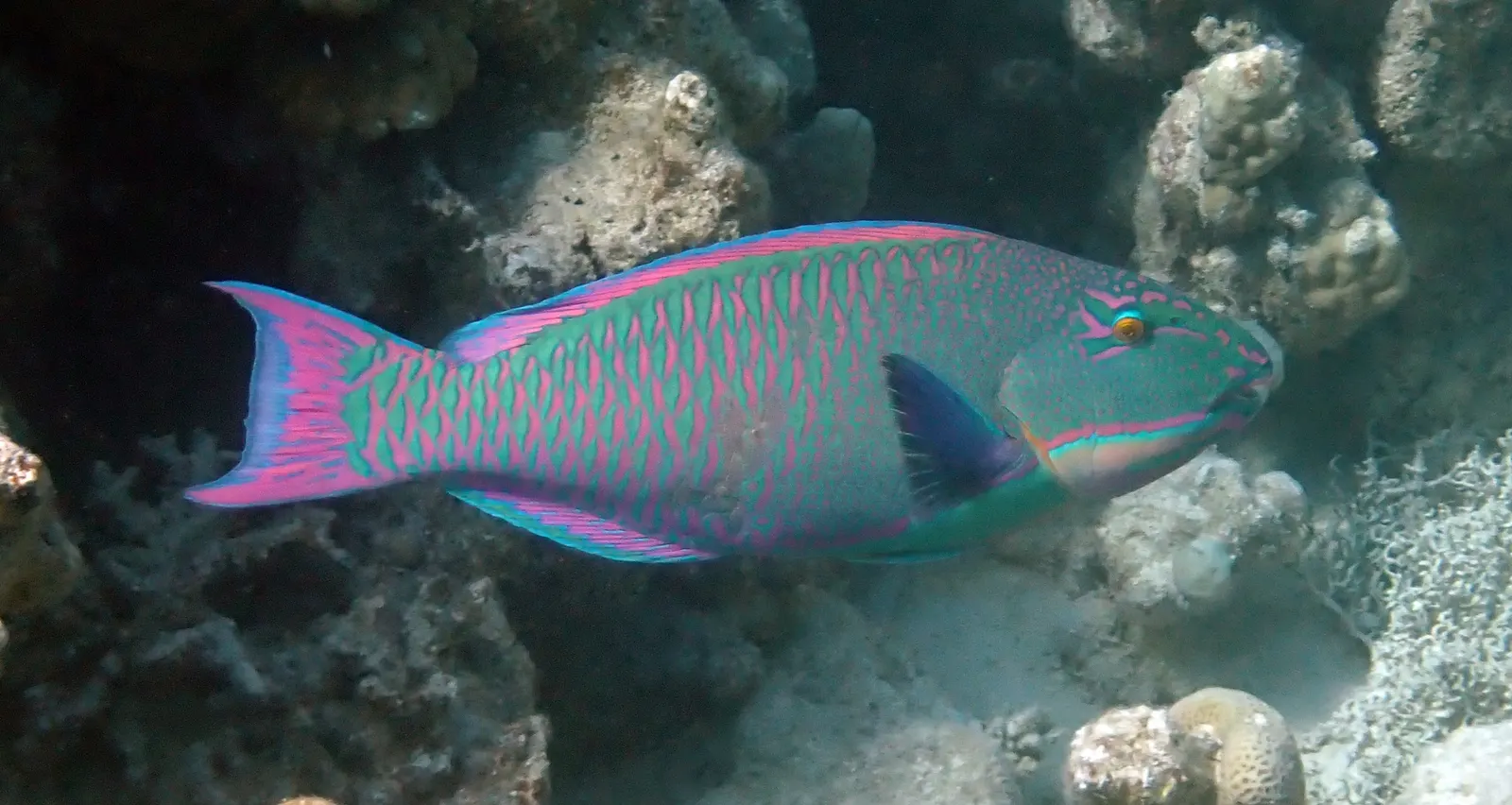
The bicolour parrotfish (Cetoscarus bicolor) is one of the largest and most spectacular parrotfish on Hurghada's reefs – and under the latest taxonomy a Red Sea endemic, since its Indo-Pacific relatives are now treated as a separate species. The name "bicolour" refers to the juveniles: the few-centimetre babies are snow-white with a broad orange band and a black dot on the head – it is hard to imagine a cuter fish on the reef.
By adulthood the fish transforms completely: females are dark with small pale spots, while the huge terminal males are green, every scale edged with pink-purple scribbles, and their foreheads bulge distinctively. With its powerful beak it bites big chunks out of the coral rock, leaving clearly visible white grazing scars on the stones. Big males hold territories surrounded by a harem of females – and if the male dies, the largest female transforms to take his place.
Around Hurghada you meet it on coral-rich plateaus and slopes: on the reefs of the Giftun Islands and Abu Ramada a giant individual regularly cruises past with its unhurried beak-clacking. You can also see it while snorkeling in the shallower coral gardens, and the photographers' favourite is the white-and-orange juvenile, often hiding among branching corals.
Did you know?
Juvenile and adult bicolour parrotfish look so unalike that early naturalists described them as separate species – nobody believed the snow-white, orange-banded baby was the green giant's own child.
Where can you meet it?
It lives on coral-rich reefs: large individuals are regularly seen on the plateaus of the Giftun Islands, Abu Ramada and El Fanadir, while the white-and-orange juveniles hide among the branching corals.
Frequently asked questions
Terminal males can reach 80 centimetres – and underwater, where everything looks bigger, they appear a metre long. At Hurghada it is one of the largest fish you will meet on an ordinary reef dive.
No: it uses the beak solely for rasping coral rock and is completely peaceful towards people. You can approach it calmly – at most it will drift away at its own leisurely pace.
They hide in sheltered, shallow coral gardens among branching corals – swim slowly and peek under the coral heads for your best chance. You can find them while snorkeling in the Giftun lagoons too.
Best sites for Bicolour parrotfish
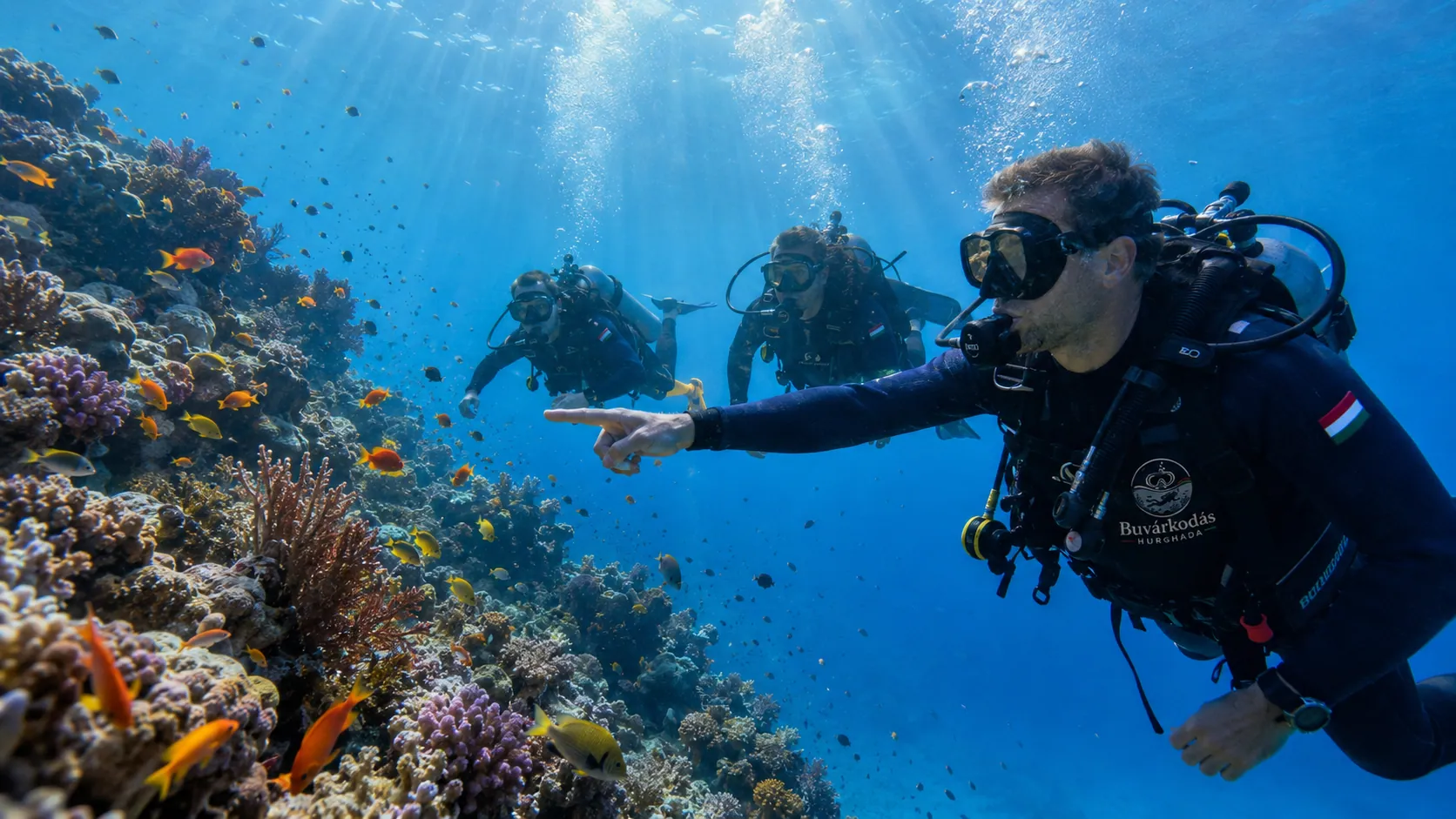
Giftun-szigetek
A national park island pair with a dozen dive sites: coral gardens, turtles and perhaps the richest fish life in the area.
- Depth
- 5–25m
- Boat
- 45min
- Species
- 6
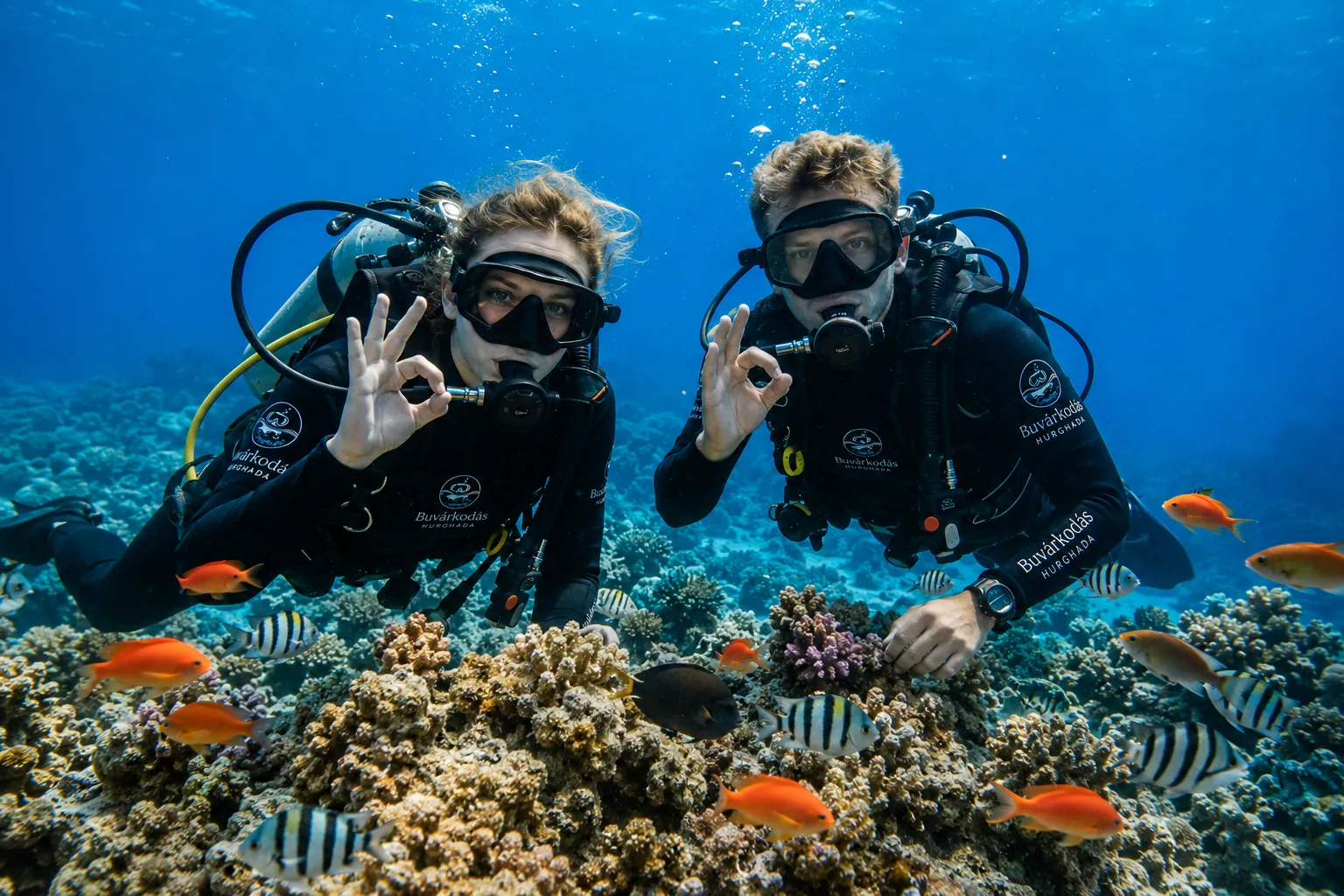
Abu Ramada („Az Akvárium”)
The Aquarium nickname is well earned: the fish schools swirling around the coral towers can be so dense you lose sight of the reef.
- Depth
- 6–26m
- Boat
- 50min
- Species
- 6
El Fanadir
A long reef ridge barely half an hour from the marina: a gentle wall, blue-spotted rays and seagrass patches with turtles.
- Depth
- 6–25m
- Boat
- 30min
- Species
- 5
The Red Sea will not wait forever.
Book today – seats on the boat are limited, your excitement is not.