Birdsnest coral
Seriatopora hystrix
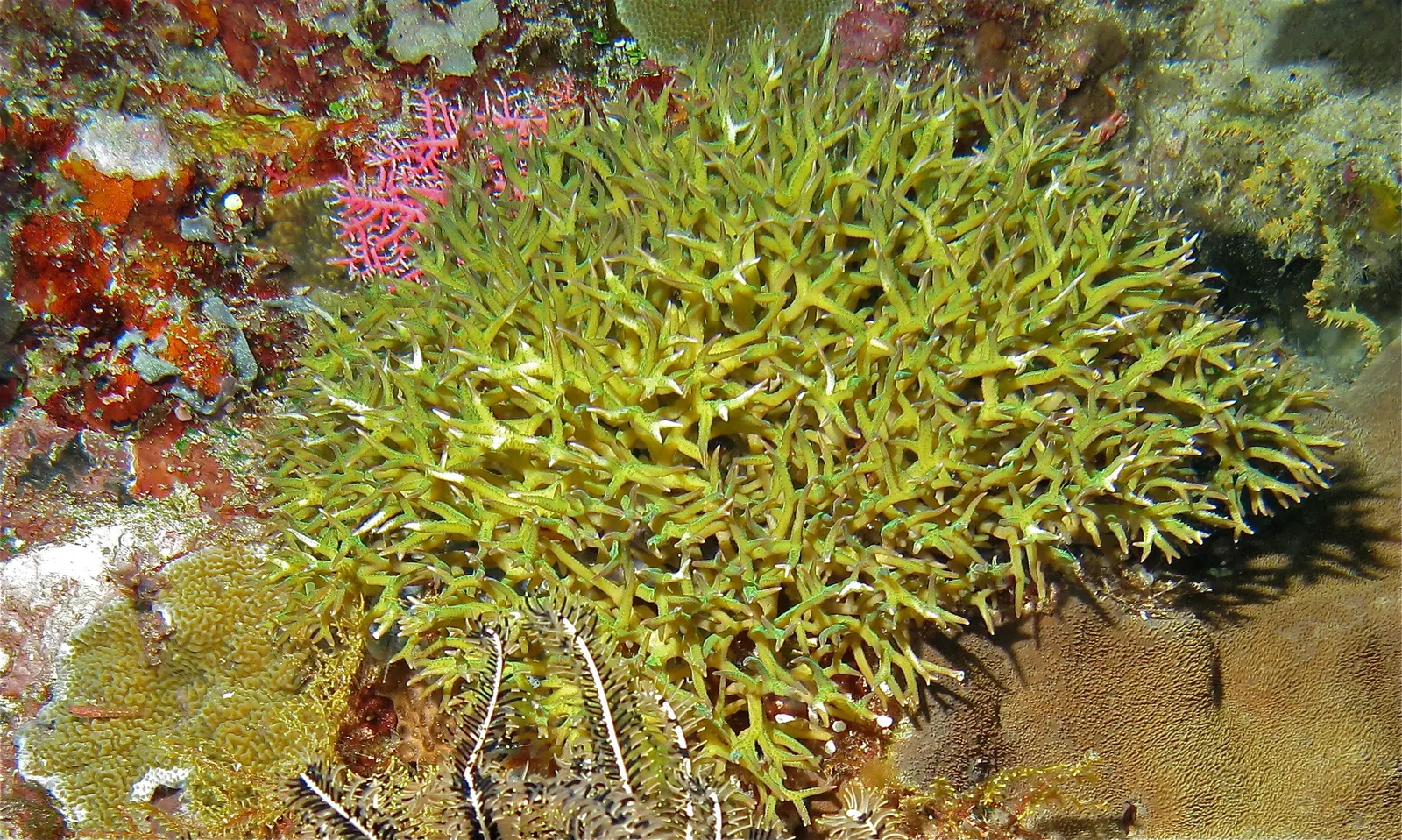
A dense tangle of needle-thin pink twigs – as if a bird had built its nest right on top of the reef.
The birdsnest coral (Seriatopora hystrix) is impossible to confuse with anything else: its branches, thinner than a pencil and sharply pointed, weave into a dense, chaotic thicket that genuinely looks like a carefully built bird's nest. Colonies range from pale cream through pink to greenish – around Hurghada the pink form is the most common. Lean in close and you will see the tiny polyps sitting in neat rows along the branches, which is where the "seriatus" (arranged in series) part of the scientific name comes from.
Like every reef-building stony coral, it is an animal: a community of millions of tiny polyps whose tissues host single-celled algae called zooxanthellae. The algae's photosynthesis supplies most of the coral's energy, which is why birdsnest coral grows so fast in the sunny shallows – up to several centimetres a year. The dense branches shelter a whole crowded house-share: gall crabs, coral hermits and small damselfish hide among the spiky twigs where predators cannot reach them.
You will find it almost everywhere in Hurghada's shallow coral gardens, on reef tops and lagoon edges, and it shows beautifully while snorkeling too. Its branches, however, are extremely fragile: a single careless fin kick snaps off years of growth. Never stand on or grab coral, and keep your distance while hovering – that is the only way the reef stays this beautiful for your next dive.
Did you know?
When a colony is badly stressed – for example by warming water – birdsnest coral polyps can literally bail out: one by one they abandon the skeleton, drift away and found a new colony elsewhere. Researchers call this escape trick "polyp bail-out".
Where can you meet it?
A jewel of the shallow coral gardens: large pink thickets grow on the reef tops of Shaab Sabina and Gota Abu Ramada and on the sheltered sides of the Giftun Islands.
Frequently asked questions
An animal! Birdsnest coral is a community of thousands of tiny polyps that build the limestone skeleton together. The plant-like part is the zooxanthellae algae living in their tissue, feeding the colony through photosynthesis – that is why corals need sunlight.
Coral's living tissue is paper-thin, and even one touch can wound it and open the door to infection. Birdsnest branches are also glass-brittle: one movement can snap off years of growth. Watch as long as you like – but never touch it with hand or fin.
Yes, it is one of the most rewarding species for snorkelers: its finest colonies grow at 1–5 metres on sunlit reef tops, so you can admire the pink thickets perfectly from the surface.
Best sites for Birdsnest coral
Sha'ab Sabina
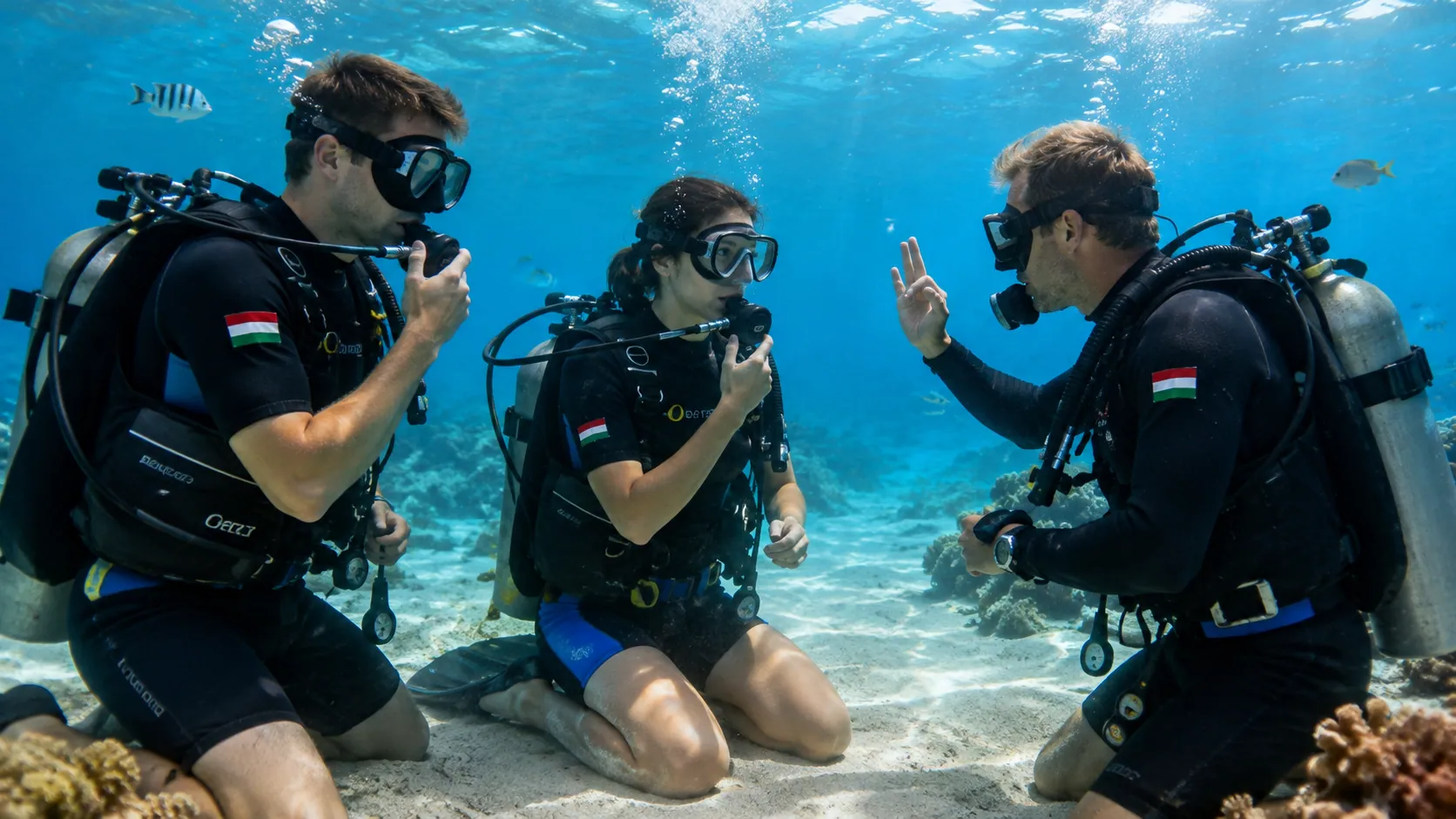
A sheltered shallow reef with a sandy lagoon – this is where most of our try dives and OWD skill sessions happen.
- Depth
- 4–12m
- Boat
- 40min
- Species
- 5
Gota Abu Ramada
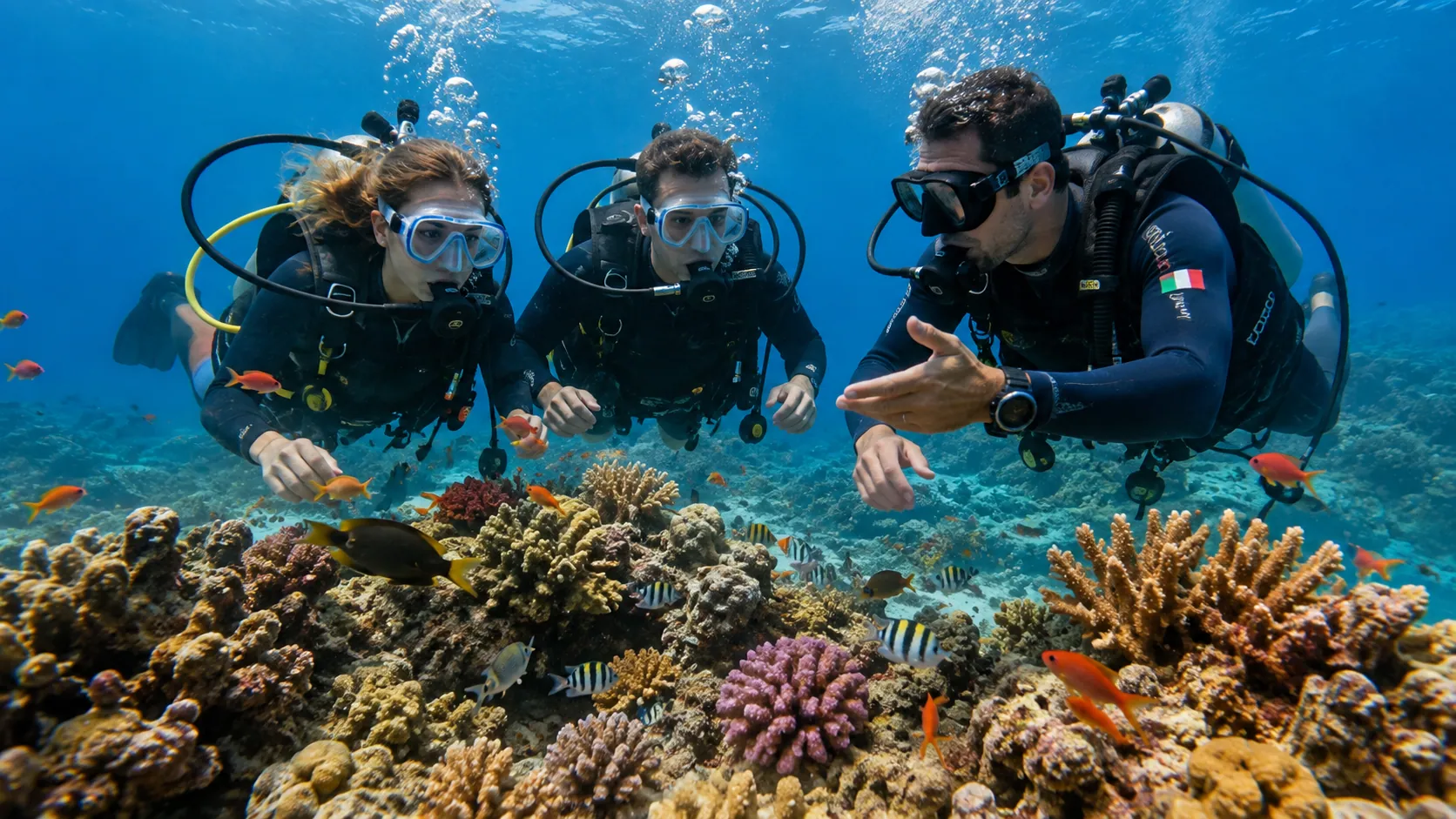
A shallow oval reef with a sandy bottom and schools of butterflyfish – perfect for training, second and night dives.
- Depth
- 4–14m
- Boat
- 55min
- Species
- 5
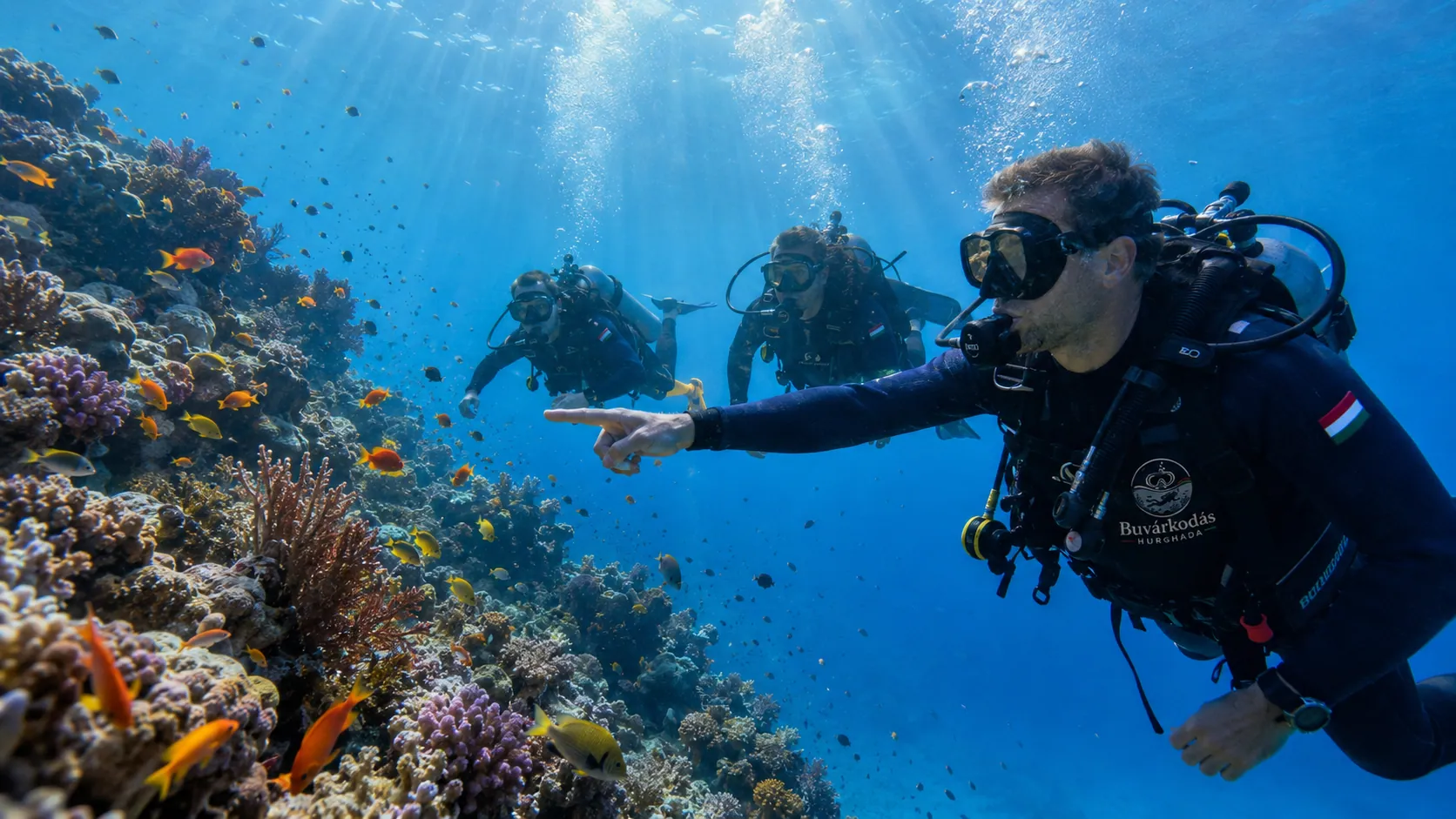
Giftun-szigetek
A national park island pair with a dozen dive sites: coral gardens, turtles and perhaps the richest fish life in the area.
- Depth
- 5–25m
- Boat
- 45min
- Species
- 6
The Red Sea will not wait forever.
Book today – seats on the boat are limited, your excitement is not.