Blackspotted sweetlips
Plectorhinchus gaterinus
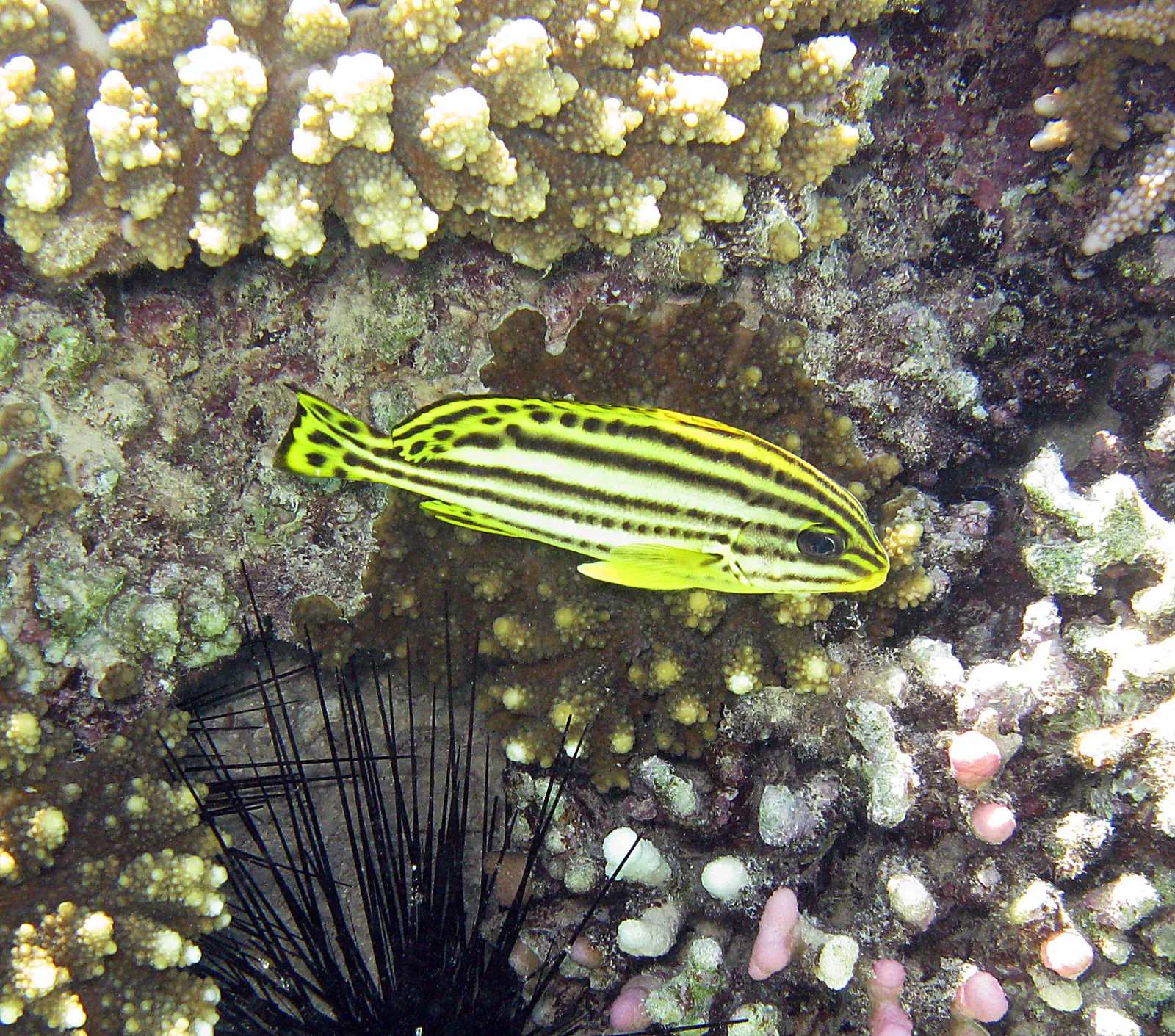
Black polka dots on a silvery body, bright yellow fins, and lips so plump it seems to pout forever – hence the name.
The blackspotted sweetlips (Plectorhinchus gaterinus) is a signature reef fish of the Red Sea and the western Indian Ocean coast, and you can hardly mistake it for anything else: regular black polka dots cover its silvery-grey body, while its fins and lips glow golden yellow. Both the English name and the Hungarian one point to the strikingly thick, fleshy lips – the tool it uses at night to rummage through the sand for worms, crustaceans and molluscs.
Juveniles wear a completely different outfit: with their brown-and-white banded pattern and exaggerated, undulating swimming style they imitate toxic nudibranchs, so predators tend to leave them alone. Adults rest in groups by day, hovering almost motionless under ledges and in the shade of coral blocks, often a dozen side by side with their heads into the current. The real feeding happens at night on the sand flats around the reef.
Around Hurghada, look for the daytime resting groups: you will meet them regularly under the big blocks of Gota Abu Ramada, around the coral heads of the Abu Hashish lagoon and beneath the ledges of El Fanadir. They are a patient photographer's dream: resting fish barely move, so you can admire the dotted pattern and yellow lips from close range – just approach slowly and never box a group in against the wall.
Did you know?
The juvenile sweetlips dresses up not as a fish but as a toxic sea slug: with its banded pattern and exaggerated, undulating swimming it mimics nudibranchs so that predators keep well away.
Where can you meet it?
Groups rest by day under the blocks of Gota Abu Ramada, in the Abu Hashish lagoon and at the ledges of El Fanadir – they can turn up in water shallow enough for snorkelers too.
Frequently asked questions
Not at all – it is a peaceful, night-feeding reef fish that rests quietly by day. At most it will lazily drift away if you get too close.
Yes, with good odds: the resting groups often hover around coral heads in shallow lagoons, for example at Abu Hashish. The dotted body and yellow fins are easy to recognise from the surface.
Because of its strikingly thick, fleshy lips, which make it look permanently puckered up. They are actually working tools: at night it uses them to plough through the sand for worms and crustaceans.
Best sites for Blackspotted sweetlips
Gota Abu Ramada
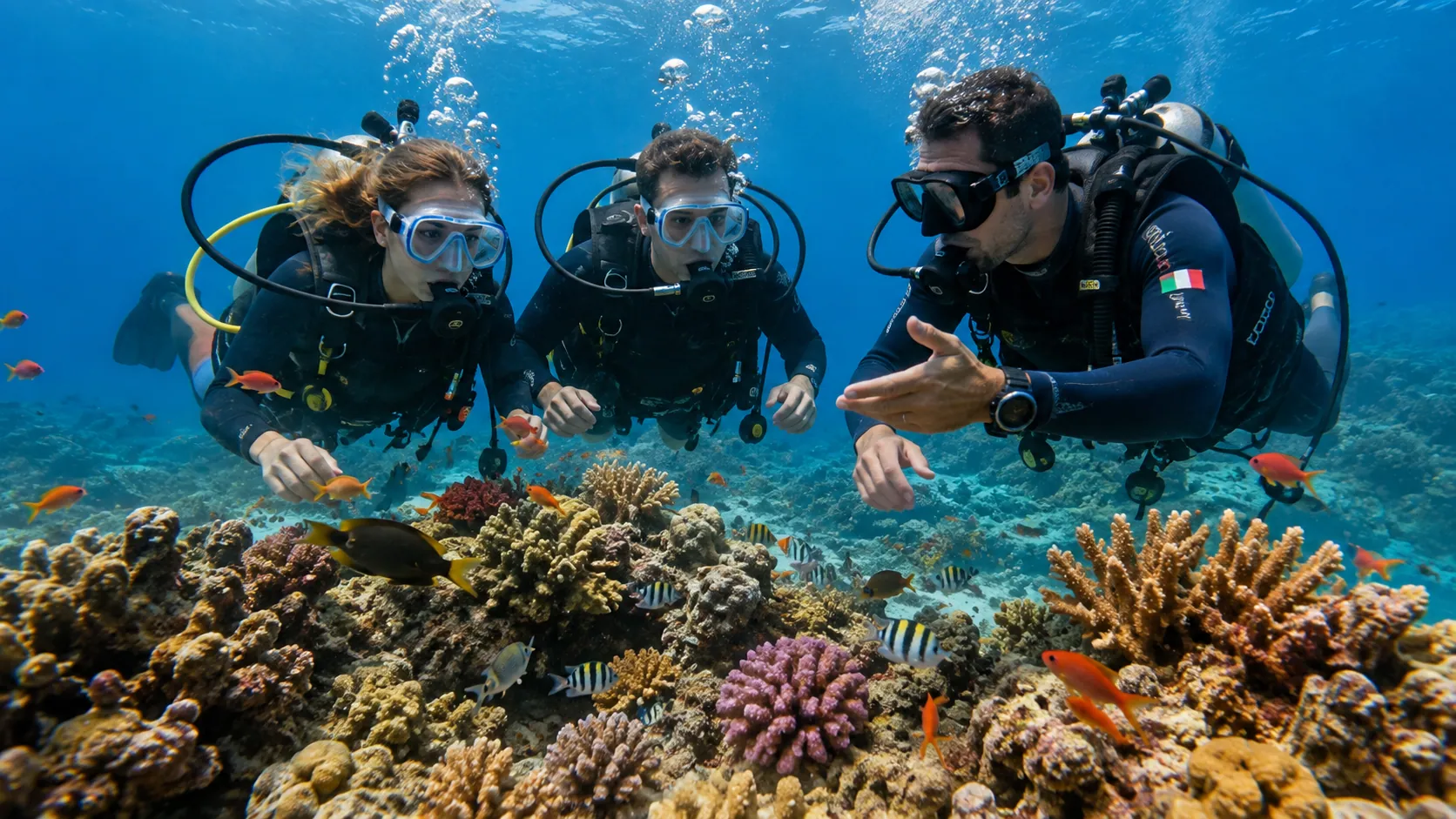
A shallow oval reef with a sandy bottom and schools of butterflyfish – perfect for training, second and night dives.
- Depth
- 4–14m
- Boat
- 55min
- Species
- 5
Abu Hashish-fok
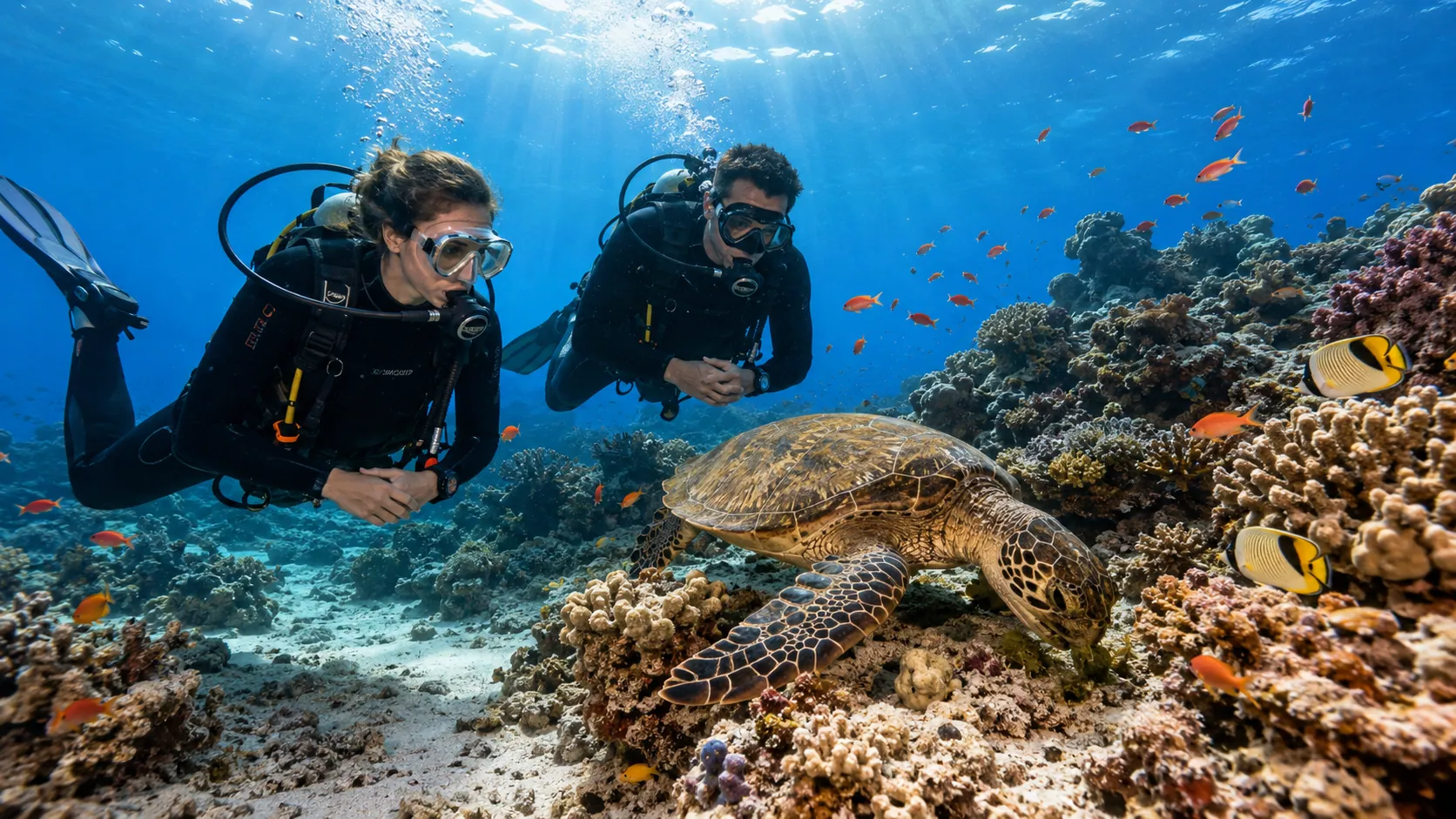
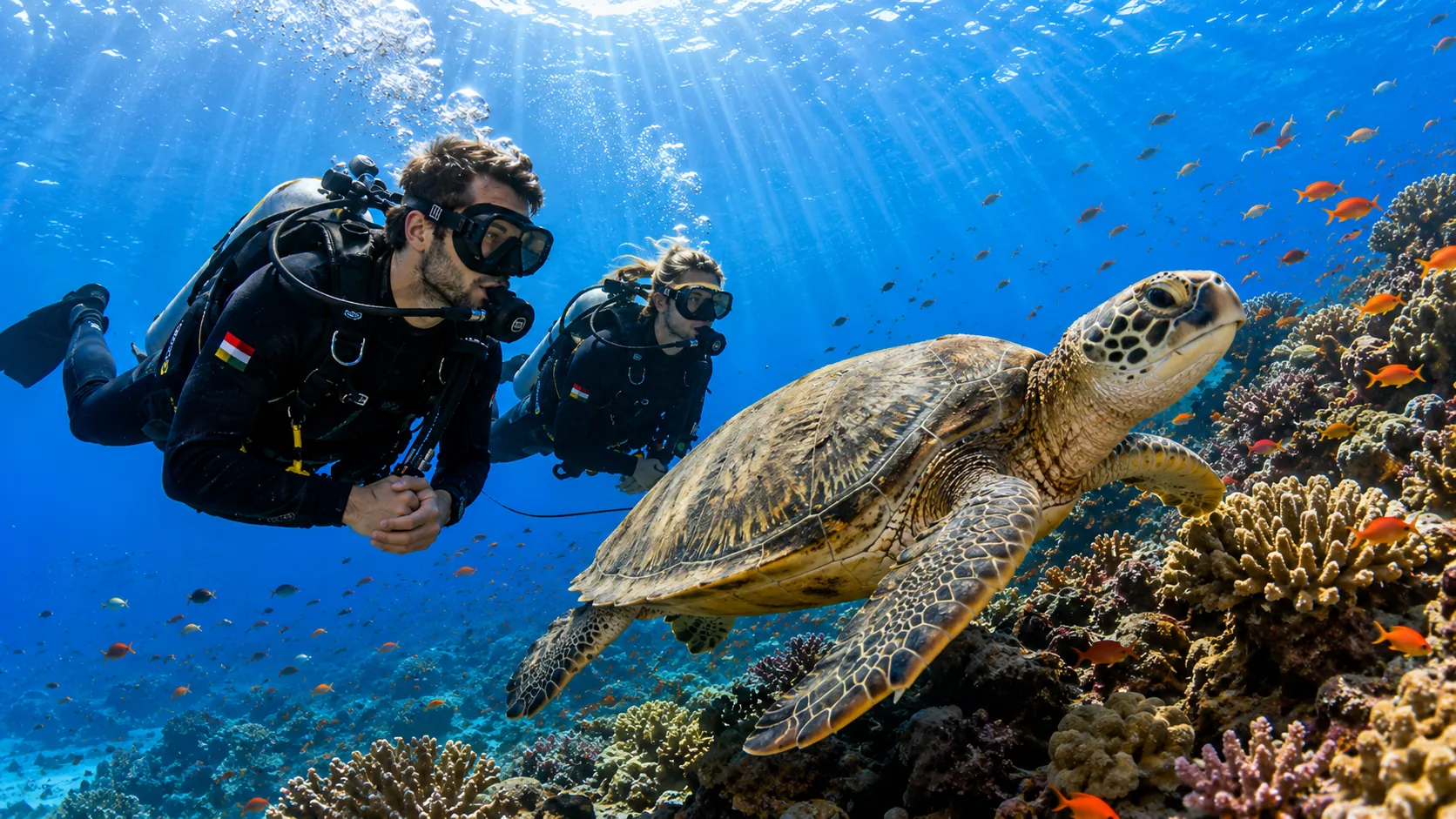
A quiet southern cape with seagrass meadows and an atmospheric cavern – turtles almost for sure, a dugong with some luck.
- Depth
- 5–20m
- Boat
- 60min
- Species
- 5
El Fanadir
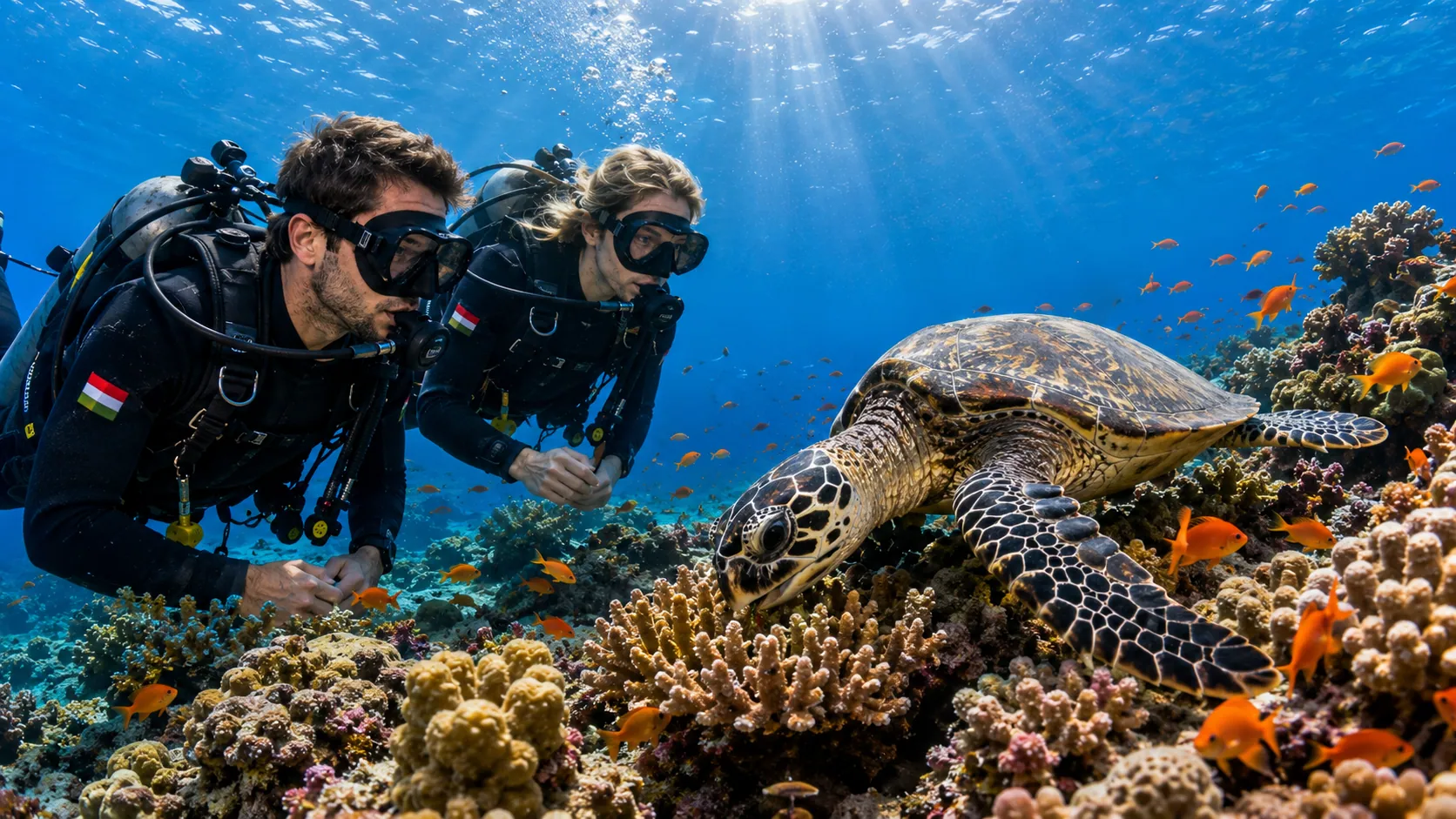
A long reef ridge barely half an hour from the marina: a gentle wall, blue-spotted rays and seagrass patches with turtles.
- Depth
- 6–25m
- Boat
- 30min
- Species
- 5
The Red Sea will not wait forever.
Book today – seats on the boat are limited, your excitement is not.