Blacktip grouper
Epinephelus fasciatus
A small orange-red grouper with black-tipped dorsal spines that sits motionless on the coral and sees everything.
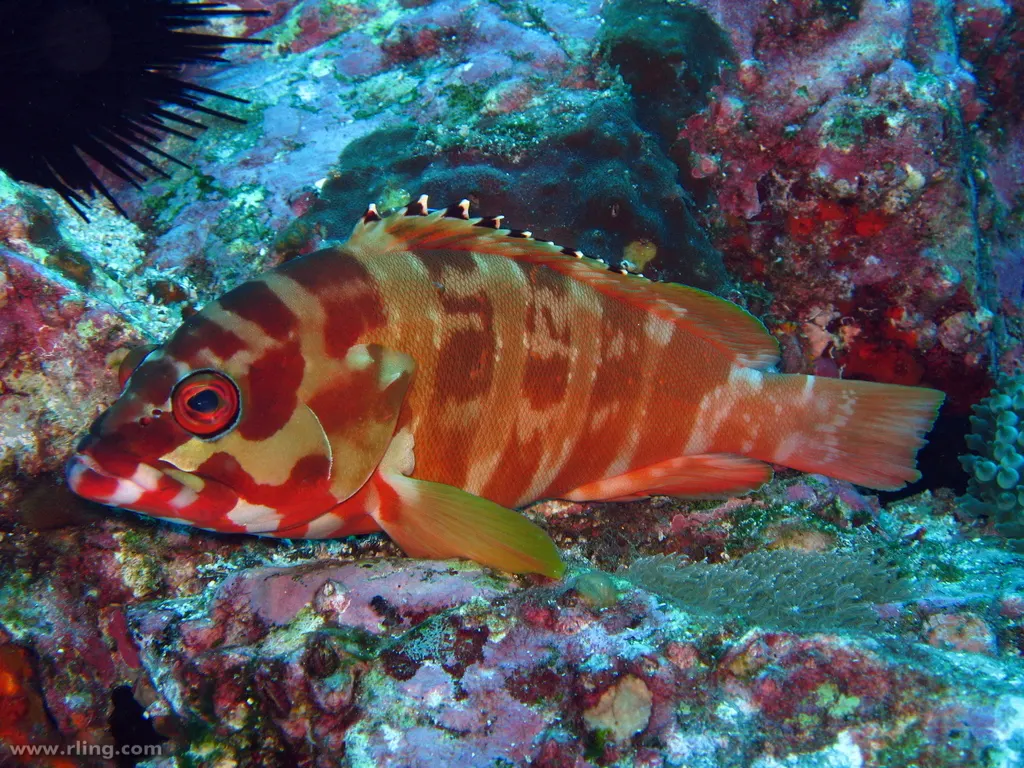
The blacktip grouper (Epinephelus fasciatus) is one of the most common small groupers on Hurghada's reefs. Its orange-red to brick-red body carries darker vertical bars, and the tips of its dorsal-fin spines are inky black – hence the name. At 30–35 cm it is decidedly small for a grouper, but the big eyes and wide mouth give it away: this is a true predator.
Its behaviour is classic ambush tactics: it perches on top of a coral block or on the edge of a ledge and scans the surroundings without moving, rotating only its eyes. Anything small enough that swims too close – tiny fish, shrimps, crabs – disappears in one flash of its vacuum-like mouth. The most striking party trick: it can change colour in seconds, intensifying its barred pattern or fading it almost completely depending on mood and background.
Around Hurghada you will meet it on practically every reef, from the shallow coral gardens down to the deeper plateaus. What divers love about it is that it does not flee: it often lets a photographer approach within arm's reach before grudgingly hopping over to the next coral. Snorkelers should look for the little red "sentry" on the coral heads of shallow reef tops – once you have learned to recognise it, you will spot it everywhere.
Did you know?
The blacktip grouper switches colour in seconds: it can intensify its barred pattern or fade it almost entirely – sometimes for camouflage, sometimes as a signal to rivals.
Where can you meet it?
Common on nearly every Hurghada reef: you are certain to meet it on the El Fanadir plateau, on the coral blocks of Gota Abu Ramada and in the gardens of the Giftun Islands.
Frequently asked questions
No, it is completely harmless to people. It is a small predator of tiny fish and crustaceans – at most it will size you up curiously from its coral perch.
Yes – it is one of the easiest groupers to watch: it sits on coral heads in as little as 1–3 metres of water on the reef tops. Look for a reddish, barred fish "enthroned" motionless on the coral.
That is its hunting technique: it watches from an ambush post, saving energy until an unsuspecting small fish strays close. Then it strikes with a single lightning-fast suction gulp – the stillness is strategy, not laziness.
Best sites for Blacktip grouper
El Fanadir
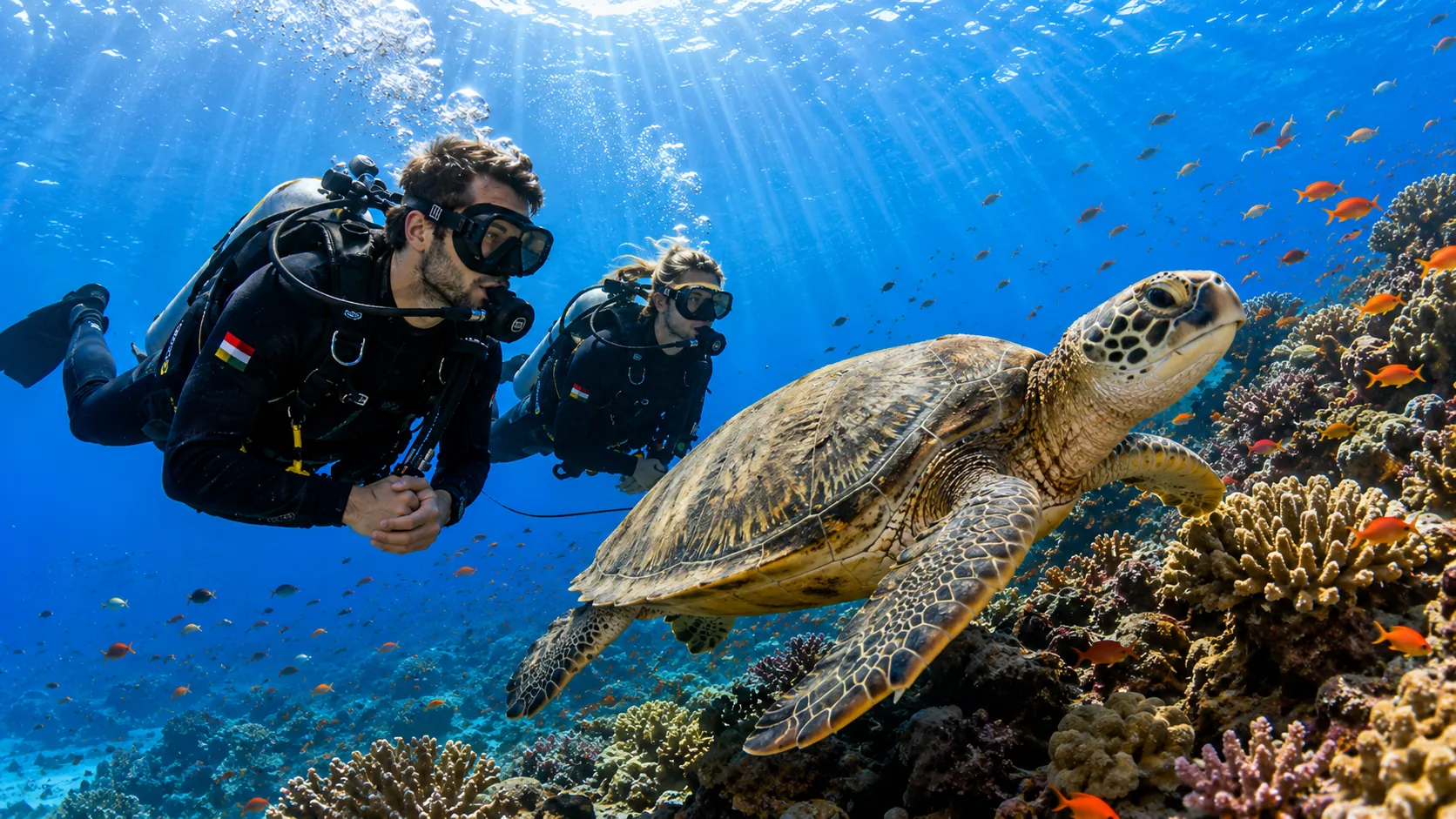
A long reef ridge barely half an hour from the marina: a gentle wall, blue-spotted rays and seagrass patches with turtles.
- Depth
- 6–25m
- Boat
- 30min
- Species
- 5
Gota Abu Ramada
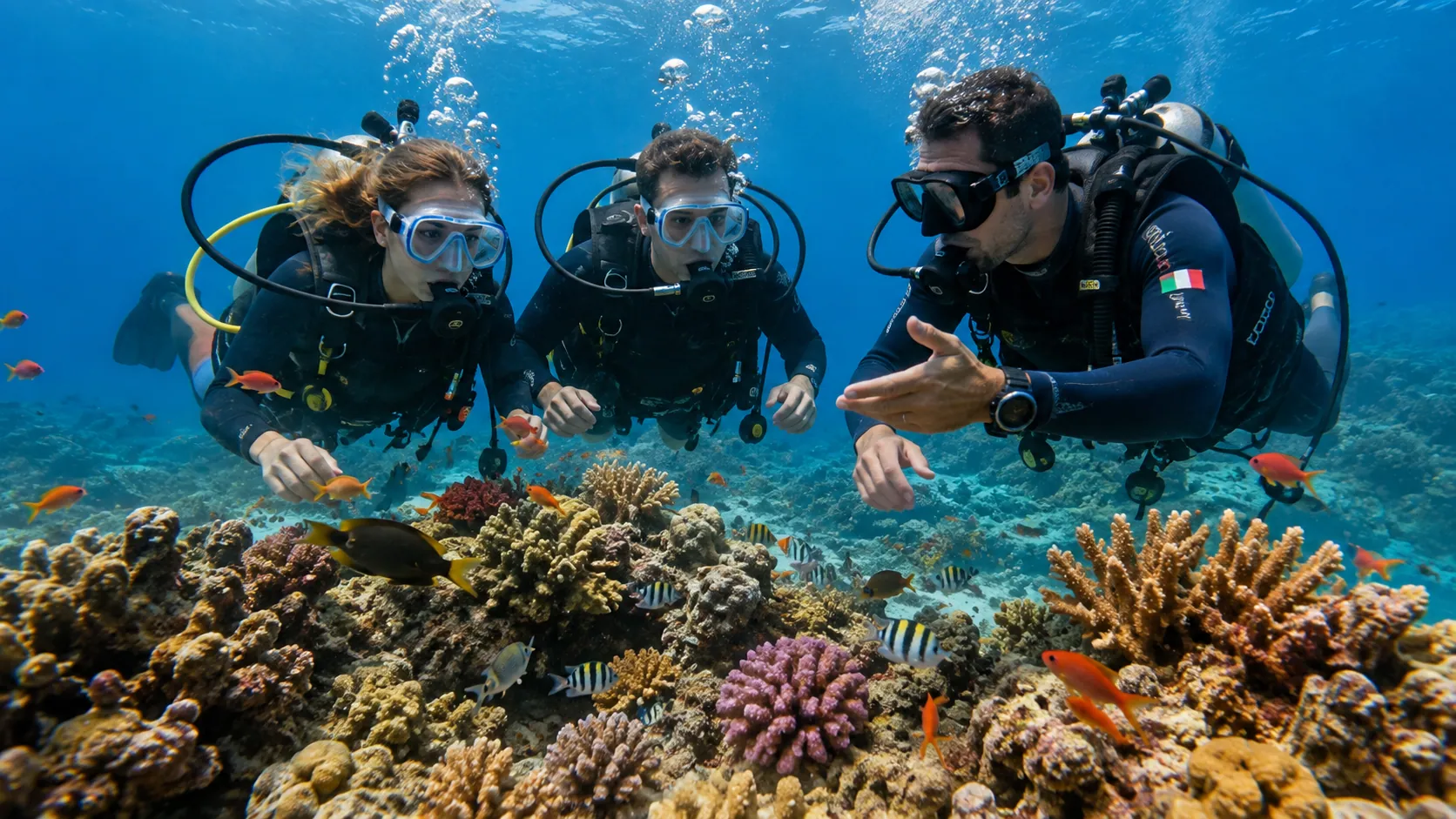
A shallow oval reef with a sandy bottom and schools of butterflyfish – perfect for training, second and night dives.
- Depth
- 4–14m
- Boat
- 55min
- Species
- 5
Giftun-szigetek
A national park island pair with a dozen dive sites: coral gardens, turtles and perhaps the richest fish life in the area.
- Depth
- 5–25m
- Boat
- 45min
- Species
- 6
The Red Sea will not wait forever.
Book today – seats on the boat are limited, your excitement is not.