Blue coral
Heliopora coerulea
Modest brown columns outside, sky-blue skeleton within – the blue coral is the only soft coral relative that builds rock-hard reef.
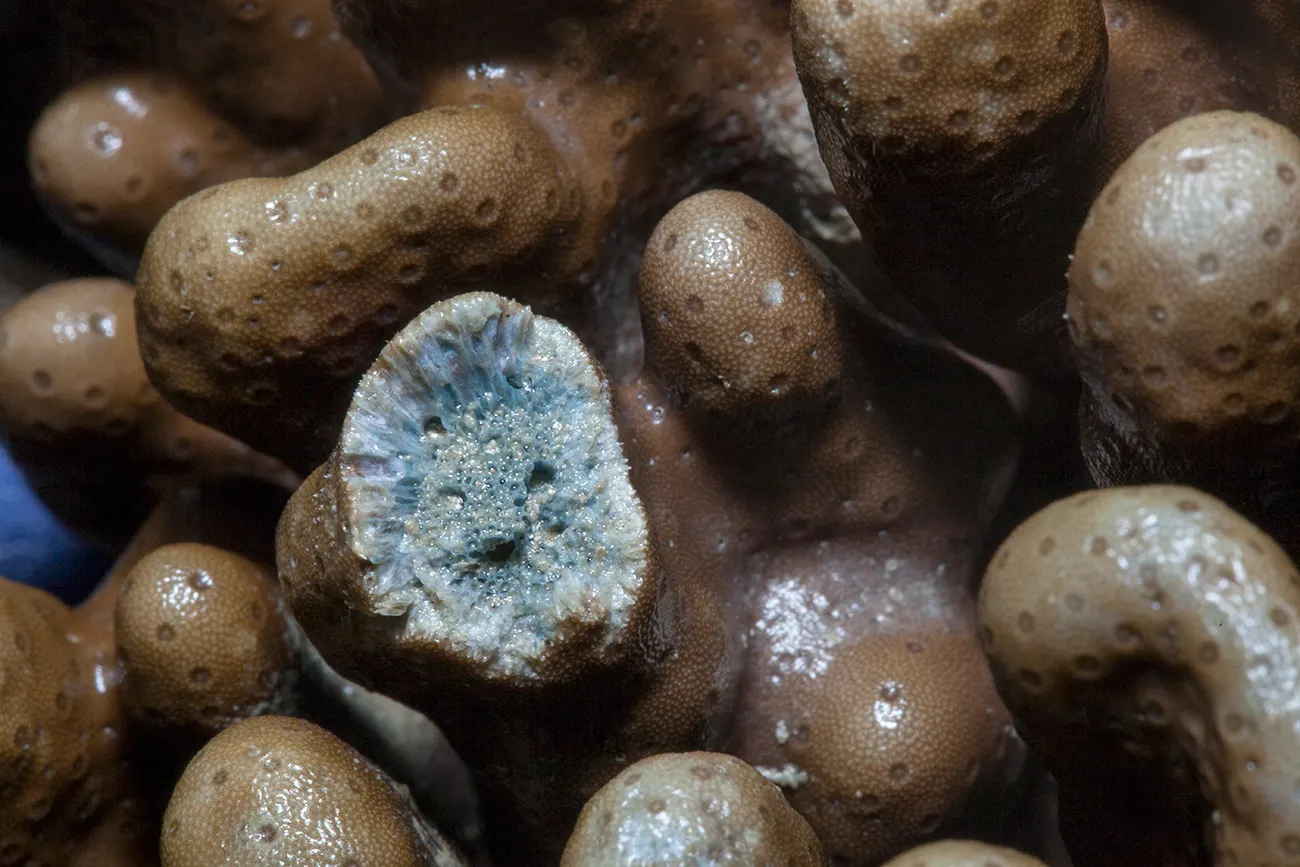
The blue coral (Heliopora coerulea) is the great trickster of the reef: swimming past, you see only greyish or greenish-brown columnar and bladed colonies with fine whitish polyps fuzzing out of them. The secret is inside: its skeleton is vivid sky-blue, glimpsed only on natural break surfaces – an intact colony hides it carefully. The colour comes from iron salts built into the aragonite, unique among corals.
Taxonomically it is an oddball too: its eight-armed polyps make it a relative of the soft corals, yet it grows a massive aragonite skeleton like the stony corals – the single living species of an ancient group that has been building reefs in unchanged form since the age of the dinosaurs, earning it the nickname "living fossil". It loves warm shallow water, and its heat tolerance has researchers watching closely: in some regions it is expanding exactly where other corals retreat from warming seas.
At Hurghada you can meet it on sunlit reef tops and shallow plateaus, well within snorkel depth: the lagoon plateaus of Abu Hashish and Sha'ab Sabina and the coral gardens of the Giftun Islands are the best spots. The species is CITES-protected – its blue skeleton was once carved into jewellery, so if you see coral souvenirs anywhere, leave them on the shelf: the reef is a better home for the blue treasure than a display cabinet.
Did you know?
Iron salts dye the blue coral skeleton sky-blue – it is the only coral in the world that builds a coloured limestone skeleton, essentially unchanged since the age of the dinosaurs.
Where can you meet it?
Find it on the shallow sunlit plateaus of Abu Hashish and Sha'ab Sabina and in the coral gardens of the Giftun Islands – you can spot it even while snorkeling.
Frequently asked questions
Because the blue is only in the skeleton: the living brownish tissue covers it entirely. You can only glimpse the colour on old natural break surfaces – and breaking a piece off is of course both forbidden and pointless harm: the species is protected, and the reef takes years to heal the wound.
Both – that is what makes it special. By its eight-armed polyps it is a relative of the soft corals, yet it builds a solid aragonite skeleton like the stony corals. It survives as the single species of its entire group, which is why biologists call it a living fossil.
On the shallow plateaus look for evenly greyish-brown colonies of vertical columns and thick blades, their surface dusted with fine whitish fuzz – the polyps. If you spot a bluish glow at an old break, that settles it: this is the only coral with blue "bones".
Best sites for Blue coral
Abu Hashish-fok
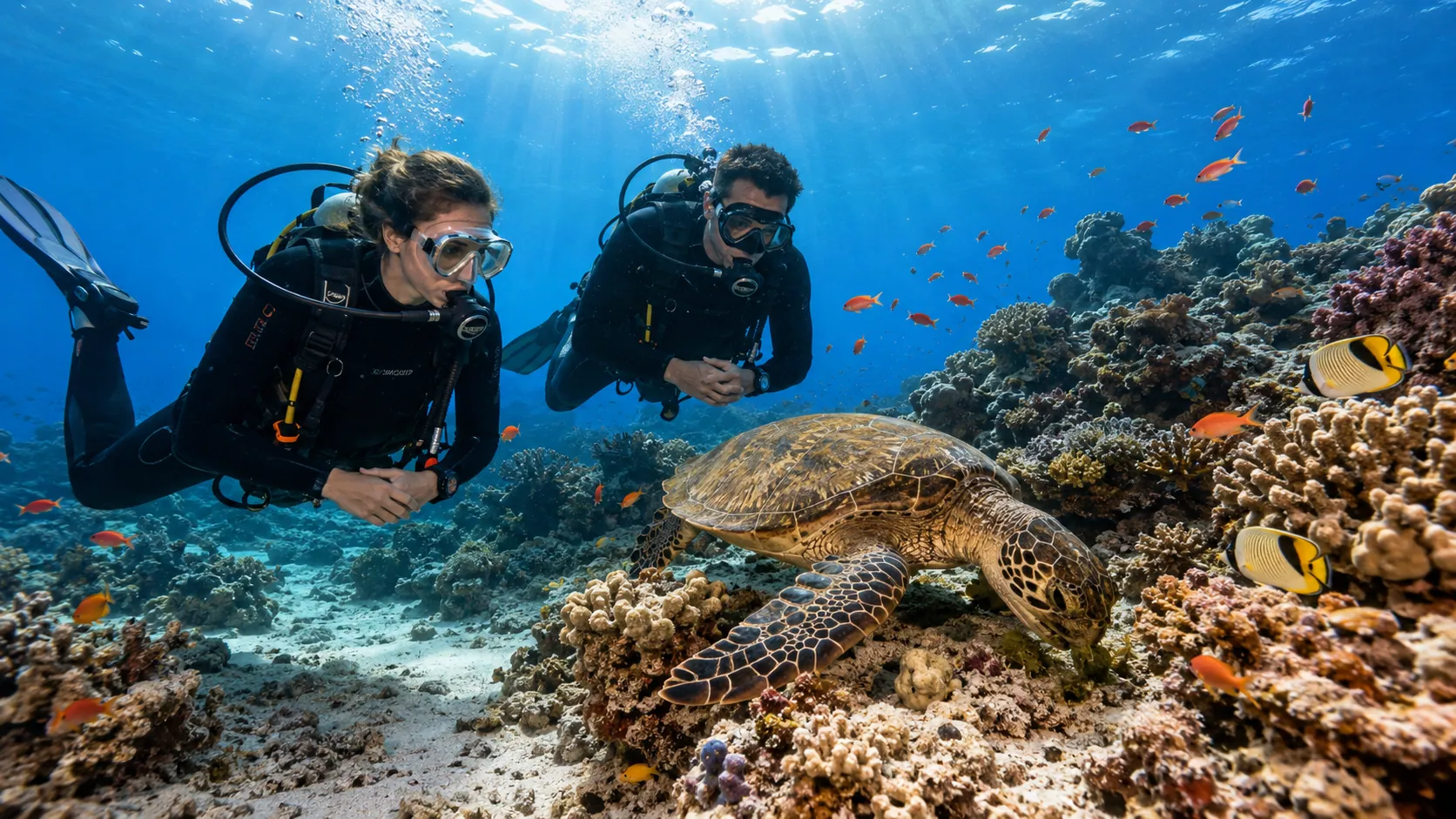
A quiet southern cape with seagrass meadows and an atmospheric cavern – turtles almost for sure, a dugong with some luck.
- Depth
- 5–20m
- Boat
- 60min
- Species
- 5
Sha'ab Sabina
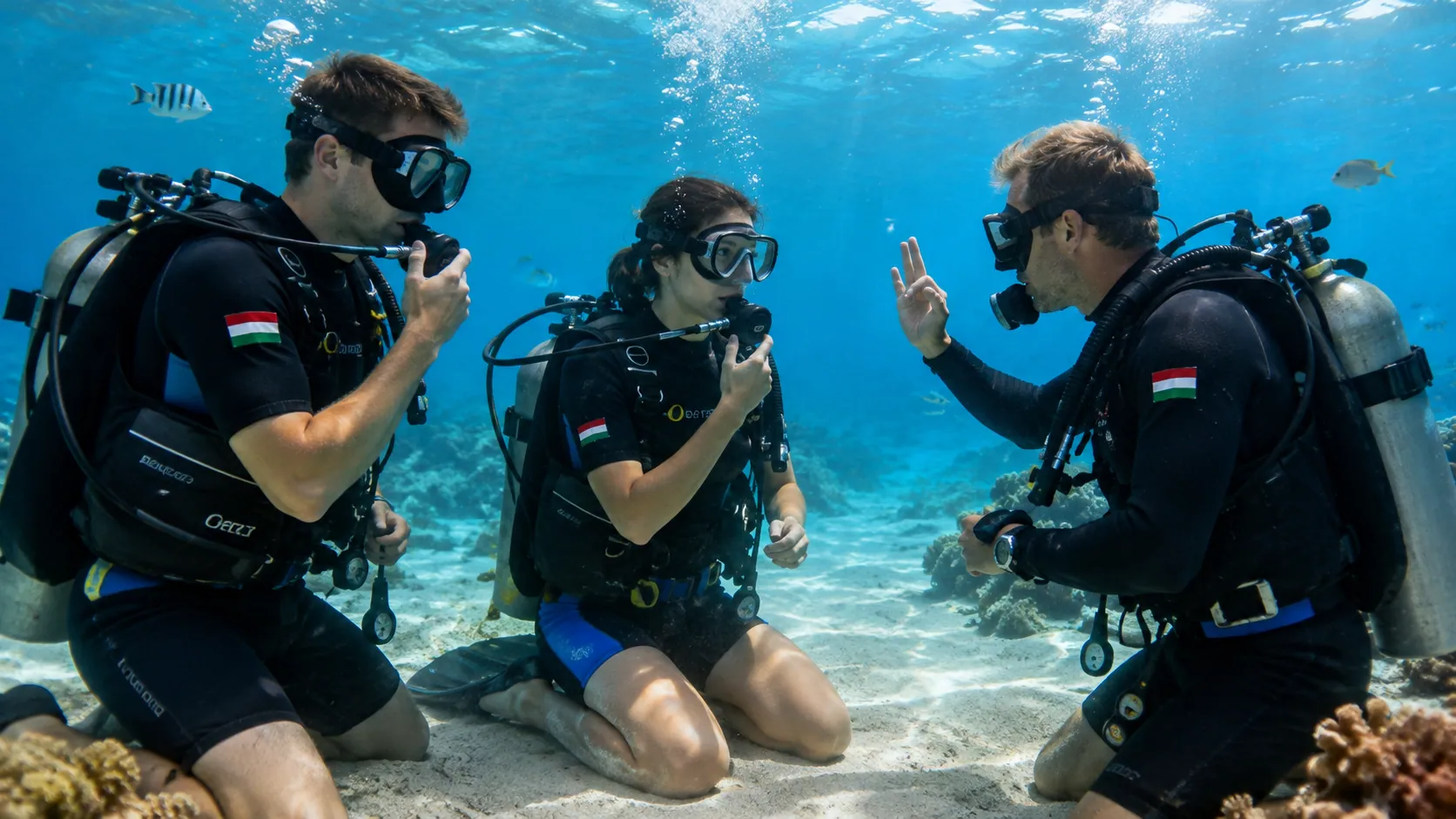
A sheltered shallow reef with a sandy lagoon – this is where most of our try dives and OWD skill sessions happen.
- Depth
- 4–12m
- Boat
- 40min
- Species
- 5
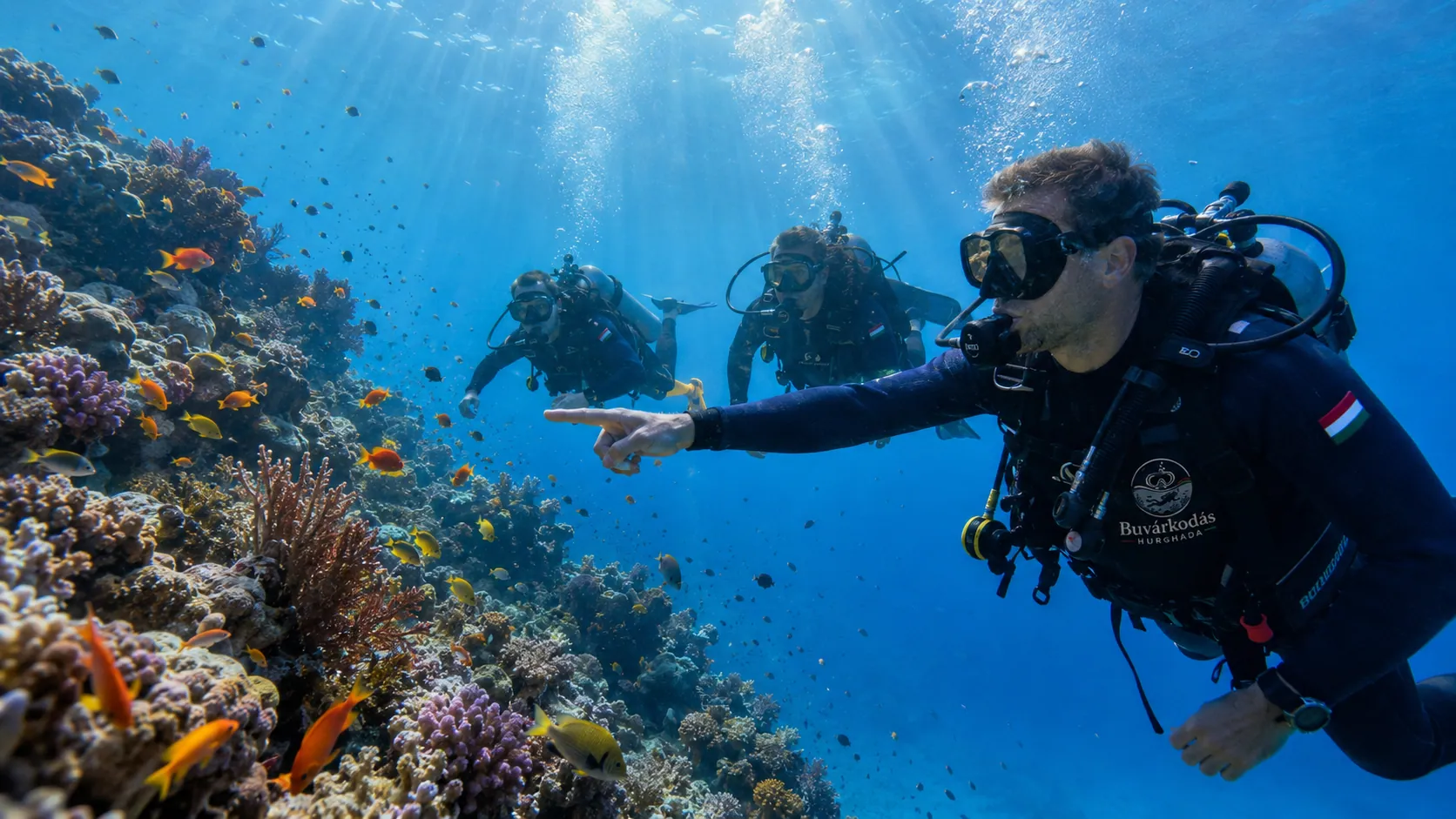
Giftun-szigetek
A national park island pair with a dozen dive sites: coral gardens, turtles and perhaps the richest fish life in the area.
- Depth
- 5–25m
- Boat
- 45min
- Species
- 6
The Red Sea will not wait forever.
Book today – seats on the boat are limited, your excitement is not.