Blue triggerfish
Pseudobalistes fuscus
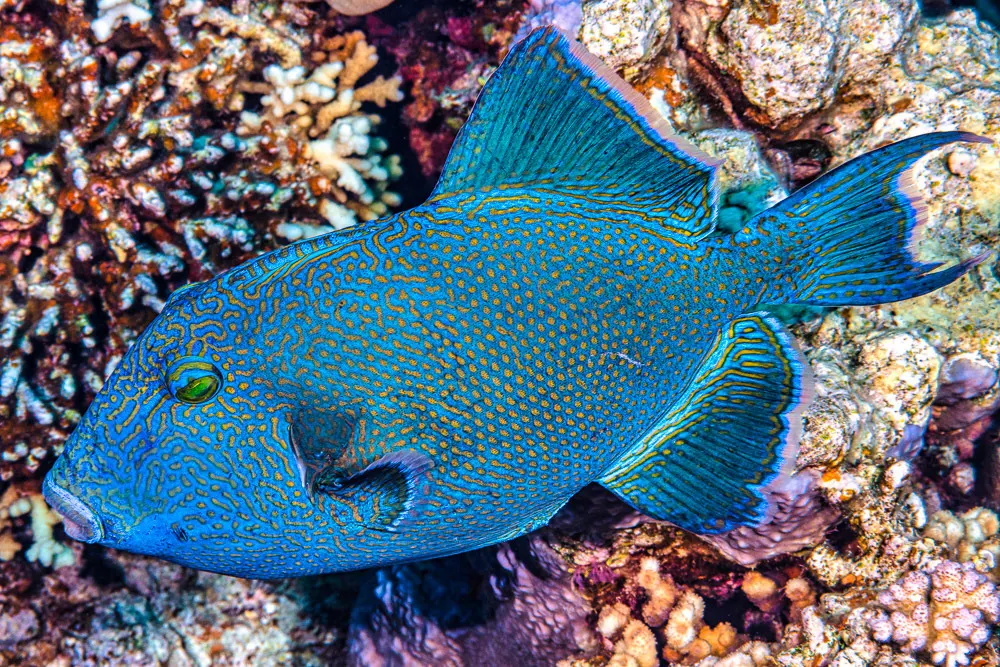
With its rippling cobalt patterns, the blue triggerfish looks like a painter's brush ran wild across the reef.
The blue triggerfish (Pseudobalistes fuscus) is one of the Red Sea's most striking triggers: its dark blue body is covered in a network of pale, almost glowing blue lines and spots that seem to shift in the light. Juveniles are yellower with blue scribbles – as if a child had doodled all over them. With strong, chisel-like teeth it cracks even the toughest armour.
The name comes from the trigger-like first spine of the dorsal fin: when threatened, the fish wedges itself into a crevice, locks the spine upright and becomes almost impossible to pull out. It is spectacular at dinner time too, blasting sand away with jets of water to reach urchins, clams and crabs – often with an entourage of wrasses hoping for flying scraps.
You will meet it regularly on Hurghada's sandy plateaus and along the edges of the coral gardens. It usually patrols its territory peacefully; only during nesting season should you give it a respectful berth, as it defends the area around its nest – like the titan triggerfish, but far more mildly.
Did you know?
A triggerfish's "trigger" is released only by its second spine: the first spine cannot be folded on its own, which is why the fish can jam itself so stubbornly into a crack – predators give up before the lock does.
How to behave around it
The blue triggerfish is fundamentally peaceful. During nesting season, though, it guards a cone-shaped zone above its nest: if it swims at you and circles, move away sideways – not upwards – and leave the area; that is all it takes.
Where can you meet it?
Common on sites with sandy plateaus: it turns up on almost every dive in the Gota Abu Ramada "aquarium", on the El Fanadir plateau and among the pinnacles of El Aruk.
Frequently asked questions
Far less often and far more mildly. Outside nesting season it is completely peaceful; if it does guard a nest, swimming away sideways ends the encounter in seconds.
Yes! Individuals feeding on shallow plateaus and the sand patches of reef tops are easy to watch with a snorkel, for example around Sha'ab Sabina.
That is how it digs out prey hiding in the sand: urchins, clams, crabs. The sand cloud it kicks up often attracts follower fish hoping for a free lunch.
Best sites for Blue triggerfish
Gota Abu Ramada
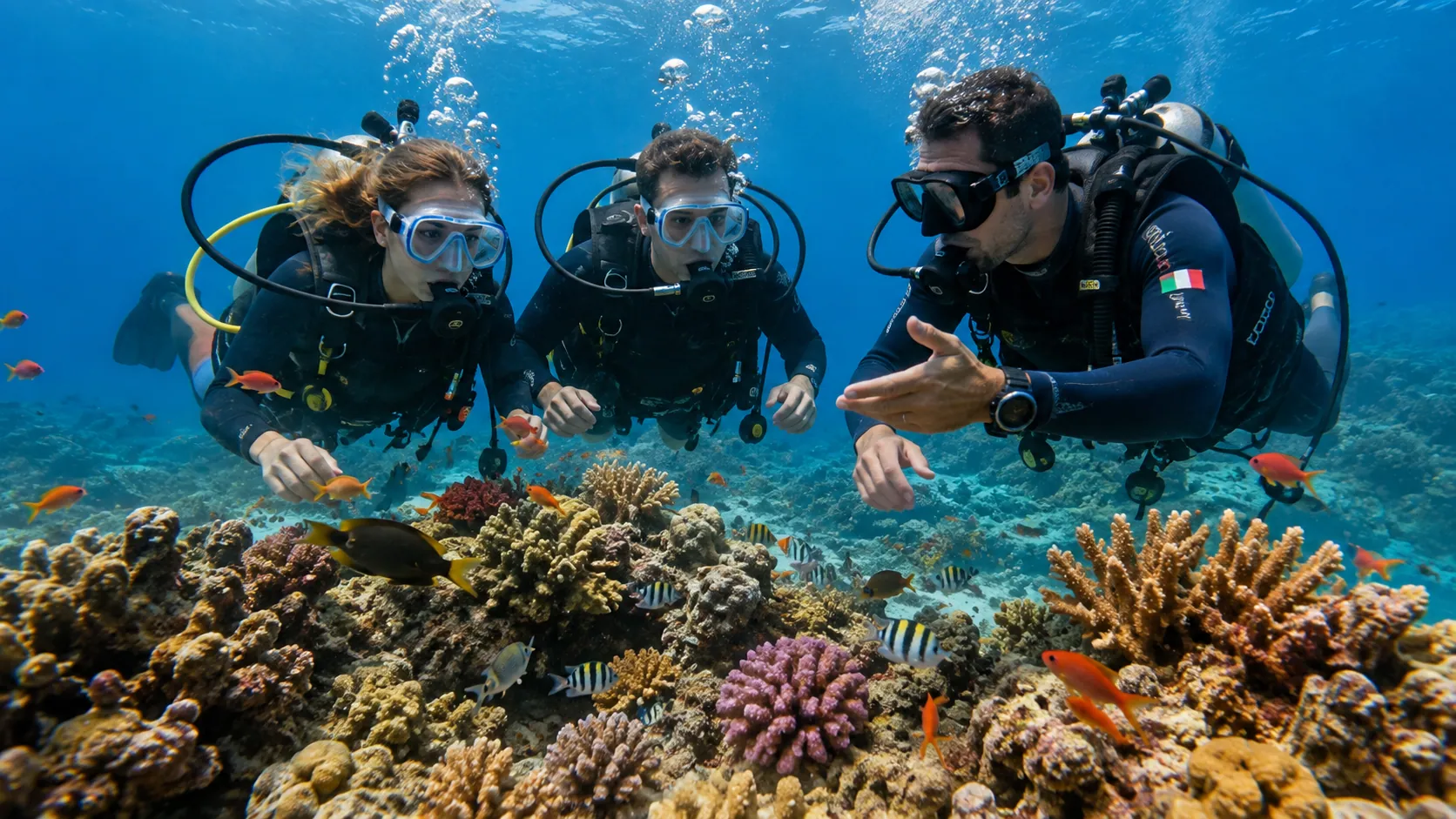
A shallow oval reef with a sandy bottom and schools of butterflyfish – perfect for training, second and night dives.
- Depth
- 4–14m
- Boat
- 55min
- Species
- 5
El Fanadir
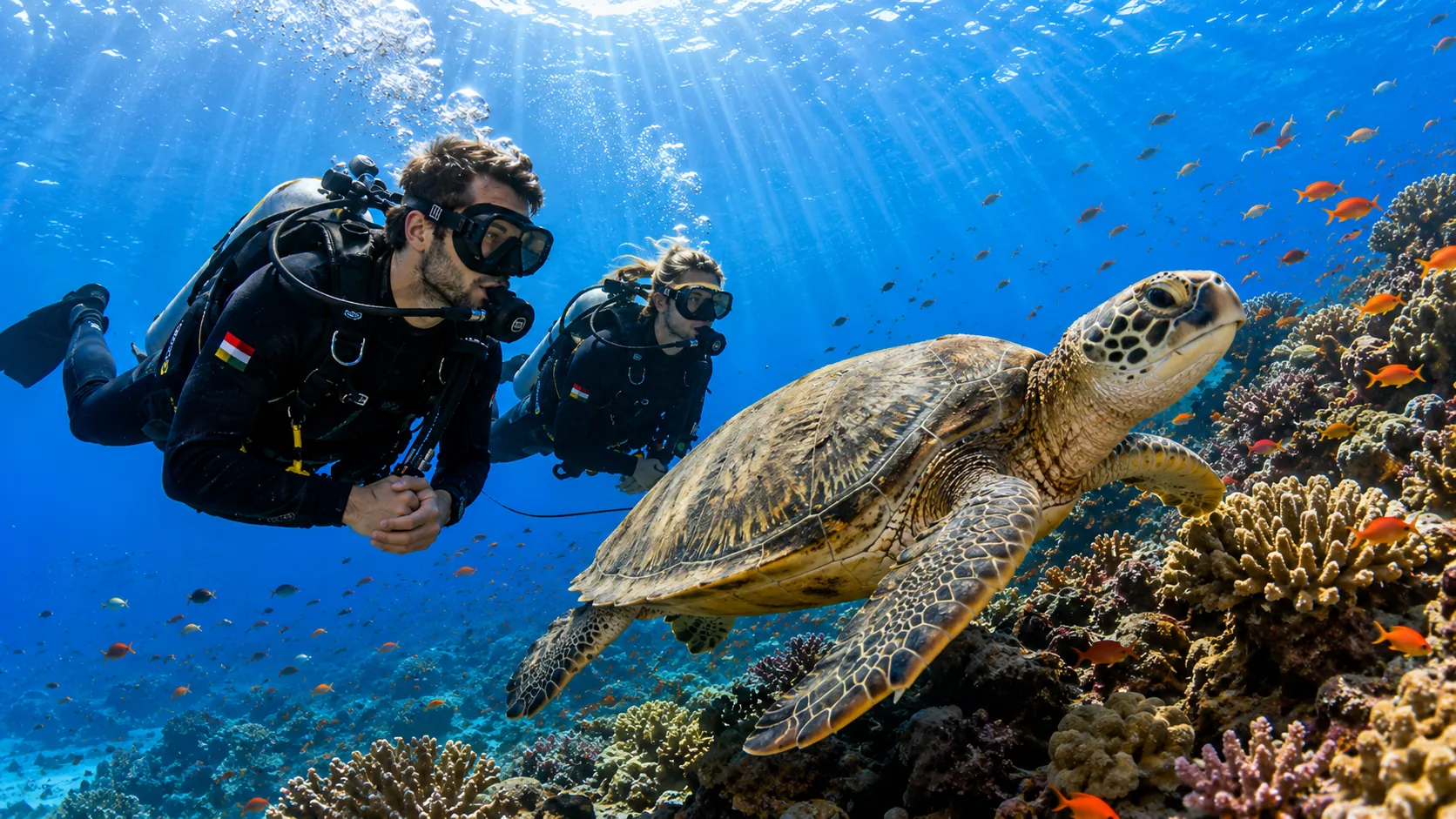
A long reef ridge barely half an hour from the marina: a gentle wall, blue-spotted rays and seagrass patches with turtles.
- Depth
- 6–25m
- Boat
- 30min
- Species
- 5
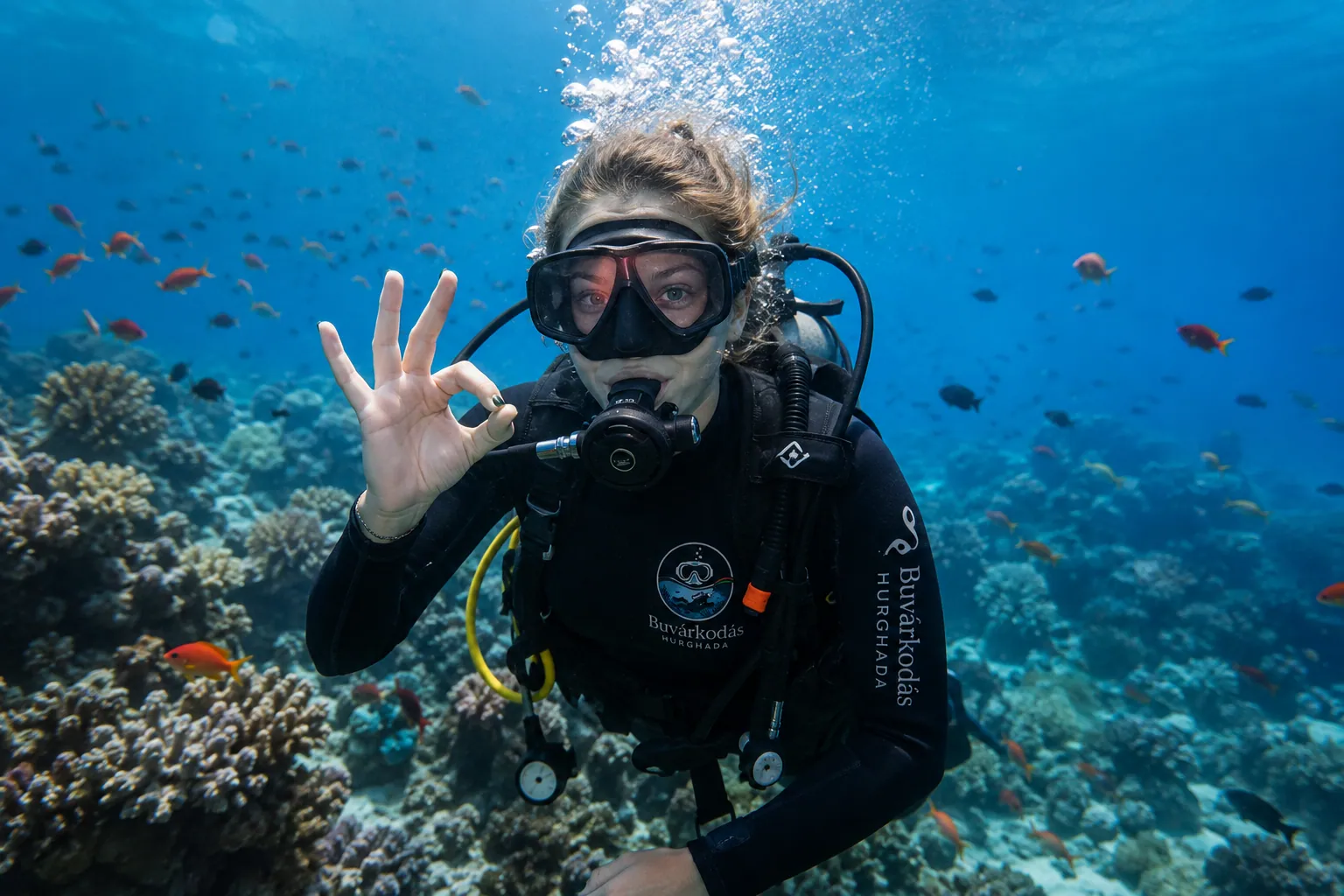
El Aruk (Gigi)
A playground of coral towers on white sand: easy navigation, clouds of glassfish and light made for photography.
- Depth
- 5–14m
- Boat
- 35min
- Species
- 5
The Red Sea will not wait forever.
Book today – seats on the boat are limited, your excitement is not.