Bluespotted ribbontail ray
Taeniura lymma
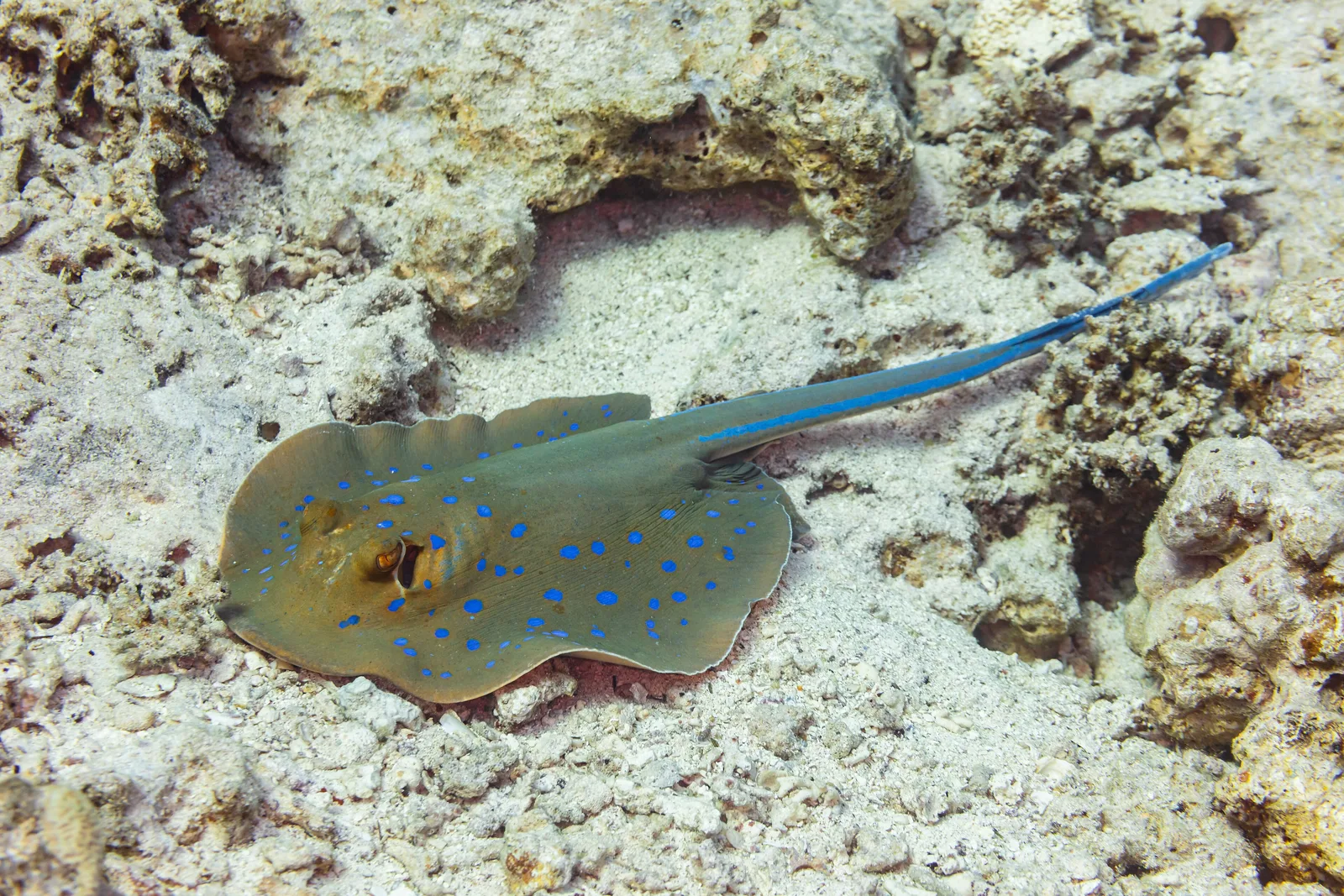
Electric-blue spots on a sand-coloured body – the bluespotted ribbontail ray is one of the most photogenic residents of Hurghada's reefs.
The bluespotted ribbontail ray (Taeniura lymma) is one of the smaller ray species: its disc measures 30–35 cm across, and even with the tail it rarely exceeds 70–80 cm. Its glowing blue spots are not decoration but warning colours: the tail carries two venomous spines, and the vivid pattern advertises this to predators. Unlike many of its relatives, it seldom buries itself completely in the sand.
During the day it tucks itself under table corals and rocky ledges, often with only its striped tail poking out. It becomes active at dusk and with the rising tide, hunting over the sandy bottom for clams, crabs and worms, which its electroreception pinpoints even beneath the sand.
Around Hurghada you can meet it on almost any sandy reef section: it is an everyday sight on the sand tongues of El Fanadir and among the coral towers of El Aruk. Approach slowly, stay slightly above the bottom, and the ray will calmly hold its position – it only flees if you swim directly over it or corner it.
Did you know?
Those vivid blue spots are one of nature's most honest messages: they say "I am venomous, leave me alone". That is why the bluespotted ray hides far less diligently than its camouflage-reliant relatives.
How to behave around it
The bluespotted ray does not attack, but its tail carries venomous spines: never touch it, corner it or hover directly above it. Keep one or two metres' distance and the encounter is completely safe.
Where can you meet it?
The sandy edges of El Fanadir and the coral towers of El Aruk are the most reliable spots, but it also appears regularly on the Giftun reefs and on the sand around the El Mina wreck.
Frequently asked questions
Practically not for divers: it uses its venomous spines purely in defence and would rather swim away than get into a conflict. Ray injuries almost always happen when someone steps on or grabs one – keep your distance and nothing can go wrong.
All year round, on almost every Hurghada reef. During the day peek under table corals and ledges – often only the tail gives it away. On sandy sections such as El Fanadir and El Aruk you will also frequently find rays lying out in the open.
It is what biologists call warning colouration: it signals to predators that the ray carries venomous spines and is not worth attacking. This is also why it can afford to rest relatively openly under the corals during the day.
Best sites for Bluespotted ribbontail ray
El Fanadir
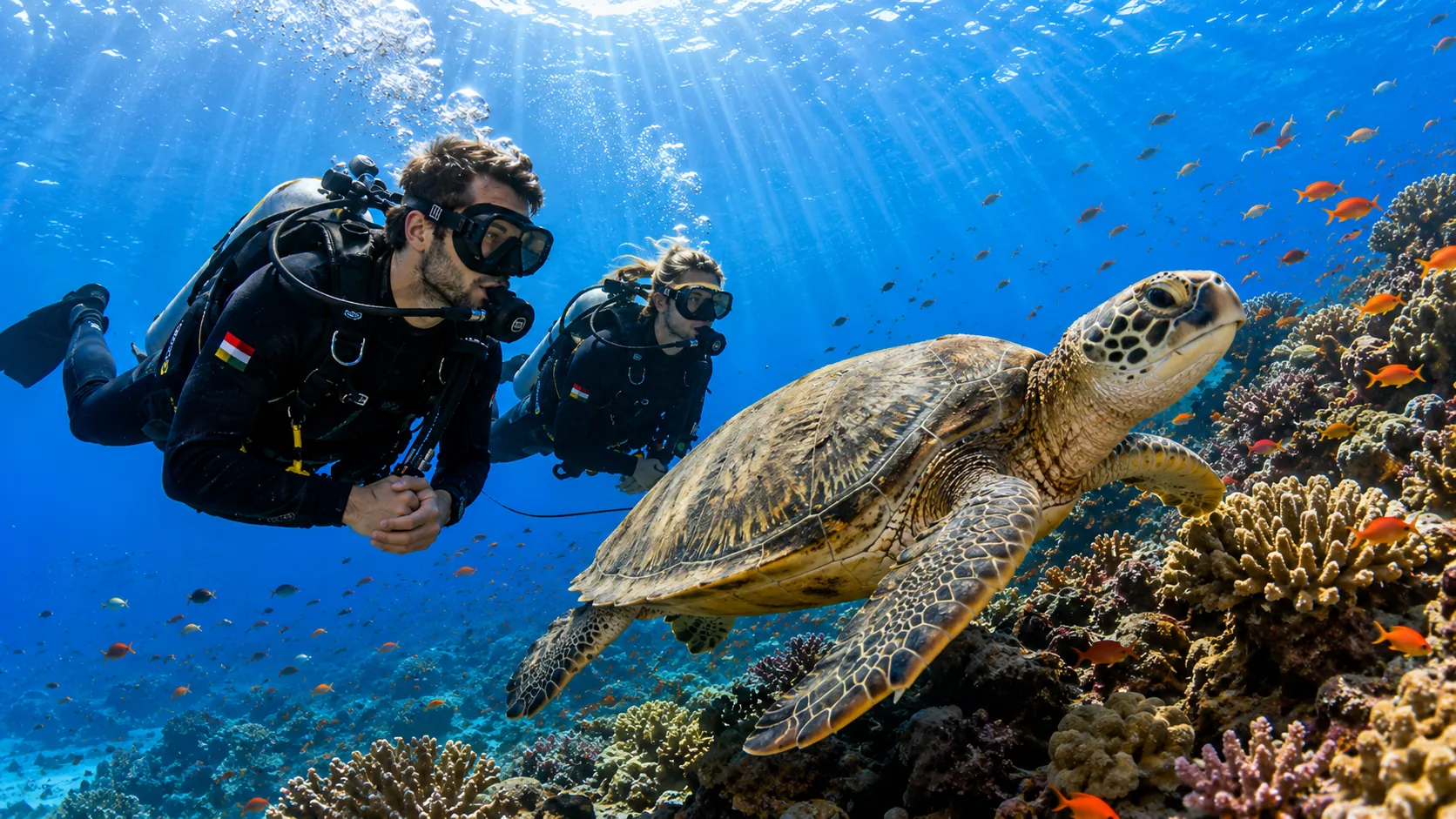
A long reef ridge barely half an hour from the marina: a gentle wall, blue-spotted rays and seagrass patches with turtles.
- Depth
- 6–25m
- Boat
- 30min
- Species
- 5
El Aruk (Gigi)
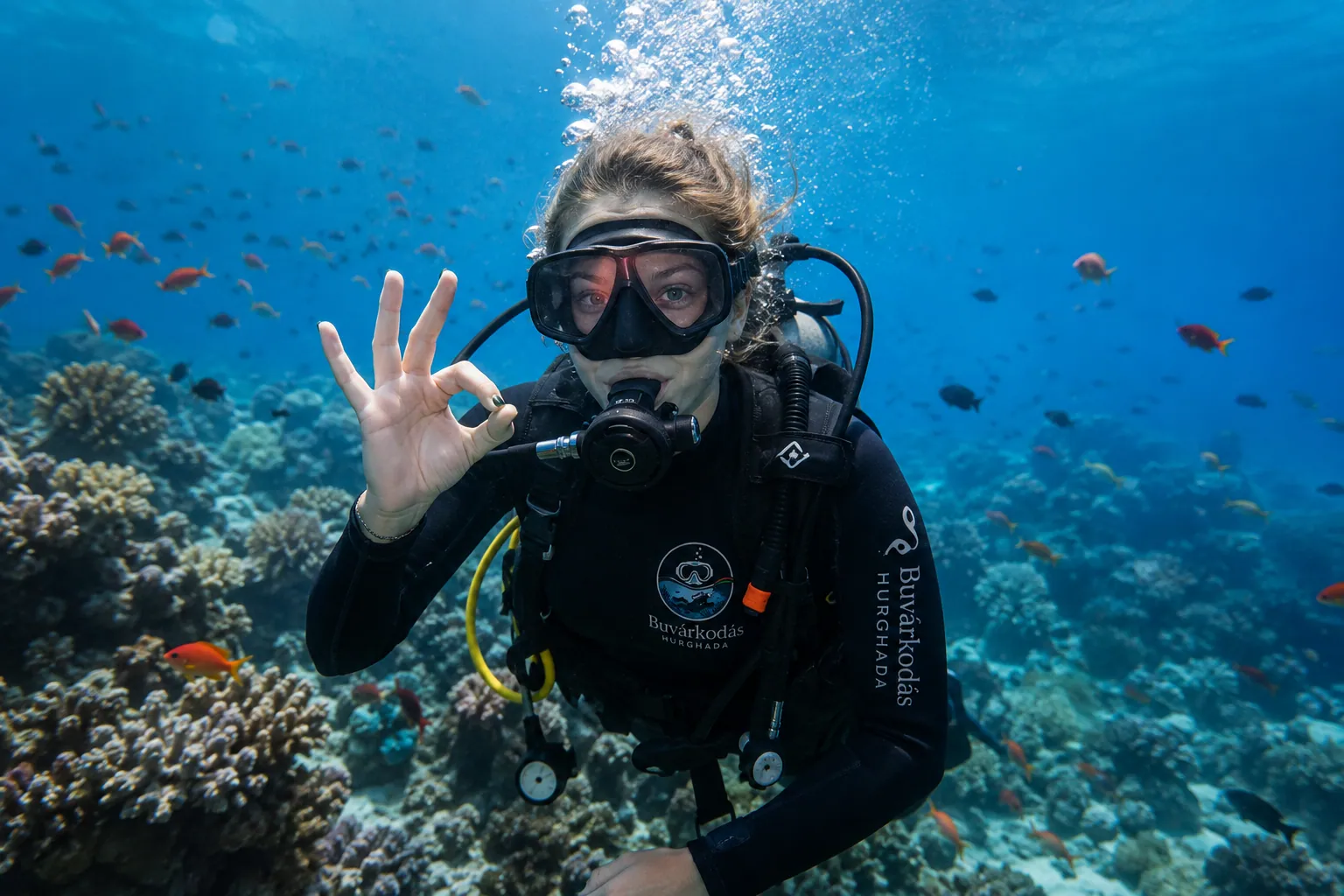
A playground of coral towers on white sand: easy navigation, clouds of glassfish and light made for photography.
- Depth
- 5–14m
- Boat
- 35min
- Species
- 5
Giftun-szigetek
A national park island pair with a dozen dive sites: coral gardens, turtles and perhaps the richest fish life in the area.
- Depth
- 5–25m
- Boat
- 45min
- Species
- 6
The Red Sea will not wait forever.
Book today – seats on the boat are limited, your excitement is not.