Bluestripe snapper
Lutjanus kasmira
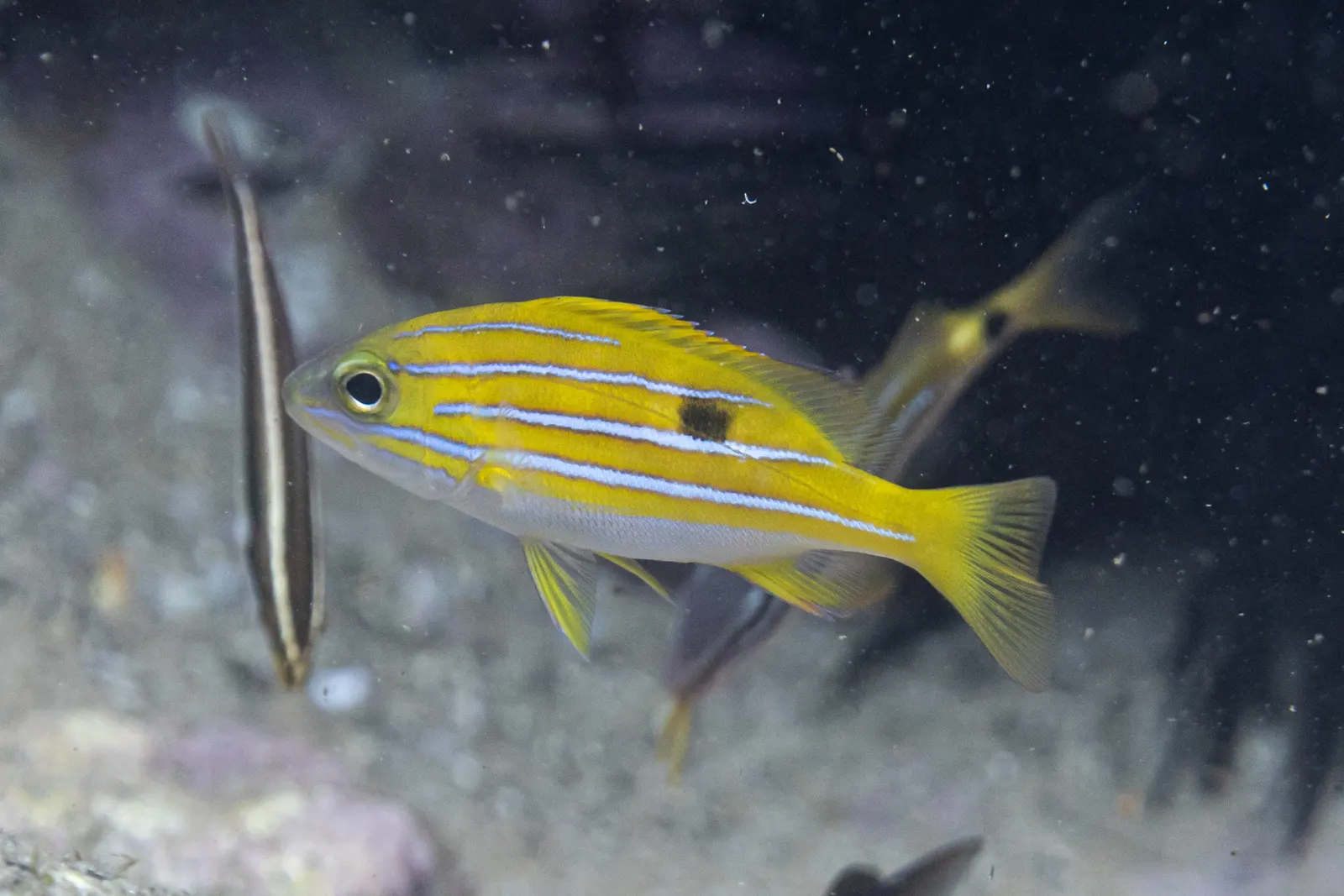
A brilliant yellow fish with four electric-blue stripes – and it almost never travels alone, massing into glittering schools by the dozens and hundreds.
The bluestripe snapper (Lutjanus kasmira) is one of the most instantly recognisable reef fish: four metallic, electric-blue stripes run along its bright lemon-yellow body, with a whitish belly. Snappers owe their name to their strong jaws and sharp teeth – and although the bluestripe is one of the smaller family members at 25–30 cm, it is a true predator.
The real spectacle is its schooling behaviour: by day, dozens or even hundreds of individuals pack into tight, almost motionless formations around a coral block, a wreck or a prominent ledge. These daytime schools are not feeding – they are resting and defending themselves, as the mass of identical striped bodies confuses predators. Once night falls the school breaks up and the fish head off individually to hunt small fish, crabs and shrimps over the sandy bottom.
Around Hurghada the finest bluestripe schools hang around wrecks and large coral blocks: a yellow cloud almost always hovers over the El Mina wreck, and they are common in the "aquarium" of Gota Abu Ramada and around the towers of El Aruk. Approach slowly as a diver: the school does not flee, it just lazily rearranges itself around you – that wall of yellow and blue is one of the most rewarding photo subjects in the Red Sea.
Did you know?
The bluestripe snapper's daytime schools are really "sleeping crowds": the fish only rest and shelter by day, then head out to feed individually at night – so that spectacular yellow cloud is essentially a dormitory.
Where can you meet it?
A school almost always hovers around the El Mina wreck, and you will also meet it regularly at the blocks of Gota Abu Ramada and around the coral towers of El Aruk.
Frequently asked questions
No, it is completely harmless to divers and snorkelers. Its sharp teeth are for small fish and crustaceans – the only thing that will strike you is the sight of the schools.
Yes! The schools often gather around clearly visible coral blocks in just 3–6 metres of water, so you can watch them beautifully from the surface – the yellow glows from far away.
Because the daytime school is all about protection: a predator cannot single out one target from so many identical striped bodies. They hunt at night, each on its own – and by morning the team reassembles at the very same coral block.
Best sites for Bluestripe snapper
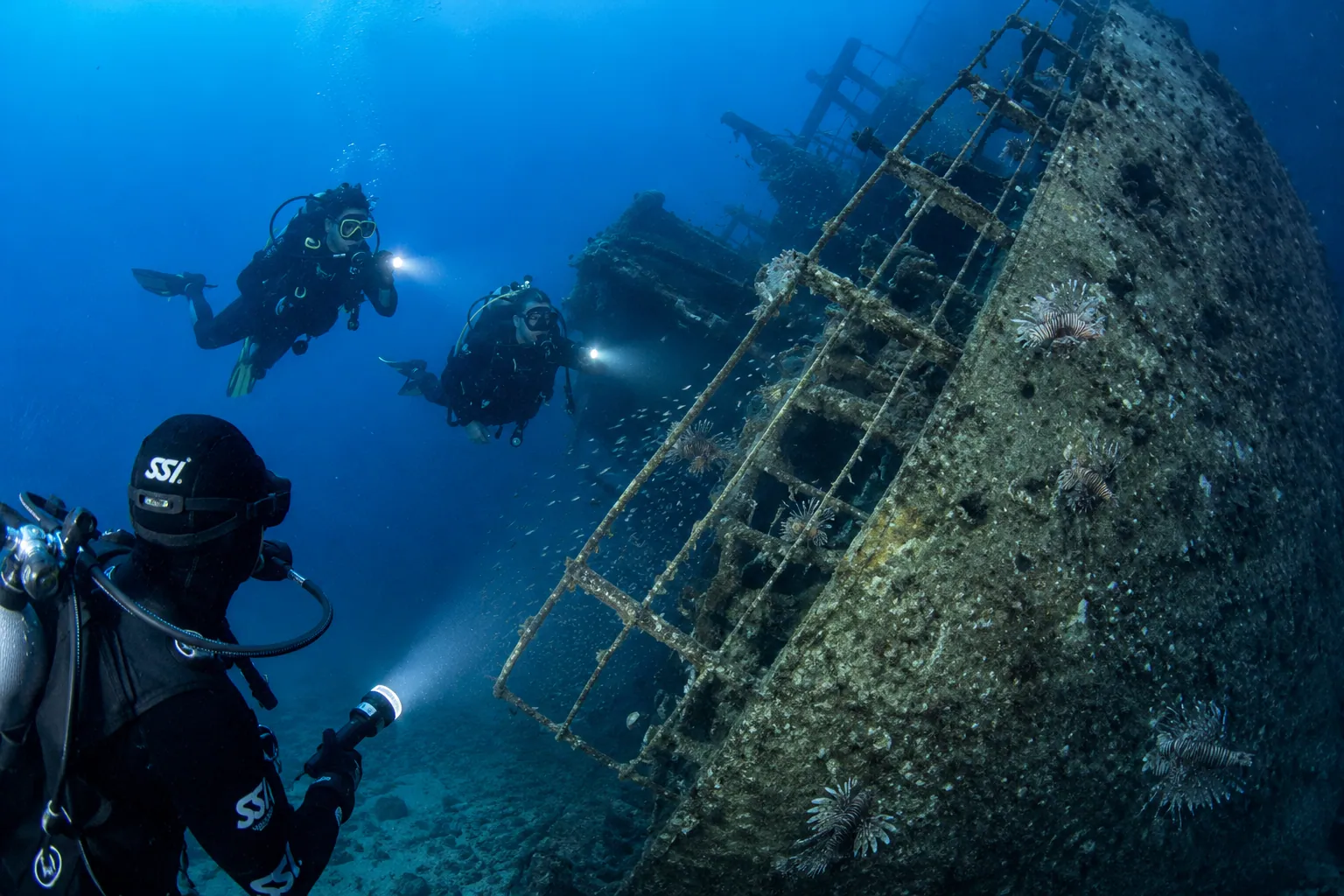
El Mina roncs
A genuine warship wreck 20 minutes from the marina: an Egyptian minesweeper sunk in 1969, resting on sand at 30 metres.
- Depth
- 16–30m
- Boat
- 20min
- Species
- 5
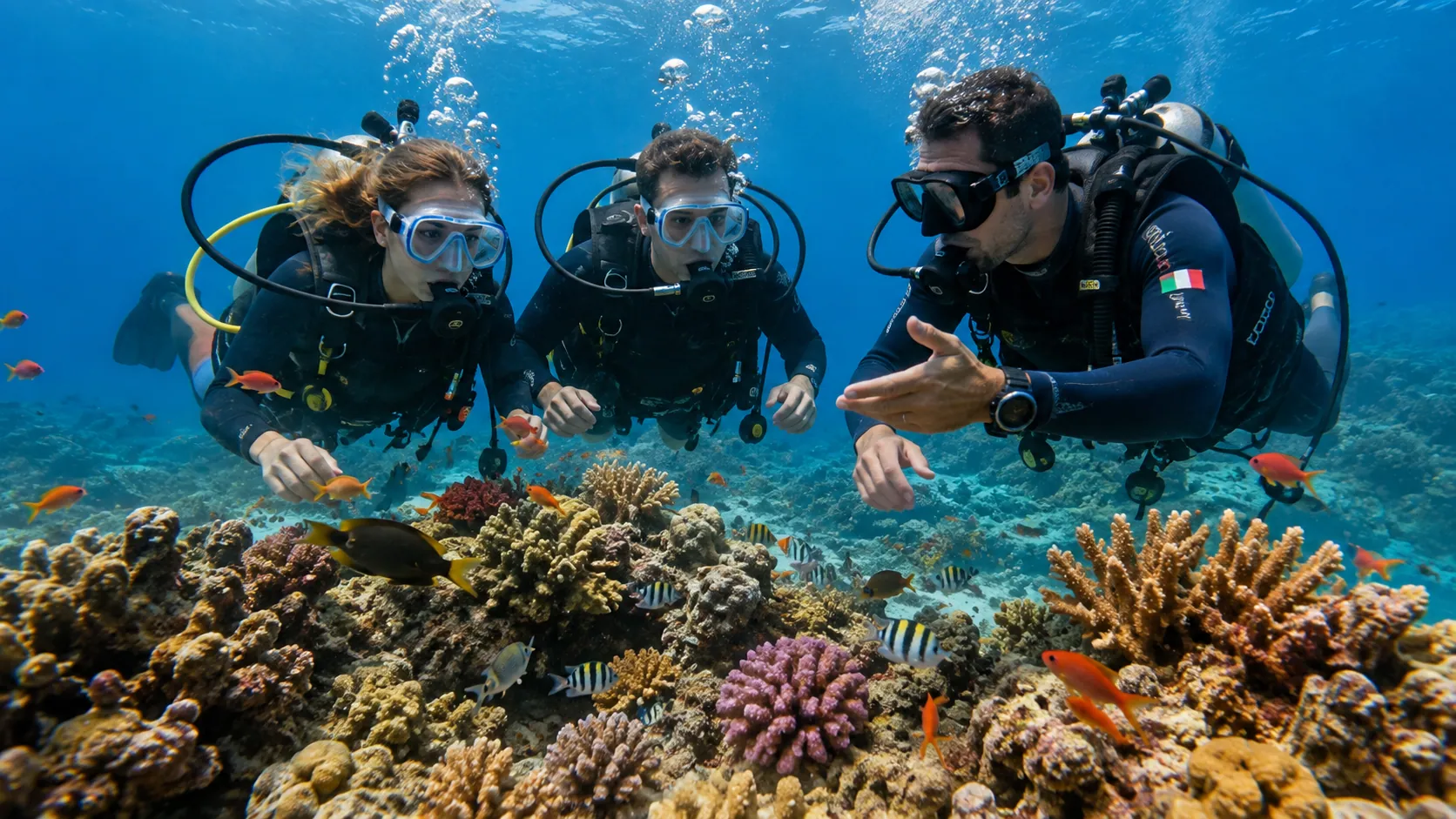
Gota Abu Ramada
A shallow oval reef with a sandy bottom and schools of butterflyfish – perfect for training, second and night dives.
- Depth
- 4–14m
- Boat
- 55min
- Species
- 5
El Aruk (Gigi)
A playground of coral towers on white sand: easy navigation, clouds of glassfish and light made for photography.
- Depth
- 5–14m
- Boat
- 35min
- Species
- 5
The Red Sea will not wait forever.
Book today – seats on the boat are limited, your excitement is not.