Bluetail trunkfish
Ostracion cyanurus
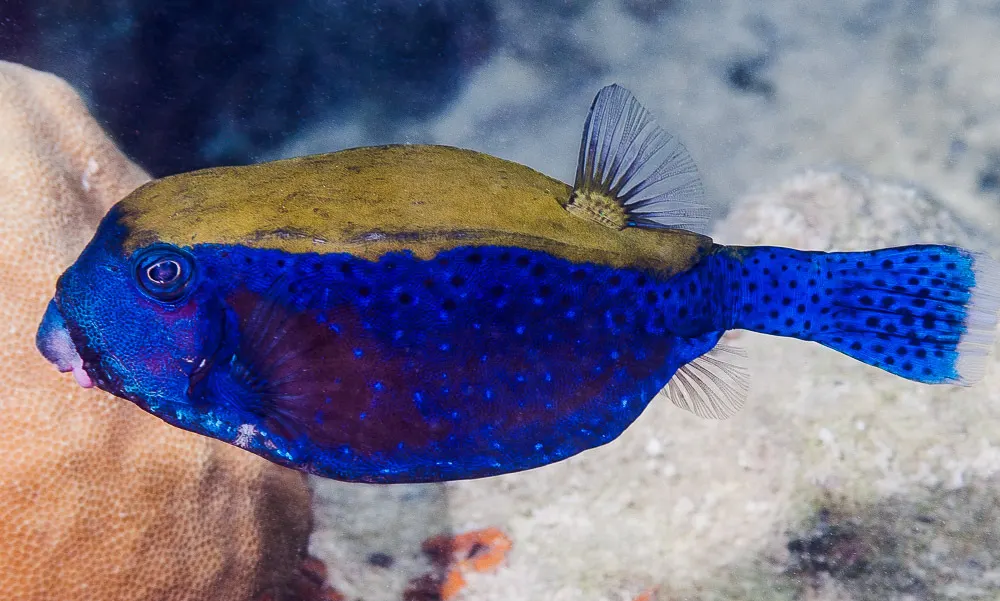
A royal-blue jewellery box with a yellow lid: the bluetail trunkfish is one of the reef's most colourful yet most bashful residents.
The bluetail trunkfish (Ostracion cyanurus) is the little sibling of the boxfish clan: barely 12–15 cm long and found almost exclusively in the Red Sea, the Gulf of Aden and the Arabian Gulf – a true local speciality here. Males are a splendid royal blue with a yellowish back and a scattering of small black spots; females are darker, blackish blue. The body is again a rigid bony carapace, with only the fins and a pair of curious eyes peeking out.
Like its relatives it manoeuvres by sculling with tiny fins, but it is far shyer: it spends most of the day beneath overhangs, in the shade of coral branches and in small caves, venturing out only briefly to forage. It nibbles algae, sponges and small invertebrates, and when stressed defends itself – like all trunkfish – with a toxic skin secretion that deters predators.
You will not see it on every Hurghada dive, which is exactly why it counts as a real photo trophy. The best tactic is slow, patient searching: shine your light under the overhangs on the walls of El Fanadir and Small Giftun and watch for a flash of blue in the dark. Snorkelers can get lucky too on shallow, sheltered reef sections by carefully scanning the bases of the corals.
Did you know?
With the bluetail trunkfish you can tell the boys from the girls at a glance: males wear brilliant blue with a yellow back, while females dress in dark blackish blue – as if they were not even the same species.
Where can you meet it?
A resident of overhangs and coral nooks: look for it along the wall of El Fanadir, on the sheltered side of Small Giftun and among the coral patches of Abu Hashish.
Frequently asked questions
It is not rare, but it is secretive: it spends most of the day under overhangs and in coral nooks. Swim slowly, shine a light into the shady spots and watch for a flash of blue – once found, it usually stays put, giving you time for photos.
Not at all: it has no teeth or spines that could hurt you. Under stress it can produce a toxic skin secretion, but that concerns predators only – just avoid touching or cornering it.
With luck, yes: it also occurs on shallow, sheltered reef sections, but since it hides in the shade of the corals you will need to scan the nooks thoroughly. Your odds are considerably better on scuba.
Best sites for Bluetail trunkfish
El Fanadir
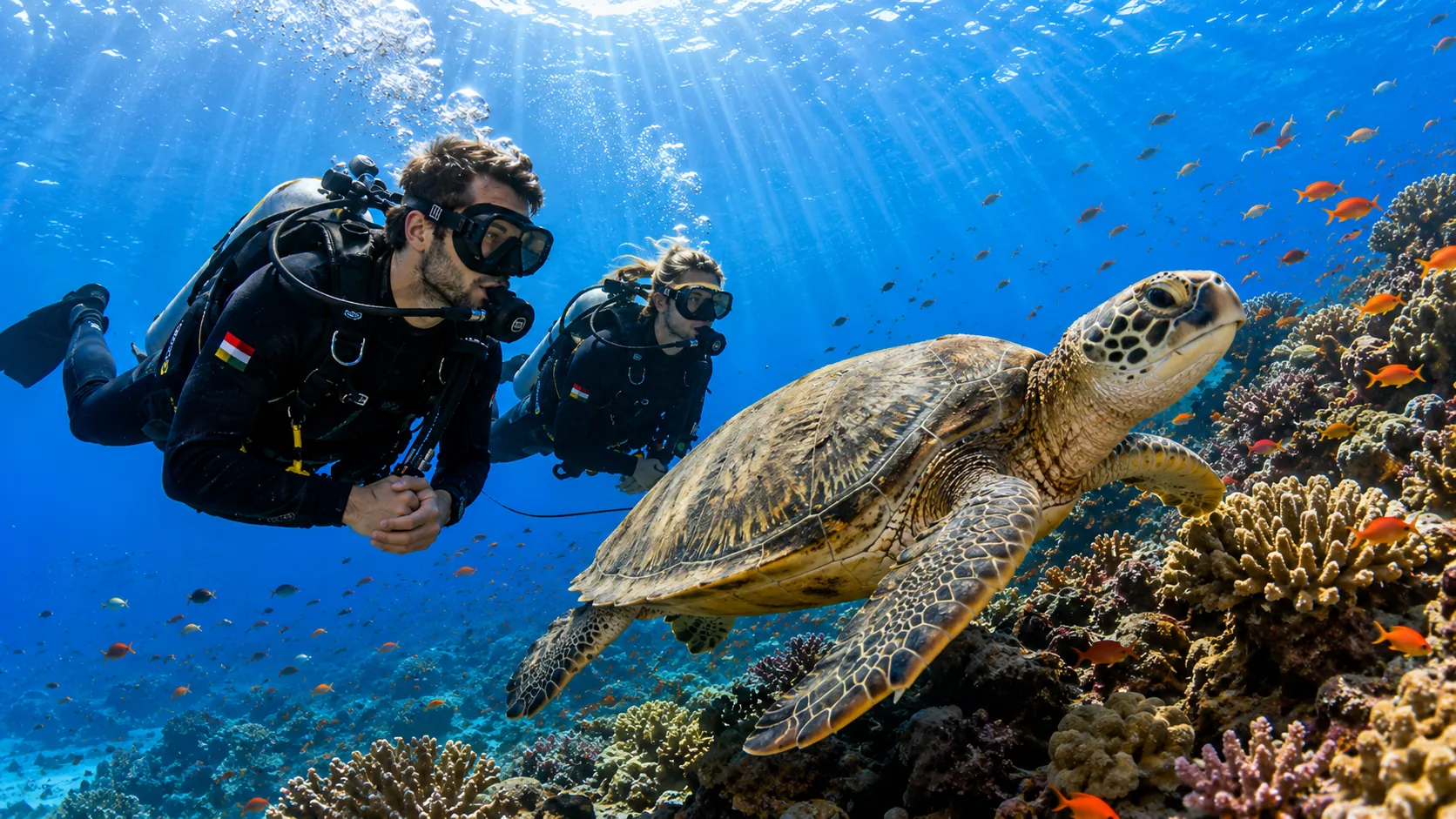
A long reef ridge barely half an hour from the marina: a gentle wall, blue-spotted rays and seagrass patches with turtles.
- Depth
- 6–25m
- Boat
- 30min
- Species
- 5
Small Giftun fal
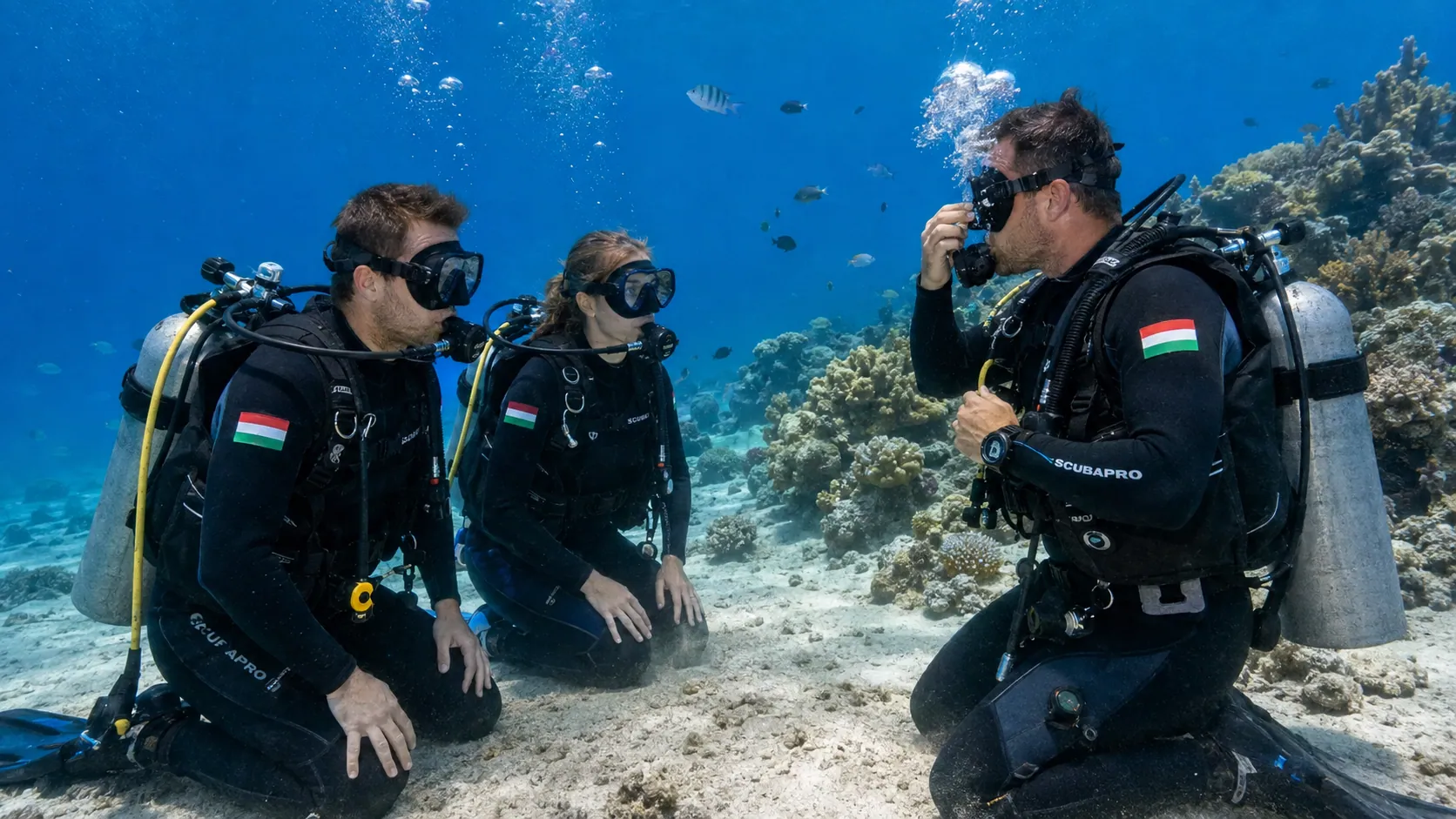
Hurghada's classic drift dive: a sheer wall with gorgonian fans, eagle rays and a coral-tower plateau at 20–30 metres.
- Depth
- 8–30m
- Boat
- 50min
- Species
- 5
Abu Hashish-fok
A quiet southern cape with seagrass meadows and an atmospheric cavern – turtles almost for sure, a dugong with some luck.
- Depth
- 5–20m
- Boat
- 60min
- Species
- 5
The Red Sea will not wait forever.
Book today – seats on the boat are limited, your excitement is not.