Lesser valley brain coral
Platygyra daedalea
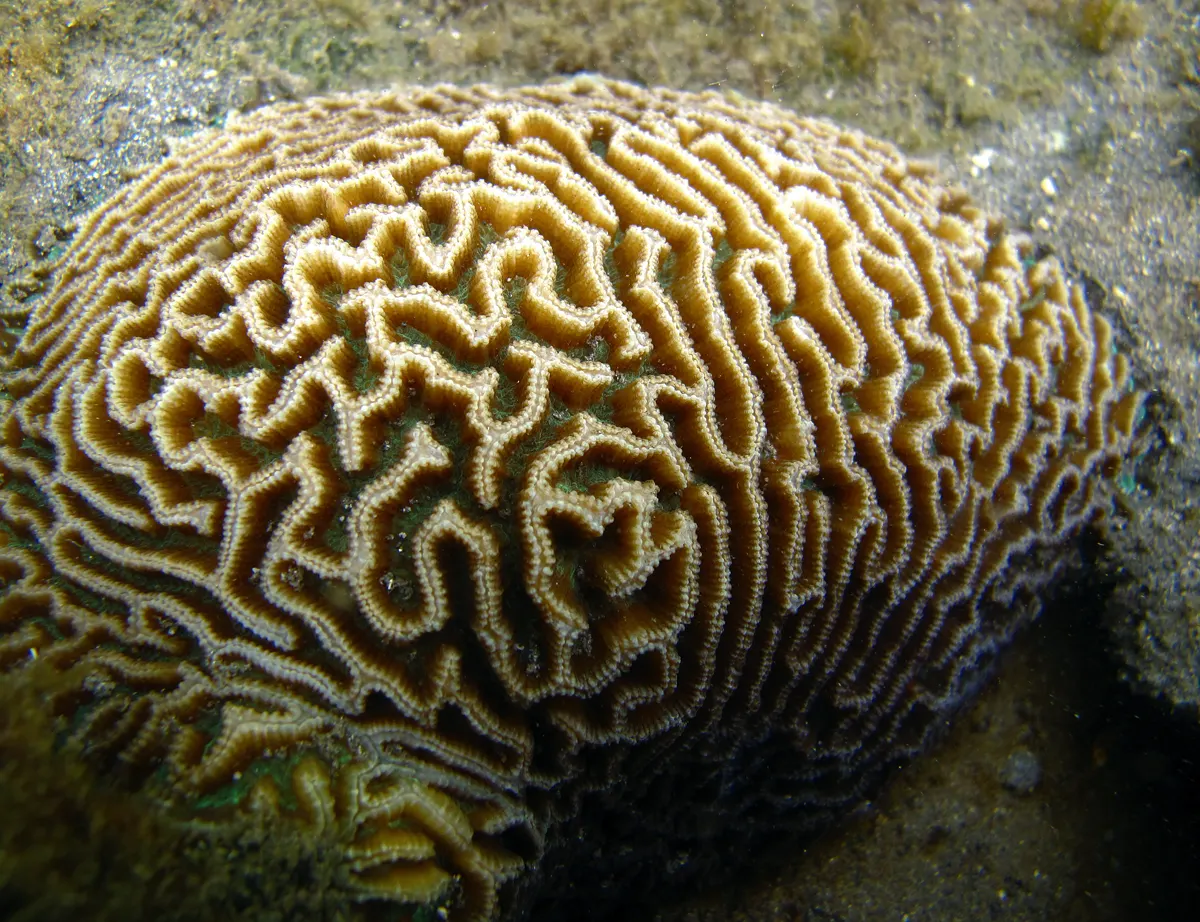
A labyrinth of winding valleys and ridges on a stone sphere – the brain coral looks as if the reef itself were thinking.
The brain coral (Platygyra daedalea) needs no introduction: the surface of its rounded colony is covered in winding, interlocking valleys and raised ridges, eerily reminiscent of the folds of a human brain. The ridges are typically brown or grey-green while the valley floors are often bright green or cream – the contrast is what makes the pattern so hypnotic. Its scientific name "daedalea" is no accident: it honours Daedalus, builder of the Cretan labyrinth.
The winding valleys hold not single polyps but whole rows of them, fused together after losing their dividing walls: one valley contains a line of mouths sharing common tissue. By day the colony looks smooth; at night a forest of tentacles opens from the valleys to catch plankton – while daytime energy comes, as ever, from photosynthesising zooxanthellae algae. Brain coral grows slowly, only about a centimetre a year, so metre-wide colonies are patriarchs many decades or even a century old. On summer nights after the full moon it broadcasts its pink egg bundles into the water in a mass spawning.
It is common all over Hurghada's reefs, from the shallow plateaus to the base of the slopes – the most photogenic, perfectly spherical colonies sit on the plateaus of El Fanadir and Umm Gamar. It is a hardy species, but because of its slow growth every injury leaves a mark for years: an anchor or a kneeling diver punches a crater into a labyrinth built over decades. Keep your distance and leave the maze unsolved – untouched.
Did you know?
A brain coral's valley pattern is as unique as a fingerprint: no two colonies share the same labyrinth. From survey photos, researchers can re-identify individual colonies by their pattern even years later.
Where can you meet it?
It grows on nearly every Hurghada reef: the finest spherical colonies are on the plateaus of El Fanadir and Umm Gamar and among the coral heads of Carless Reef.
Frequently asked questions
For the same reason the brain's cortex is folded: wrinkling packs the maximum surface onto the smallest sphere. For the coral this means more polyp rows, more tentacles and more food-catching surface on the same colony.
An animal: rows of polyps live in the valleys, jointly building the limestone skeleton. Zooxanthellae algae in their tissue feed them by day through photosynthesis, and at night they catch plankton with their tentacles – so the colony is both solar-powered and predatory.
Yes, brain coral is common on the shallow reef tops too, and the distinctive maze pattern of the large round colonies is easy to see from the surface. Specimens with green valleys almost glow in sunshine.
Best sites for Lesser valley brain coral
El Fanadir
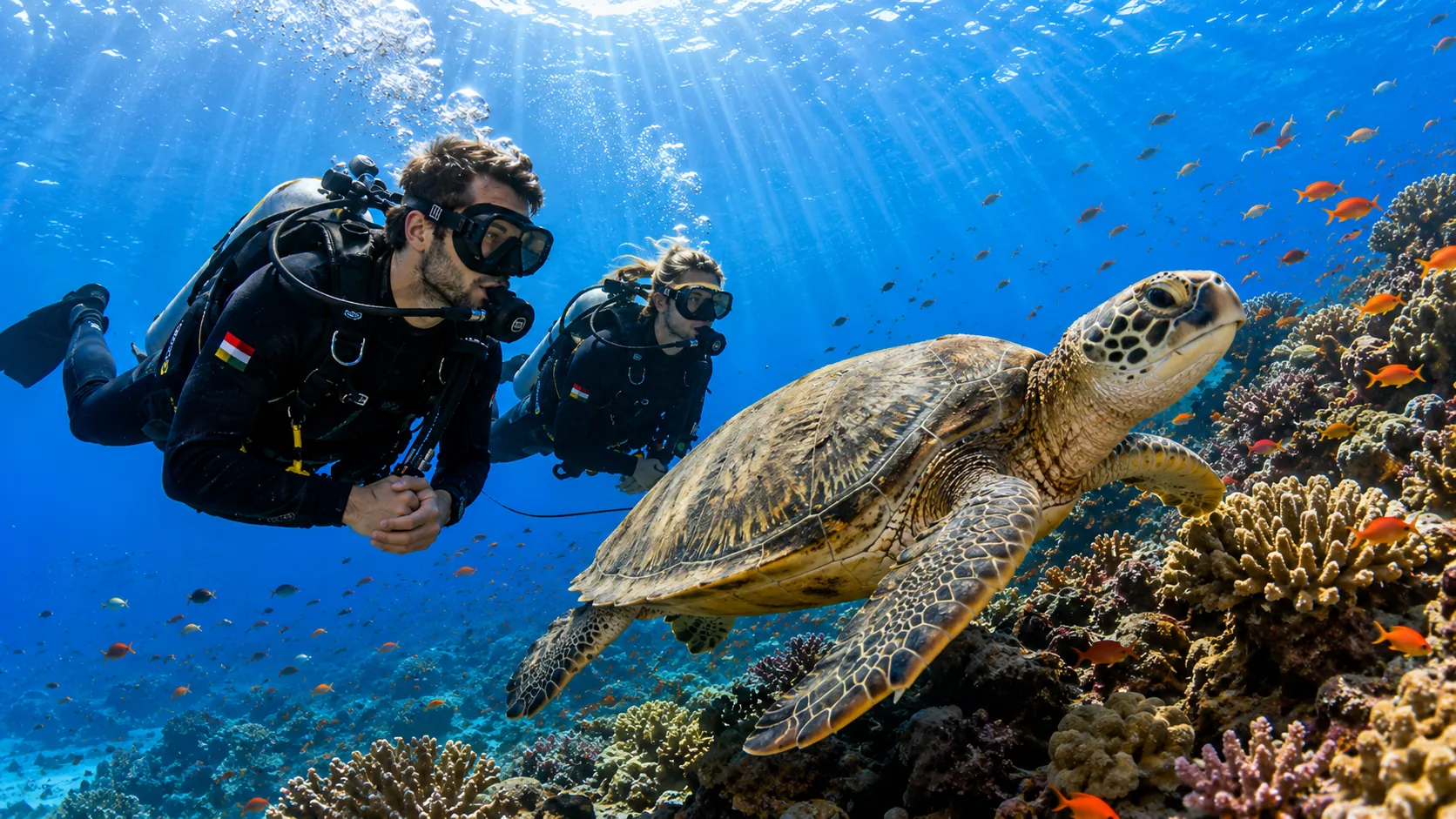
A long reef ridge barely half an hour from the marina: a gentle wall, blue-spotted rays and seagrass patches with turtles.
- Depth
- 6–25m
- Boat
- 30min
- Species
- 5
Umm Gamar
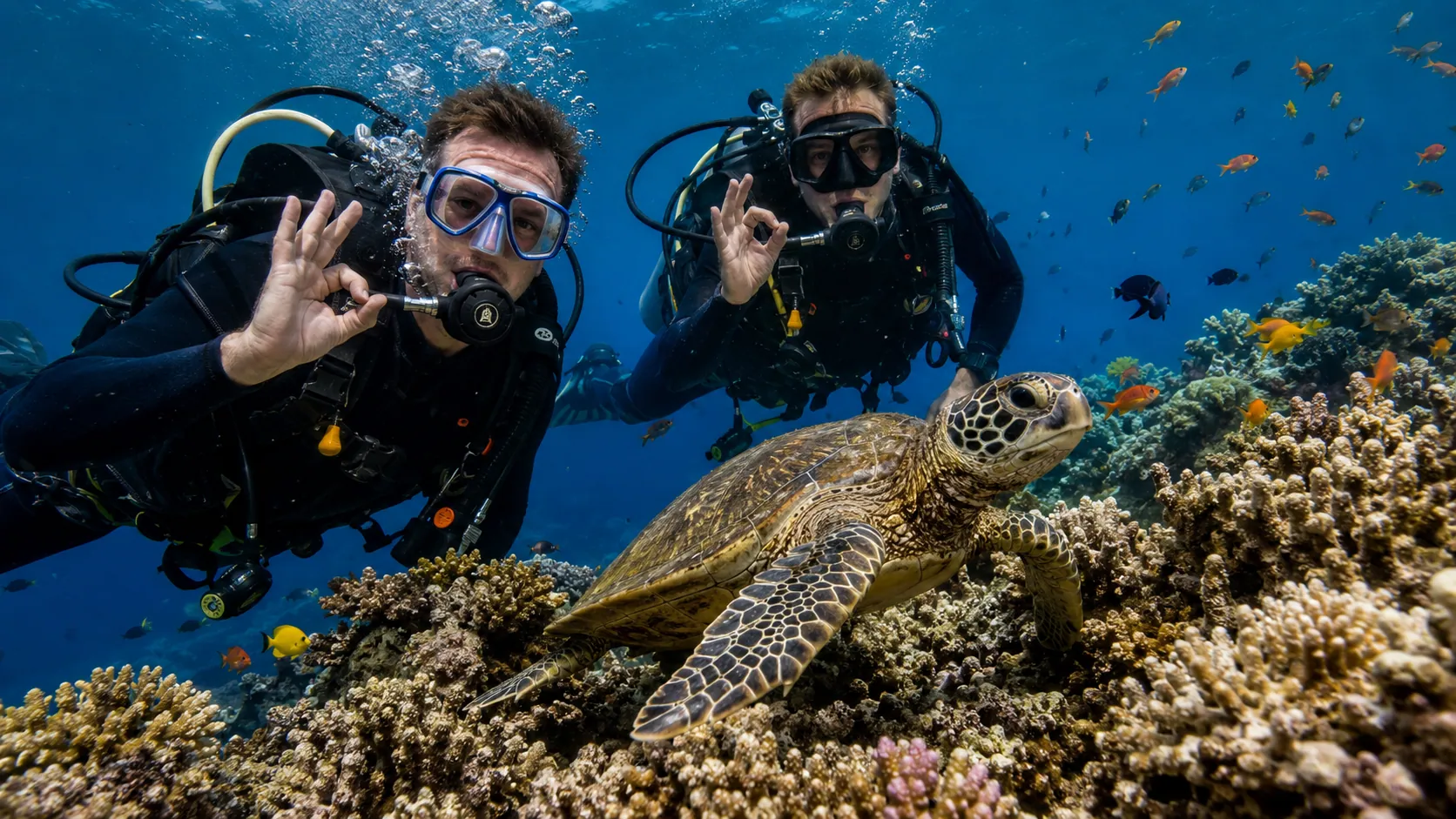
An elongated island in the north: a plateau with three coral towers, small caves and big predators out in the blue.
- Depth
- 10–30m
- Boat
- 75min
- Species
- 5
Carless Reef
An offshore twin-erg reef famous for its legendary moray colony – for experienced divers, weather permitting.
- Depth
- 12–30m
- Boat
- 70min
- Species
- 5
The Red Sea will not wait forever.
Book today – seats on the boat are limited, your excitement is not.