Broccoli soft coral
Litophyton arboreum
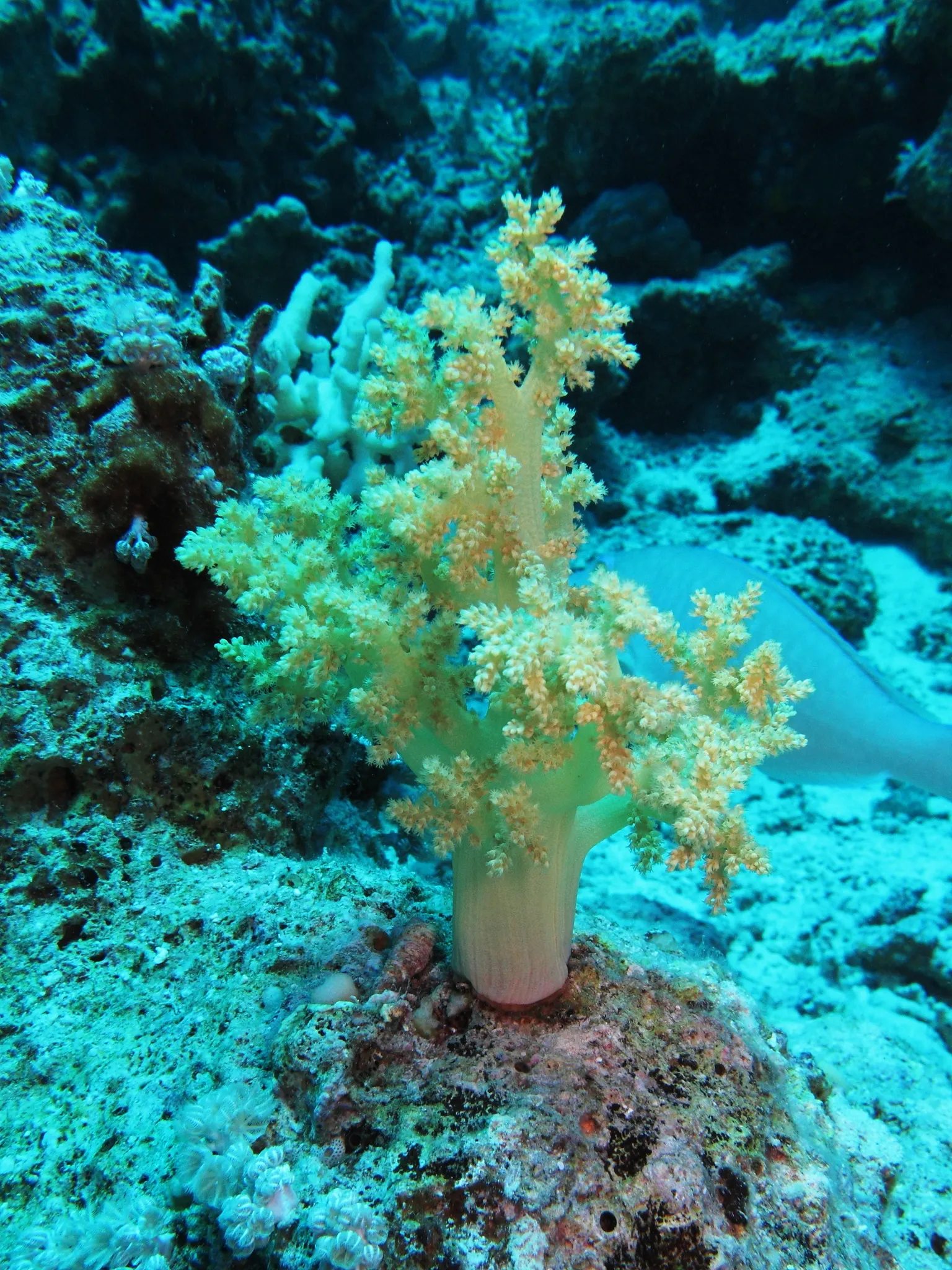
A grey-green, tree-shaped soft coral that looks like someone planted broccoli on the reef – and it may even become a pharmacy.
The broccoli coral (Litophyton arboreum) needs no explanation for its name: the grey-green, bush-like branching colony with its florets is the spitting image of broccoli. Its soft trunk and branches stand inflated with water – when the current picks up or the colony is disturbed, it contracts and "deflates" to half its size like a punctured balloon. The same coral can be a plump little tree in the morning and a limp bundle by afternoon.
It belongs to the soft corals, meaning it has no hard limestone skeleton: its tissues are stiffened by tiny calcareous needles called sclerites. It draws energy partly from symbiotic algae living in its tissues and partly from plankton filtered out of the water. Against predators it fights with a chemical arsenal, producing compounds that researchers are studying in the search for antifungal and anticancer agents – the reef is quite literally a floating pharmacy.
It is very common around Hurghada: you meet it on reef slopes, plateaus and shallow coral gardens alike, so snorkelers can recognise it too. Whole "broccoli groves" often grow side by side with clouds of glassfish between them – one of the most rewarding photo subjects. Soft corals are fragile: one bad fin kick erases years of growth, so keep your distance and know where your gear is dangling.
Did you know?
Compounds from the broccoli coral are being researched as anticancer and antifungal drug candidates – one of tomorrow's medicines may well be "growing" on a Hurghada reef right now.
Where can you meet it?
It thrives on almost every Hurghada reef: you find whole broccoli groves in the coral gardens around Giftun, on the slopes of El Fanadir and on the Gota Abu Ramada plateau.
Frequently asked questions
Not at all – the resemblance is purely in shape. The broccoli coral is an animal: a colony of thousands of tiny polyps catching plankton from the water, and it owes its greenish tint to symbiotic algae living in its tissues.
Because it has no hard skeleton: the colony pumps itself up with water like a hydraulic structure. When disturbed, or simply "resting", it lets the water out and shrivels – then a few hours later it stands in full glory again.
It is a cnidarian, but harmless to humans – its weapon is not the sting but chemistry: bitter, toxic compounds that spoil the appetite of fish. Touching is still off-limits, because the soft colony damages very easily.
Best sites for Broccoli soft coral
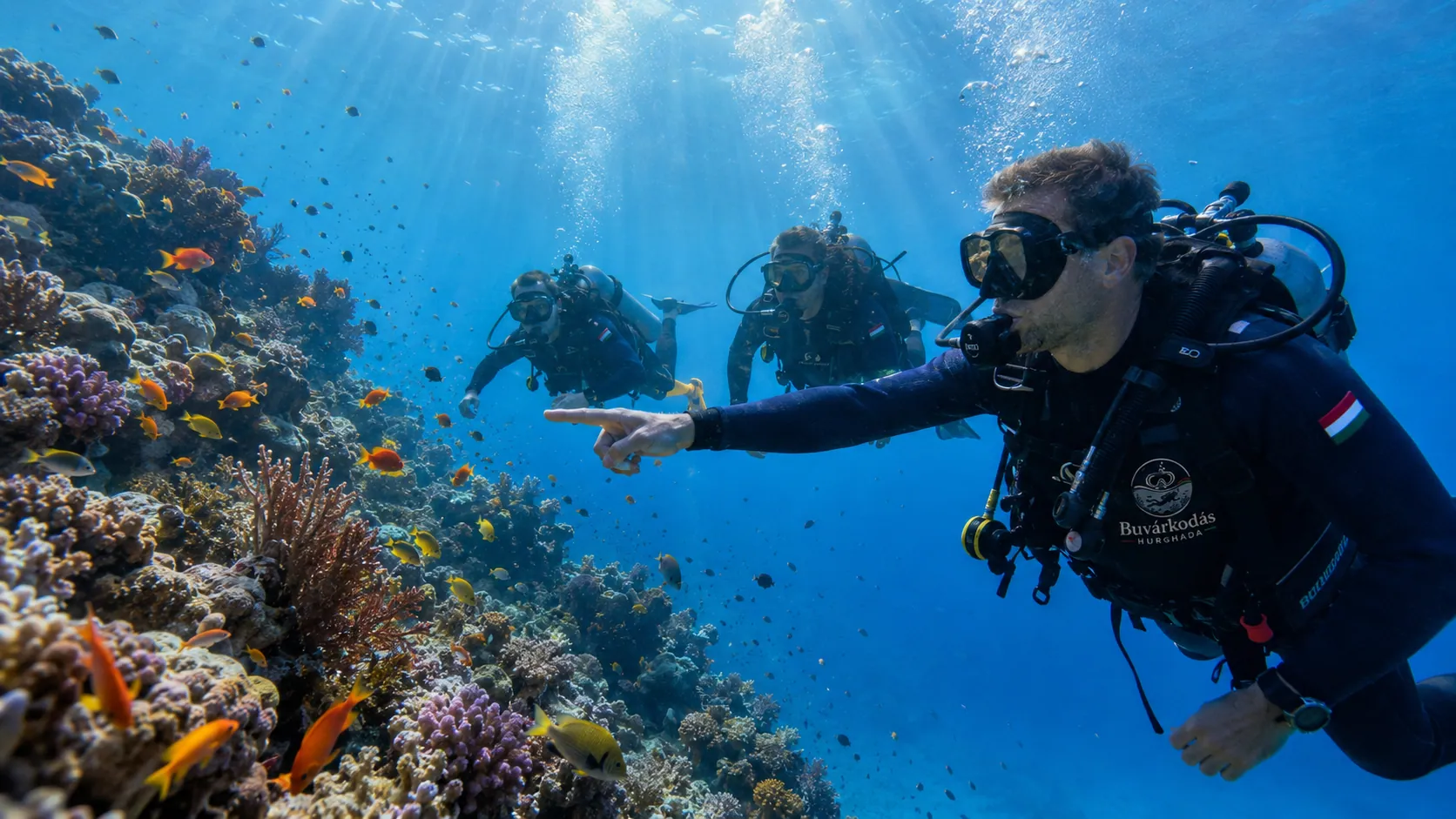
Giftun-szigetek
A national park island pair with a dozen dive sites: coral gardens, turtles and perhaps the richest fish life in the area.
- Depth
- 5–25m
- Boat
- 45min
- Species
- 6
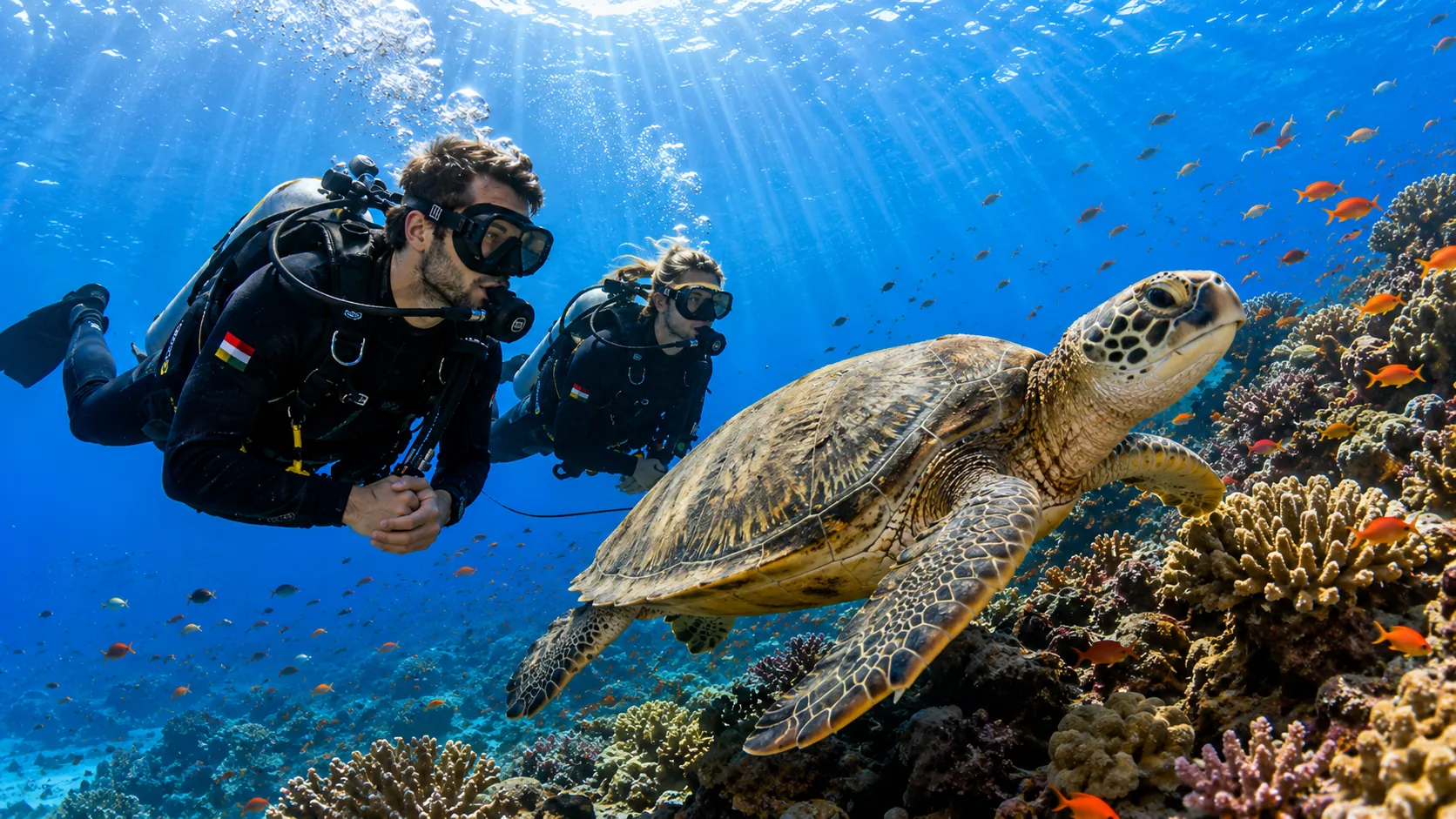
El Fanadir
A long reef ridge barely half an hour from the marina: a gentle wall, blue-spotted rays and seagrass patches with turtles.
- Depth
- 6–25m
- Boat
- 30min
- Species
- 5
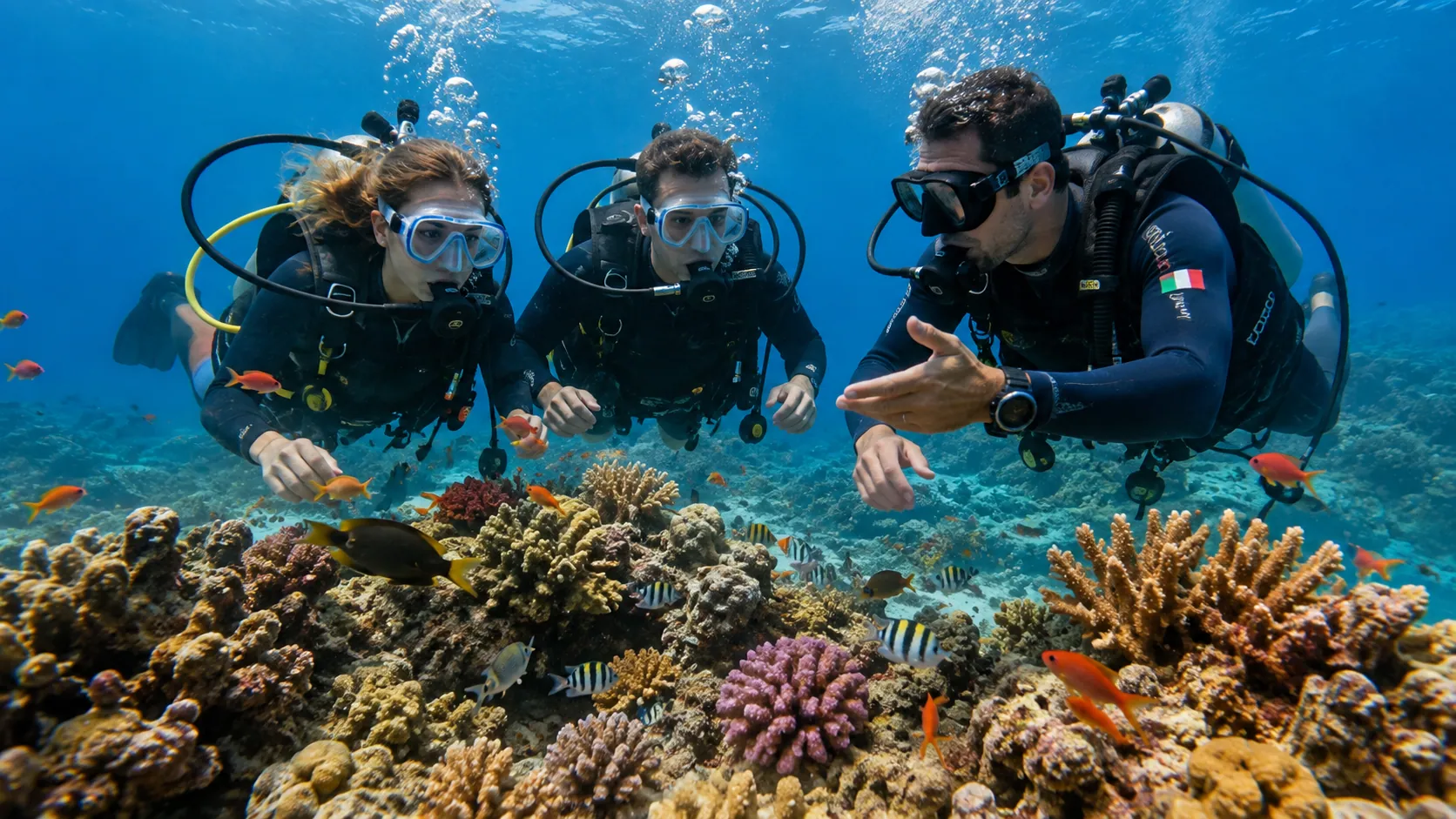
Gota Abu Ramada
A shallow oval reef with a sandy bottom and schools of butterflyfish – perfect for training, second and night dives.
- Depth
- 4–14m
- Boat
- 55min
- Species
- 5
The Red Sea will not wait forever.
Book today – seats on the boat are limited, your excitement is not.