Broomtail wrasse
Cheilinus lunulatus
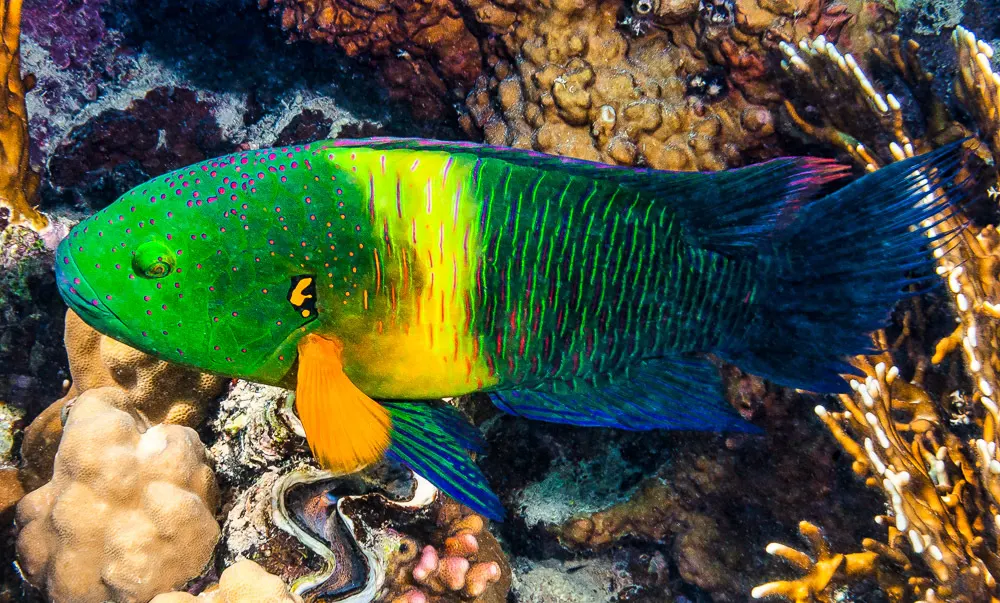
Thick lips, an emerald body and a tail that looks torn to shreds but is pure ornament: the broomtail wrasse is the reef's big character.
Meeting a broomtail wrasse (Cheilinus lunulatus) for the first time, many divers assume the fish is injured: in adult males the tail-fin rays extend into long, separate fringes as if shredded – yet this is full regalia, the "broom" of its name. The robust, half-metre body is emerald green, the head yellowish-orange with blue scribbles, a bright yellow patch glows at the pectoral-fin base, and the lips are strikingly fleshy. The species is a speciality of the Red Sea and Gulf of Aden region.
Behind the thick lips sits serious machinery: with powerful, protrusible jaws and crushing throat teeth it cracks snails, clams, crabs and sea urchins. It is a theatrical feeder – freezing motionless over the bottom, then striking suddenly and spitting out the rubble to sort the edible parts. It patrols the boundary of reef and sand alone; large males hold territories, inspecting them in slow, stately circuits.
Around Hurghada you will meet it most often on reefs broken by sandy plateaus, between 3 and 25 metres. It does not bolt – it sidesteps with dignity – but curious individuals sometimes let you surprisingly close, especially if you approach calmly and at an angle. Big males regularly appear on the shallower plateaus within snorkeling range, and the frayed tail guarantees the same question back on the surface: "was that fish injured?"
Did you know?
The frayed broom-tail is the fish's ceremonial dress: the older and more dominant a male, the longer and fuller his fringes. Females and juveniles have perfectly smooth-edged tails – so the most "tattered" fish on the reef is actually its reigning boss.
Where can you meet it?
It favours reefs with sandy plateaus: big males patrol the Giftun plateaus, the sand flats of Abu Hashish and the reef base at El Fanadir.
Frequently asked questions
No – quite the opposite: the frayed tail is the healthy ornament of adult males, like a peacock's feathers. The fuller the "broom", the higher the fish's rank. Females have smooth-edged tails, so the sexes are easy to tell apart.
No, it is completely harmless – those strong jaws are for snails and urchins, not people. The only "hazard" is a cloud of rubble drifting your way if you hover too close while it feeds.
Yes, with good odds: it hunts on shallow plateaus and the sand along reef edges, and a half-metre emerald body is hard to miss. The finest big males are usually seen on dives near the reef base.
Best sites for Broomtail wrasse
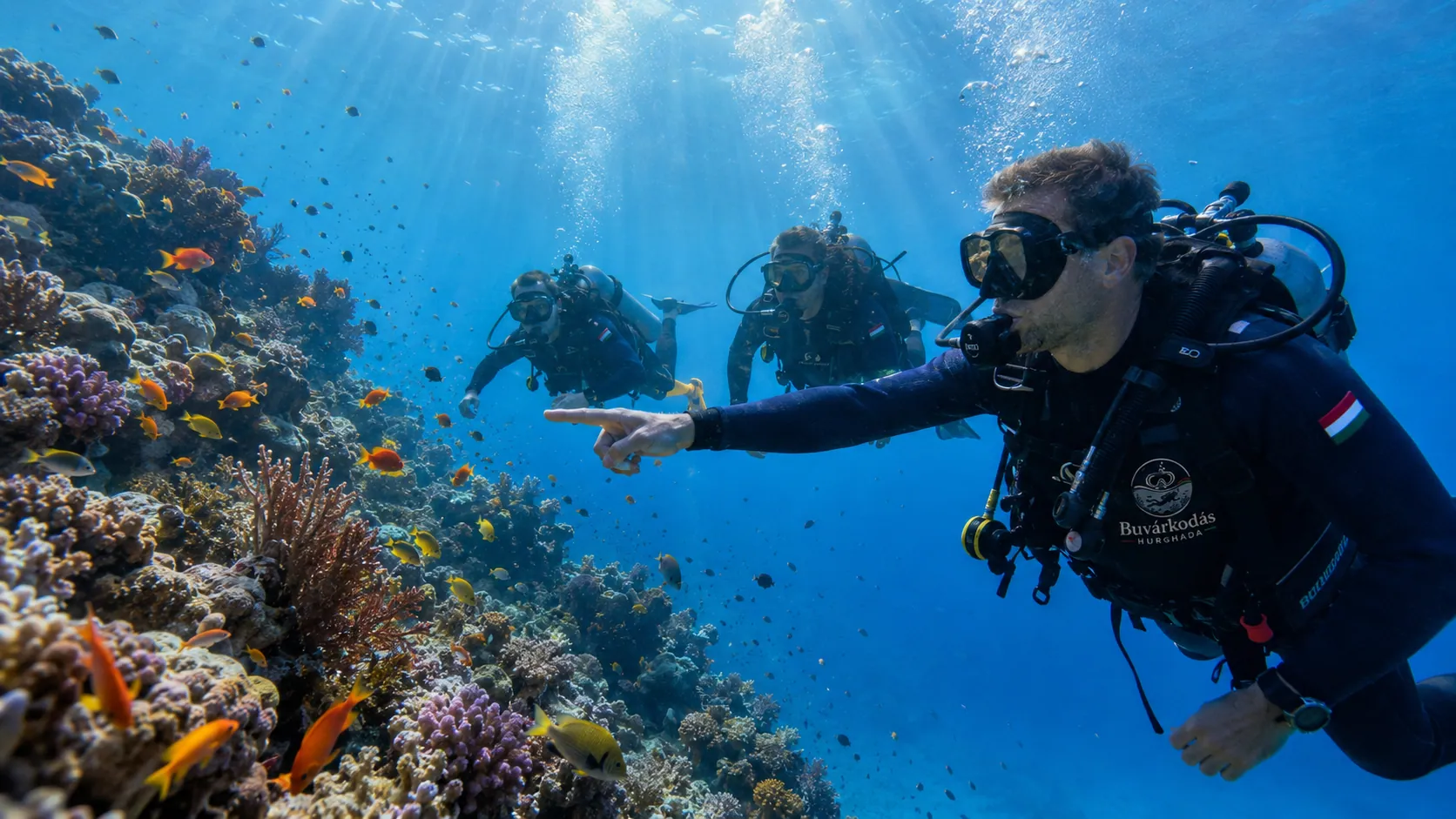
Giftun-szigetek
A national park island pair with a dozen dive sites: coral gardens, turtles and perhaps the richest fish life in the area.
- Depth
- 5–25m
- Boat
- 45min
- Species
- 6
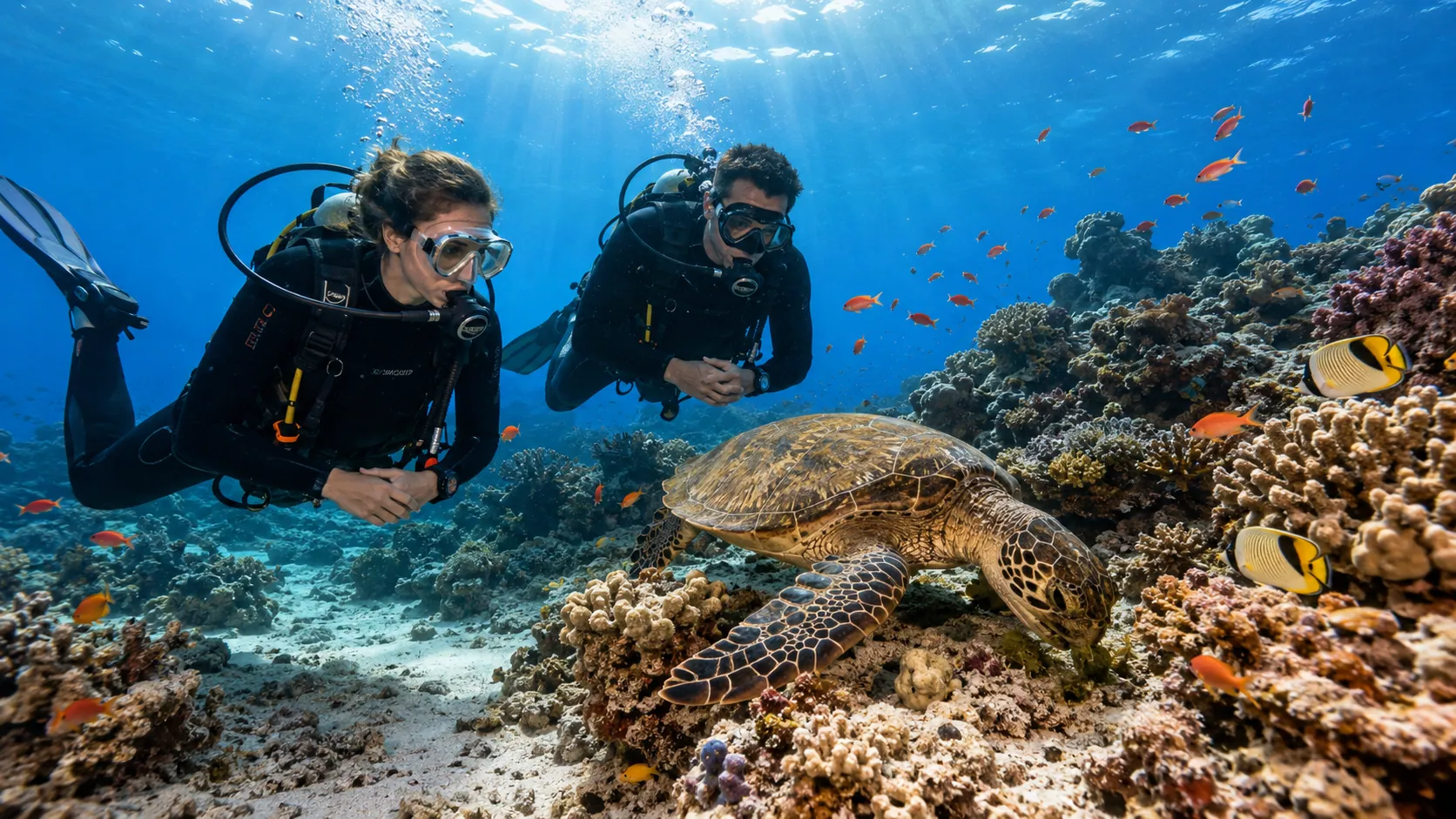
Abu Hashish-fok
A quiet southern cape with seagrass meadows and an atmospheric cavern – turtles almost for sure, a dugong with some luck.
- Depth
- 5–20m
- Boat
- 60min
- Species
- 5
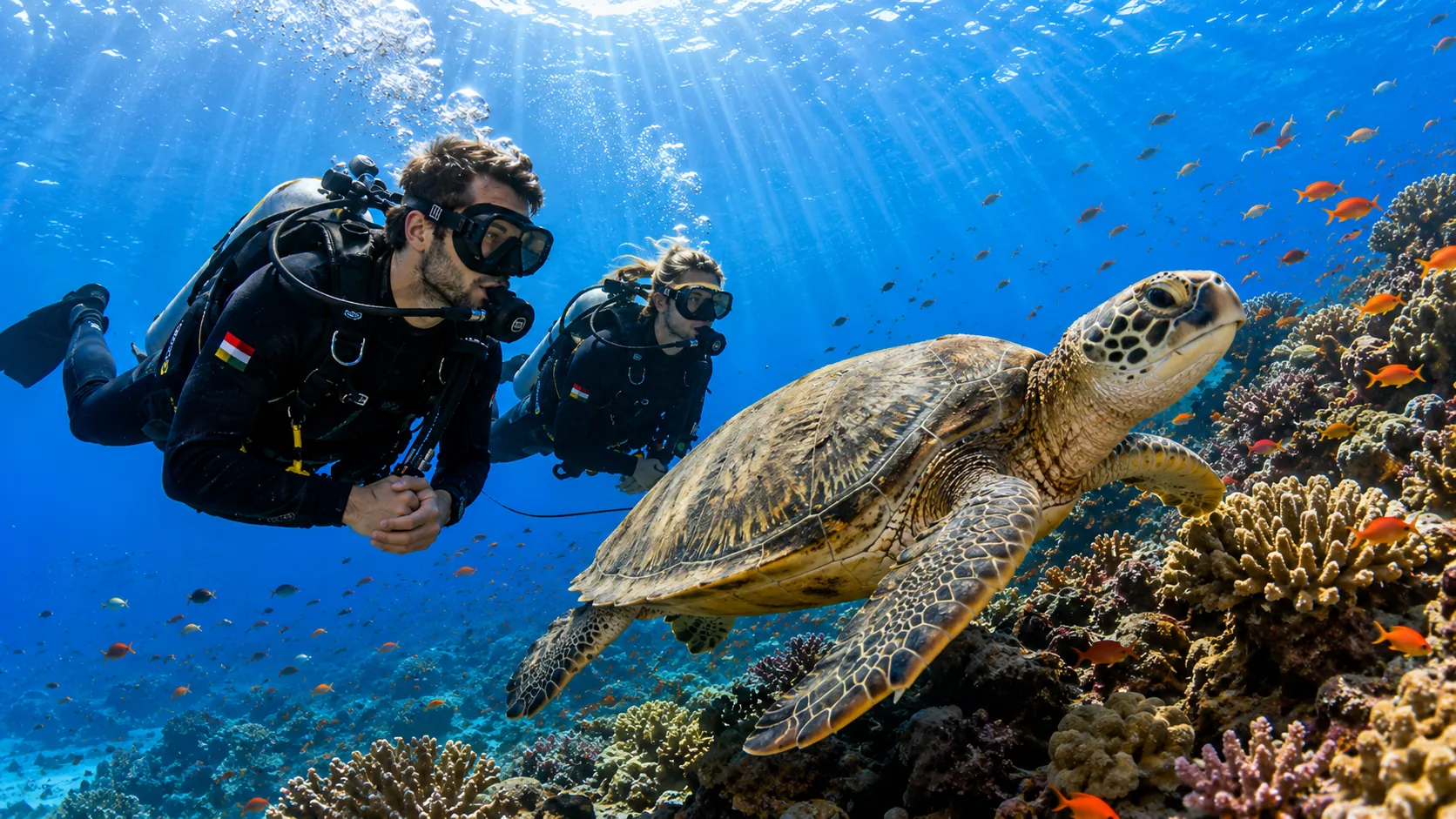
El Fanadir
A long reef ridge barely half an hour from the marina: a gentle wall, blue-spotted rays and seagrass patches with turtles.
- Depth
- 6–25m
- Boat
- 30min
- Species
- 5
The Red Sea will not wait forever.
Book today – seats on the boat are limited, your excitement is not.