Bubble coral
Plerogyra sinuosa
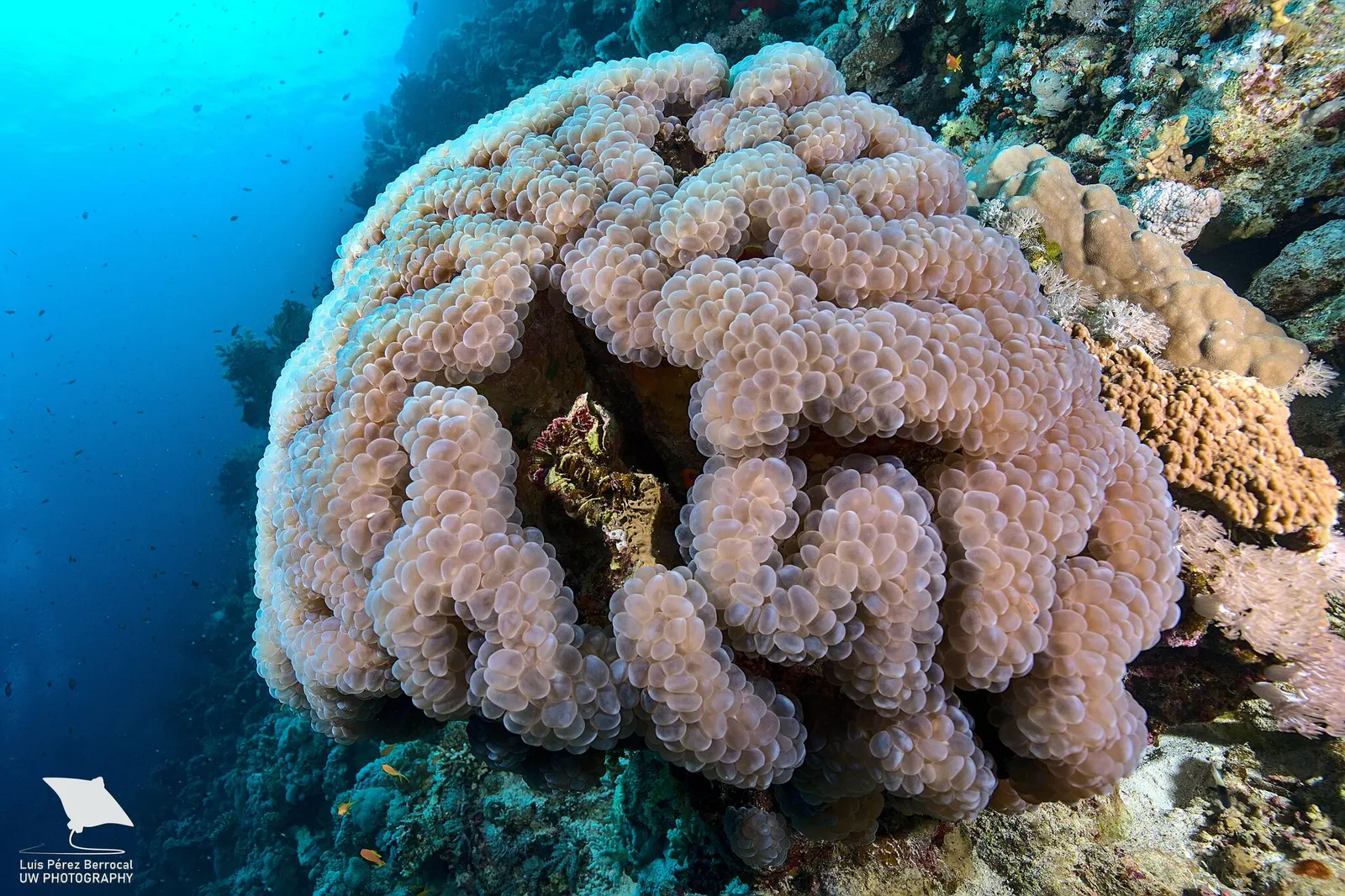
Like a bunch of pearly grapes growing on the rock: the inflated daytime bubbles of this coral are the jewels of shaded walls.
The bubble coral (Plerogyra sinuosa) is one of the strangest hard corals you can meet at Hurghada: by day the colony is covered in grape-sized, pearl-white or pale green bubbles that completely hide the skeleton. The sight is so un-coral-like that many divers first take it for a clam or an anemone. The bubbles are in fact inflated sacs of tissue, housing the coral's algae partners.
The bubbles swell during the day so the zooxanthellae living inside catch as much light as possible – the coral is effectively "sunbathing" in its shaded habitat. At night the bubbles deflate and long hunting tentacles stretch out instead, waiting for plankton. That is when you discover the soft exterior hides a hard skeleton with sharp ridges – so do not put a hand down next to it, even in the dark.
On Hurghada reefs it seeks out dimmer spots: the undersides of overhangs and shaded sections of walls, typically below 10 metres – which is why you see it diving rather than snorkeling. Look for it on the walls and in the crevices of El Fanadir and Umm Gamar. It is a slow-growing, fragile species: the bubbles can tear at the slightest touch, so caress it only with the beam of your torch.
Did you know?
The bubble coral works in shifts: by day it inflates bubbles that act as solar panels, by night it extends hunting tentacles from the very same spot – one body, two completely different operating modes.
How to behave around it
Its stinging cells can cause a mild burning on sensitive skin, and the tentacles it extends at night sting noticeably. Nothing serious – just look, do not touch, and with a dive torch it is easy to avoid after dark.
Where can you meet it?
Find it on the shaded walls and under the overhangs of El Fanadir and Umm Gamar, typically at 10–25 metres – with a sharp eye it also turns up on the Small Giftun wall.
Frequently asked questions
Inflated sacs of tissue, full of the coral's symbiotic algae. They swell during the day so the algae get more light in the shaded habitat – at night the coral deflates them and hunts with tentacles instead.
For you it is merely unpleasant: a mild sting or burning feeling. For the coral it is genuinely dangerous: the bubbles tear easily and heal slowly. The good diver rule protects you both – leave your hands on the boat.
Because it avoids strong light: it lives under overhangs and in the shadow of walls, typically deeper than 10 metres. Those nooks are invisible from the surface – this is one of the species worth putting on a tank for.
Best sites for Bubble coral
El Fanadir
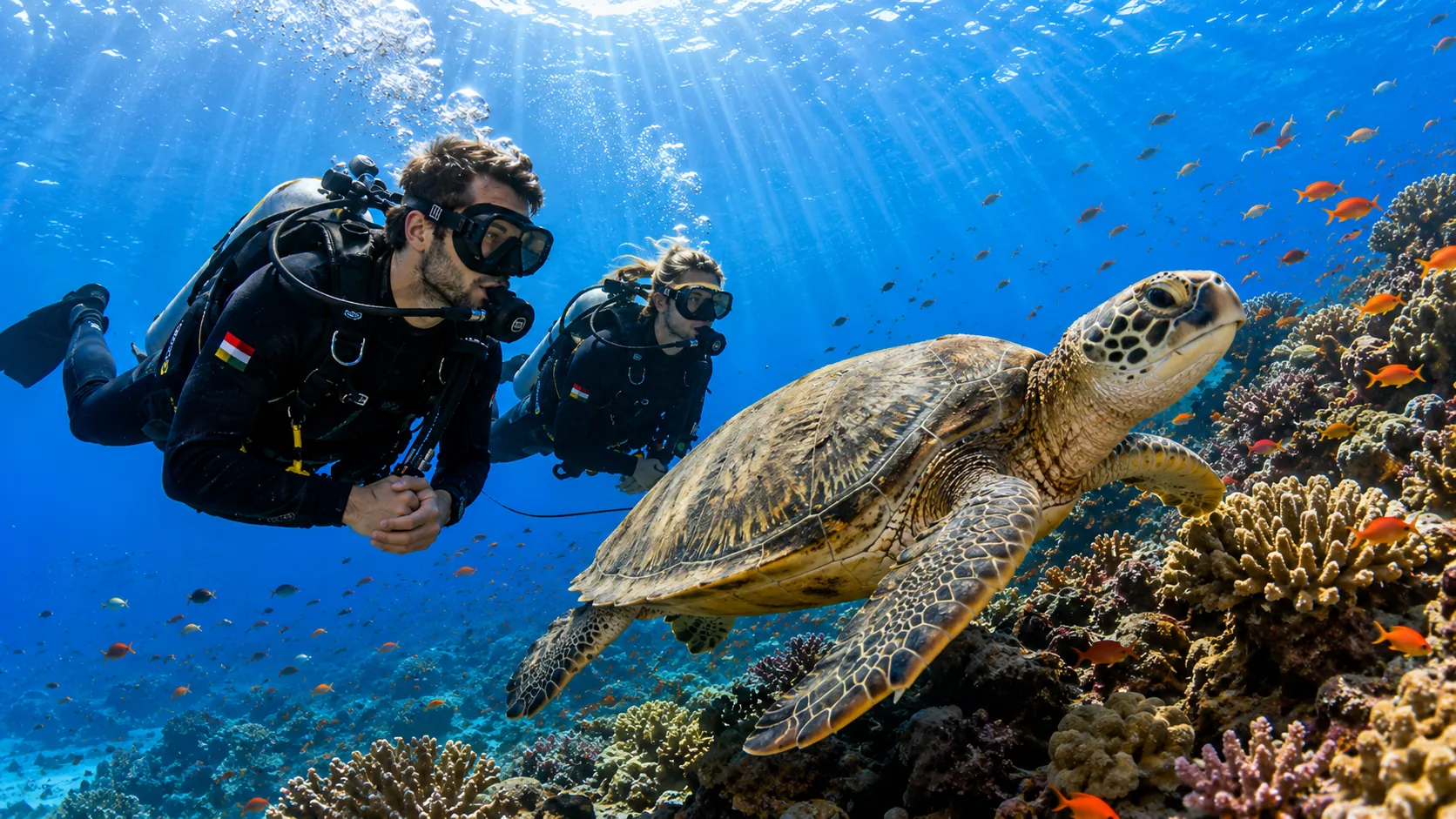
A long reef ridge barely half an hour from the marina: a gentle wall, blue-spotted rays and seagrass patches with turtles.
- Depth
- 6–25m
- Boat
- 30min
- Species
- 5
Umm Gamar
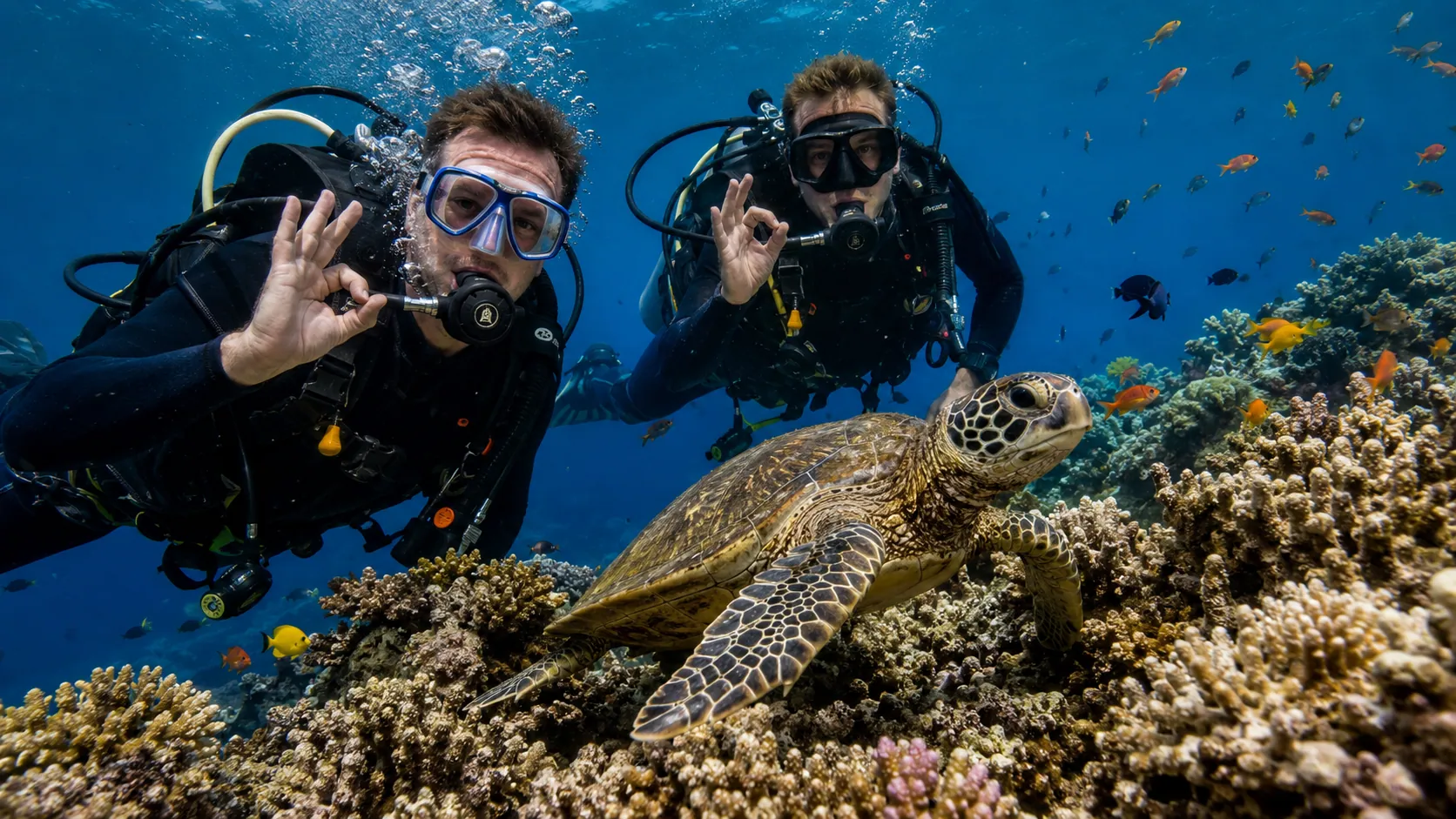
An elongated island in the north: a plateau with three coral towers, small caves and big predators out in the blue.
- Depth
- 10–30m
- Boat
- 75min
- Species
- 5
Small Giftun fal
Hurghada's classic drift dive: a sheer wall with gorgonian fans, eagle rays and a coral-tower plateau at 20–30 metres.
- Depth
- 8–30m
- Boat
- 50min
- Species
- 5
The Red Sea will not wait forever.
Book today – seats on the boat are limited, your excitement is not.