Cactus coral
Pavona cactus
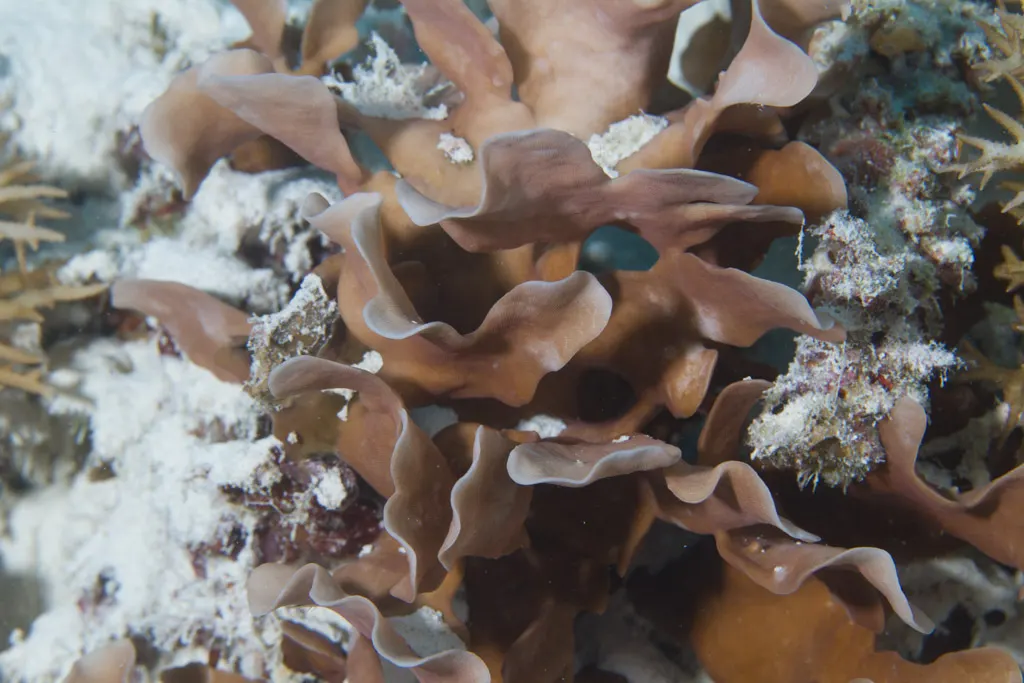
An underwater lettuce garden: the cactus coral's thin, wavy fronds rise like fragile sculptures from the floor of sheltered lagoons.
The cactus coral (Pavona cactus) is one of the most graceful stony corals: its colonies consist of thin, upright, wavily twisting plates – "fronds" – that most resemble a frilly head of lettuce or potato chips. The fronds are only a few millimetres thick, covered on both sides with minute polyps, and the colony is brownish or greenish, often with a paler margin. Colonies of 30–70 cm merge in places into continuous, undulating meadows.
With such a fragile build it wisely avoids the surf: the cactus coral is a specialist of sheltered, calm-water bays and lagoons, and it also tolerates the slightly murkier, siltier water that many other corals cannot settle in. Zooxanthellae algae in its tissues produce its energy. In reproduction its fragility becomes its strength: broken-off frond fragments do not die but take root and grow into new colonies – for this species such clonal spreading by fragmentation matters at least as much as sexual reproduction.
Around Hurghada you find it in sheltered bays and lagoons: fine meadows grow on the coral patches of the sandy Abu Hashish bay, on the calm reef sections around El Mina and in the Shaab Sabina lagoon, typically at 3–12 metres. One look at the fronds and the rule explains itself: this coral is so fragile that even the vortex from a careless fin stroke can damage it. Hover above it with perfect buoyancy, well clear of the bottom – that is when the rippling meadow of fronds looks its best anyway.
Did you know?
A cactus coral meadow several metres across is often a single organism: the broken-off, re-rooted frond fragments are all clones of the same colony, so the "meadow" is really one genetically identical individual that spread by fragmentation over decades.
Where can you meet it?
It lives in sheltered, calm-water spots: the finest frond meadows are in the Abu Hashish bay, on the quiet reef sections around El Mina and in the Shaab Sabina lagoon.
Frequently asked questions
It may look like lettuce, but it is an animal: its fronds are covered in thousands of tiny coral polyps fed by the algae in their tissues. The millimetre-thin plates are the most fragile on the whole reef – a single touch or a close fin kick causes breakage. Hover above it and all is well.
Because it turned fragility into a weapon: its broken pieces take root and grow into new colonies, so every storm is also an expansion. It also lives in sheltered, silty lagoons where most competing corals never gain a foothold.
Yes: in the shallow, calm water of sheltered bays – at Abu Hashish for example – you can meet it at just 3–4 metres. Seen from the surface, the rippling meadow of fronds is one of the loveliest sights, and this way you are guaranteed not to touch it.
Best sites for Cactus coral
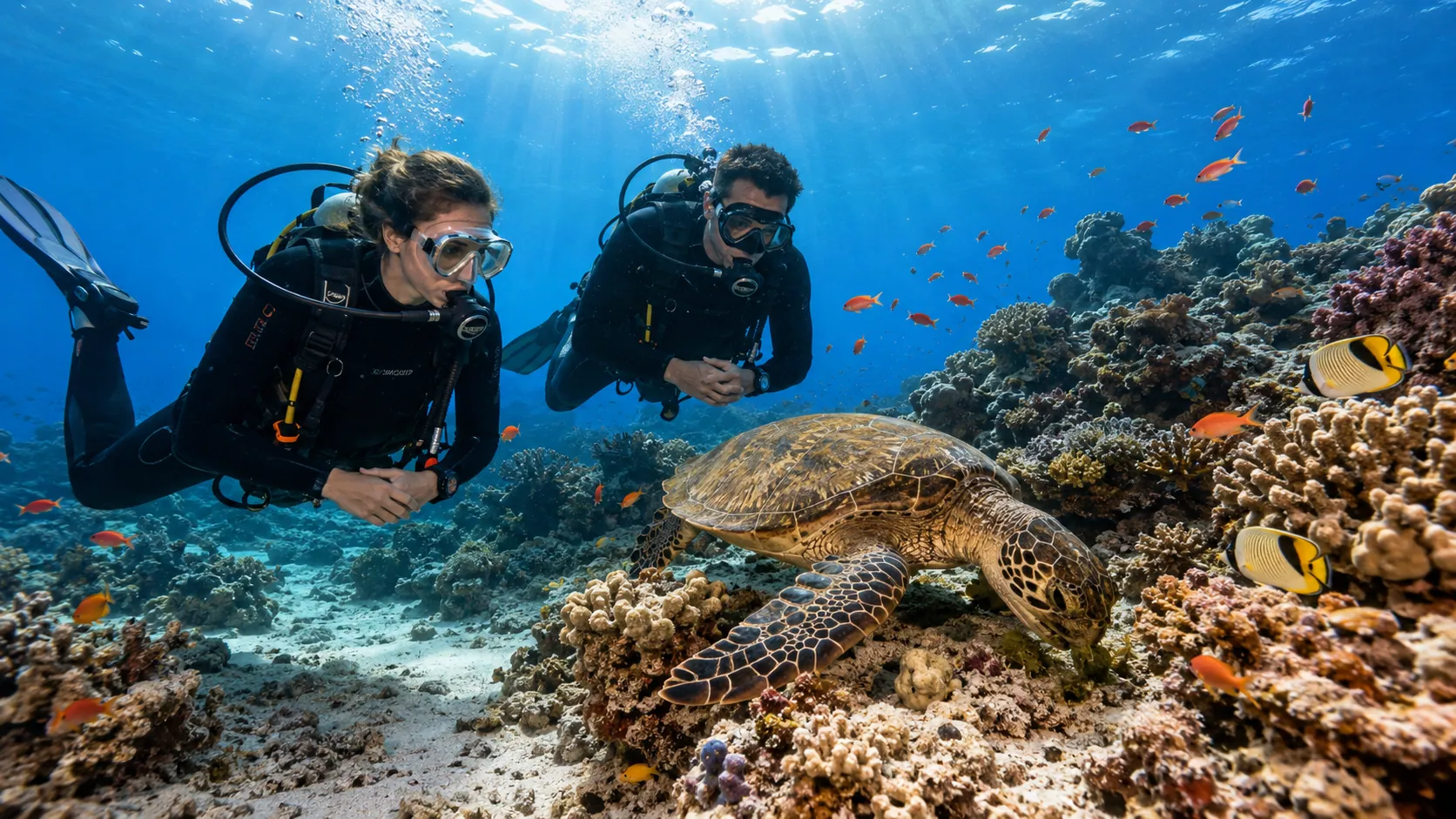
Abu Hashish-fok
A quiet southern cape with seagrass meadows and an atmospheric cavern – turtles almost for sure, a dugong with some luck.
- Depth
- 5–20m
- Boat
- 60min
- Species
- 5
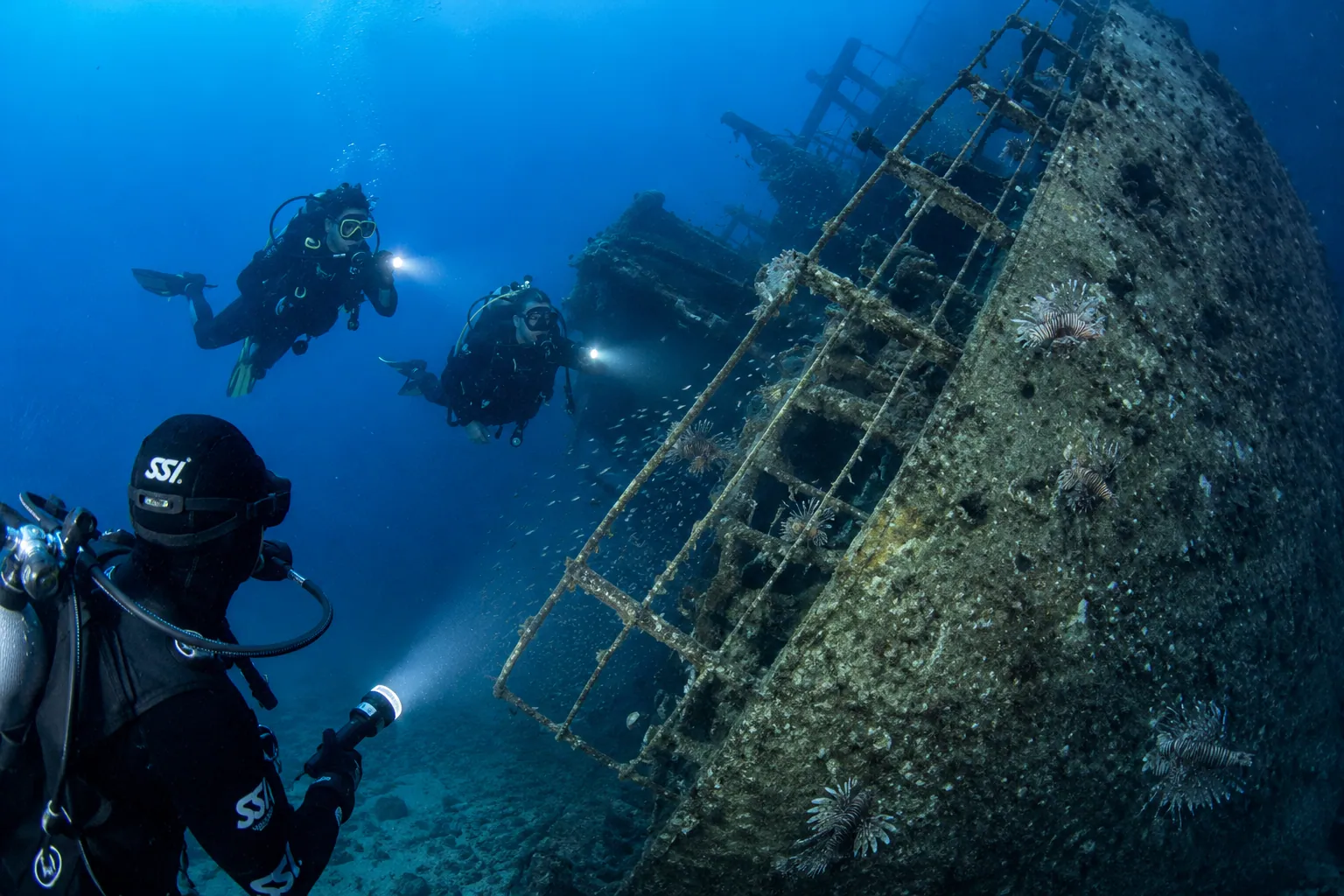
El Mina roncs
A genuine warship wreck 20 minutes from the marina: an Egyptian minesweeper sunk in 1969, resting on sand at 30 metres.
- Depth
- 16–30m
- Boat
- 20min
- Species
- 5
Sha'ab Sabina
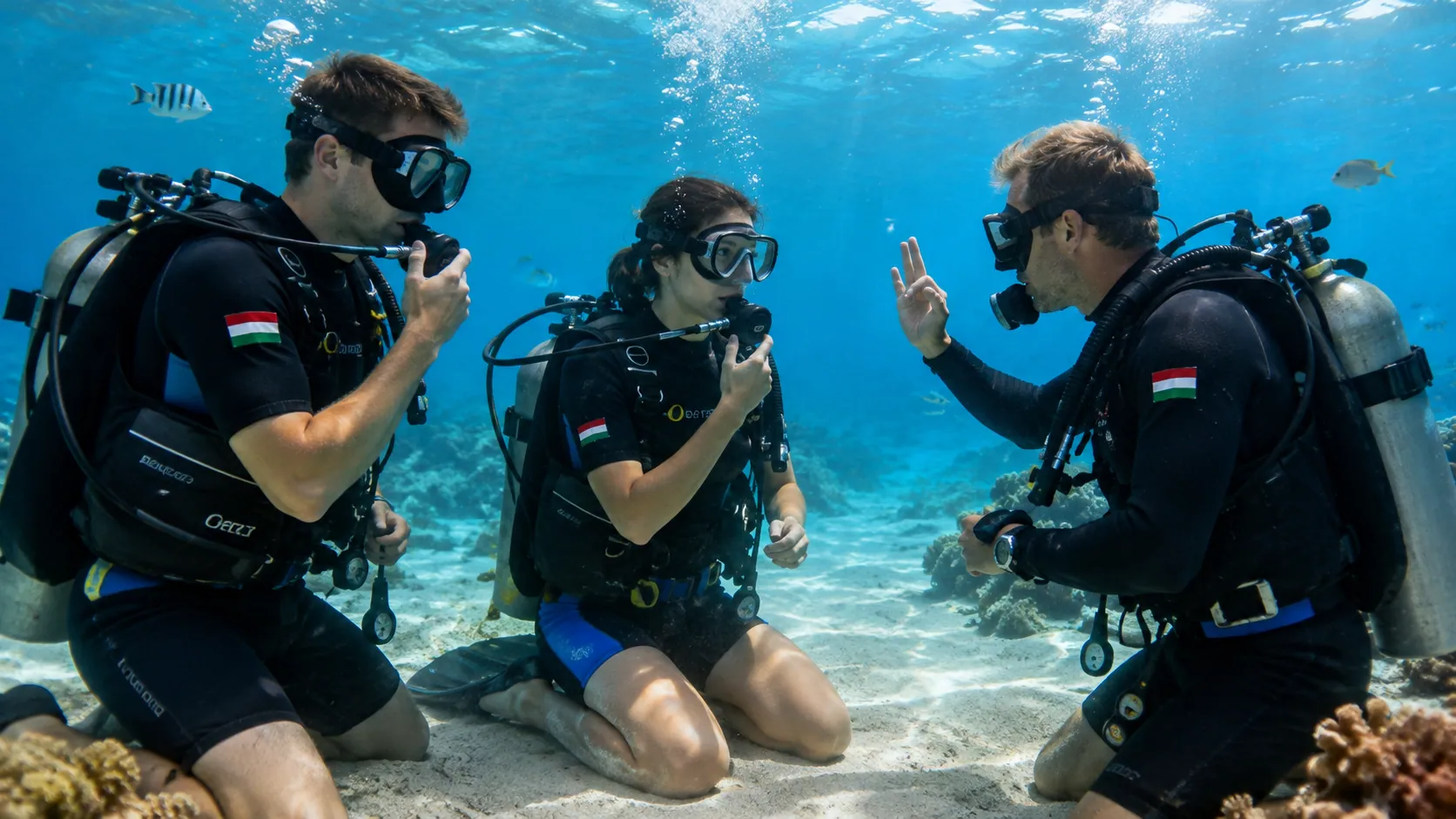
A sheltered shallow reef with a sandy lagoon – this is where most of our try dives and OWD skill sessions happen.
- Depth
- 4–12m
- Boat
- 40min
- Species
- 5
The Red Sea will not wait forever.
Book today – seats on the boat are limited, your excitement is not.