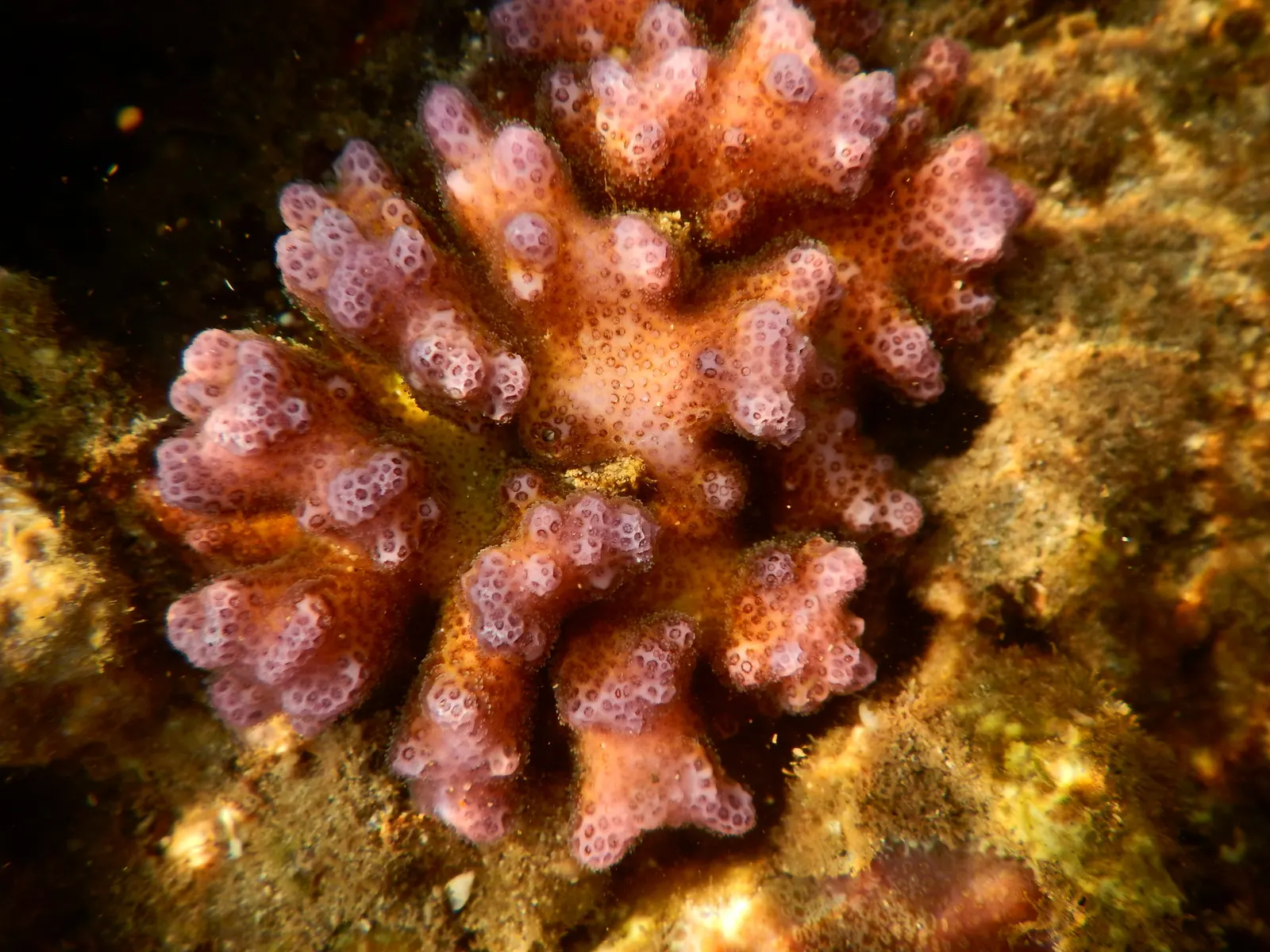
Cauliflower coral
Pocillopora damicornis
The reef's pioneer: pinkish, cauliflower-shaped colonies are first to claim new surfaces – and they keep bodyguard crabs for protection.
The compact, bushy colonies of the cauliflower coral (Pocillopora damicornis) really do look like a submerged cauliflower head: the densely branching, 20–40 cm colonies are covered in tiny wart-like bumps called verrucae. Colours range from cream through pink to greenish brown. It lives on shallow reef tops, lagoons and plateaus, so it is easy to watch while snorkeling – around Hurghada it is one of the most common stony corals.
This species is a star of coral science: one of the most thoroughly studied corals in the world, and a true pioneer – on shipwrecks, mooring buoys and fresh rubble it is often the first to appear. Its secret lies in its reproduction: unlike most corals it does not spawn just once a year, but releases ready-made larvae regularly in step with the lunar cycle, and these settle quickly. The zooxanthellae algae in its tissues make energy from sunlight, which is why the colony always seeks well-lit, shallow water.
A whole micro-world lives among the cauliflower coral's branches: tiny guard crabs (Trapezia) and pistol shrimps rent a home in the colony and defend it from coral-eating enemies in return. Around Hurghada you will find tenants in nearly every colony on the El Fanadir plateau, in the coral garden of Gota Abu Ramada and on the towers of El Aruk. The rule is sacred here too: never touch the coral and never stand on it – the brittle branches snap at a single move, and with them goes the home of the entire little community.
Did you know?
The cauliflower coral literally employs bodyguards: the tiny Trapezia crabs living among its branches pinch and drive off the coral-eating crown-of-thorns starfish – and the coral pays the "rent" in nutritious drops of fat.
Where can you meet it?
Common on every shallow reef top: you will easily find it on the El Fanadir plateau, in the Gota Abu Ramada coral garden, on the El Aruk towers and in the Shaab Sabina shallows.
Frequently asked questions
An animal: a colony of hundreds of tiny polyps building a limestone skeleton, fed by the algae living in its tissues. Touching damages the protective mucus layer, and the branches are glass-brittle – what you snap in one move takes the coral years to rebuild.
Because it is almost always the first settler: it releases ready-made larvae regularly with the lunar cycle, so the first little cauliflower heads can appear on a shipwreck or fresh rubble within months, paving the way for other coral species.
Yes, absolutely: the cauliflower coral lives on shallow, well-lit reef tops, often at just 1–3 metres. Float above and look between the branches too – that is where the tiny guard crabs and domino damselfish hide.
Best sites for Cauliflower coral
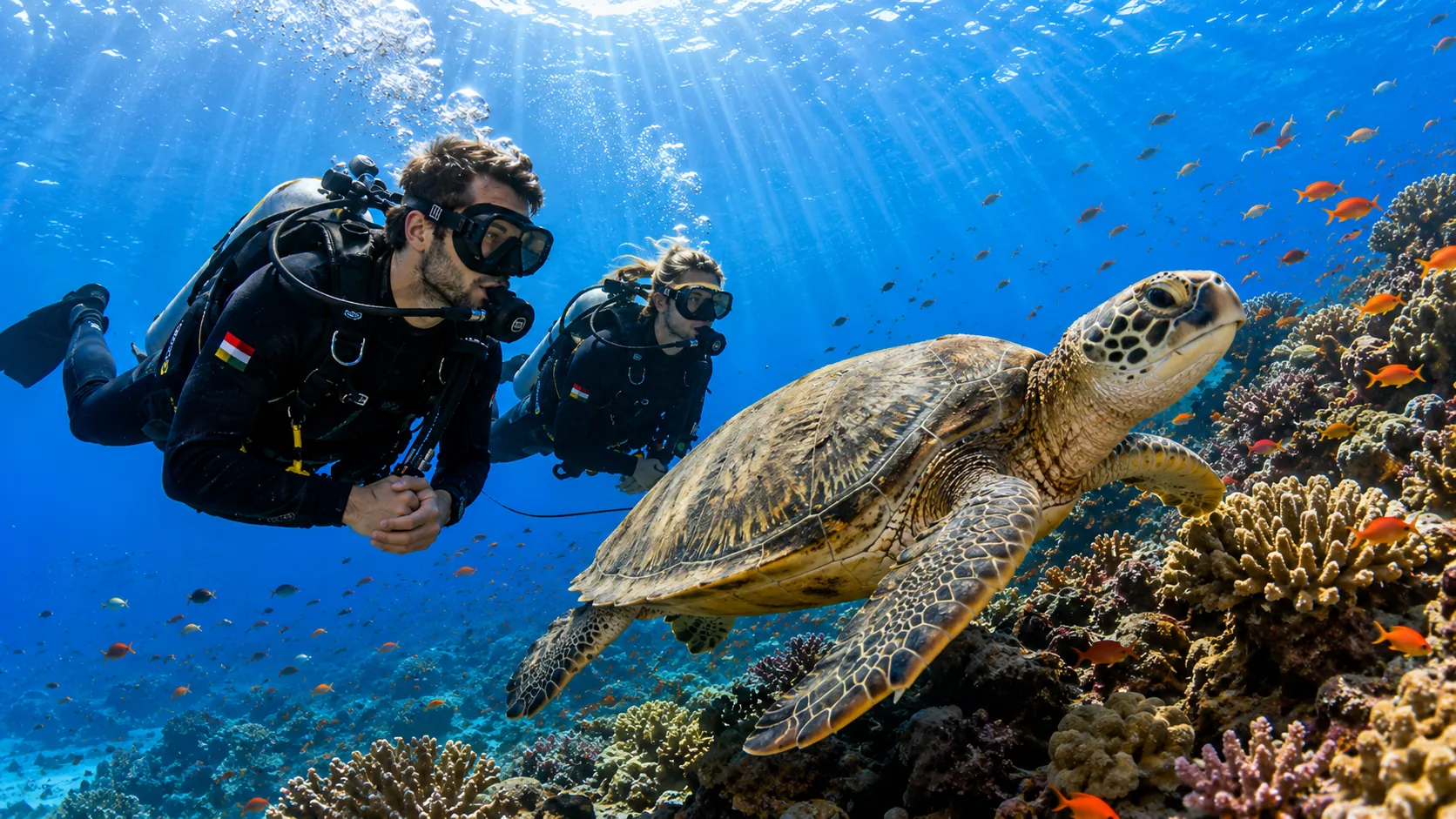
El Fanadir
A long reef ridge barely half an hour from the marina: a gentle wall, blue-spotted rays and seagrass patches with turtles.
- Depth
- 6–25m
- Boat
- 30min
- Species
- 5
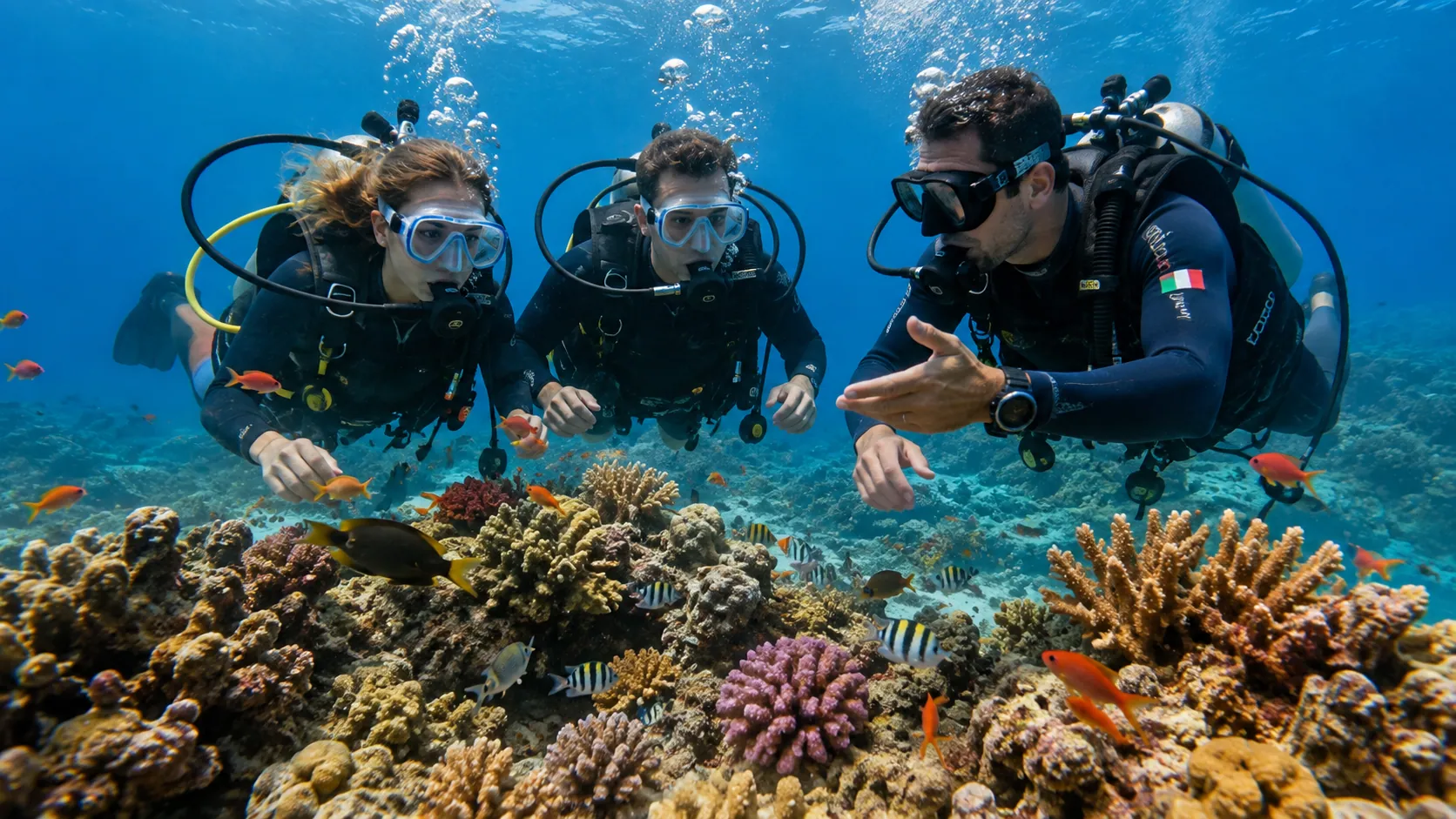
Gota Abu Ramada
A shallow oval reef with a sandy bottom and schools of butterflyfish – perfect for training, second and night dives.
- Depth
- 4–14m
- Boat
- 55min
- Species
- 5
El Aruk (Gigi)
A playground of coral towers on white sand: easy navigation, clouds of glassfish and light made for photography.
- Depth
- 5–14m
- Boat
- 35min
- Species
- 5
The Red Sea will not wait forever.
Book today – seats on the boat are limited, your excitement is not.