Checkerboard wrasse
Halichoeres hortulanus
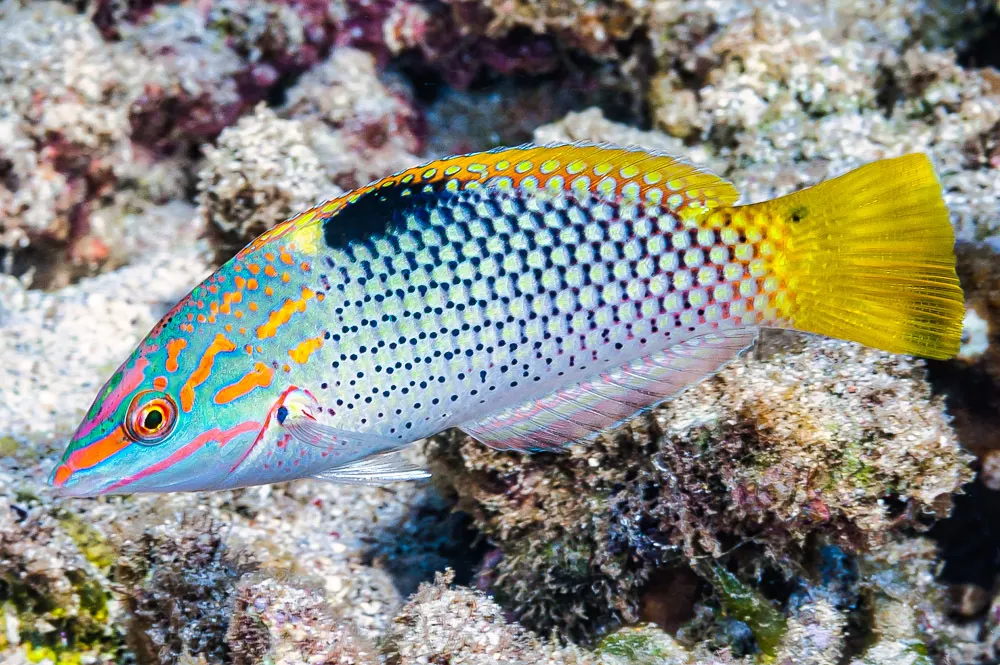
A black checkerboard on a white body and pink scribbles on a green head: the tireless prospector of sandy reefs, who buries itself in the sand at night.
The checkerboard wrasse (Halichoeres hortulanus) needs no explanation for its name: every scale on its pearly white body wears a black edge, turning its flank into a miniature chessboard. The greenish head is decorated with winding pink-purple lines, and a bright yellow spot sits on the front third of the back like a dab of paint. The juveniles are tricksters here too: their black-and-white blotched "zebra" pattern is so different they pass for another species.
This fish is a sand specialist: it forages all day along the boundary of reef and sandy bottom, hunting small invertebrates – crustaceans, worms, snails. Its favourite trick is sifting mouthfuls of sand, swallowing the morsels and spitting out the rest; harder-shelled prey gets smashed against a rock. It often tags along with feeding goatfish to snatch the small creatures they flush from the sand.
Around Hurghada you will meet it on every reef with sandy plateaus, from shallow lagoons down to 20–25 metres. It is easy to watch while snorkeling too, since it almost never pauses its prospecting and is not particularly shy. On a dusk dive, keep an eye on the sand: come evening, the checkerboard wrasse simply drills itself into the bottom and sleeps there until morning – sometimes vanishing in a puff of sand right before your eyes.
Did you know?
Instead of pyjamas it puts on sand for the night: it burrows its whole body into the bottom and sleeps there until morning. It is not just a bed but an escape hatch too – if a predator shows up, the fish can crash-dive into the sand and vanish in the blink of an eye.
Where can you meet it?
A fixture of sandy-bottom dive sites: almost always in view on the sand between the coral blocks of El Aruk, in the "aquarium" of Gota Abu Ramada and in the shallow lagoon of Shaab Sabina.
Frequently asked questions
Yes, easily: it is a constant resident of shallow lagoons and sandy reef edges, on the move all day. The black-and-white checkerboard pattern is clearly visible from the surface.
Pure opportunism: goatfish plough the sand with their barbels, and some of the fleeing crustaceans and worms end up in the mouth of the checkerboard wrasse trailing behind. Several wrasses use this ambush-by-association trick – this one is among the best at it.
Not at all, completely harmless – its shell-cracking jaws are strictly for prey. You can watch it from up close, and it will probably ignore you entirely, absorbed in sifting the sand.
Best sites for Checkerboard wrasse
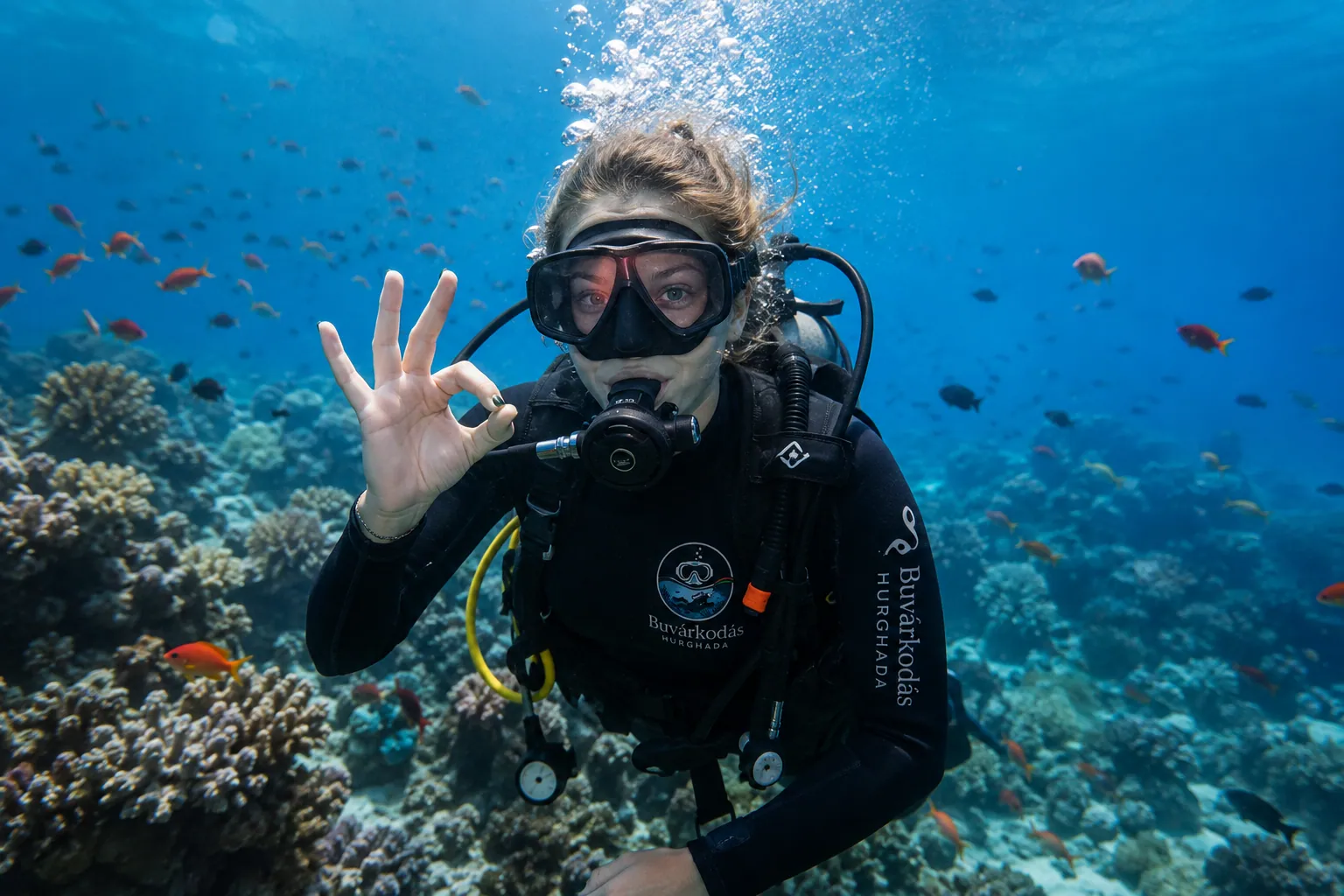
El Aruk (Gigi)
A playground of coral towers on white sand: easy navigation, clouds of glassfish and light made for photography.
- Depth
- 5–14m
- Boat
- 35min
- Species
- 5
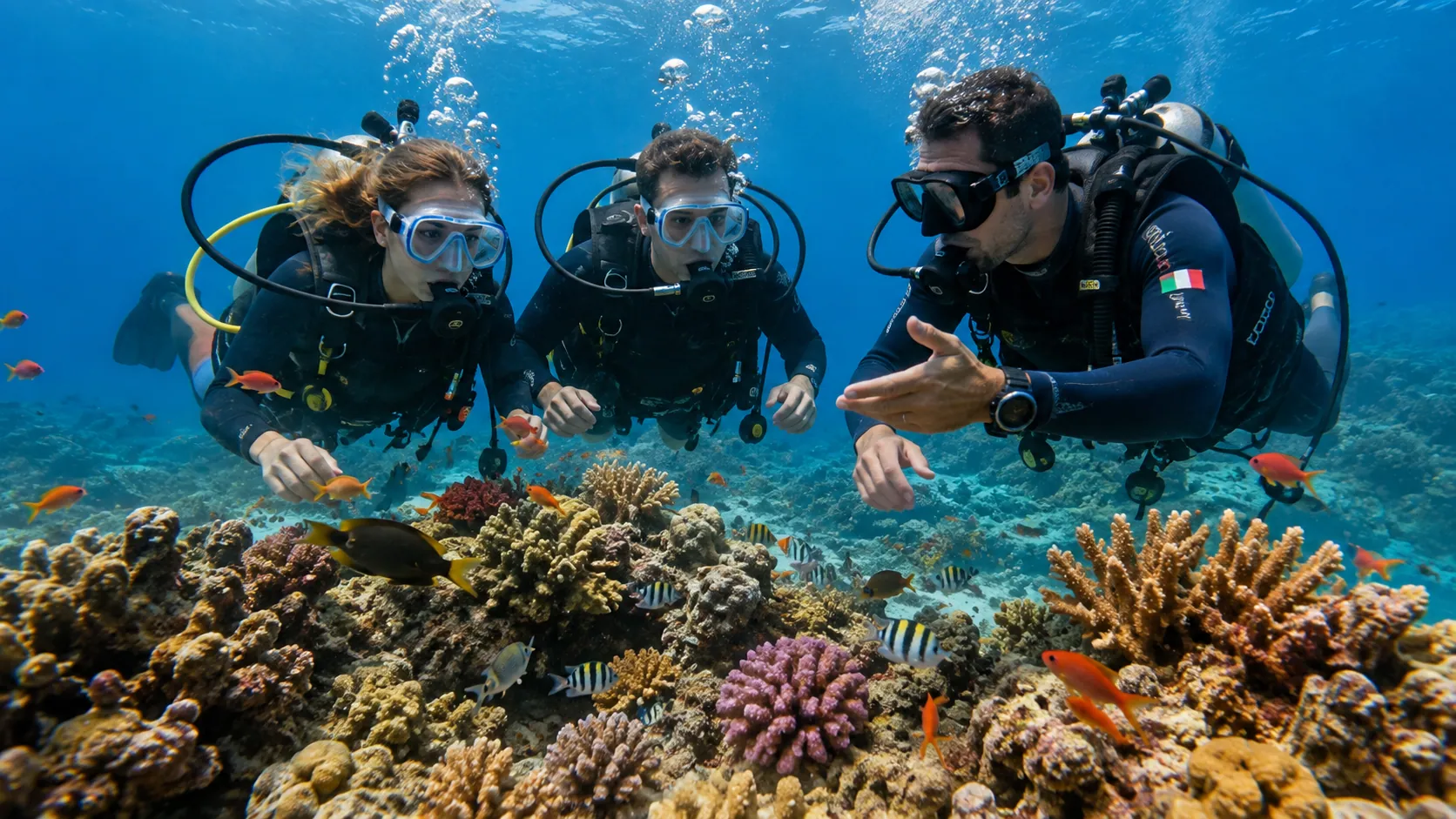
Gota Abu Ramada
A shallow oval reef with a sandy bottom and schools of butterflyfish – perfect for training, second and night dives.
- Depth
- 4–14m
- Boat
- 55min
- Species
- 5
Sha'ab Sabina
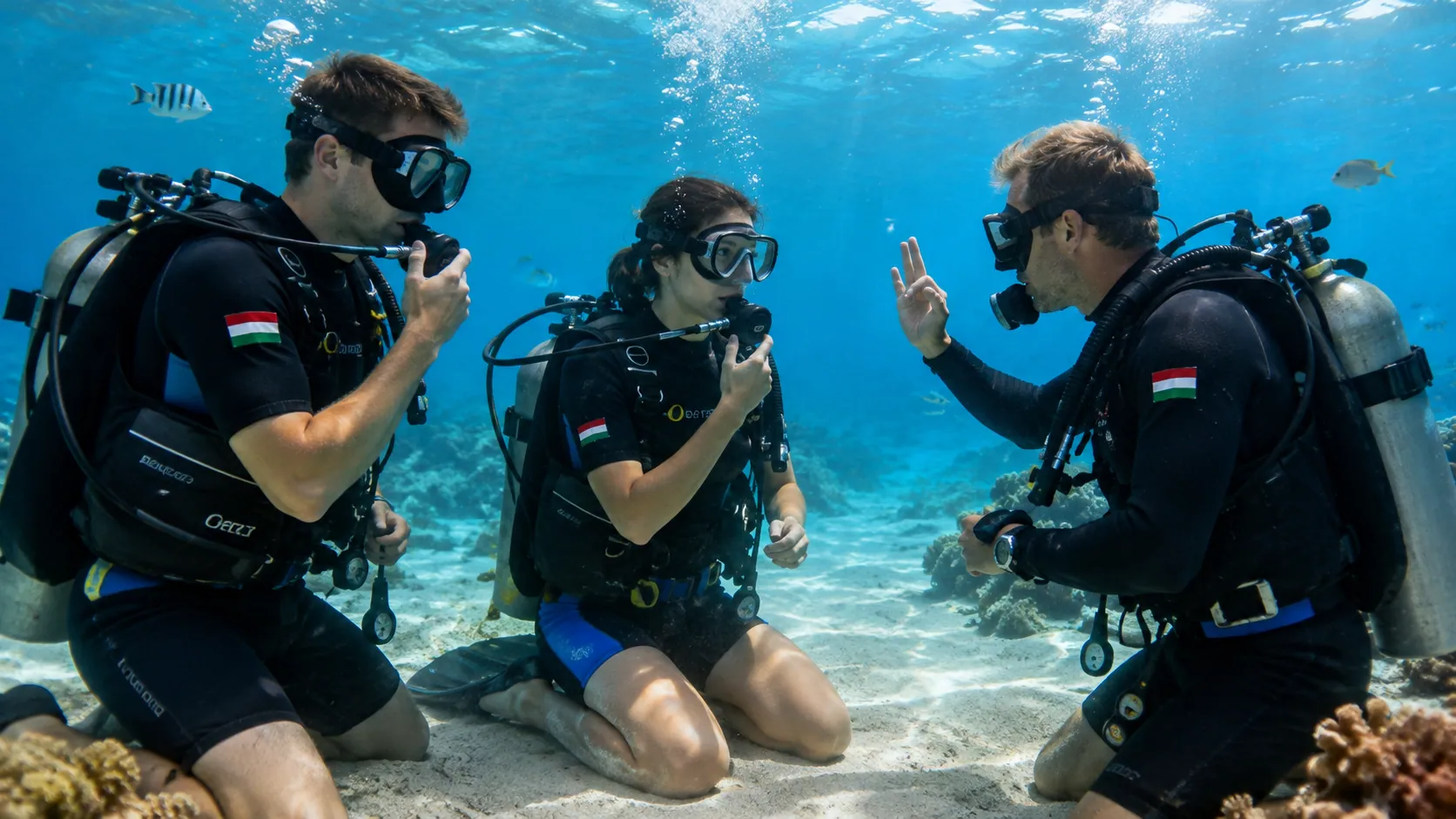
A sheltered shallow reef with a sandy lagoon – this is where most of our try dives and OWD skill sessions happen.
- Depth
- 4–12m
- Boat
- 40min
- Species
- 5
The Red Sea will not wait forever.
Book today – seats on the boat are limited, your excitement is not.