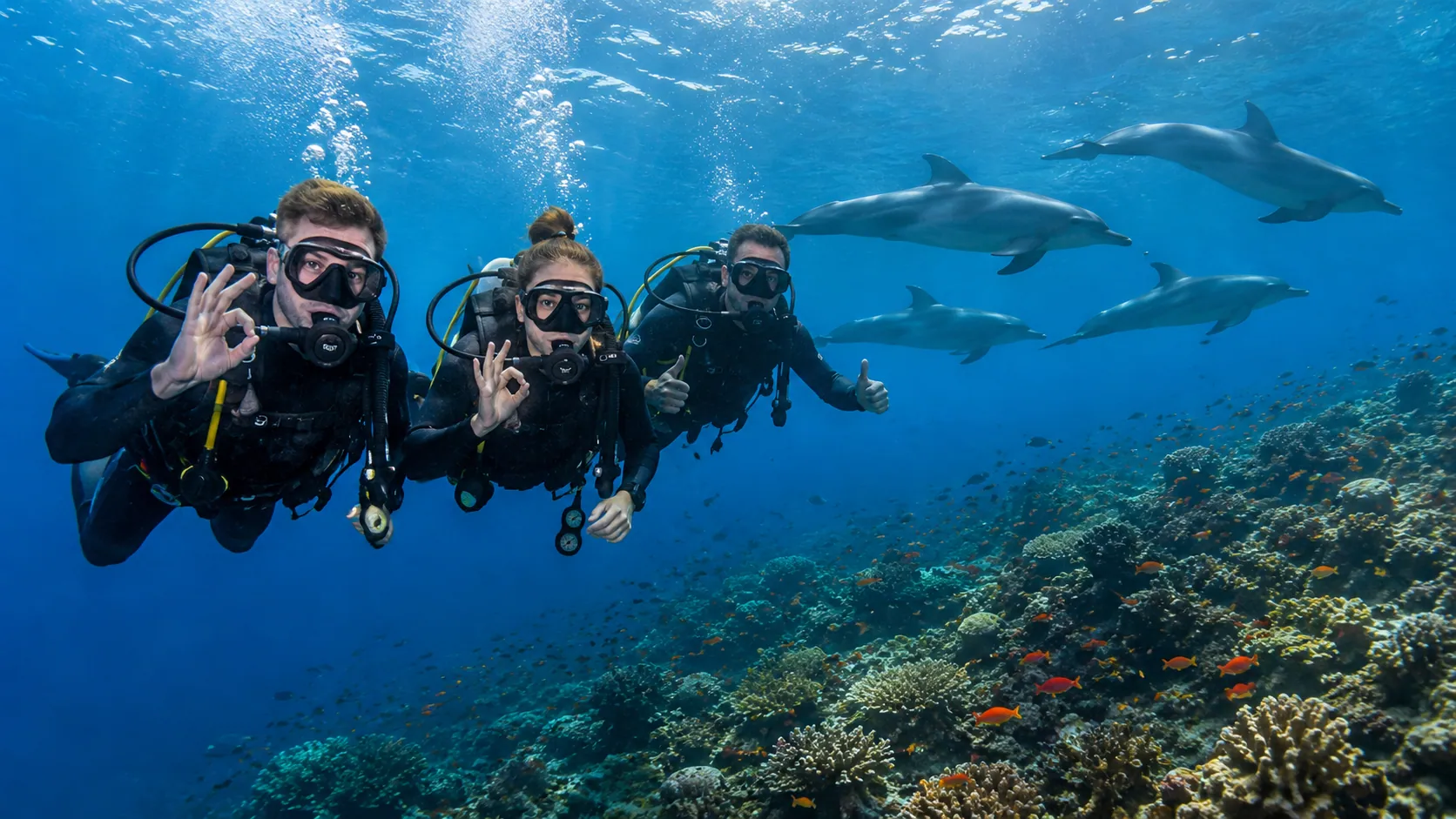
Clearfin lionfish
Pterois radiata
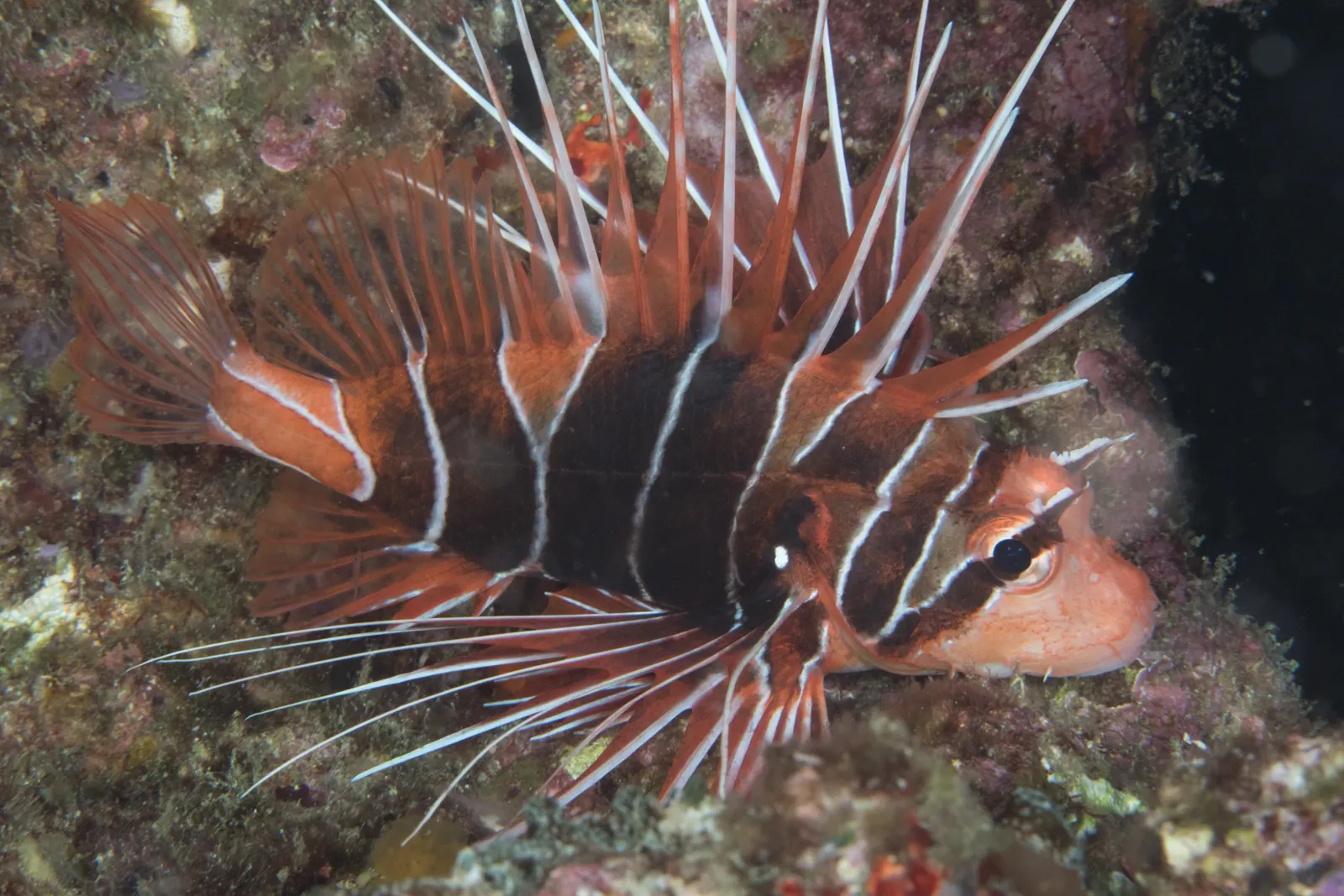
The elegant eccentric among lionfish: its pure white, unmarked spine rays radiate from the dark body like a crown of light.
The clearfin lionfish (Pterois radiata) is the aristocrat of the lionfish clan: while its famous cousins flaunt banded fins, its long spine rays are pure white without any markings – hence both its English and Hungarian names. Dark bands framed by bold white lines decorate its reddish-brown body, and two horizontal white stripes run along the tail base – a mark no other lionfish species carries, making identification unmistakable.
It is a decidedly nocturnal hunter: by day it hangs head-down under a ledge or on a cave ceiling, setting out on patrol only at dusk. Its diet also sets it apart – while other lionfish prey mostly on fish, the clearfin hunts almost exclusively crabs and shrimps. It herds its victim into a corner with outspread pectoral fins, then inhales it with a lightning strike. Venom glands sit in its long dorsal spines – strictly for defence.
Around Hurghada you can meet it on broken, cave-riddled reefs: by day, peek under the ledges with a torch to discover the distinctive white crown of spines, and on a night dive you can watch it hunting in the open. It is rarer and shyer than the common lionfish, so divers treasure every encounter – if your guide taps twice and points a torch under a ledge, chances are this is what they have found.
Did you know?
While its cousins have conquered the Caribbean and the Mediterranean as invasive species, the clearfin lionfish stayed a homebody – and it is the only lionfish that hunts almost exclusively crustaceans, largely leaving fish alone.
How to behave around it
A lionfish never attacks on its own – the spines are defensive weapons. Keep a distance of 1–2 metres, never corner one, and on night dives mind where you reach and point your light: it hunts the small crustaceans your torch attracts, so it may drift closer to you. If stung, immerse the limb in tolerably hot water (about 45 °C) and see a doctor – painful, but well manageable with proper care.
Where can you meet it?
It favours cave-riddled reef sections: you have a good chance under the ledges of Umm Gamar and Carless Reef, in the recesses of the El Mina wreck and around the blocks of Abu Ramada – especially on night dives.
Frequently asked questions
In three ways: its spine rays are pure white and unpatterned; two horizontal white stripes run along the tail base, found on no other lionfish; and it is a much rarer, more secretive species. If you have found one, know that you are looking at the special member of the lionfish family.
Only if you touch it: the dorsal spines are venomous, but the fish is slow, peaceful and never takes the initiative. Accidents almost always come from carelessness – reaching under a ledge, for instance. Keep your distance and the encounter is completely safe.
On a night or dusk dive, when it comes out to hunt – then you may meet it on the open reef wall. By day you need to peek under ledges and overhangs with a torch: it often rests hanging head-down from the ceiling.
Best sites for Clearfin lionfish
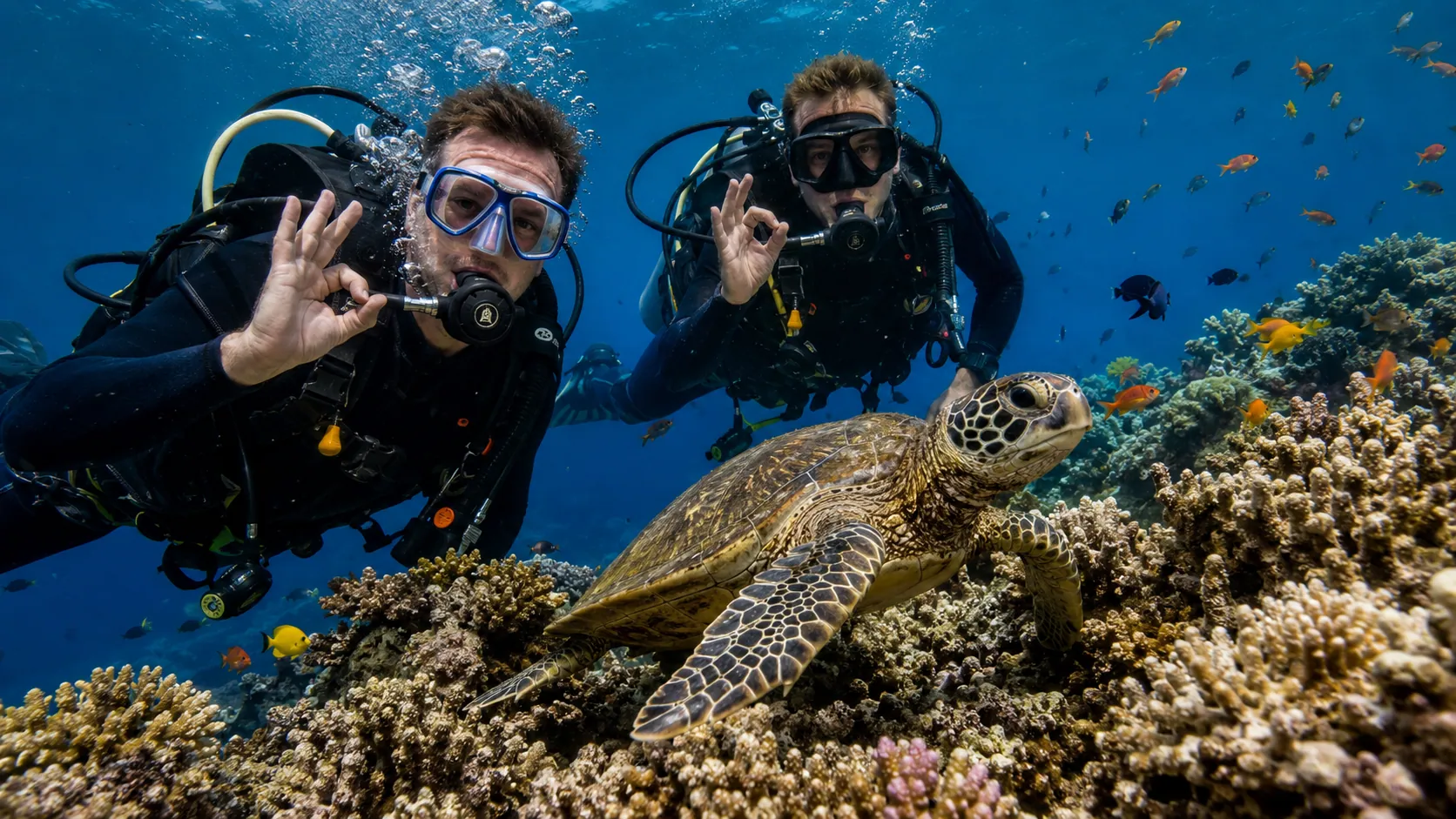
Umm Gamar
An elongated island in the north: a plateau with three coral towers, small caves and big predators out in the blue.
- Depth
- 10–30m
- Boat
- 75min
- Species
- 5
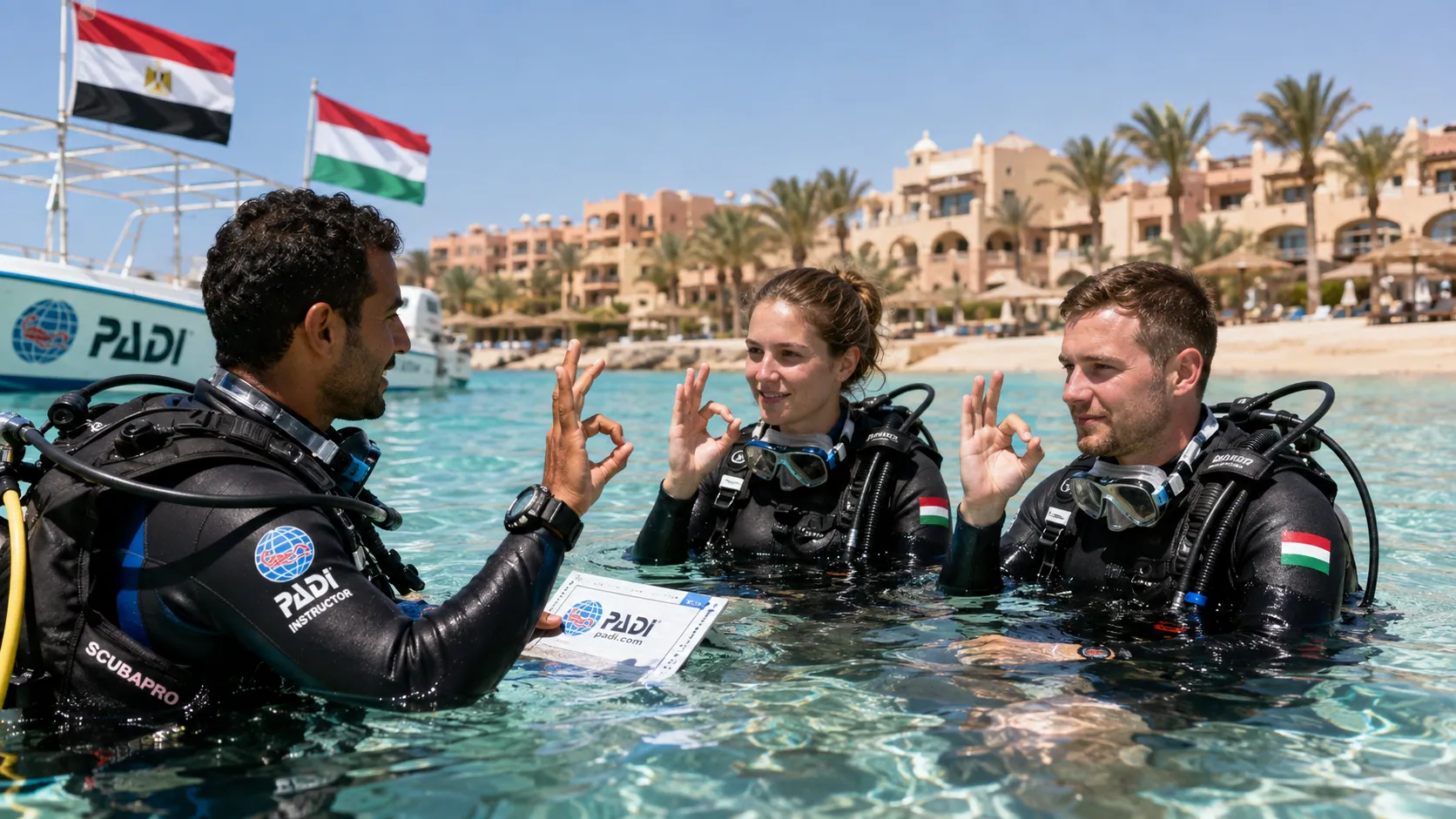
Carless Reef
An offshore twin-erg reef famous for its legendary moray colony – for experienced divers, weather permitting.
- Depth
- 12–30m
- Boat
- 70min
- Species
- 5
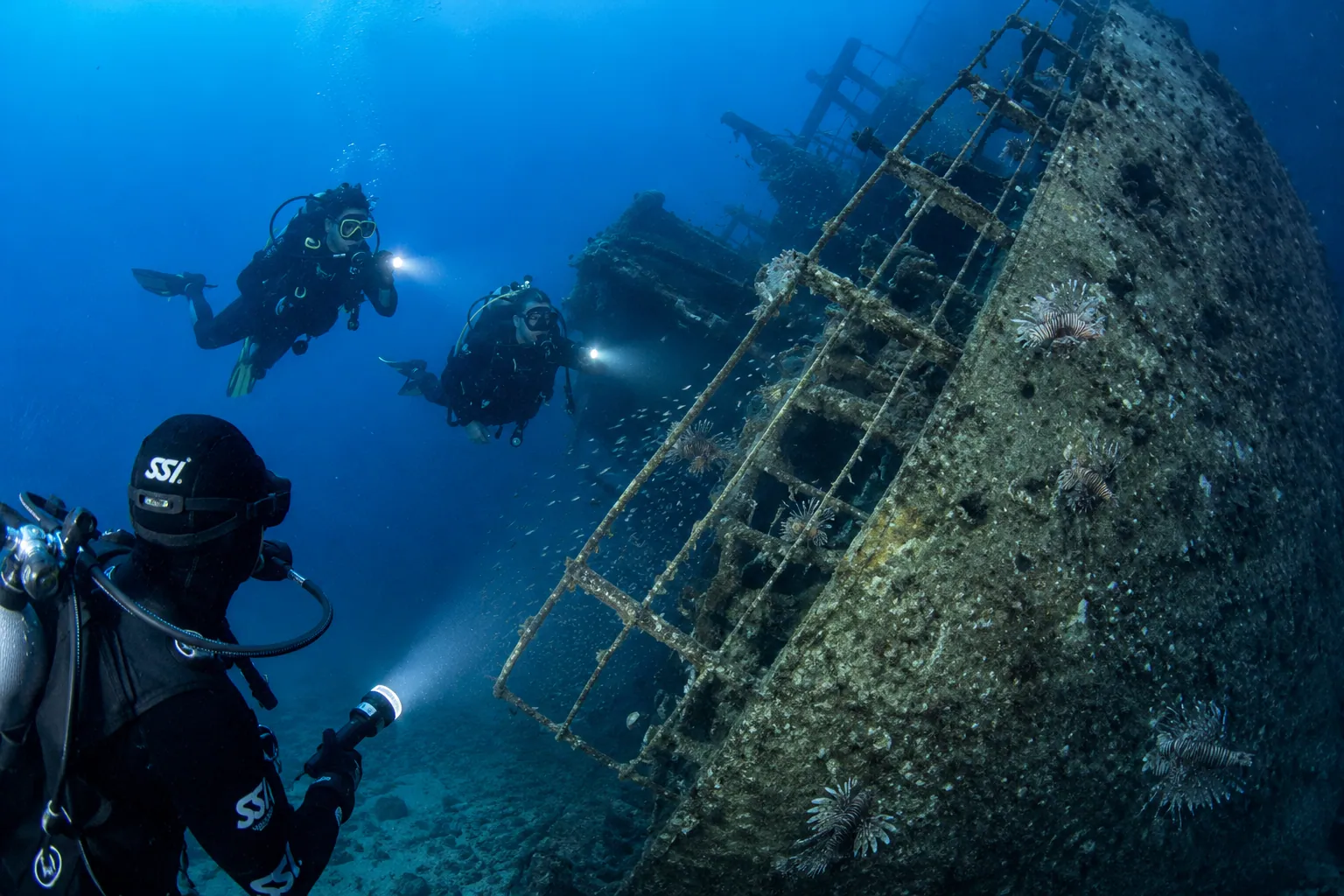
El Mina roncs
A genuine warship wreck 20 minutes from the marina: an Egyptian minesweeper sunk in 1969, resting on sand at 30 metres.
- Depth
- 16–30m
- Boat
- 20min
- Species
- 5
The Red Sea will not wait forever.
Book today – seats on the boat are limited, your excitement is not.