Columnar porites
Porites nodifera
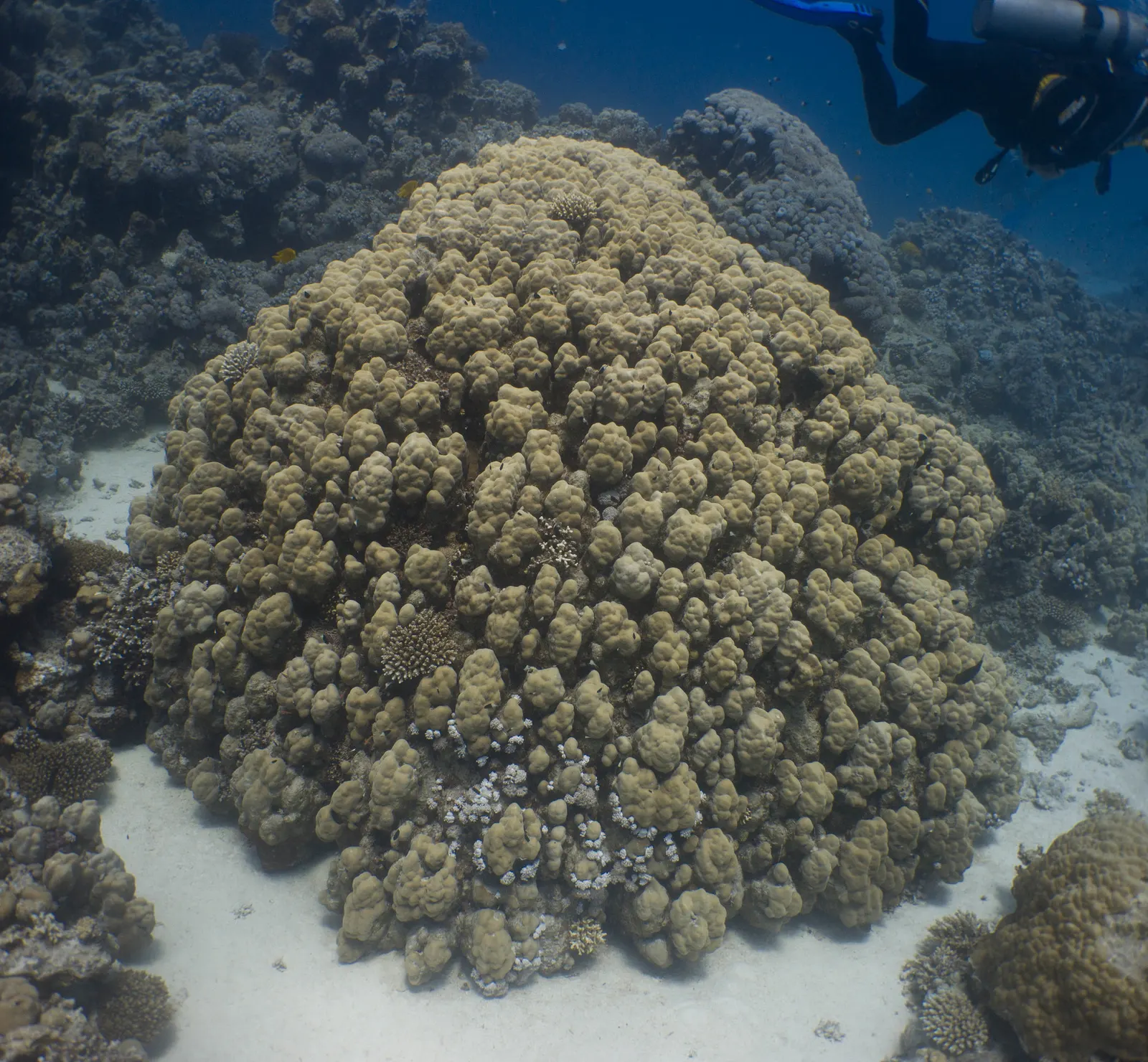
A forest of yellow-brown coral pillars in the shallow lagoons – one of the Red Sea's most distinctive underwater skylines.
Columnar porites (Porites nodifera) colonies grow not domes but tightly packed pillars, from finger- to thigh-thick – a large colony looks like a city of miniature organ pipes. The colour is yellow-brown, mustard or greenish, and the surface feels velvet-smooth thanks to millimetre-sized polyps. In shallow, sheltered bays these pillar forests often carpet whole hectares and define the underwater landscape.
This species is a true Red Sea specialist: it thrives in hot, salty, shallow lagoons where most corals would give up. Its partnership with zooxanthellae algae and its slow, persistent growth make it remarkably tough. Between the pillars a sheltered labyrinth forms that works as a fish nursery: juvenile parrotfish, damselfish and cardinalfish shoals hide in the passages, and at night the polyps stretch out their tentacles to hunt plankton.
Around Hurghada you meet it most often on the shallow coastal reefs and along the edges of sandy lagoons – whole pillar forests grow in the bay of Abu Hashish and in the coral garden of Shaab Sabina, and you can admire them while snorkeling. In water this shallow the rule matters more than ever: never stand on coral, not even "just for a second" – the tops of the pillars are living tissue that dies where it is touched.
Did you know?
Porites nodifera builds its most spectacular pillar forests where summer water tops 32 °C and is extra salty – conditions lethal to most corals. That is why it is studied worldwide: its genes may hold clues to how reefs can survive global warming.
Where can you meet it?
A species of shallow, sheltered spots: you will find extensive pillar forests in the lagoon of Abu Hashish, in the coral garden of Shaab Sabina and on the Gota Abu Ramada plateau.
Frequently asked questions
It is one of the best snorkeling corals: the pillar forests typically grow at 1–4 metres in sheltered bays, so you see them in full glory swimming at the surface.
The skeleton really is rock-hard, but a thin layer of living tissue covers the top, and it is crushed instantly under your foot or fin. The coral dies at the wound and algae move in – one thoughtless stop can destroy decades of growth.
In shallow, calm water, growing upward toward the light pays off best: pillars maximise the sunlight-collecting surface while sand stirred up by waves slides off them. The result is a stable "coral city" that avoids shading itself.
Best sites for Columnar porites
Abu Hashish-fok
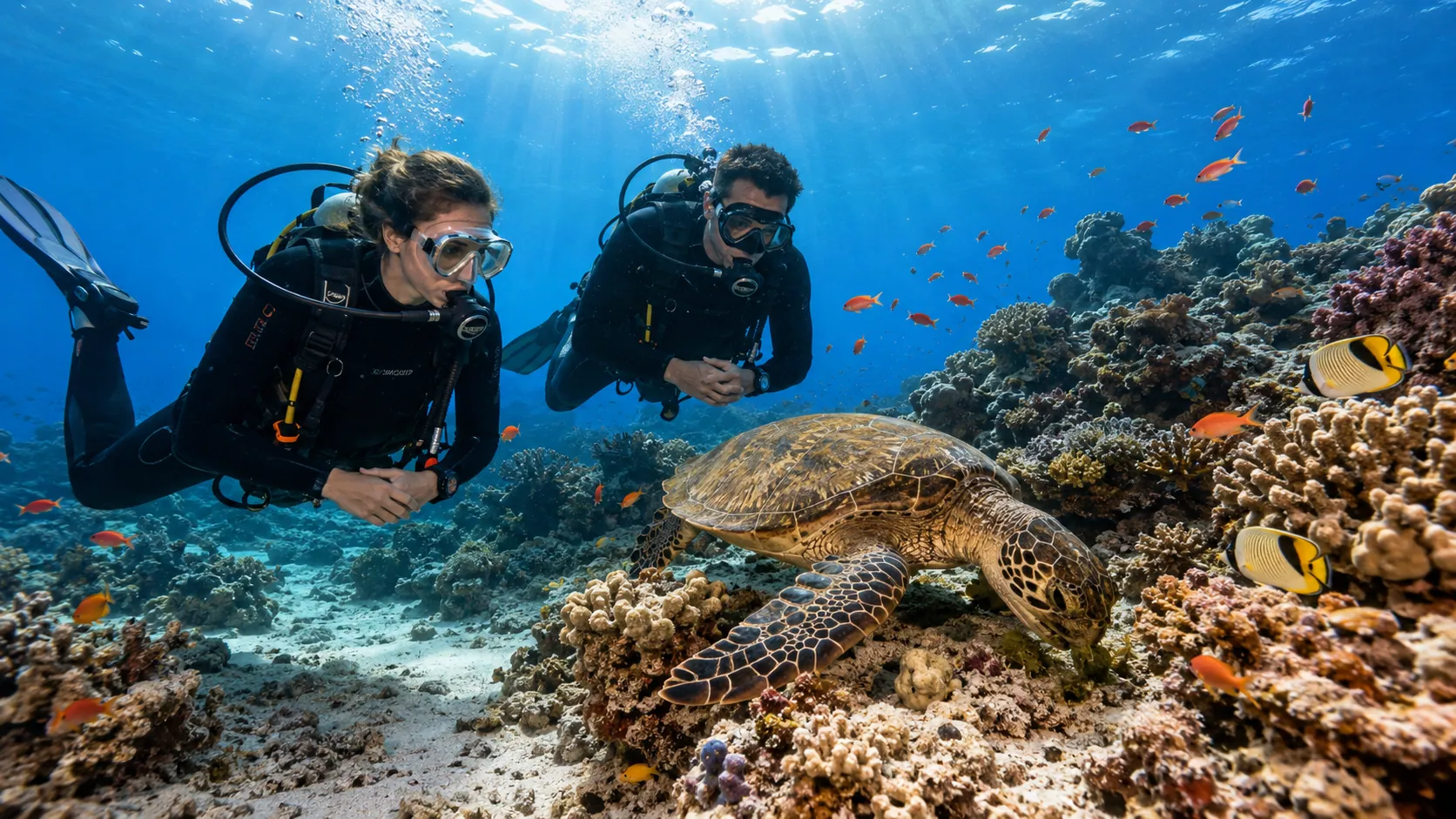
A quiet southern cape with seagrass meadows and an atmospheric cavern – turtles almost for sure, a dugong with some luck.
- Depth
- 5–20m
- Boat
- 60min
- Species
- 5
Sha'ab Sabina
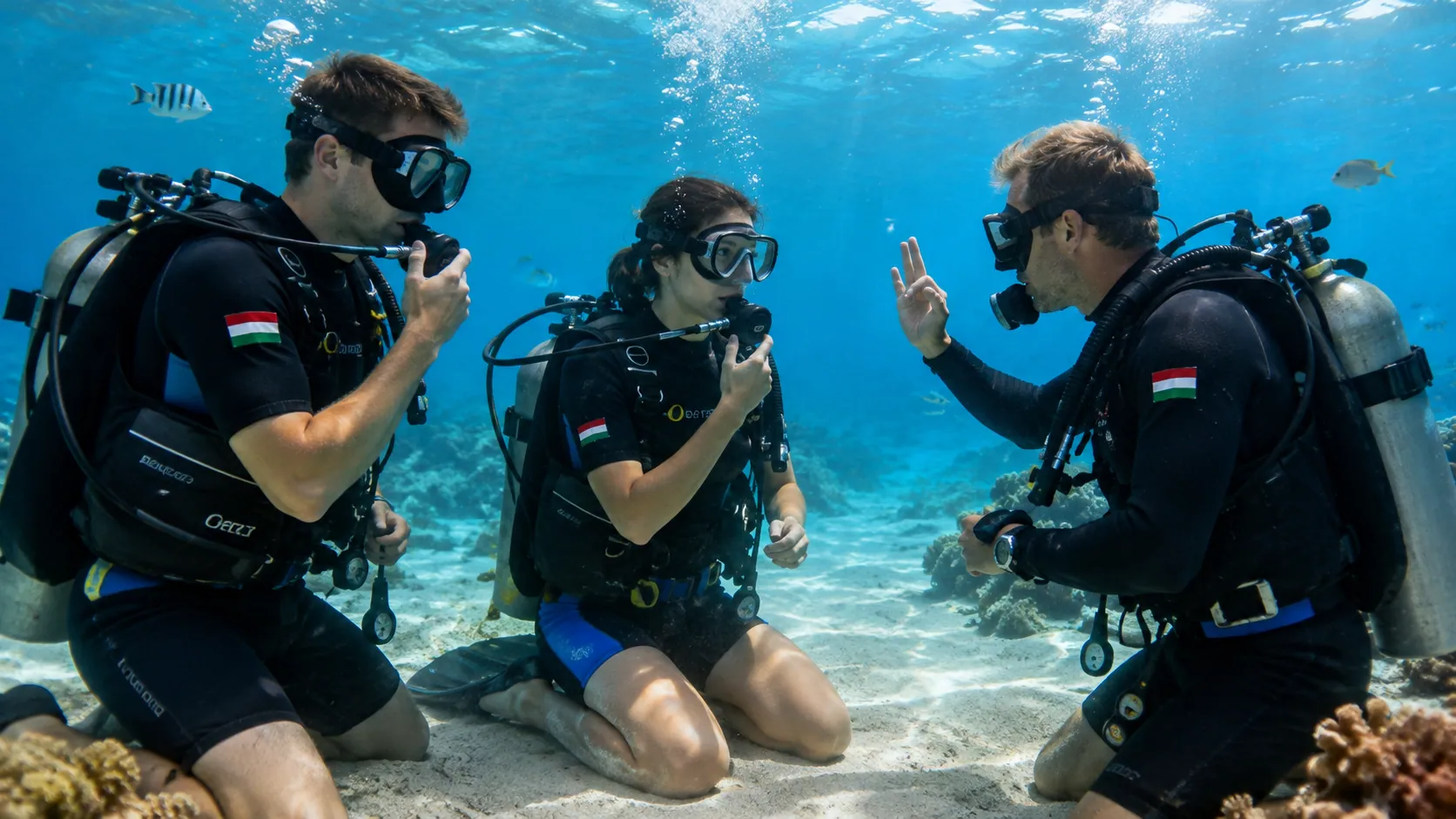
A sheltered shallow reef with a sandy lagoon – this is where most of our try dives and OWD skill sessions happen.
- Depth
- 4–12m
- Boat
- 40min
- Species
- 5
Gota Abu Ramada
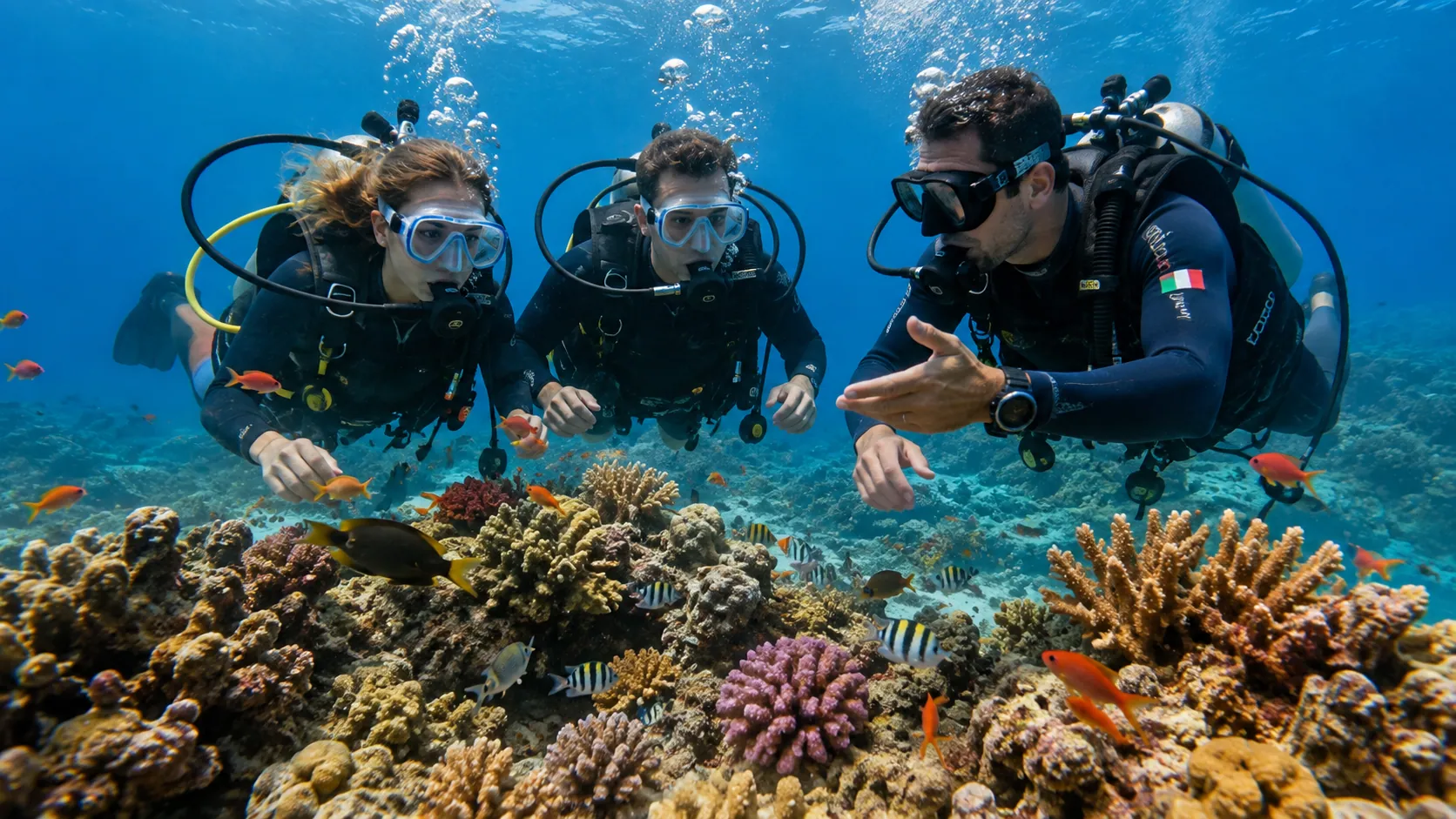
A shallow oval reef with a sandy bottom and schools of butterflyfish – perfect for training, second and night dives.
- Depth
- 4–14m
- Boat
- 55min
- Species
- 5
The Red Sea will not wait forever.
Book today – seats on the boat are limited, your excitement is not.