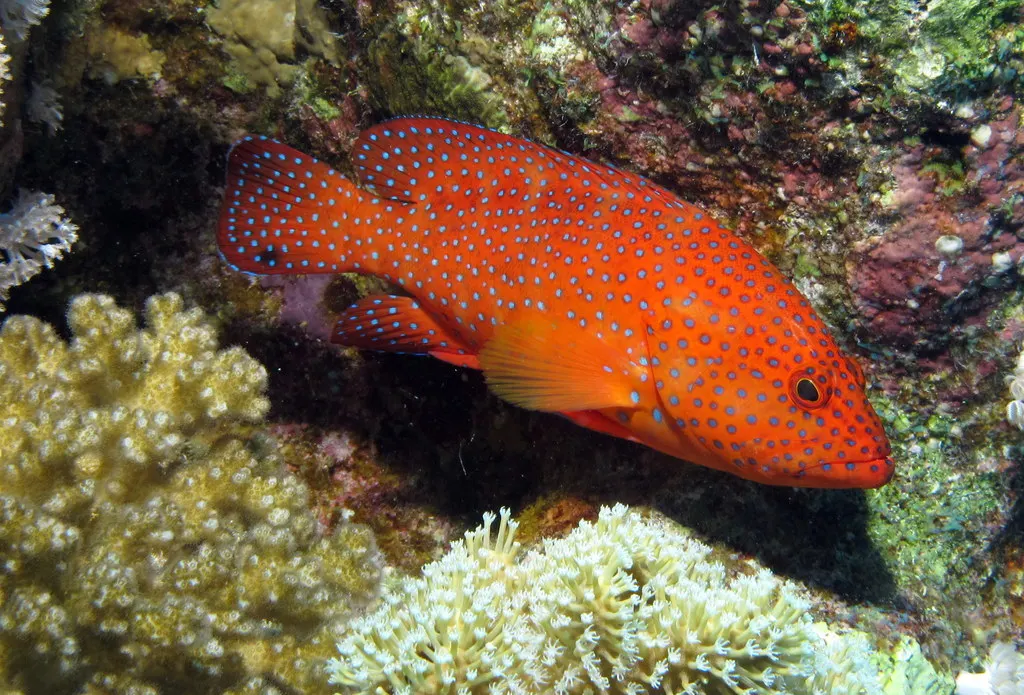
Coral hind
Cephalopholis miniata
A hundred tiny blue dots glow on its scarlet body – the reef's most photogenic predator watches from under a coral ledge.
The coral hind (Cephalopholis miniata) looks as if a painter designed it: its scarlet-orange body is covered from head to fin edges in tiny, dark-rimmed blue dots. It belongs to the grouper family – a smaller but far more colourful cousin of the huge groupers. With rounded fins and a stocky body it is a classic ambush predator, hunting in short explosive bursts.
It spends most of the day under a coral ledge or at the mouth of a hole with only its head showing, watching the small fish swarming in the water column. Its favourite prey is the sea goldie, the little fish that forms the orange clouds over the reefs. Coral hinds live in harems: within a larger male's territory several females each hold a small patch of their own, and like most groupers they can change from female to male.
Around Hurghada you will see it on nearly every dive along coral-rich, current-swept walls and plateaus: it is especially common on the walls of Umm Gamar and Carless Reef and on the drop-off of Small Giftun. It is a grateful photo subject, posing patiently in front of its bolt-hole – approach slowly and it may let you within arm's reach. You can also spot it at the shallower coral heads while snorkeling.
Did you know?
Its flashy red colour is actually camouflage at depth: red light is the first to be absorbed by seawater, so below a few metres the coral hind looks greyish-brown – it takes a dive light to make its true colour blaze out.
Where can you meet it?
A resident of coral-rich walls and plateaus: you will meet it on almost every dive along the walls of Umm Gamar and Carless Reef, on the Small Giftun drop-off and in the Giftun coral gardens.
Frequently asked questions
No: although it is a predator, its prey consists of fish a few centimetres long, and it merely watches people curiously from its hole. Feel free to photograph it up close – if you get too near, it simply retreats deeper into its lair.
Seawater absorbs red light first, so below a few metres every red animal looks drab. Bring your torch or strobe close and the greyish fish turns brilliant scarlet in an instant – one of diving's finest "magic tricks".
Yes, it also lives in the recesses of shallower coral heads – but you need to look carefully, because by day only its dotted head peeks out of the shadow. As a diver you will see far more of it.
Best sites for Coral hind
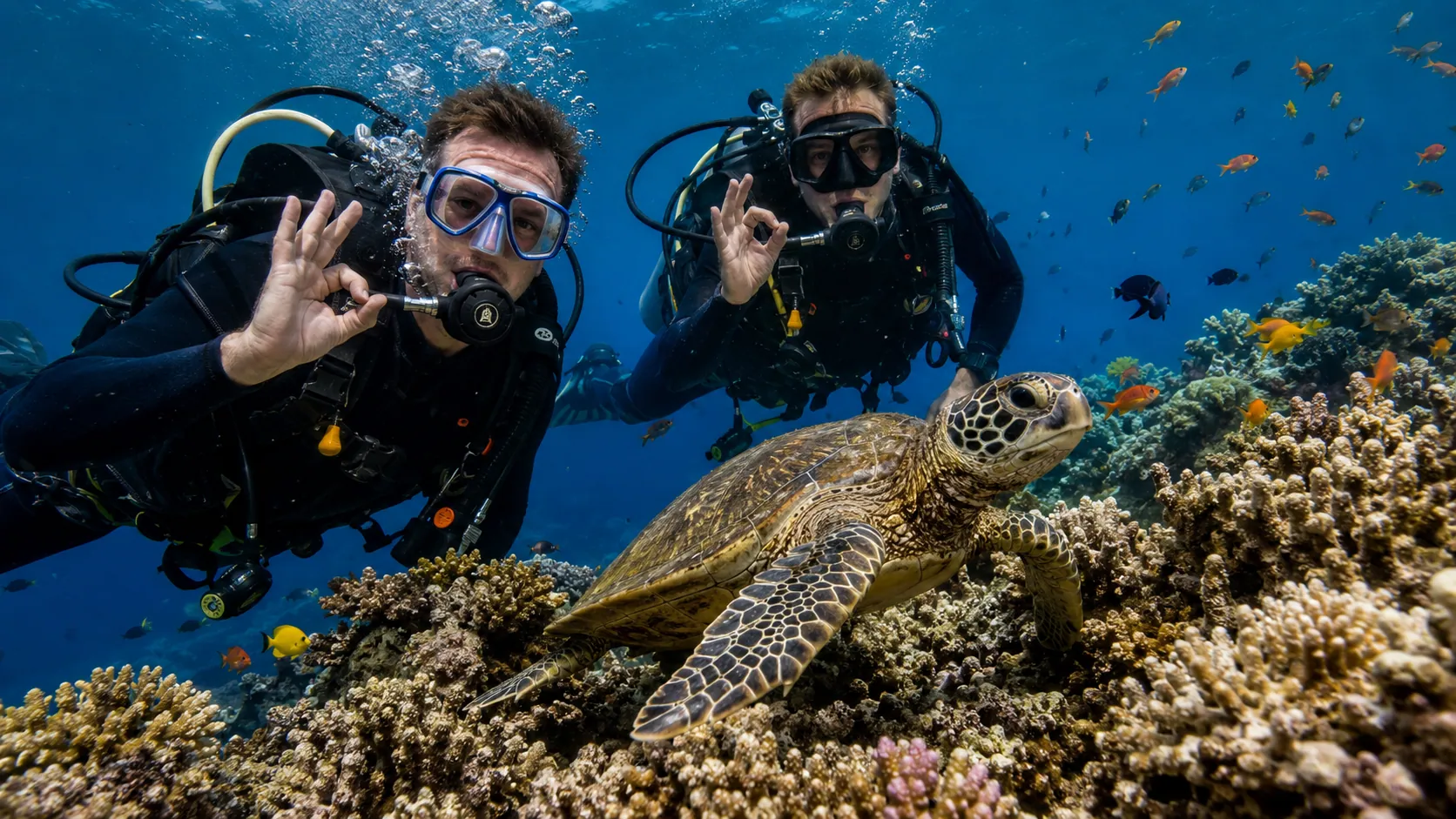
Umm Gamar
An elongated island in the north: a plateau with three coral towers, small caves and big predators out in the blue.
- Depth
- 10–30m
- Boat
- 75min
- Species
- 5
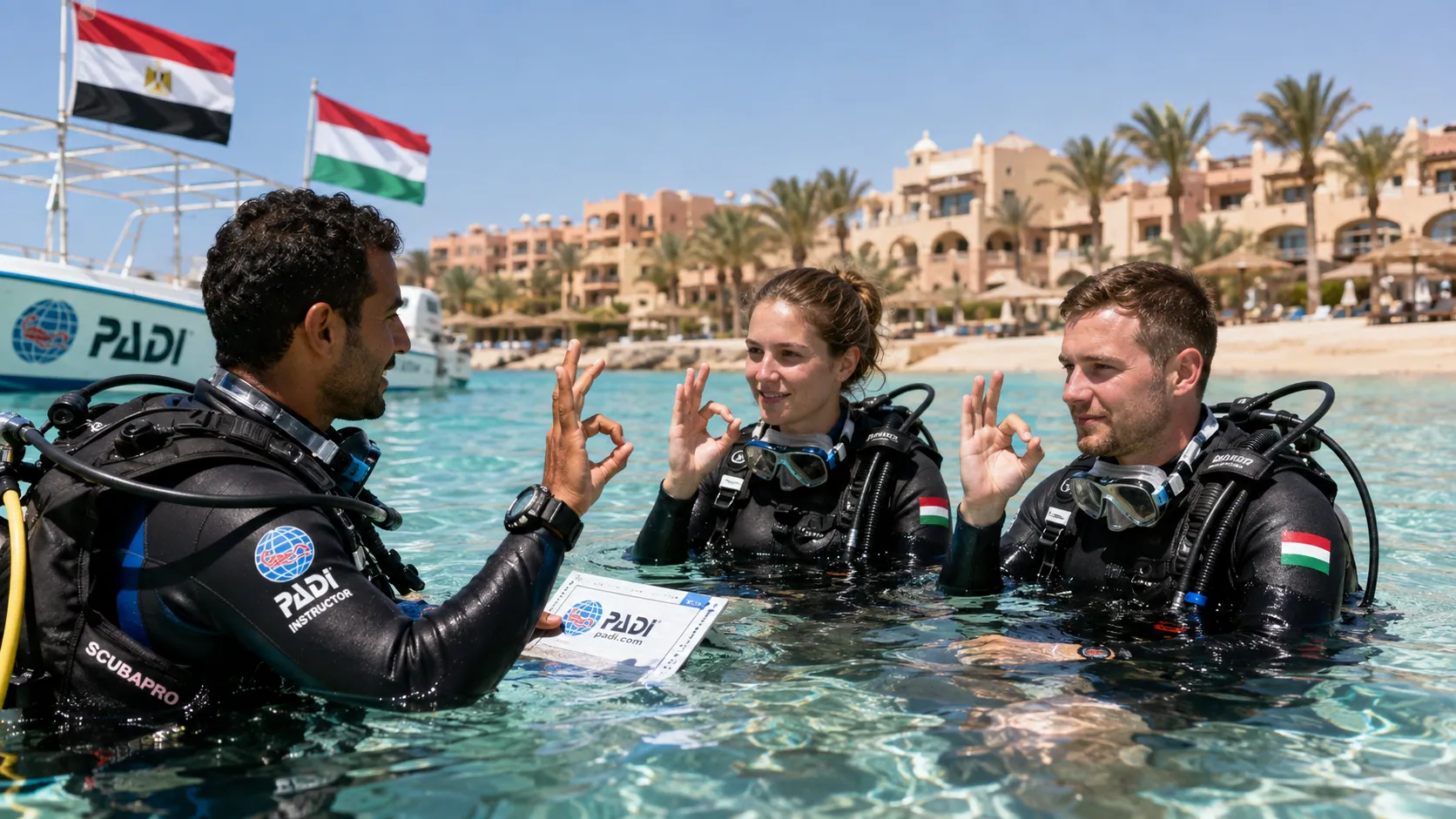
Carless Reef
An offshore twin-erg reef famous for its legendary moray colony – for experienced divers, weather permitting.
- Depth
- 12–30m
- Boat
- 70min
- Species
- 5
Small Giftun fal
Hurghada's classic drift dive: a sheer wall with gorgonian fans, eagle rays and a coral-tower plateau at 20–30 metres.
- Depth
- 8–30m
- Boat
- 50min
- Species
- 5
The Red Sea will not wait forever.
Book today – seats on the boat are limited, your excitement is not.