Cowtail stingray
Pastinachus sephen
A metre-and-a-half velvet-black ray named for the flag-like banner on its tail – the stately giant of the sand flats.
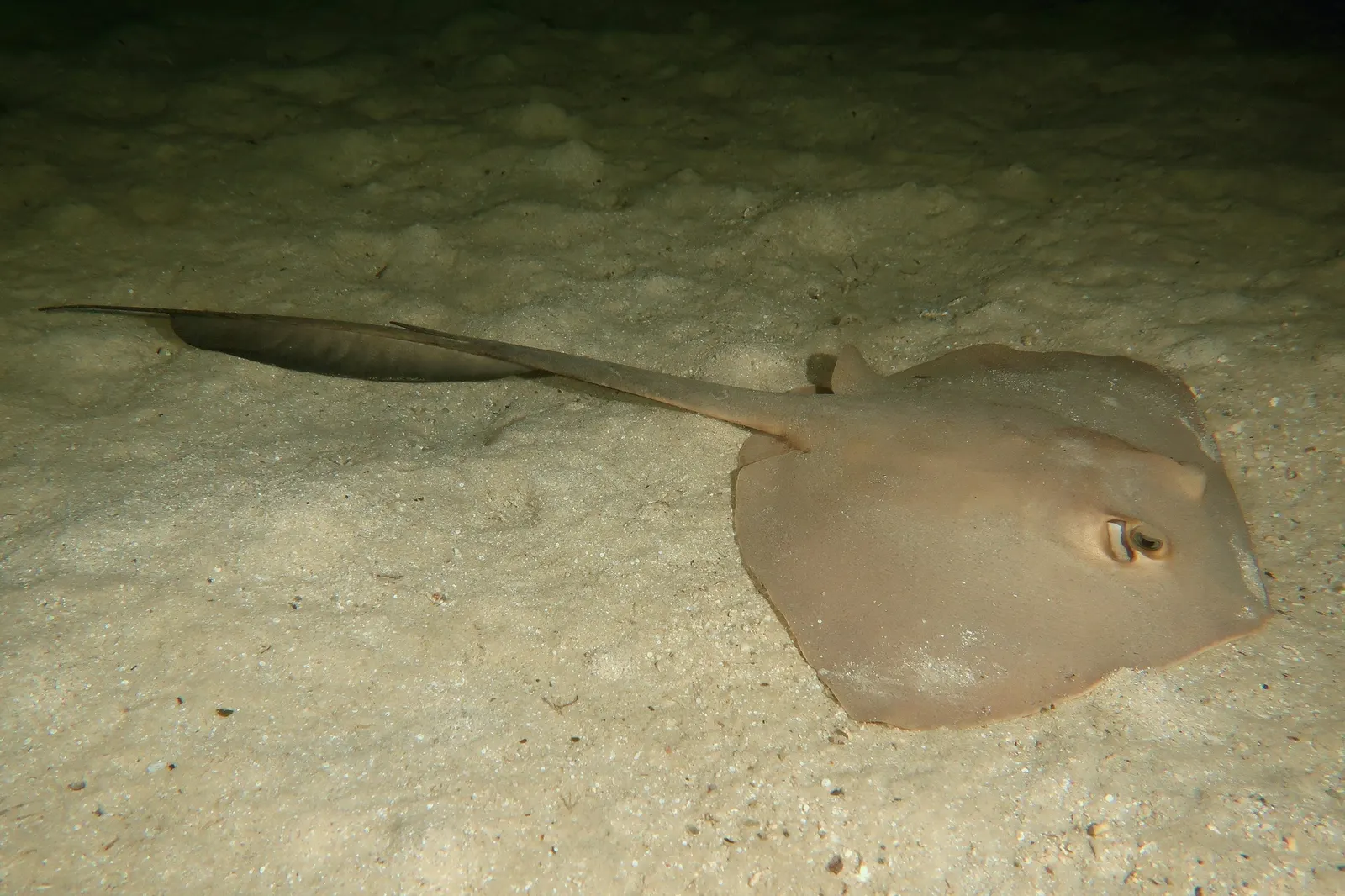
The cowtail stingray (Pastinachus sephen) is one of the largest rays you can meet on Hurghada's sand flats: its disc can reach 180 centimetres. The dark grey-black, heavy-set body forms a rounded diamond, but its surest field mark is the tail: a broad black skin-fold runs along its underside, rippling like a flag as it swims – the source of both its Hungarian and English names. Near the tail base sits a serrated, venom-coated spine, used strictly for defence.
It is a bottom-feeding hunter: with sensitive electroreceptors it locates clams, crabs and worms hidden beneath the sand, then blasts out veritable craters to dig them up – a line of pits in the sand often marks where it has dined. By day it frequently rests on the sand beside reef walls, dusted over with a thin layer of sediment, betrayed only by its eyes and that tail banner. Curiously, its skin wrote itself into human history too: covered in tiny pearl-like denticles, ray leather of this species was used for centuries to wrap the hilts of samurai swords.
Around Hurghada, the sandy lagoon of Abu Hashish, the sand flats of El Fanadir and the "aquarium" of Gota Abu Ramada are its best-known haunts. The ray is peaceful and shy: it never attacks, deploying its spine only if stepped on or cornered. The diver's rules follow naturally: do not swim directly over it, do not trap it between yourself and the reef, and never touch it – that keeps the encounter stress-free for both sides.
Did you know?
The cowtail ray's pearl-grained skin was one of the most sought-after materials of Japanese swordsmiths: for centuries samurai sword hilts were wrapped in this species' leather ("same-kawa"), because it does not slip even when wet.
How to behave around it
A peaceful animal, but a venomous spine sits at its tail base: never swim directly above it, never corner it and never touch it. Stingray injuries almost always come from stepping on or handling one – with a little distance the encounter is completely safe.
Where can you meet it?
It rests at sandy-bottomed dive sites: your best chances are in the lagoon of Abu Hashish, on the sand flats of El Fanadir and on the sand of Gota Abu Ramada.
Frequently asked questions
Only if you provoke it: the spine is a purely defensive weapon, used when the ray is stepped on or grabbed. Faced with a calm diver who does not hover above it, the worst it will do is sail elegantly away. The rule is the same as always: watch it, photograph it, do not touch it.
The exact role of the skin-fold under the tail is still being studied – it most likely serves to confuse predators: the rippling black banner makes the tail look larger and harder to grab, drawing attacks away from the body. Conveniently, it is also the surest field mark for divers.
Its head is covered in tiny electroreceptors called ampullae of Lorenzini, which detect even the faint electrical signals of a clam's or crab's muscle movements – the ray literally has a "sixth sense". That is why you often see crater-like pits in the sand: that is where it had breakfast.
Best sites for Cowtail stingray
Abu Hashish-fok
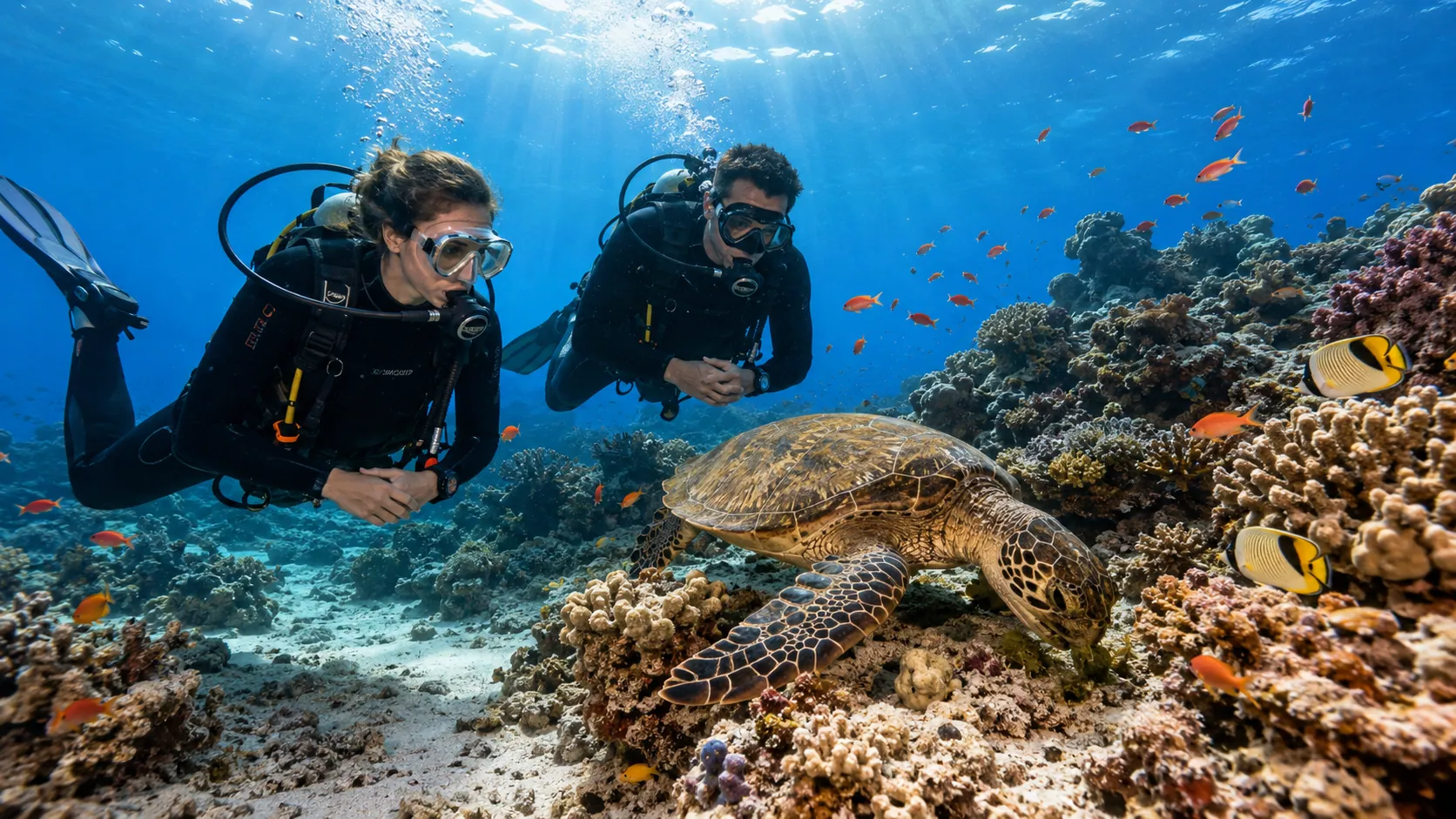
A quiet southern cape with seagrass meadows and an atmospheric cavern – turtles almost for sure, a dugong with some luck.
- Depth
- 5–20m
- Boat
- 60min
- Species
- 5
El Fanadir
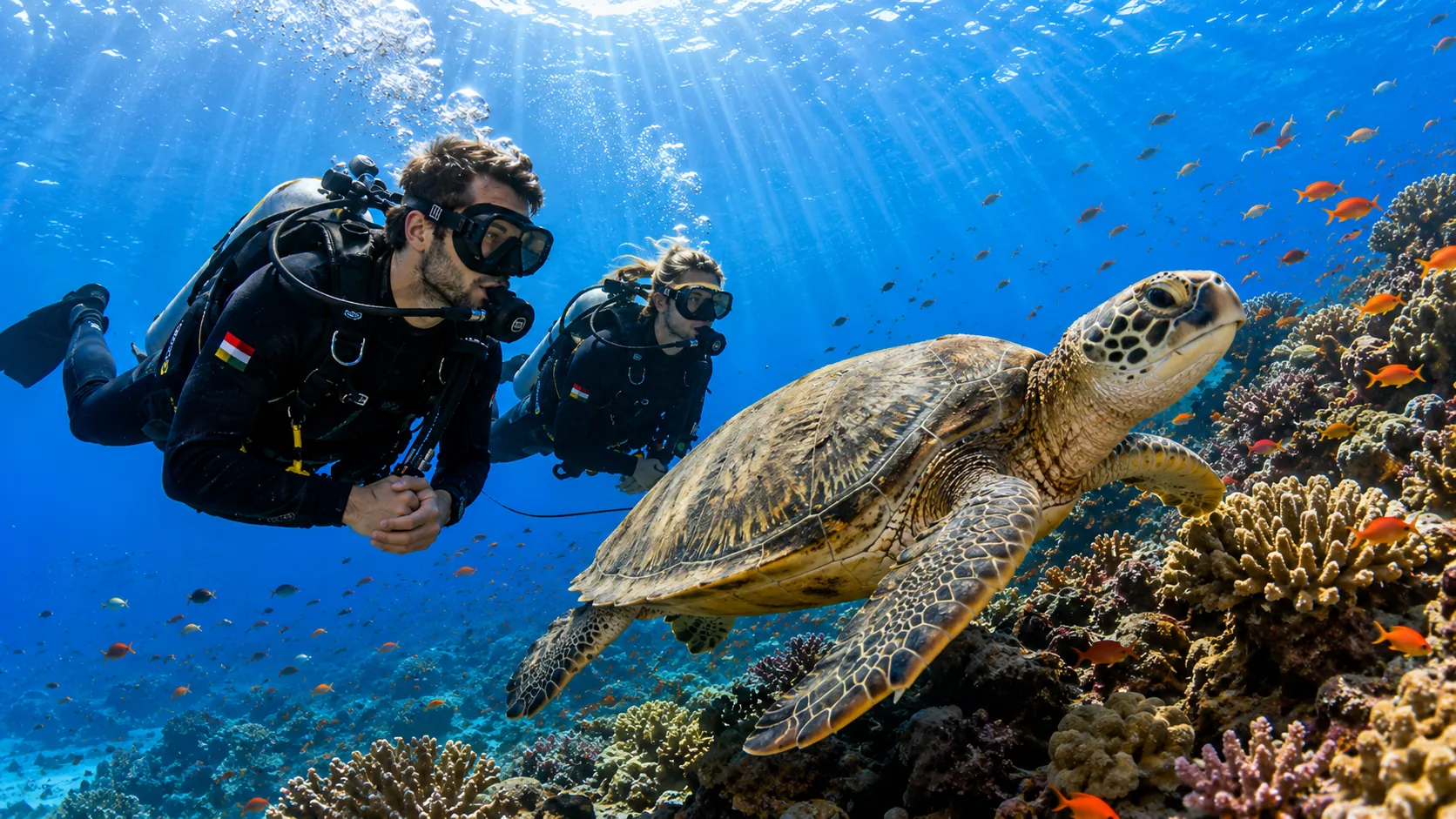
A long reef ridge barely half an hour from the marina: a gentle wall, blue-spotted rays and seagrass patches with turtles.
- Depth
- 6–25m
- Boat
- 30min
- Species
- 5
Gota Abu Ramada
A shallow oval reef with a sandy bottom and schools of butterflyfish – perfect for training, second and night dives.
- Depth
- 4–14m
- Boat
- 55min
- Species
- 5
The Red Sea will not wait forever.
Book today – seats on the boat are limited, your excitement is not.