Tentacled flathead
Papilloculiceps longiceps
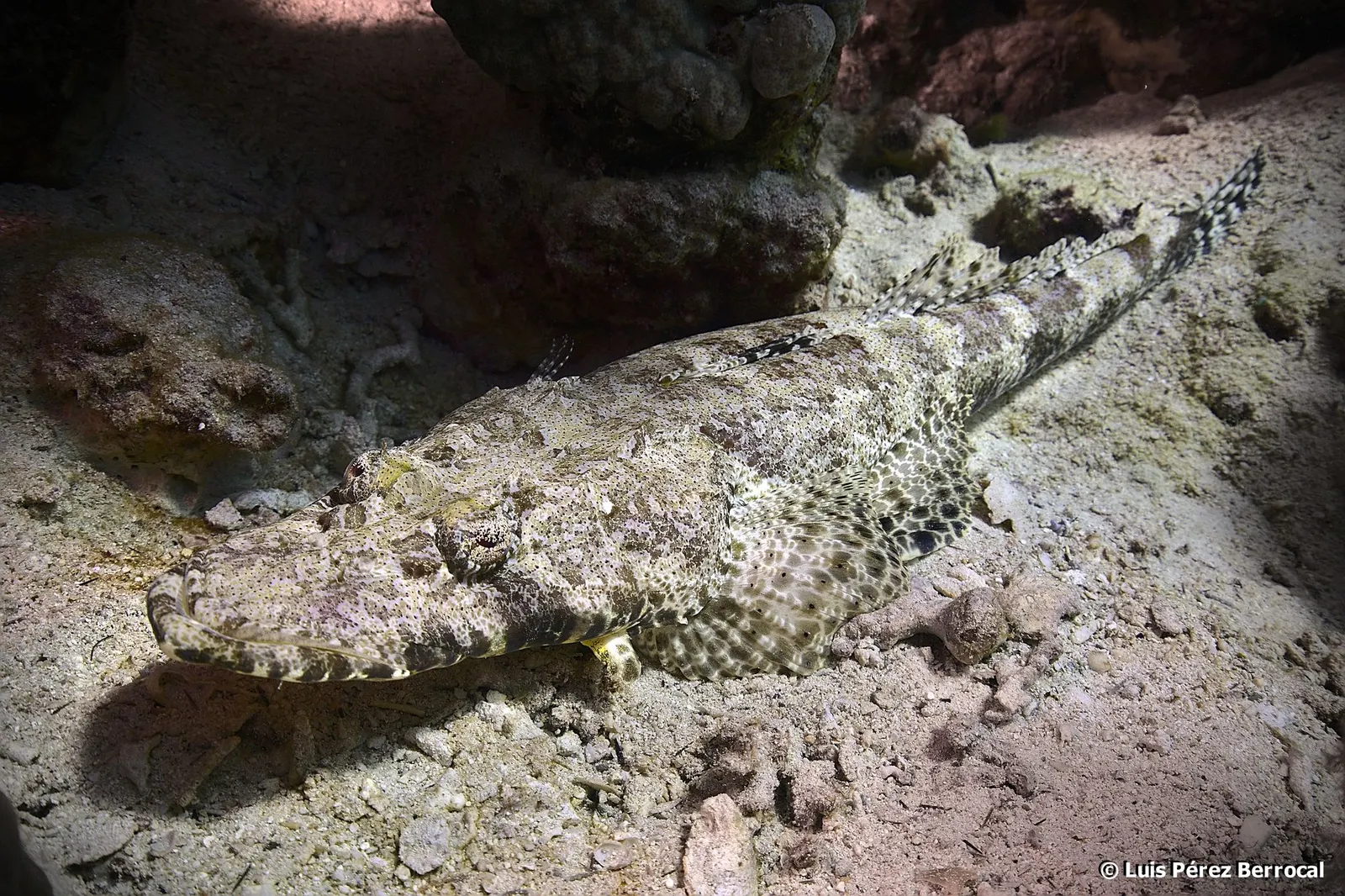
The master of sand camouflage: the half-metre crocodilefish melts into the bottom so well that you often only notice it when your eyes meet its.
The tentacled flathead or crocodilefish (Papilloculiceps longiceps) owes its name to a flattened, elongated head and a broad, toothy mouth – seen from above it truly resembles a miniature crocodile. Its sand-coloured body, mottled with greenish-brown blotches, takes on the pattern of the bottom perfectly. Its most remarkable detail is the eye: lacy, fringed skin flaps cover the eyeball, erasing the one thing camouflage cannot normally hide – the round, shiny outline of an eye.
It is an ambush predator: it spends most of its day motionless, pressed onto sand or coral rubble, often half buried. When an unsuspecting small fish or shrimp strays too close, the huge mouth snaps open in a fraction of a second and the prey vanishes into it with the suction vortex it creates. The crocodilefish trusts its camouflage so completely that it almost never flees – which makes it one of the most rewarding subjects for underwater photographers.
Around Hurghada you find it on sandy, rubbly reef floors, typically at 5–25 metres, so it is more of a diver's encounter than a snorkeler's. The sandy lagoon of Abu Hashish, the sand channels between the towers of Gota Abu Ramada and the bases of the El Aruk coral heads are its reliable haunts. Finding one takes a guide's trained eye – but once it has been pointed out to you, you never forget what to look for.
Did you know?
Its eyes wear lacy skin flaps – literal camouflage nets: the weakest point of any disguise is the round, shiny eye, so evolution gave the crocodilefish a camo pattern even for that.
Where can you meet it?
It lies low on Hurghada's sandy, rubbly bottoms: guides regularly find it in the lagoon of Abu Hashish, on the sand channels of Gota Abu Ramada and at the foot of the El Aruk coral heads.
Frequently asked questions
Despite the fearsome name and toothy mouth, it is completely harmless to people: it is not venomous and never bites divers – its mouth is sized strictly for small fish and shrimps. The only rule is the usual one: don't touch it, and don't accidentally settle onto the patch of sand where it is lying.
Look for the outline, not the colour: the elongated, flat crocodile-head shape lying on the sand and the fan-like pectoral fins give it away. Our guides know exactly which sand patches it favours – tell us in advance you'd like to see one and the odds are good we'll point one out.
Because its entire survival strategy is built on invisibility: it is convinced you cannot see it. That is why you can hover beside it taking photos for minutes – just move slowly, because if it does finally bolt, it vanishes in a single puff of sand.
Best sites for Tentacled flathead
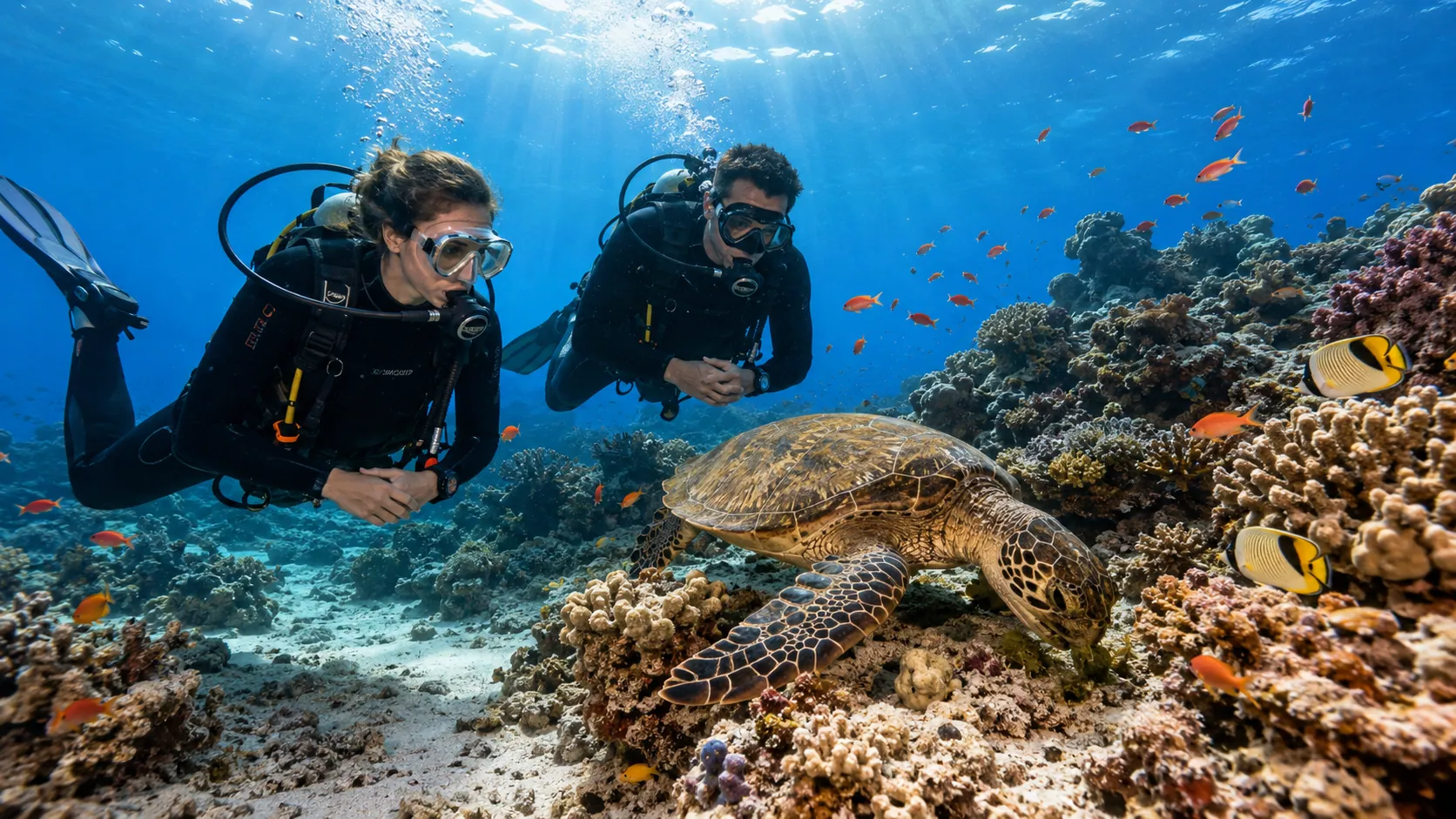
Abu Hashish-fok
A quiet southern cape with seagrass meadows and an atmospheric cavern – turtles almost for sure, a dugong with some luck.
- Depth
- 5–20m
- Boat
- 60min
- Species
- 5
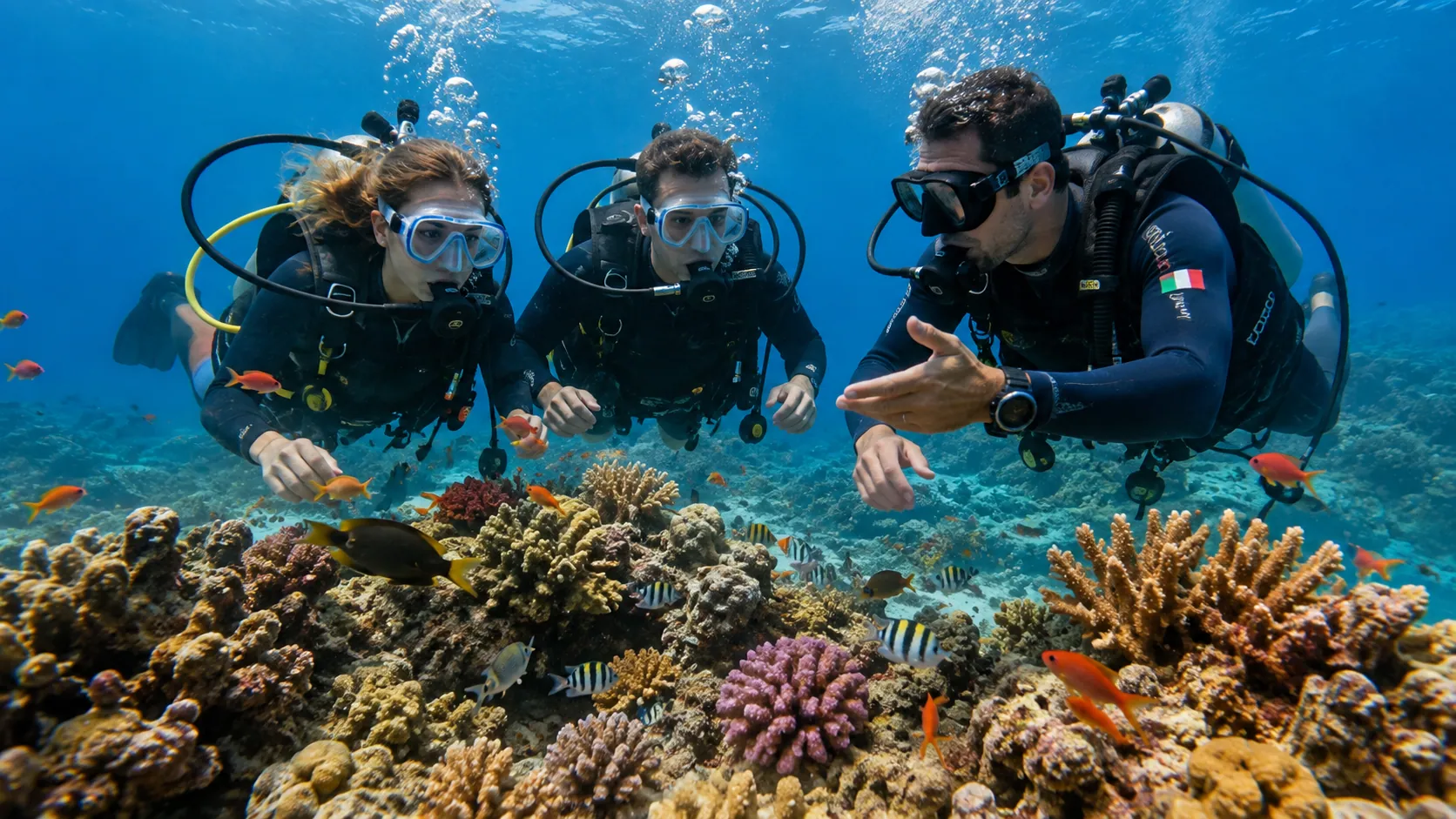
Gota Abu Ramada
A shallow oval reef with a sandy bottom and schools of butterflyfish – perfect for training, second and night dives.
- Depth
- 4–14m
- Boat
- 55min
- Species
- 5
El Aruk (Gigi)
A playground of coral towers on white sand: easy navigation, clouds of glassfish and light made for photography.
- Depth
- 5–14m
- Boat
- 35min
- Species
- 5
The Red Sea will not wait forever.
Book today – seats on the boat are limited, your excitement is not.