Devil scorpionfish
Scorpaenopsis diabolus
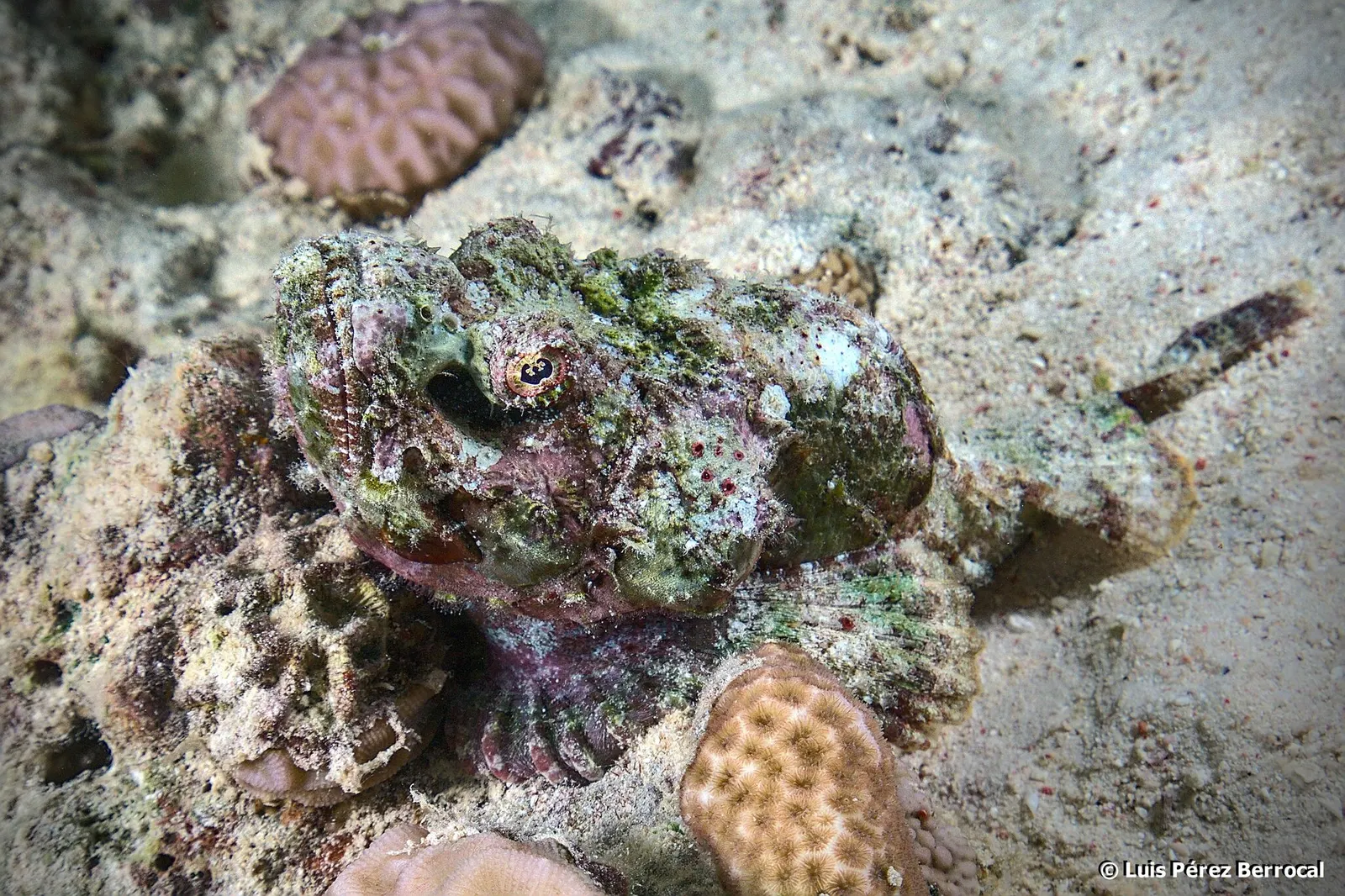
The false stonefish: it poses as a humpbacked, algae-crusted rock – and flashes its lurid orange "inner wings" only when disturbed.
The devil scorpionfish (Scorpaenopsis diabolus) is one of the reef's most convincing impostors: its humpbacked body, covered in skin flaps and camouflage growths, so eerily resembles the dreaded stonefish that it is nicknamed the "false stonefish". Its greyish, pinkish or algae-green blotches melt perfectly into the coral rubble. Its dorsal fin carries 12–13 venomous spines – with venom weaker than a true stonefish's, yet still delivering a very painful sting.
It hunts from ambush: it may squat on the same patch of rubble for days, waiting for a small fish or shrimp to drift in front of its huge, down-curved mouth – then swallows the prey in one lightning-fast gulp. Its oddest habit is the warning flash: when disturbed it spreads its pectoral fins, whose inner surfaces hide a garish orange-and-black pattern. This sudden explosion of colour is a message to predators: "I am venomous – leave me alone." A poor swimmer, it often walks across the bottom on its pectoral fins instead.
Around Hurghada it occurs on rubble plateaus and sand patches at diving depths – finding one is a challenge even for the guides, so every discovered individual is a small celebration. The rubble channels between the coral heads of Gota Abu Ramada and El Aruk and the plateaus of Abu Ramada give you the best odds. Photograph it freely, but always keep a respectful distance and never lean on anything nearby.
Did you know?
It has built-in hazard lights: a lurid orange-and-black pattern hides on the inner surface of its pectoral fins, flashed only in moments of danger – like a hi-vis vest suddenly revealed under a grey coat.
How to behave around it
Its dorsal spines are venomous and the sting is very painful – but the fish never attacks; accidents always come from an unlucky hand placement or step. Keep good buoyancy, lean on nothing, and look twice before putting your hand anywhere. If stung, soak the wound in hot water (about 42–45 °C) to ease the pain and see a doctor.
Where can you meet it?
It lurks on Hurghada's rubble plateaus: guides find it most often in the channels between the coral heads of Gota Abu Ramada and El Aruk and on the plateaus of Abu Ramada.
Frequently asked questions
No, it just resembles one closely – hence the nickname false stonefish. Its venom is weaker than a true stonefish's, but the sting is still very painful. You can tell them apart by its more humped back and the orange inner pectorals – but as a diver the rule for both is identical: look, don't touch.
For anyone with good buoyancy who touches nothing, the risk is practically zero: the fish tolerates photography without moving and never attacks. Accidents come almost exclusively from someone mistaking it for a rock and leaning on it – which is exactly why we teach never to touch anything on the reef.
Very rarely – it lives deeper on the rubble plateaus, and from the surface its camouflage makes it practically undiscoverable. This is a diver's species through and through, and even underwater it takes a guide's trained eye.
Best sites for Devil scorpionfish
Gota Abu Ramada
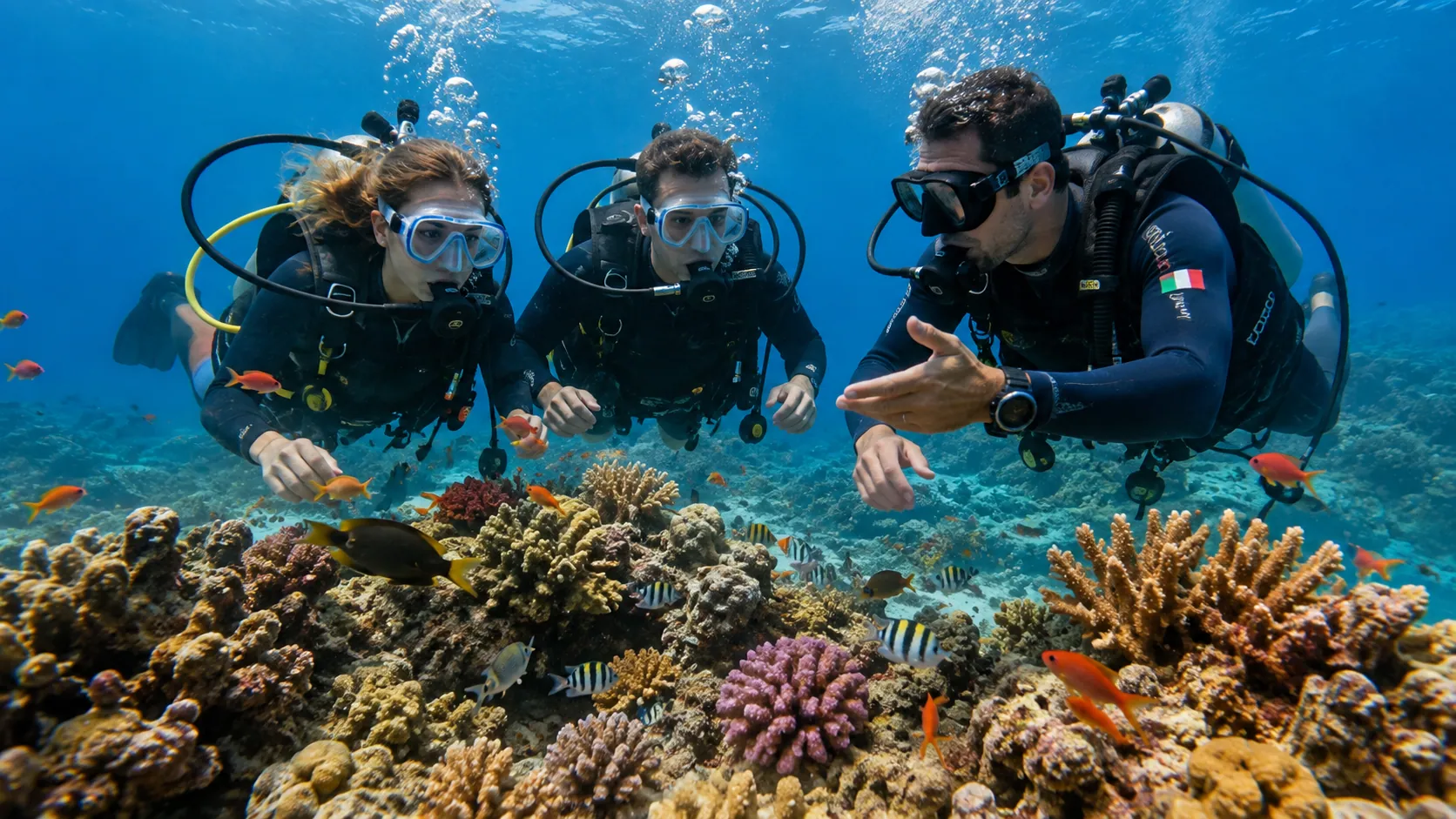
A shallow oval reef with a sandy bottom and schools of butterflyfish – perfect for training, second and night dives.
- Depth
- 4–14m
- Boat
- 55min
- Species
- 5
El Aruk (Gigi)
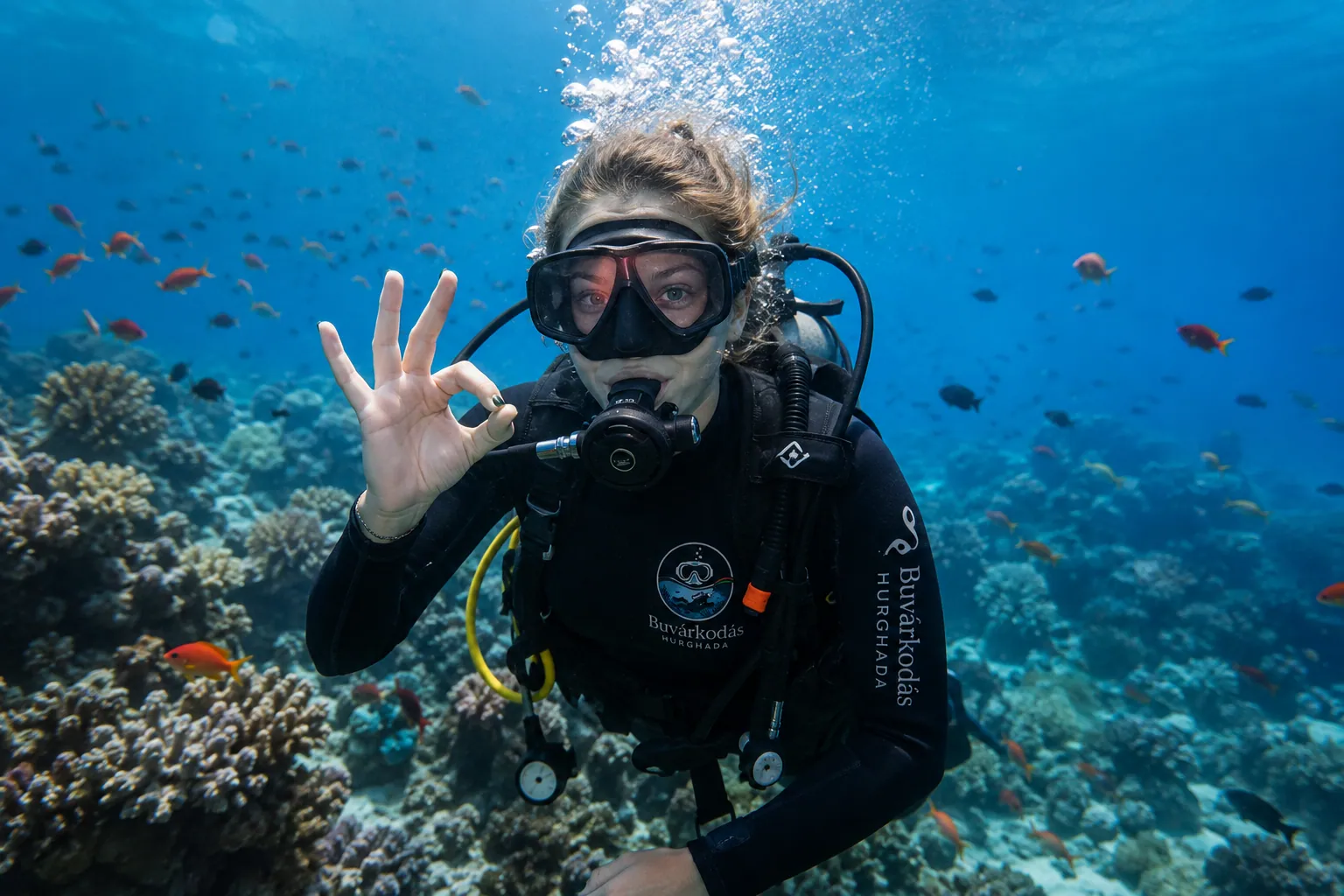
A playground of coral towers on white sand: easy navigation, clouds of glassfish and light made for photography.
- Depth
- 5–14m
- Boat
- 35min
- Species
- 5
Abu Ramada („Az Akvárium”)
The Aquarium nickname is well earned: the fish schools swirling around the coral towers can be so dense you lose sight of the reef.
- Depth
- 6–26m
- Boat
- 50min
- Species
- 6
The Red Sea will not wait forever.
Book today – seats on the boat are limited, your excitement is not.