Dome coral
Porites lutea
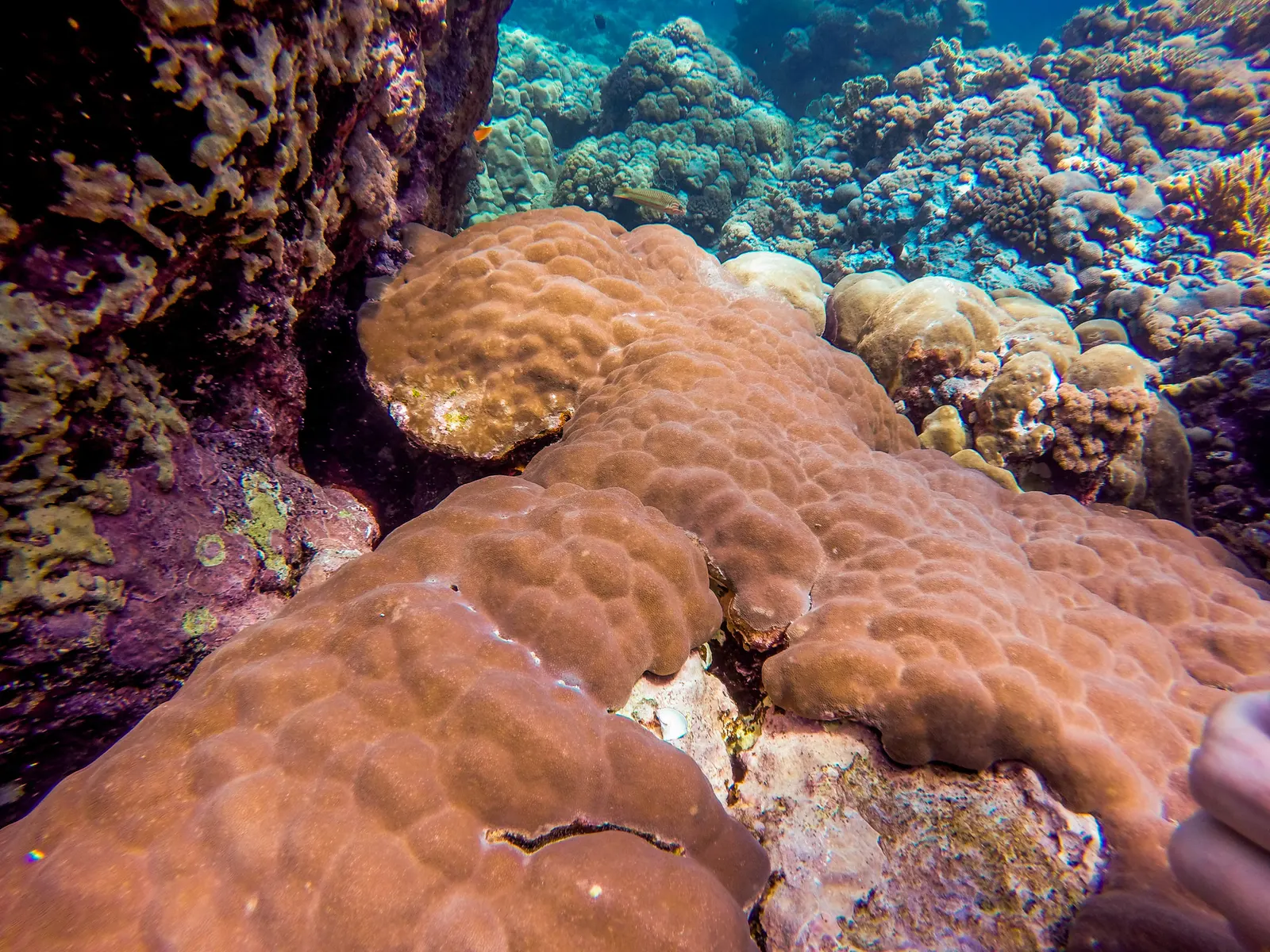
The reef's centuries-old giant: the yellow-brown, velvet-surfaced dome coral grows slowly but unstoppably – some colonies are older than any person alive.
The dome coral (Porites lutea) is impossible to miss: its huge yellow-brown or mustard hemispheres, sometimes the size of a car, sit on the reef like petrified hills. Its polyps are among the smallest of all stony corals – barely one or two millimetres – so from a distance the colony surface looks perfectly smooth and velvety. A telltale sign: colourful Christmas tree worms (Spirobranchus) often poke their spiral gill crowns out of the surface, as these worms are especially fond of Porites colonies.
Dome coral is the reef's marathon runner: it grows only about one centimetre a year, but in return it is nearly indestructible. Its skeleton lays down annual growth bands just like tree rings, so a colony of 3–4 metres can easily be 300–400 years old. It gets its energy from photosynthesising zooxanthellae algae in its tissue, and at night its tiny polyps also catch plankton. In summer, after the full moon, the Red Sea's Porites colonies join the corals' synchronised spawning.
Around Hurghada you will find the biggest specimens on the deeper plateaus and at the foot of the reef slopes – the domes below the walls of El Fanadir and the Giftun Islands are true living monuments. That is exactly why every anchor scar and fin strike hurts: a palm-sized wound on a centuries-old colony may not heal for decades. Hover above it at a respectful distance and consider how many generations of divers have swum over this very same dome.
Did you know?
From thin cores drilled into dome coral skeletons, scientists can read sea temperatures going back centuries – the colony's growth bands are like a climate diary hundreds of years long, written by the coral itself.
Where can you meet it?
The finest multi-metre domes stand on the El Fanadir plateau, on the slopes around the Giftun Islands and at the reef base of Umm Gamar – but smaller colonies appear on almost every dive site.
Frequently asked questions
Yes. Dome coral grows roughly one centimetre a year, so a 3-metre colony can be over 300 years old – it was already standing on the reef when sailing ships still plied the Red Sea.
A paper-thin layer of living tissue covers the rock-hard skeleton, and a single touch can wound it. On a coral this slow-growing, one fin mark means decades of damage – so the rule is: look, photograph, but never touch or stand on it.
Christmas tree worms: tube-dwelling worms embedded in the coral, showing only their spiral gill crowns. Swim close and they snap back inside – then cautiously unfurl again a few seconds later.
Best sites for Dome coral
El Fanadir
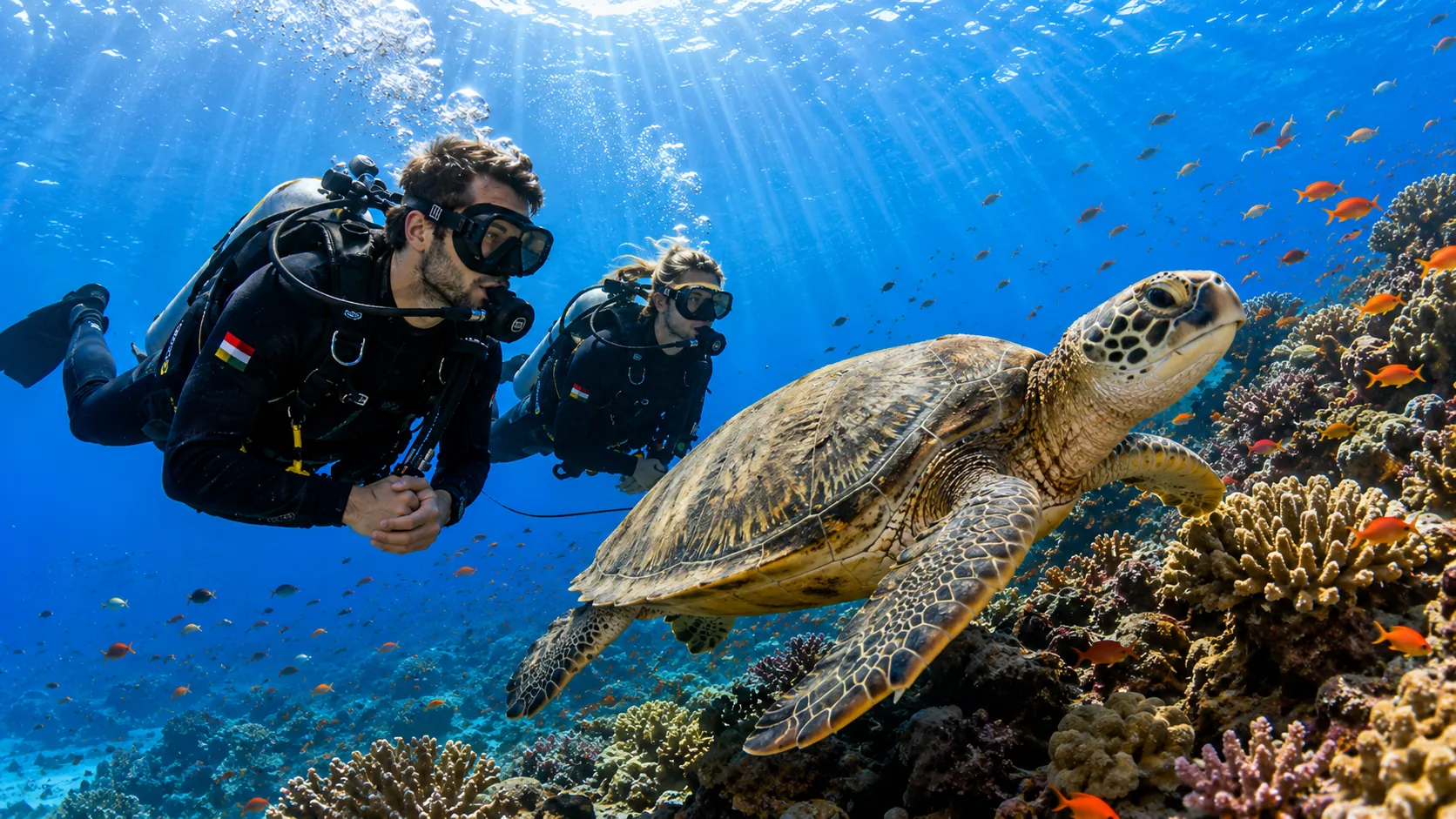
A long reef ridge barely half an hour from the marina: a gentle wall, blue-spotted rays and seagrass patches with turtles.
- Depth
- 6–25m
- Boat
- 30min
- Species
- 5
Giftun-szigetek
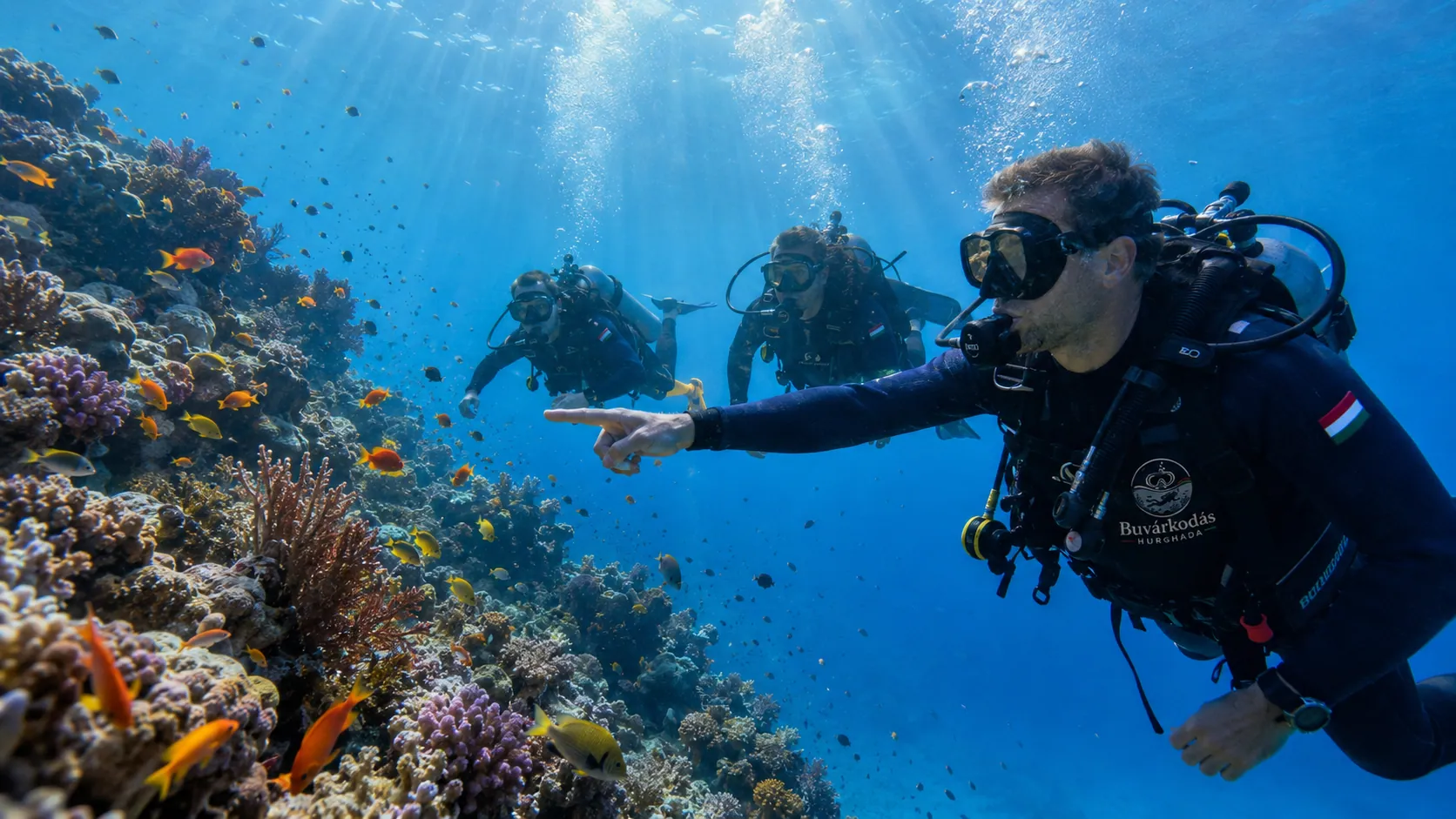
A national park island pair with a dozen dive sites: coral gardens, turtles and perhaps the richest fish life in the area.
- Depth
- 5–25m
- Boat
- 45min
- Species
- 6
Umm Gamar
An elongated island in the north: a plateau with three coral towers, small caves and big predators out in the blue.
- Depth
- 10–30m
- Boat
- 75min
- Species
- 5
The Red Sea will not wait forever.
Book today – seats on the boat are limited, your excitement is not.