Dugong (sea cow)
Dugong dugon
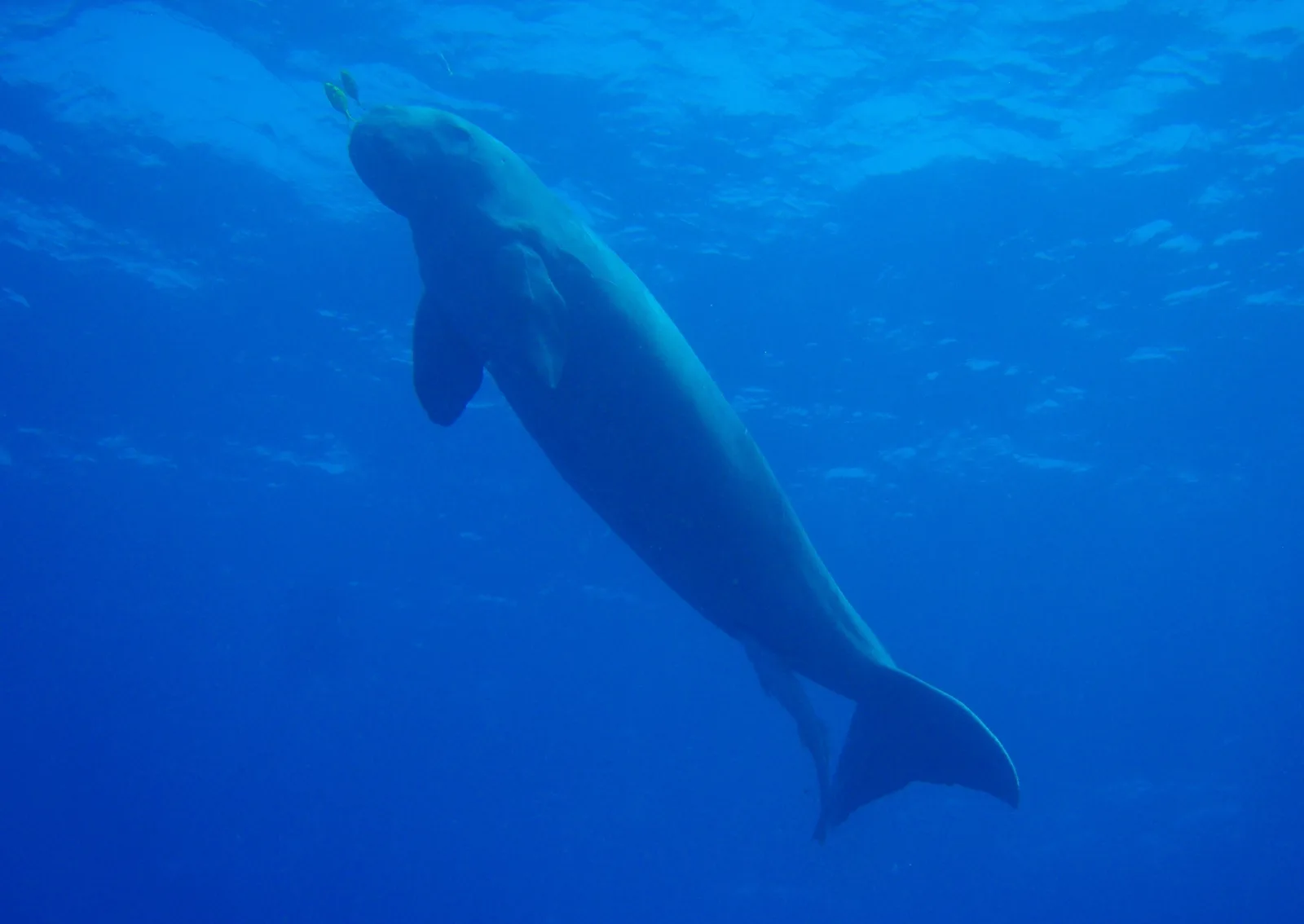
The gentle inspiration behind mermaid legends grazes seagrass in sandy bays – seeing a dugong is one of the Red Sea rarest gifts.
The dugong (Dugong dugon) is the only member of the sea cow order (Sirenia) that lives exclusively in the sea. At 2.5–3 metres and 250–400 kg, it is strictly herbivorous, grazing 25–40 kg of seagrass every day. Its closest land relatives, surprisingly, are not seals but elephants. Being a mammal, it rises to the surface every few minutes to breathe.
A dugong's life revolves around seagrass meadows: rooting along the bottom with its snout, it leaves distinctive "feeding trails" through the grassy fields. In the Red Sea it seeks out shallow, sandy, grassy bays – it is more frequent south of Hurghada around Marsa Alam, but a wandering individual does turn up from time to time in the seagrass lagoon of Abu Hashish bay.
A dugong encounter cannot be planned – which is exactly what makes it so special. Whenever we sail towards Abu Hashish, we watch for clouds of sand rising above the grassy bottom and for the round snout breaking the surface. With luck, we can observe the calmly grazing animal while snorkeling, from a respectful distance – an experience of a lifetime.
Did you know?
The dugong's closest living relatives are the elephants – a kinship still visible in its tusk-like incisors. And the mermaid legends of old sailors were most likely inspired by dugongs and their kin resting at the surface.
How to behave around it
The dugong is completely peaceful but strictly protected and sensitive to disturbance: never chase, encircle or touch it. Stay at the surface, keep a few metres' distance and let it graze undisturbed – that way it will stay with you longest.
Where can you meet it?
Near Hurghada your chance lies in the seagrass lagoon of Abu Hashish bay, and it has been spotted around the Shaab Sabina sandbank too – but a dugong is always a gift of luck.
Frequently asked questions
Not at all: the dugong is a slow, gentle herbivore that feeds exclusively on seagrass. It poses no danger whatsoever to people – sadly, the reverse is far from true, which is why it is strictly protected and must never be disturbed or touched.
Honestly: small – the dugong is the pinnacle of the rare category, and that is precisely its magic. The grassy bay of Abu Hashish is your best bet in the Hurghada area; further south around Marsa Alam it is more frequent. If it happens once, you will tell the story for the rest of your life.
Because it lives exactly like a grazing cow: it spends most of its day on the seagrass meadows, moving along placidly and cropping the grass. The order's scientific name, Sirenia, meanwhile refers to the sirens – together the two names describe this strange, endearing animal perfectly.
Best sites for Dugong (sea cow)
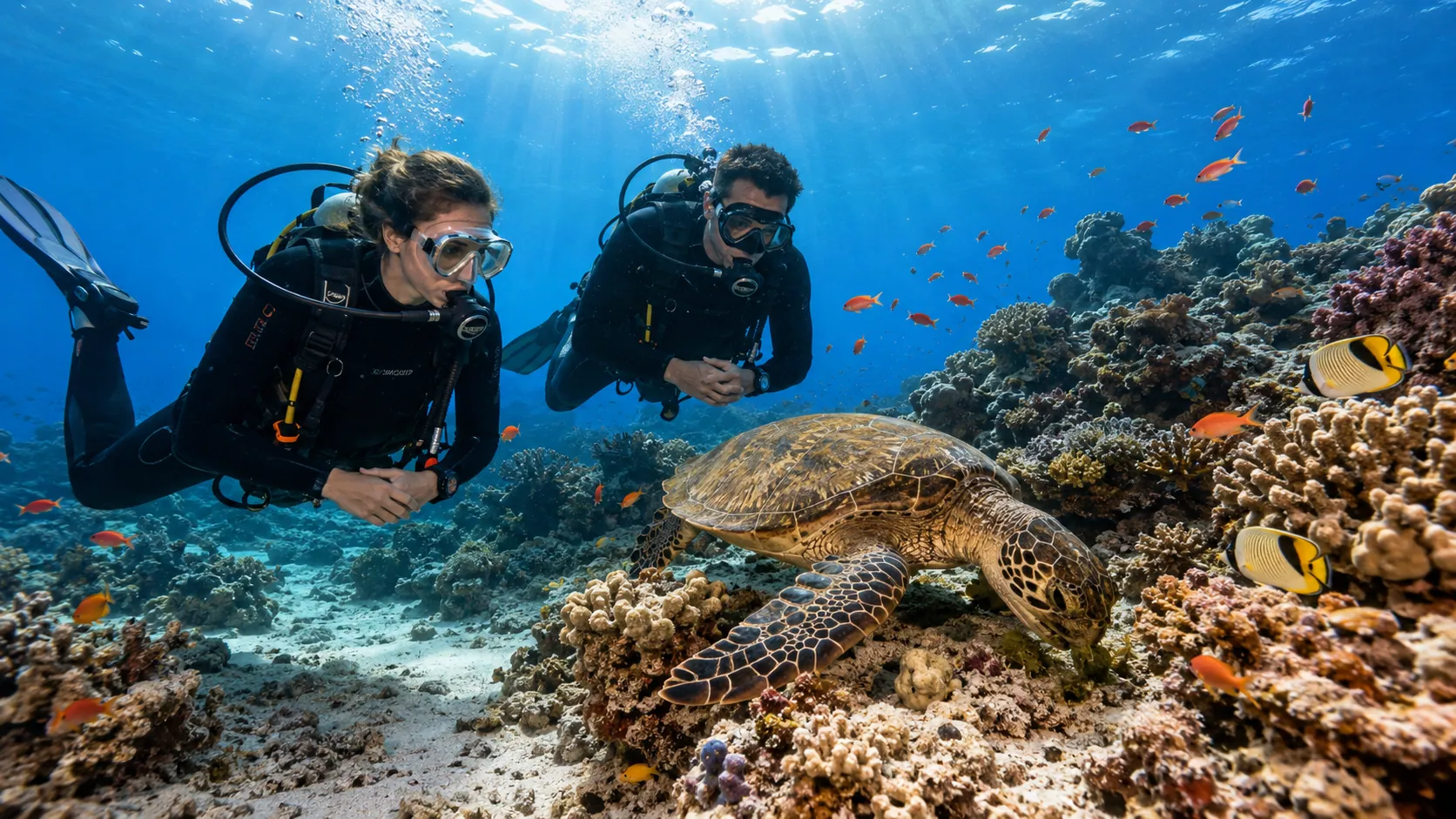
Abu Hashish-fok
A quiet southern cape with seagrass meadows and an atmospheric cavern – turtles almost for sure, a dugong with some luck.
- Depth
- 5–20m
- Boat
- 60min
- Species
- 5
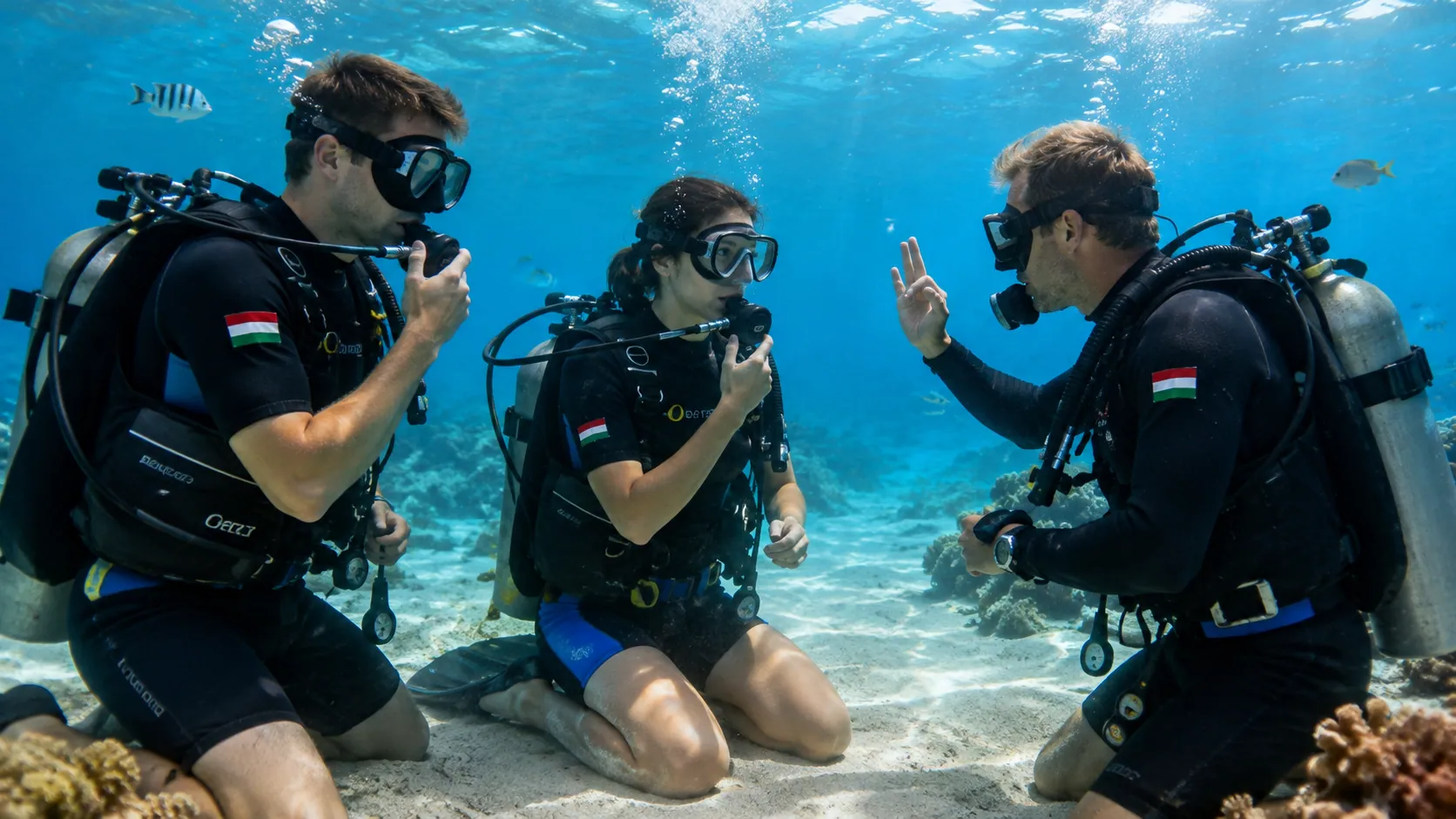
Sha'ab Sabina
A sheltered shallow reef with a sandy lagoon – this is where most of our try dives and OWD skill sessions happen.
- Depth
- 4–12m
- Boat
- 40min
- Species
- 5
The Red Sea will not wait forever.
Book today – seats on the boat are limited, your excitement is not.