Elephant ear leather coral
Sarcophyton trocheliophorum
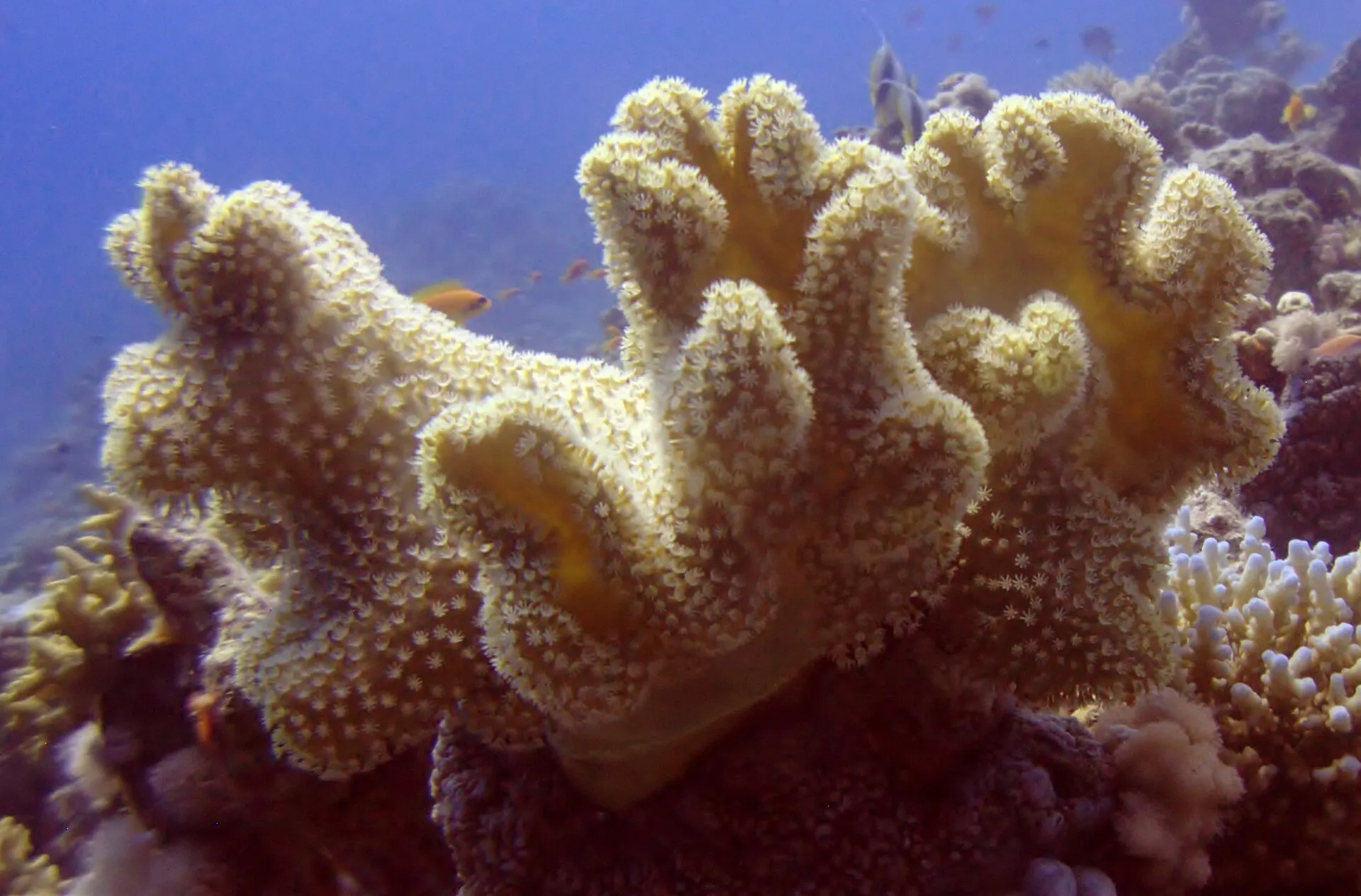
A huge, wavy-edged leather mushroom on the reef top – the folds of the elephant ear coral really do look like an elephant ear sprouting among the corals.
The elephant ear leather coral (Sarcophyton trocheliophorum) is one of the largest leather corals in the Red Sea: its heavily folded, wavy-edged disc, sitting on a thick stalk, can reach a metre across. Colours run from cream to greenish or yellowish brown. With polyps out, the surface looks like a fine fuzzy carpet; with polyps retracted it becomes smooth, shiny leather – the same colony shows two different faces, sometimes within a single dive.
Leather corals are soft corals: instead of a hard limestone skeleton they have a flexible body stiffened by tiny calcite needles called sclerites. The elephant ear coral does something curious from time to time: it secretes a waxy film over its surface and "moults" off the algae and sediment that have settled on it – after a few days the film peels away in shreds, revealing a clean, renewed surface underneath. It also carries a chemical arsenal: terpene compounds keep neighbouring corals and grazing fish at bay.
It is very common on the shallow plateaus and reef tops of Hurghada, in places forming continuous leather coral meadows – easy to enjoy while snorkeling too. The biggest specimens sit on the plateaus of Gota Abu Ramada and El Aruk and in the coral gardens of the Giftun Islands. Though tougher than stony corals, it does not forgive being stepped on – hover above it and watch up close how the polyp carpet ripples in the current.
Did you know?
The elephant ear coral occasionally puts on a wax coat: it sheds the film together with all the algae and sediment stuck to it – the coral world equivalent of a spring clean.
Where can you meet it?
You meet it on nearly every dive and snorkel trip on the shallow plateaus of Gota Abu Ramada and El Aruk and in the coral gardens of the Giftun Islands.
Frequently asked questions
Because of its polyps: when open, thousands of tiny eight-armed polyps cover it like a fuzzy carpet; when retracted, only the smooth leathery surface remains. If disturbed – or when moulting – the colony can go "bald" for hours or even days.
A soft coral: it has no hard limestone skeleton, only tiny calcite needles stiffening its body, which is why it bends and ripples in the current. That is what makes it such a good photo subject – and why it handles wave action better than many fragile stony corals.
Yes, it is one of the easiest corals to observe: huge colonies sit on the shallow reef tops at just 1–5 metres. On snorkel trips to Gota Abu Ramada and El Aruk you are guaranteed to float over a few "elephant ears".
Best sites for Elephant ear leather coral
Gota Abu Ramada
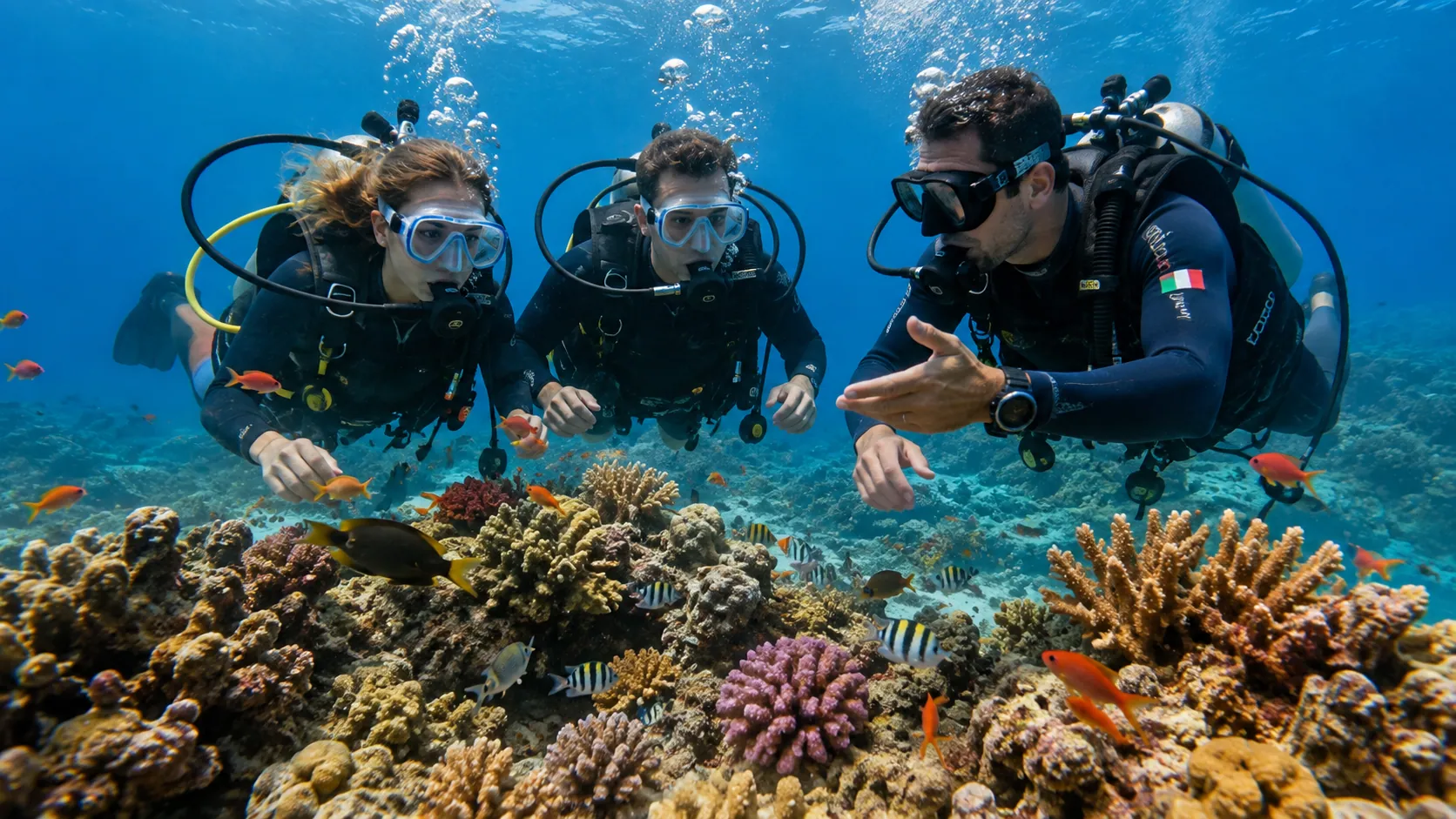
A shallow oval reef with a sandy bottom and schools of butterflyfish – perfect for training, second and night dives.
- Depth
- 4–14m
- Boat
- 55min
- Species
- 5
El Aruk (Gigi)
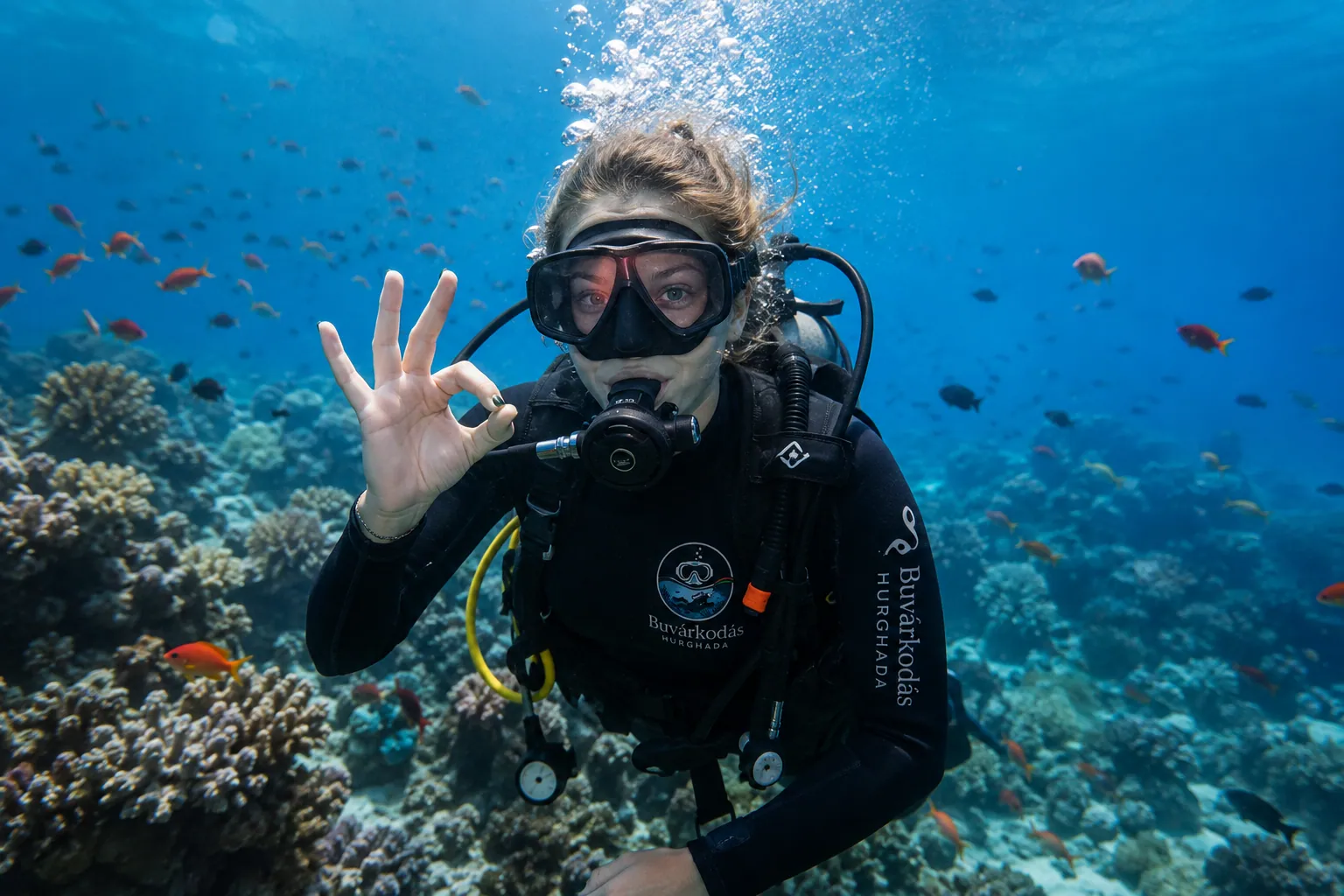
A playground of coral towers on white sand: easy navigation, clouds of glassfish and light made for photography.
- Depth
- 5–14m
- Boat
- 35min
- Species
- 5
Giftun-szigetek
A national park island pair with a dozen dive sites: coral gardens, turtles and perhaps the richest fish life in the area.
- Depth
- 5–25m
- Boat
- 45min
- Species
- 6
The Red Sea will not wait forever.
Book today – seats on the boat are limited, your excitement is not.