Finger leather coral
Sinularia polydactyla
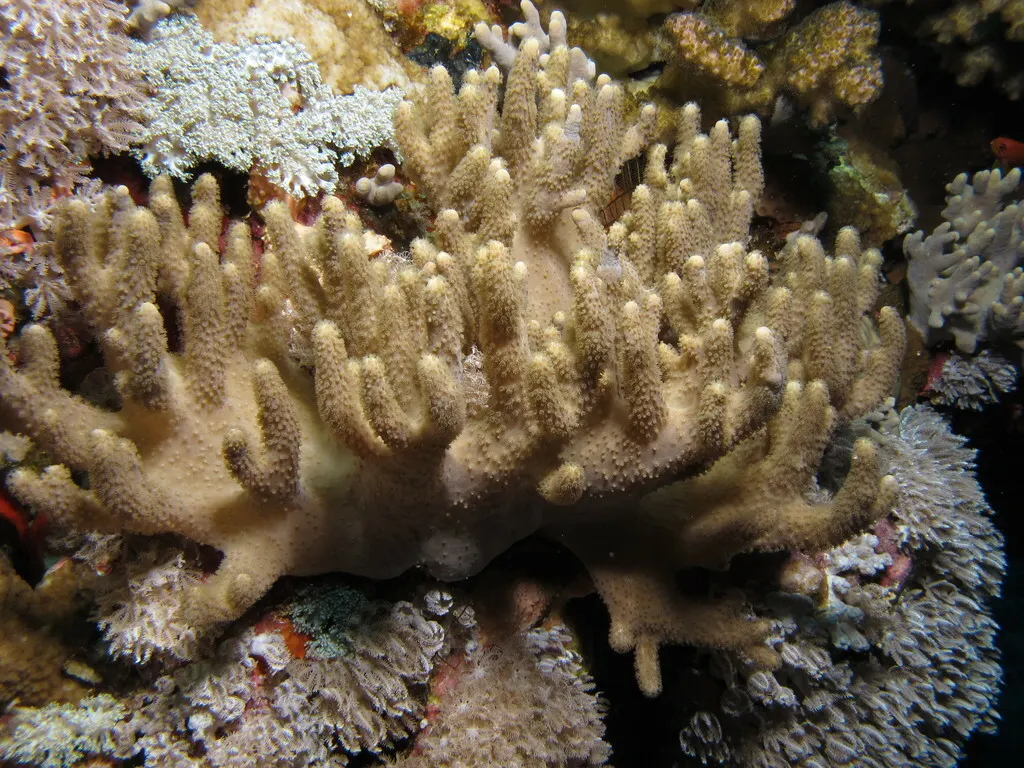
Cream-coloured, many-fingered leather cushions spread across the reef top – the Sinularia called polydactyla, "many-fingered", wears its name honestly.
The finger leather coral (Sinularia polydactyla) forms extensive cushion-like colonies whose surface bristles with soft cylindrical fingers – its scientific name polydactyla simply means "many-fingered". It is cream, greyish or greenish brown, and leathery to the touch (which of course you never test). In calm water tiny polyps give the surface a fuzzy look; in surge, or when disturbed, it closes up smooth.
As a soft coral it has no continuous limestone skeleton; its body is stiffened by millions of tiny calcite needles called sclerites. Here comes the surprise: after the colony dies, these needles cement together into rock-hard, reef-building stone – Sinularia keeps building the reef even in death, and the foundations of some Pacific reefs consist of metres of this "soft coral rock". Like its leather coral relatives, it moults a waxy film and defends its patch with chemistry.
Around Hurghada it is one of the commonest soft corals of the shallow plateaus and reef tops: on El Fanadir, Abu Hashish and Sha'ab Sabina it forms continuous carpets in places, at 1–15 metres. It shows beautifully while snorkeling too, the fingers swaying in rhythm with the surge. A hardy but slow-growing species – a big cushion is many years of work, so keep fins and hands well away.
Did you know?
Sinularia builds reef even in death: the millions of calcite needles of its dead colonies cement into solid rock – some reefs rest on metres of this "soft coral concrete".
Where can you meet it?
You find continuous finger leather carpets on the shallow plateaus of El Fanadir, Abu Hashish and Sha'ab Sabina, from snorkel depth down to 15 metres.
Frequently asked questions
Not easy – even biologists cannot always do it by eye! Rule of thumb: Sinularia fingers are longer, slimmer and more densely, irregularly packed on a sprawling cushion; Lobophytum fingers are stubbier and sit in ridge-like rows. The final proof only comes from examining the sclerites under a microscope.
In life it is a soft, leathery coral – in death it turns to stone: its calcite needles cement together into solid reef rock. So it is both a soft coral and a reef builder, which is a rather rare combination.
Retracting the polyps is a defence: in heavy surge, or when grazing fish or curious divers approach, the colony seals itself smooth. During moulting it can stay "bald" for days too – you see a shiny waxy surface instead of the fuzzy carpet.
Best sites for Finger leather coral
El Fanadir
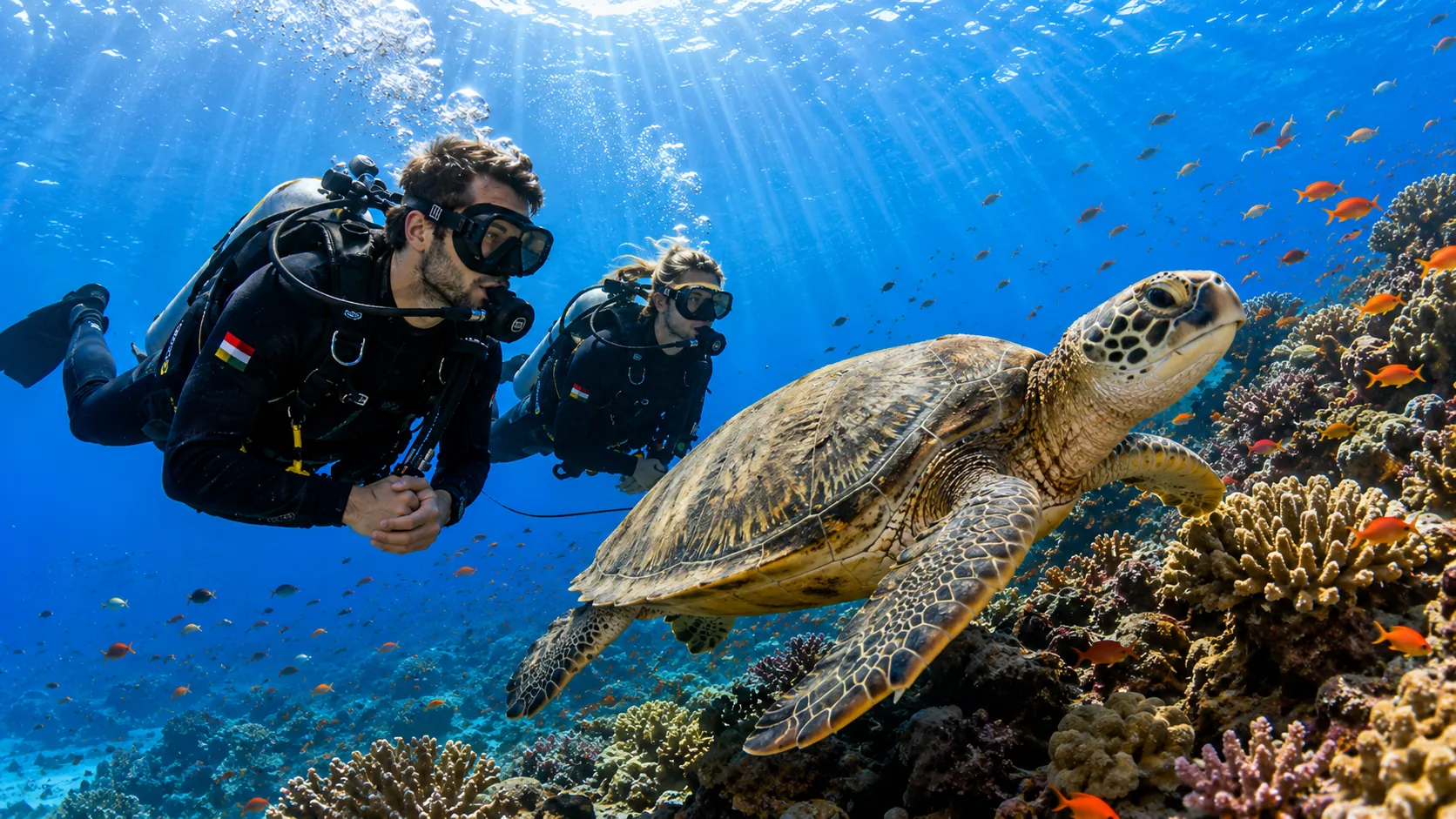
A long reef ridge barely half an hour from the marina: a gentle wall, blue-spotted rays and seagrass patches with turtles.
- Depth
- 6–25m
- Boat
- 30min
- Species
- 5
Abu Hashish-fok
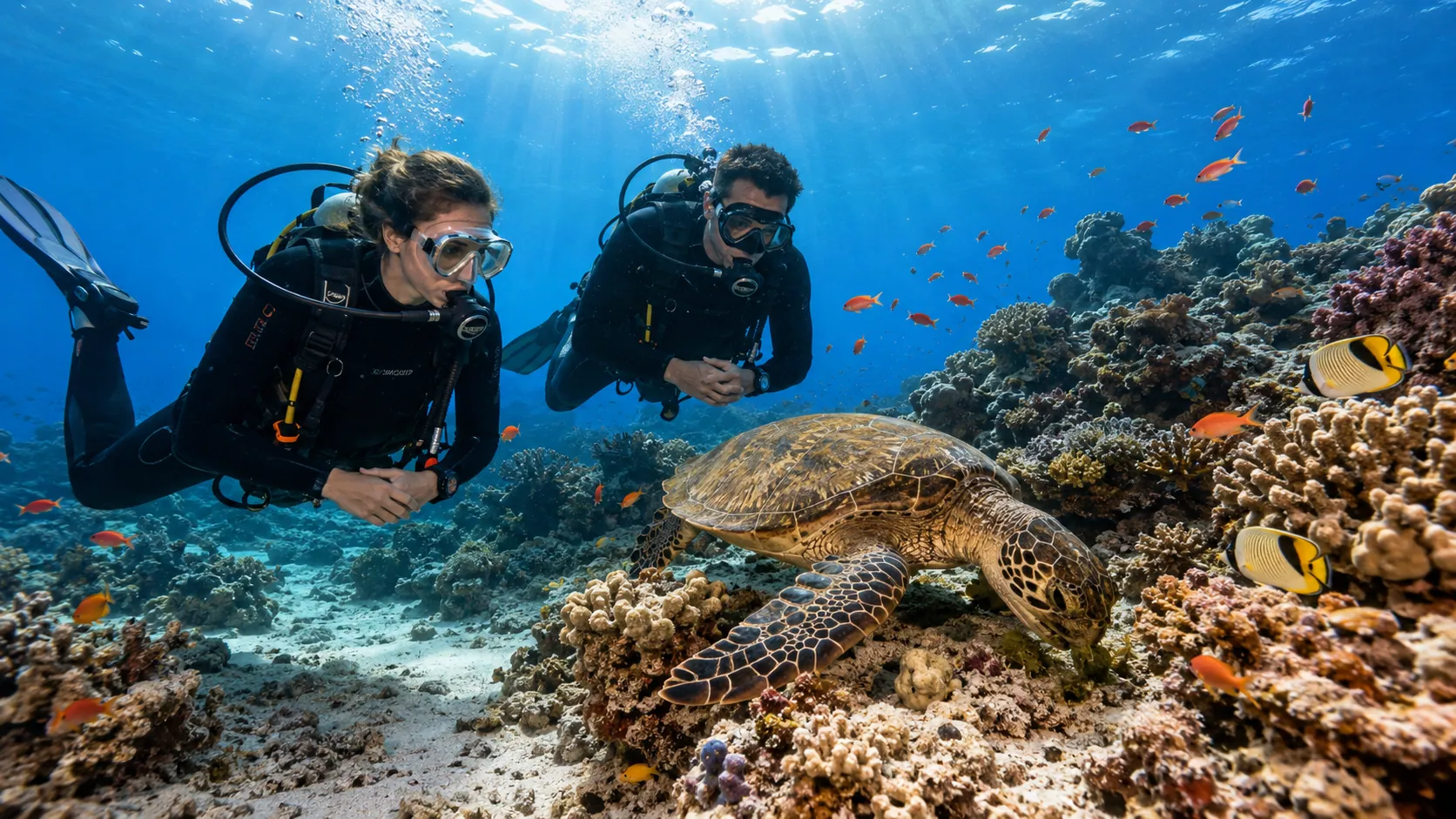
A quiet southern cape with seagrass meadows and an atmospheric cavern – turtles almost for sure, a dugong with some luck.
- Depth
- 5–20m
- Boat
- 60min
- Species
- 5
Sha'ab Sabina
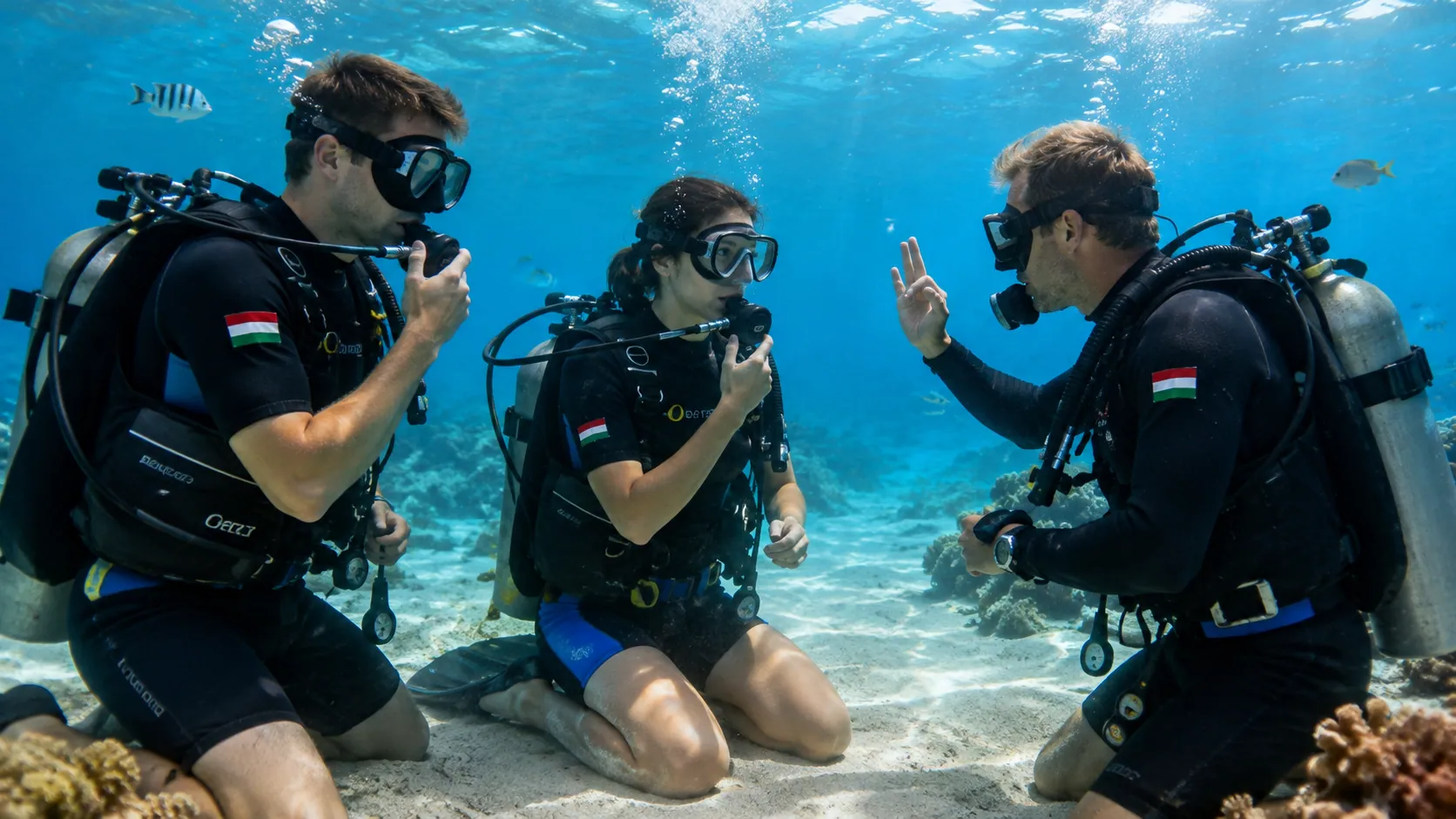
A sheltered shallow reef with a sandy lagoon – this is where most of our try dives and OWD skill sessions happen.
- Depth
- 4–12m
- Boat
- 40min
- Species
- 5
The Red Sea will not wait forever.
Book today – seats on the boat are limited, your excitement is not.