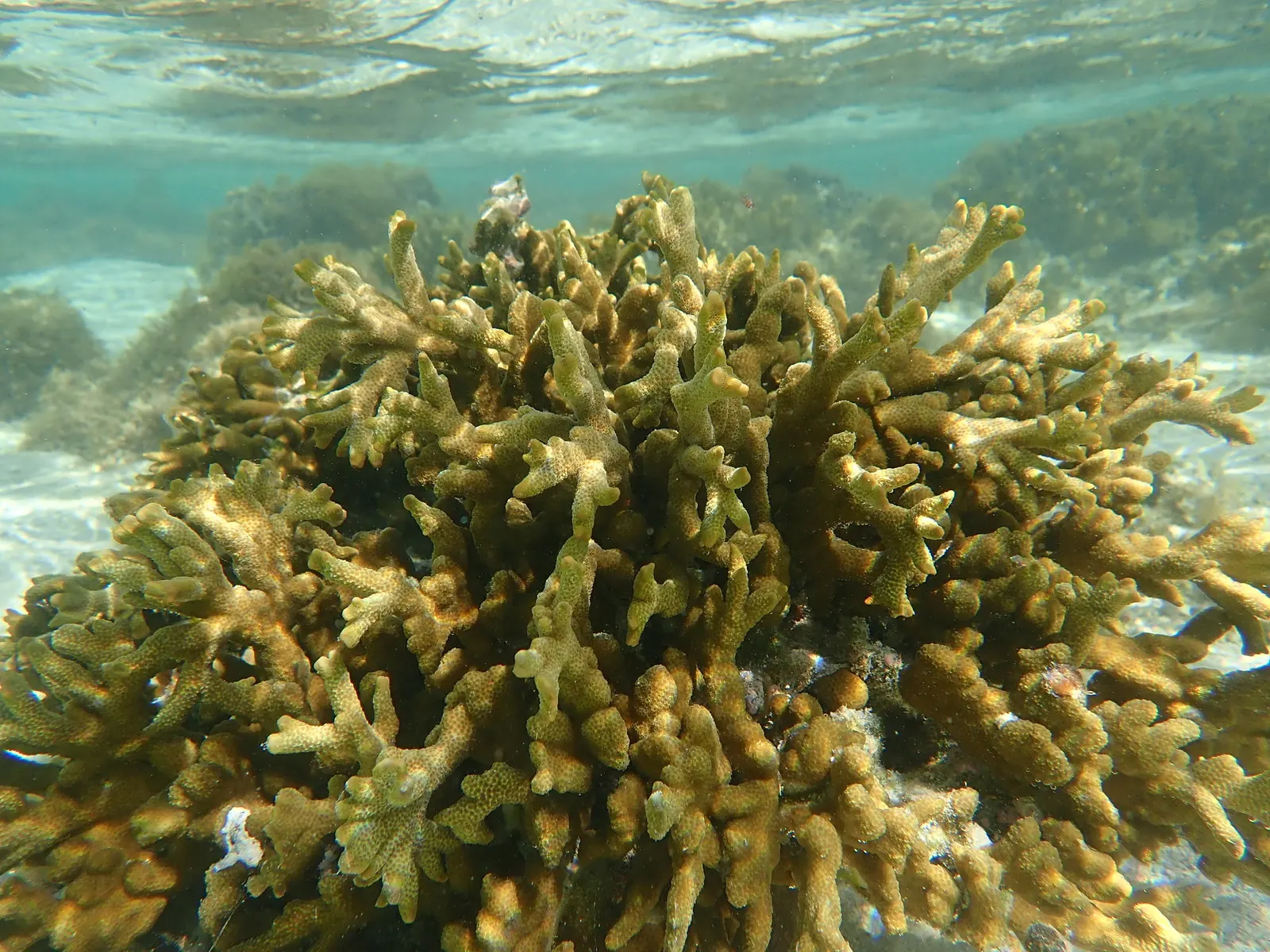
Finger montipora
Montipora digitata
Cream, purple or brownish bushes of upright finger-like branches on the reef top – one of the fastest growers in the shallow coral gardens.
A finger montipora (Montipora digitata) colony looks as if the reef were reaching toward the surface with a hundred small fingers: its stubby, round-tipped, often branching stalks form dense bushes. Colours vary – cream, light brown, sometimes purplish or bluish – and the surface feels finely rough because the minute polyps sit between tiny bumps. You can easily tell it from birdsnest coral by its thicker, blunter-ended branches.
This species is the sprinter of the coral world: under good conditions it can grow 5–10 centimetres a year, ranking among the fastest-spreading stony corals. It draws its energy from the zooxanthellae algae in its tissue, which is why it clings to well-lit shallow water. It also has a special reproductive trick: when waves snap off a branch, the fragment can carry on growing as a new colony on the sand – so storms unintentionally "plant" the coral garden.
Around Hurghada you find it on sheltered reef tops and lagoon edges, typically in the first few metres, so it is a joy to watch while snorkeling. Despite its rapid growth it is just as vulnerable as any coral: the branches break easily, and even a fingerprint-sized injury can become infected. Hover above it, never stand over it – good buoyancy is the best conservation.
Did you know?
A montipora mother colony does not send its offspring off empty-handed: it packs its own zooxanthellae algae into its eggs, so the coral larvae hatch with "solar panels" pre-installed – whereas most corals must collect their algae from the water from scratch.
Where can you meet it?
It feels at home in the shallow coral gardens: its finest bushes grow on the reef tops of Shaab Sabina and Gota Abu Ramada and on the sheltered side of Small Giftun.
Frequently asked questions
They look similar at first glance, but montipora branches are thicker, blunt-ended and mostly upright, while birdsnest coral's needle-sharp thin twigs form a tangled mess. The colours differ too: montipora tends to cream-brown-purple, birdsnest is typically pink.
An animal – a colony of thousands of tiny polyps building a shared limestone skeleton. The "plant" work is done by zooxanthellae algae living in its tissue: their photosynthesis supplies most of the coral's energy, which is why montipora grows in the sunny shallows.
Yes. Although a broken fragment can in lucky cases grow into a new colony, most fragments die in the sand and the wound on the mother colony can get infected. Natural wave action is one thing, a fin kick another – as a diver your job is to break nothing at all.
Best sites for Finger montipora
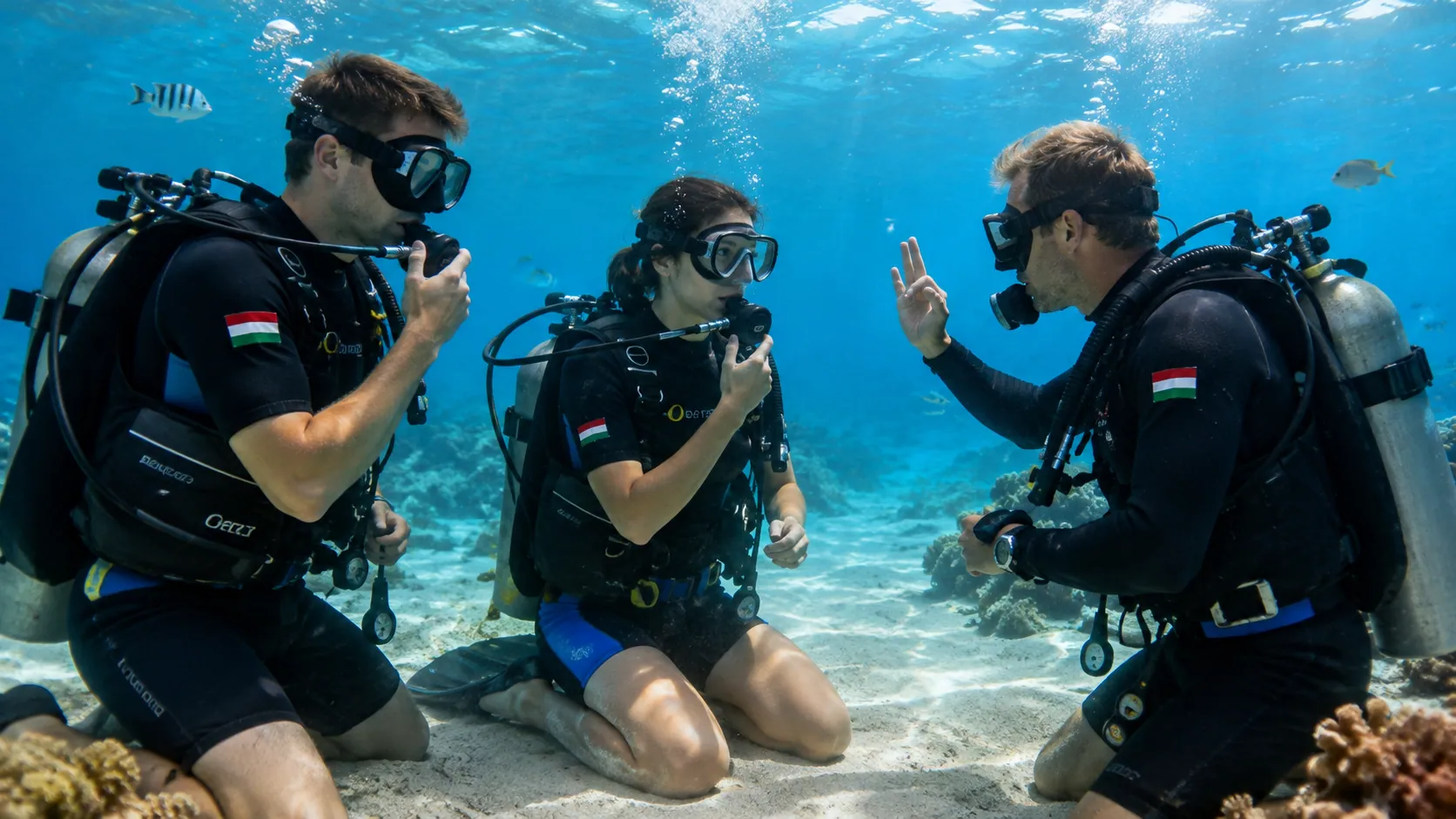
Sha'ab Sabina
A sheltered shallow reef with a sandy lagoon – this is where most of our try dives and OWD skill sessions happen.
- Depth
- 4–12m
- Boat
- 40min
- Species
- 5
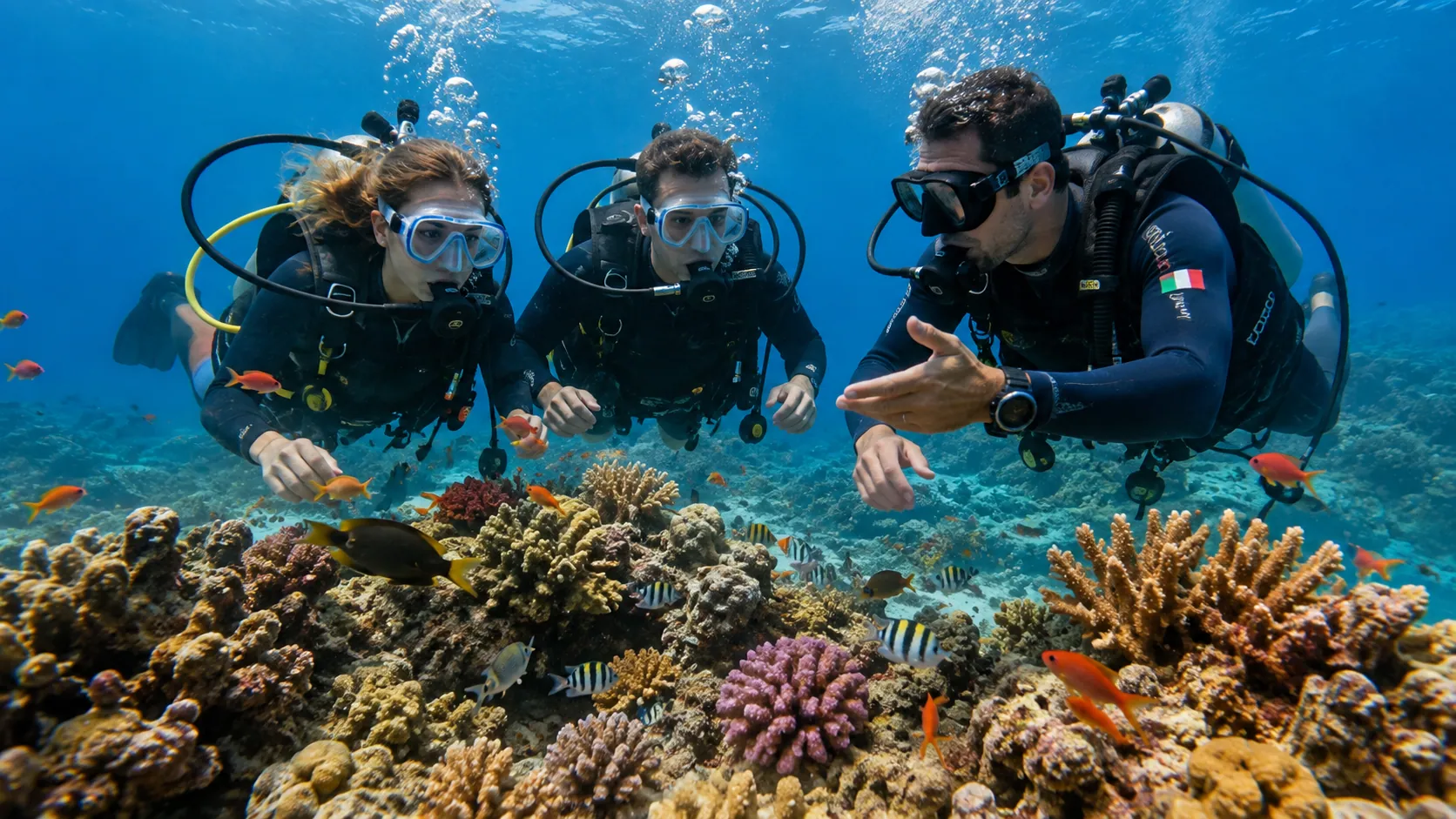
Gota Abu Ramada
A shallow oval reef with a sandy bottom and schools of butterflyfish – perfect for training, second and night dives.
- Depth
- 4–14m
- Boat
- 55min
- Species
- 5
Small Giftun fal
Hurghada's classic drift dive: a sheer wall with gorgonian fans, eagle rays and a coral-tower plateau at 20–30 metres.
- Depth
- 8–30m
- Boat
- 50min
- Species
- 5
The Red Sea will not wait forever.
Book today – seats on the boat are limited, your excitement is not.