Finger staghorn coral
Acropora humilis
Its stout, finger-like branches are the tough residents of the wave-beaten reef crest – thriving where other corals would be smashed to pieces.
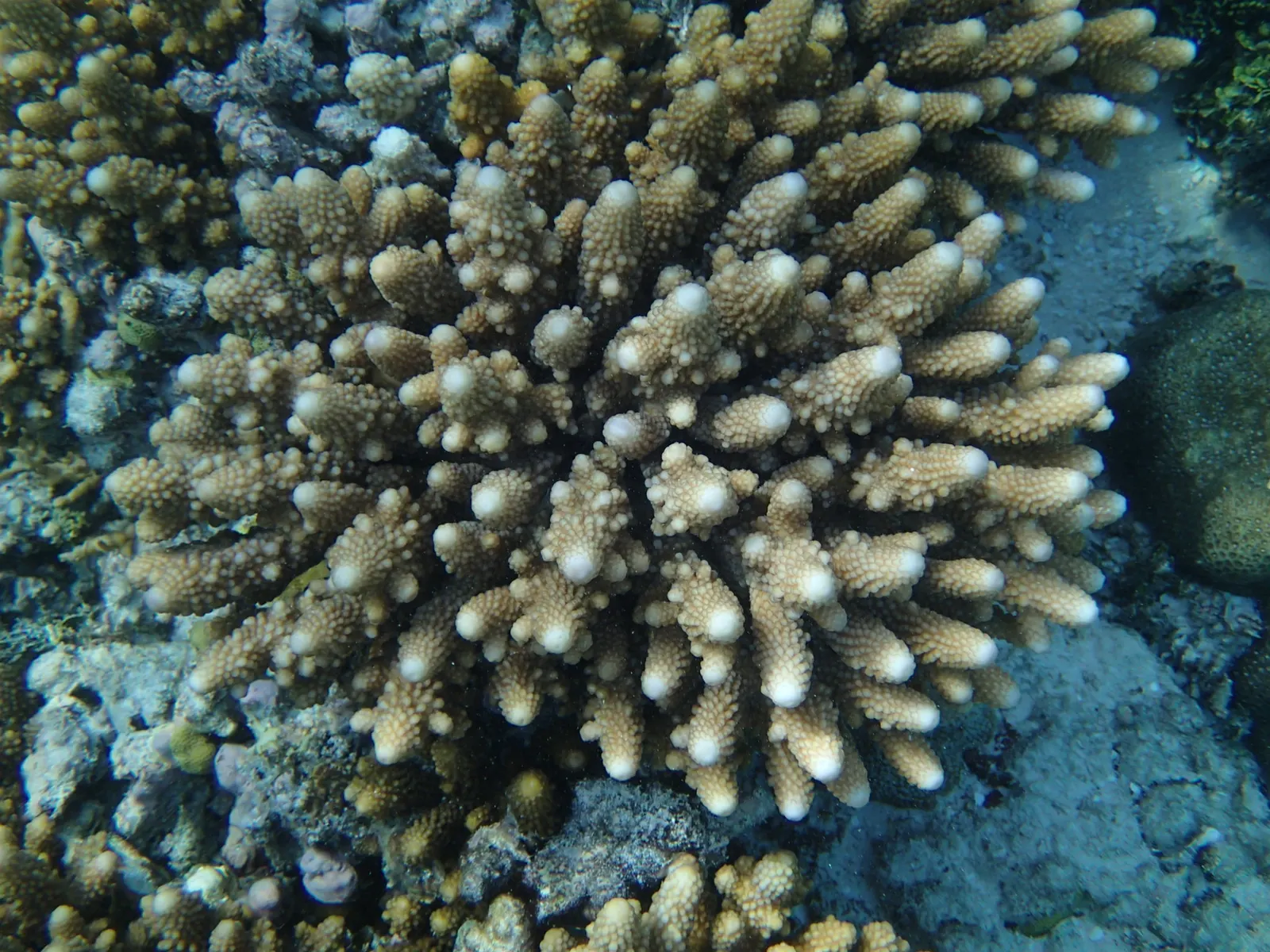
The finger staghorn coral (Acropora humilis) is the stocky cousin of the staghorns: instead of slender antlers it grows short, thick, upward-pointing "fingers" that gather into cushion-like colonies of 20–50 centimetres. Its colour runs from cream-yellow through green-brown to violet shades, with branch tips often paler or bluish – a sign of fresh growth. At the top of every finger you can clearly see the large terminal cup typical of Acropora, housing the polyp that leads the growth.
The squat shape is no accident but an engineering solution: A. humilis lives on the reef crest and upper edge, where wave action would simply flatten slender-branched corals. The short, stout fingers break the force of the waves, which is why this species dominates the coral world of the first few metres. Like its relatives it draws energy from the zooxanthellae algae in its tissues and thrives in shallow, light-flooded water – and Red Sea populations rank among the most heat-tolerant corals on Earth, shrugging off summer temperatures that would trigger mass bleaching elsewhere.
Around Hurghada you will meet it on virtually every reef top: the shallow gardens of Shaab Sabina and Gota Abu Ramada, the reef edge of El Fanadir and the plateaus of the Giftun Islands are full of it – snorkeling, you often float within arm's reach (but never reach!). Tiny damselfish and gobies live between the fingers. Its shallow home also makes it the reef's most endangered resident: snorkelers standing or stepping on the reef cause the most damage. Never stand on coral – if you need a rest, find a sand patch or roll onto your back at the surface.
Did you know?
The bluish-violet branch tips are not decoration but sunscreen: the coral produces its own UV-filtering proteins to protect its growth zones, which are exposed to the strongest sunlight – living on the shallow reef crest, it takes as much daily UV as a high-altitude skier.
Where can you meet it?
It lives in the first few metres of the reef tops: snorkeling the shallow gardens of Shaab Sabina and Gota Abu Ramada or the reef edge of El Fanadir, you glide over it the whole way.
Frequently asked questions
Because it lives in the surf: on the reef crest, slender-branched corals would be flattened by the first serious storm. Short, stout fingers offer the waves far less purchase – in calmer, deeper water the same species can grow slightly more elongated branches. A coral's shape always tells the story of its address.
The coral's skeleton is sharp, so a graze is easy to pick up and coral cuts heal slowly – but the greater harm is to the coral: its protective tissue is damaged by even a light touch. Keep a little distance from the reef top and never stand on coral, and both your skins stay intact.
Better than almost anyone: through an evolutionary accident, corals of the northern Red Sea are among the most heat-tolerant on the planet, riding out heatwaves without bleaching that destroy reefs elsewhere. That is why scientists call this region one of the corals' last refuges – and why looking after it is such a responsibility.
Best sites for Finger staghorn coral
Sha'ab Sabina
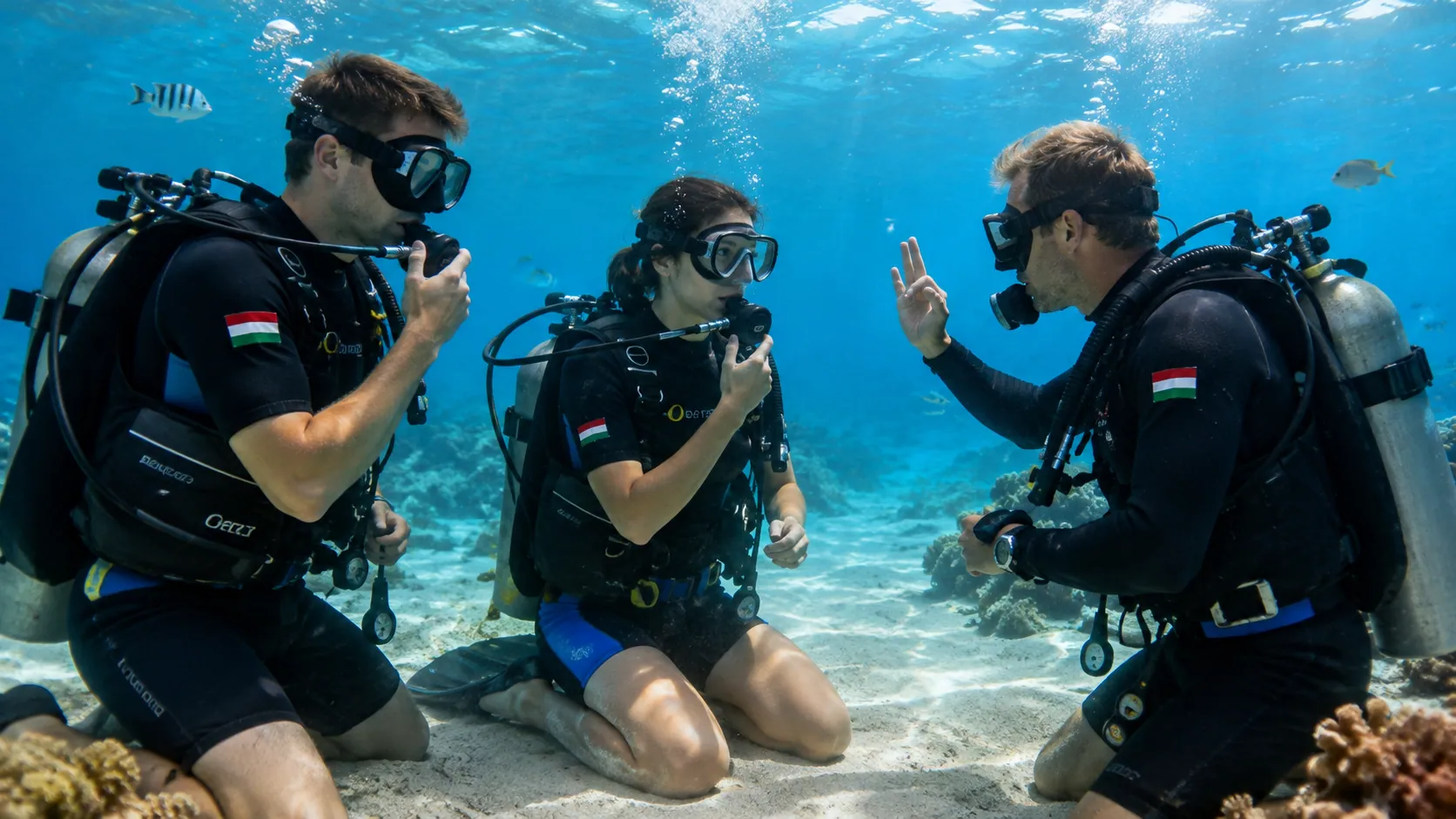
A sheltered shallow reef with a sandy lagoon – this is where most of our try dives and OWD skill sessions happen.
- Depth
- 4–12m
- Boat
- 40min
- Species
- 5
Gota Abu Ramada
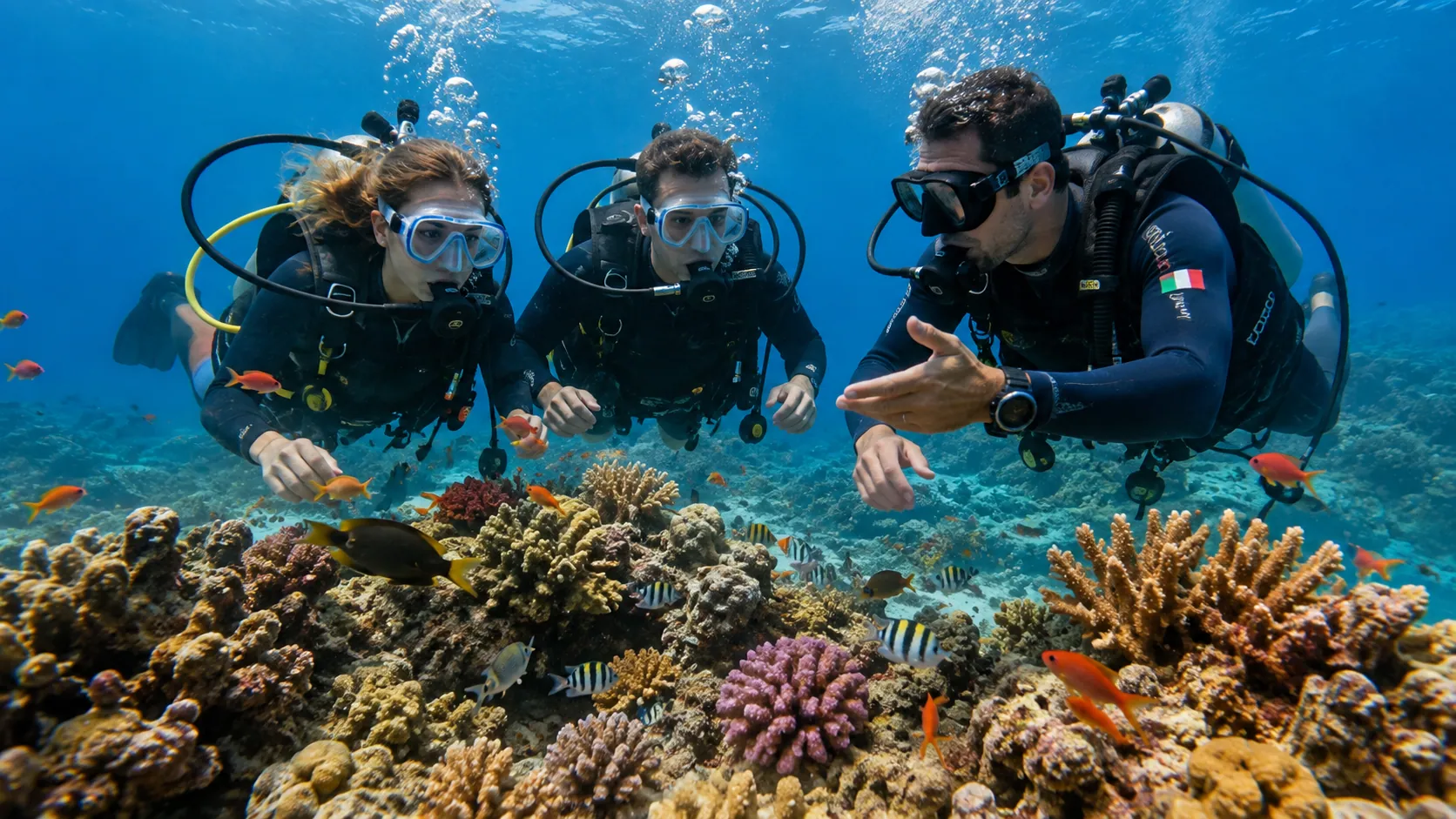
A shallow oval reef with a sandy bottom and schools of butterflyfish – perfect for training, second and night dives.
- Depth
- 4–14m
- Boat
- 55min
- Species
- 5
El Fanadir
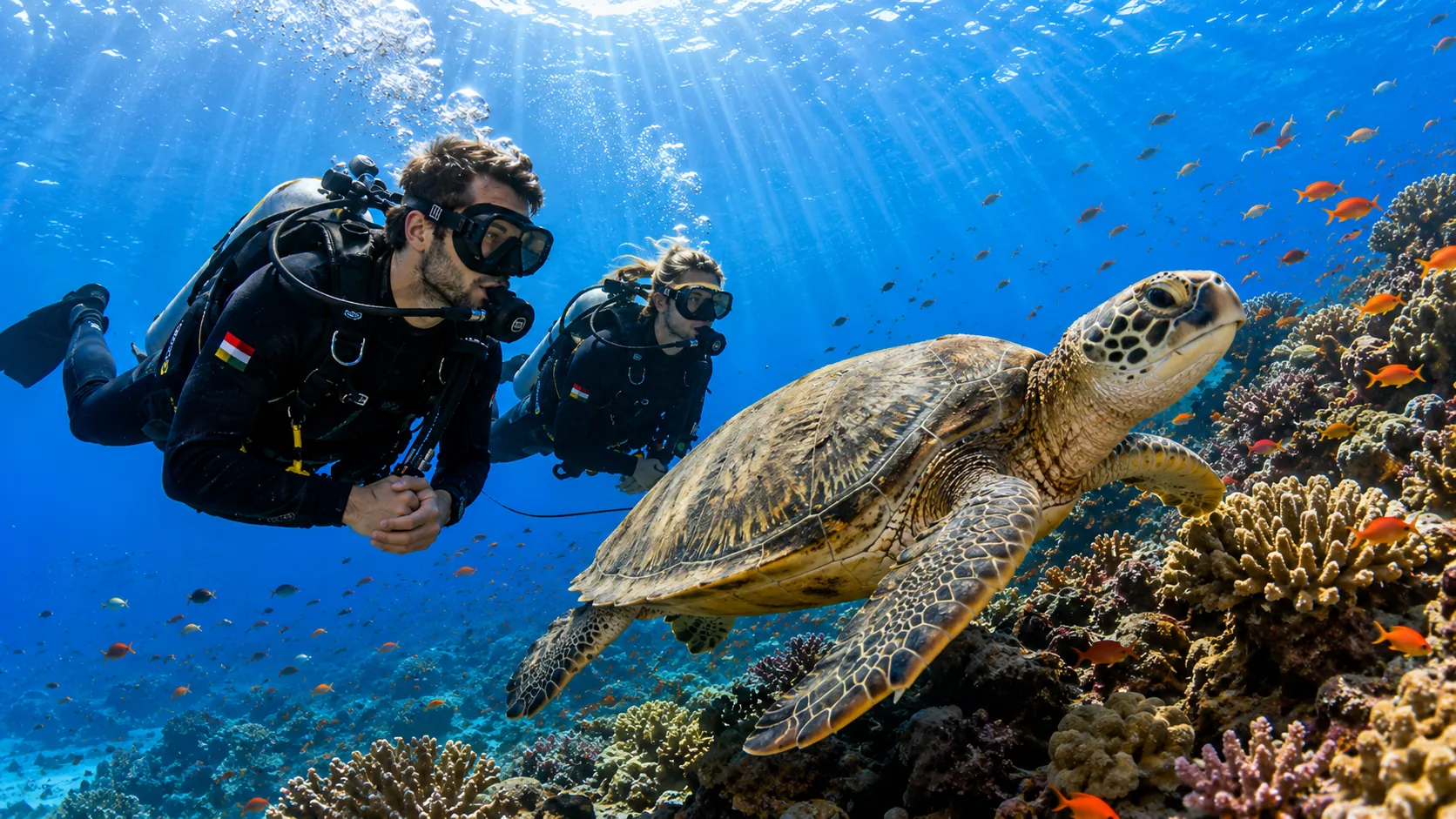
A long reef ridge barely half an hour from the marina: a gentle wall, blue-spotted rays and seagrass patches with turtles.
- Depth
- 6–25m
- Boat
- 30min
- Species
- 5
The Red Sea will not wait forever.
Book today – seats on the boat are limited, your excitement is not.