Fire dartfish
Nemateleotris magnifica
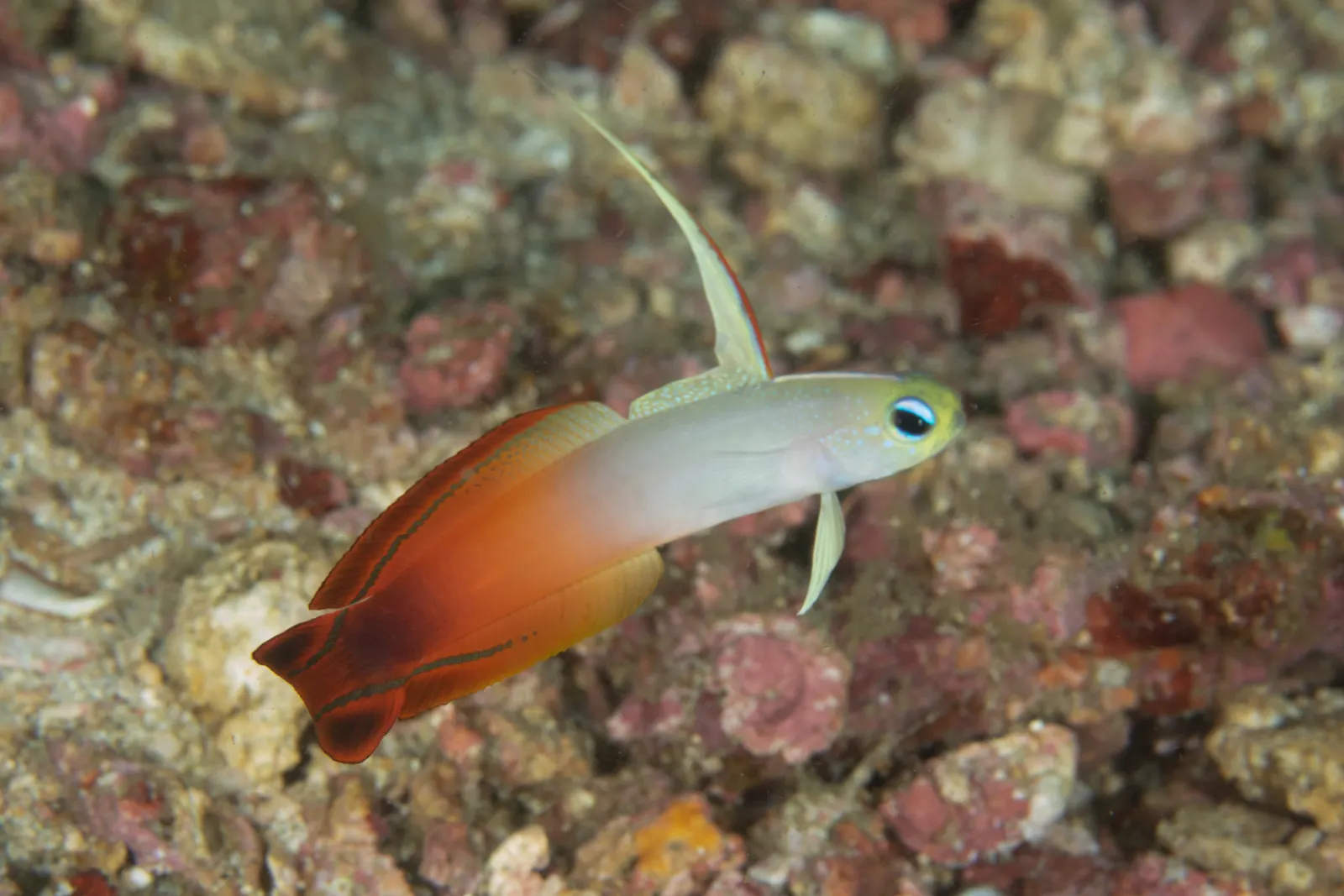
White-gold body, flame-red tail, a needle fin held high: the fire dartfish hovers over the rubble slope like a tiny living candle flame.
The fire dartfish (Nemateleotris magnifica) is one of the most elegant little fish you can see in the Red Sea: pearl-white in front with a golden-yellow head, its body gradually ignites into glowing orange-red towards the tail – hence the "fire" in its name. Its most striking ornament is the long, needle-like first dorsal ray, held aloft like a flag and flicked back and forth almost constantly.
A relative of the gobies, it inhabits open sand and rubble slopes, hovering motionless above its burrow entrance, facing into the current and snapping up tiny drifting plankton. The flicking needle fin is a signalling system for its own kind – pairs often share a single burrow, and they vanish into it with a lightning, arrow-like dart whenever a predator or an over-eager diver comes too close. Hence the "dart" in its name.
Around Hurghada it is a rare, deeper-water treat: you will typically meet it between 15 and 30 metres on the rubble slopes at the reef base, which makes it a reward for more advanced dives. When your guide pauses at the edge of a deep plateau and points, look carefully: the dartfish holds its position until the last moment, so you can admire it beautifully from a few metres away – just avoid any sudden movement.
Did you know?
The fire dartfish can hover on station against the current for hours like an anchored helicopter – and its needle fin is not just for signalling: braced inside its burrow it works as a door bolt, wedging the fish in so a predator cannot pull it out.
Where can you meet it?
Search the rubble slopes of the deeper outer reefs: it turns up along the plateau edges of Carless Reef and Umm Gamar and on the deeper slope of Small Giftun.
Frequently asked questions
Unfortunately not really: around Hurghada it typically lives deeper than 15 metres on the rubble slopes. This species is a reward reserved for advanced dives – one more good reason to take your AOWD course.
Because it is never far from its emergency exit: it hovers directly above its burrow and vanishes into it in a single flash. The answer is slowness – approach from the side, never from above, and from a few metres it photographs beautifully.
Not at all – it is a six-to-eight-centimetre planktivore more scared of everything than anything is of it. The only "danger" is losing track of time and air while photographing it, so keep an eye on your gauge.
Best sites for Fire dartfish
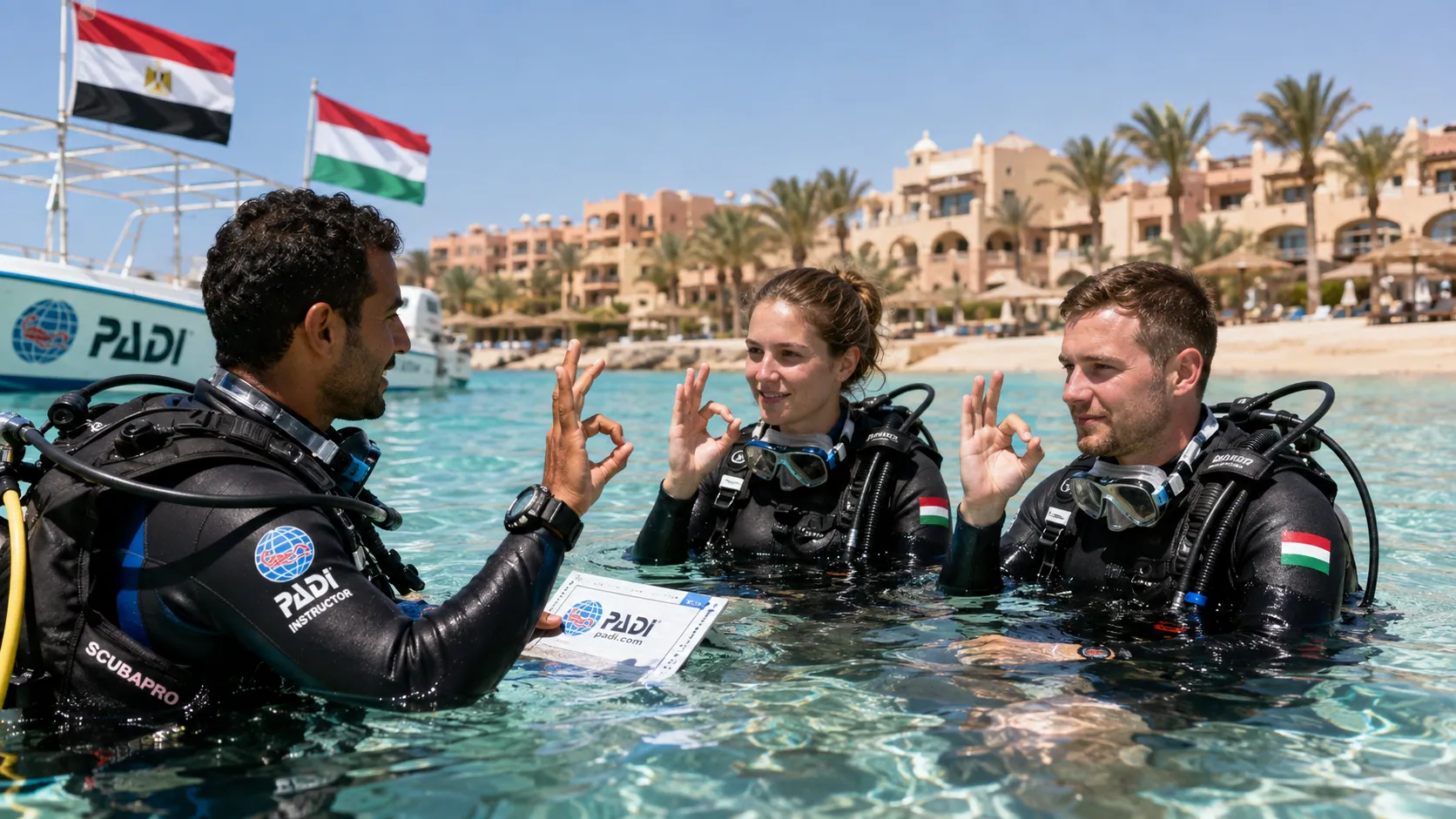
Carless Reef
An offshore twin-erg reef famous for its legendary moray colony – for experienced divers, weather permitting.
- Depth
- 12–30m
- Boat
- 70min
- Species
- 5
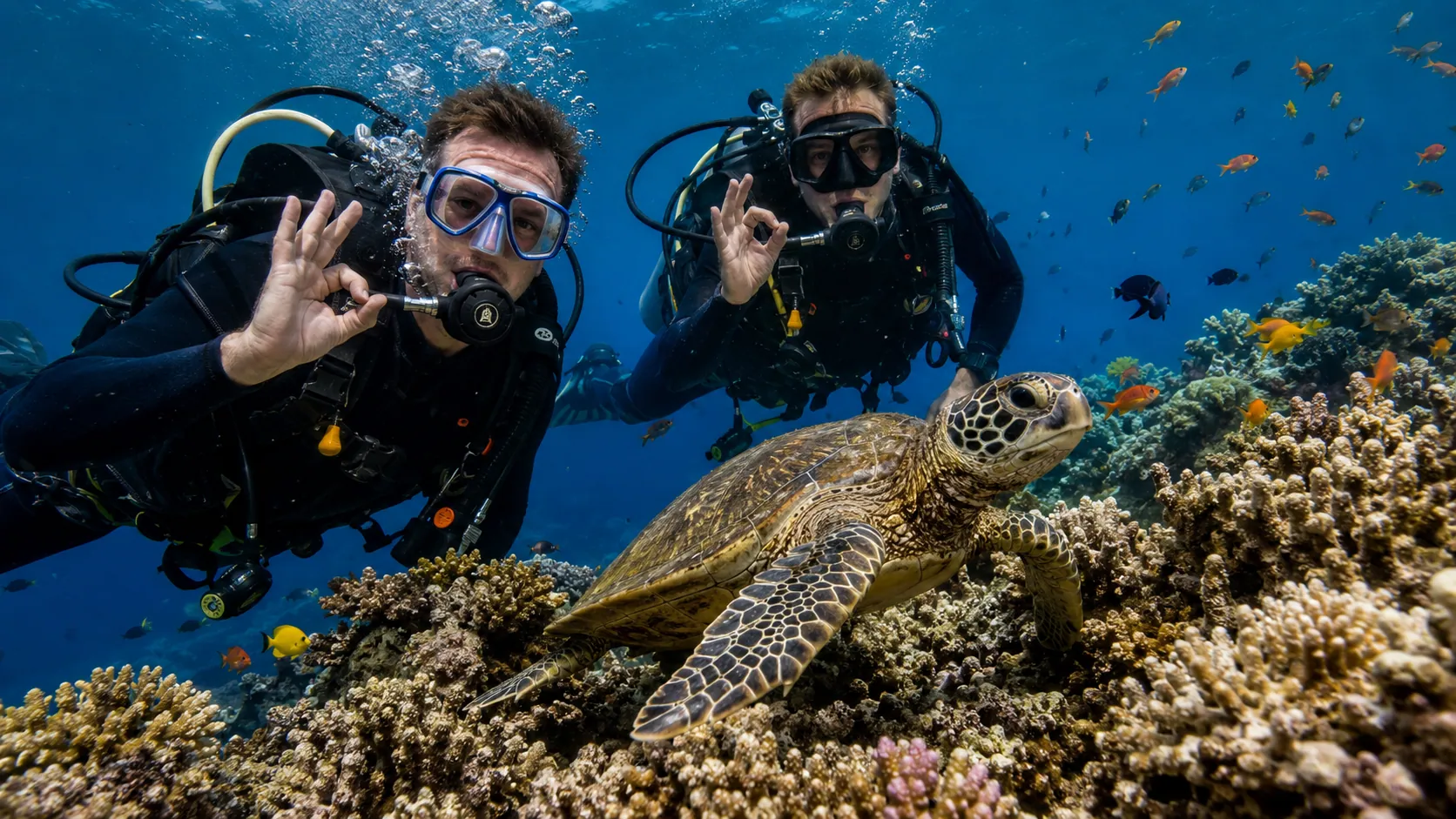
Umm Gamar
An elongated island in the north: a plateau with three coral towers, small caves and big predators out in the blue.
- Depth
- 10–30m
- Boat
- 75min
- Species
- 5
Small Giftun fal
Hurghada's classic drift dive: a sheer wall with gorgonian fans, eagle rays and a coral-tower plateau at 20–30 metres.
- Depth
- 8–30m
- Boat
- 50min
- Species
- 5
The Red Sea will not wait forever.
Book today – seats on the boat are limited, your excitement is not.