Flowerpot coral
Goniopora columna
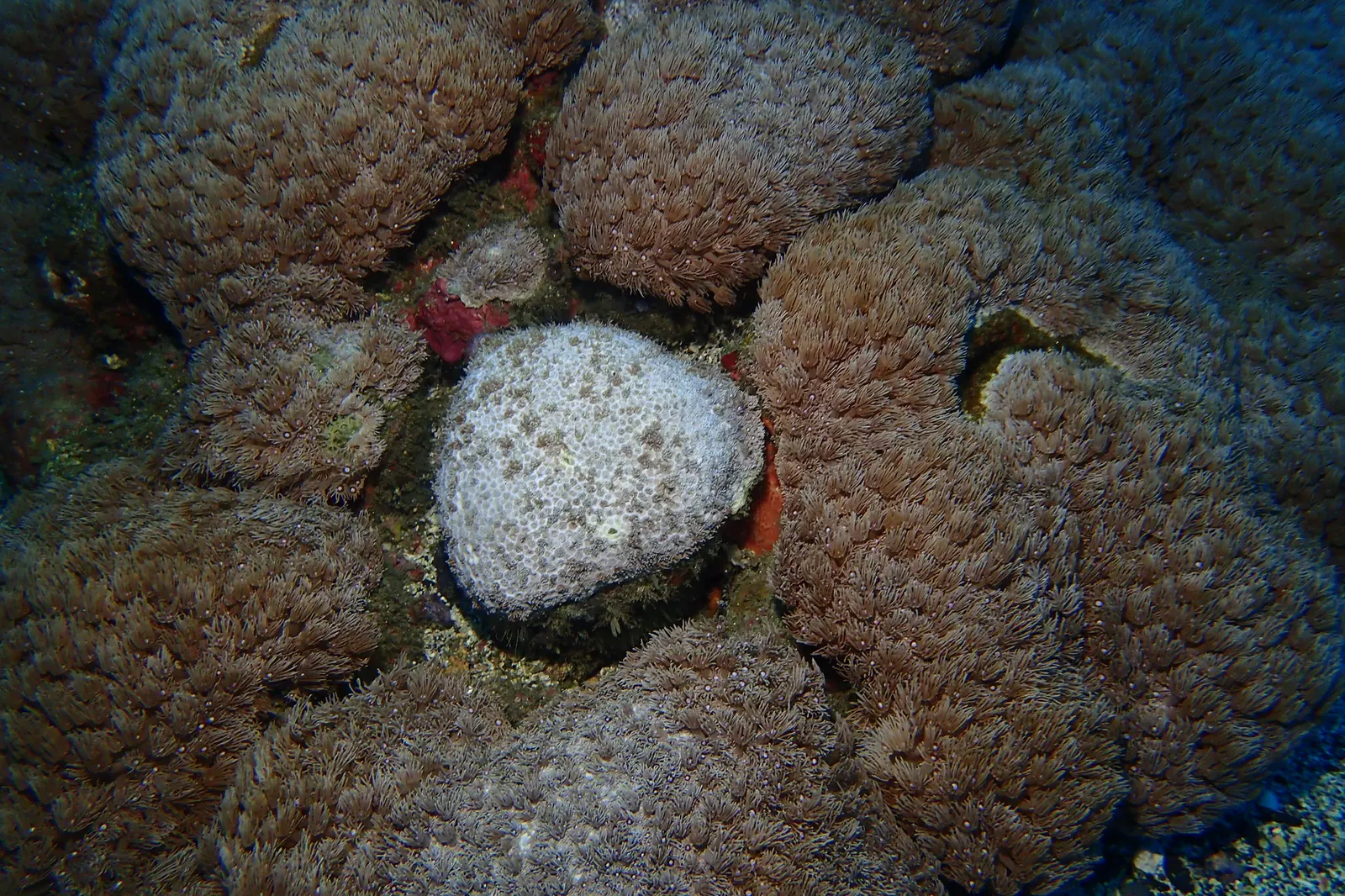
It looks like a bouquet of daisies swaying in the current – yet beneath the flowers hides a rock-hard coral skeleton.
The flowerpot coral (Goniopora columna) is one of the most misleading sights on the reef: its columnar colony is covered in long-stalked, flower-like polyps that wave gently in the current like a bunch of meadow daisies. Every "flower" is a polyp with exactly 24 tentacles around its mouth – a magic number worth remembering, because its close cousin Alveopora carries only 12.
Most stony corals extend their polyps only at night, but Goniopora keeps them out day and night – which is why so many divers mistake it for a soft coral. Yet under the waving carpet a solid limestone skeleton is being built: if a fish takes a nip or a fin strays too close, the polyps retract within seconds, revealing bare, porous stone. The long polyp stalks are all about light and plankton – the further they reach, the more they catch of both.
Around Hurghada it is common on sheltered slopes, in lagoons and at sandy reef bases from as little as 3–5 metres, so you can enjoy the "blooming" while snorkeling too. Sadly the aquarium trade has decimated Goniopora stocks worldwide, which makes seeing it untouched all the sweeter – watch it, photograph it, but never stroke it: every retraction you trigger costs the colony energy.
Did you know?
Count the tentacles: every flowerpot coral polyp has exactly 24. It is the divers' secret ID key – the nearly identical Alveopora corals always make do with 12.
Where can you meet it?
It blooms on the sheltered sides: you will meet it most often on the inner slope of El Fanadir, in the lagoons of the Giftun Islands, in the sandy bay of Abu Hashish and between the towers of El Aruk.
Frequently asked questions
A stony coral, however softly it waves: beneath the flower-like polyps sits a solid limestone skeleton. You see through the trick when a fish startles it – the "flowers" vanish within seconds, leaving bare stone.
The polyps react to pressure waves and shadows alike – it is their defence against nibbling fish. Approach slowly from the side without stirring the water and they stay open, giving you a much better photo.
It is practically harmless to humans, but like every coral it does carry stinging cells – and touching harms the coral above all. The rule is simple: no picking flowers, not even on the reef.
Best sites for Flowerpot coral
El Fanadir
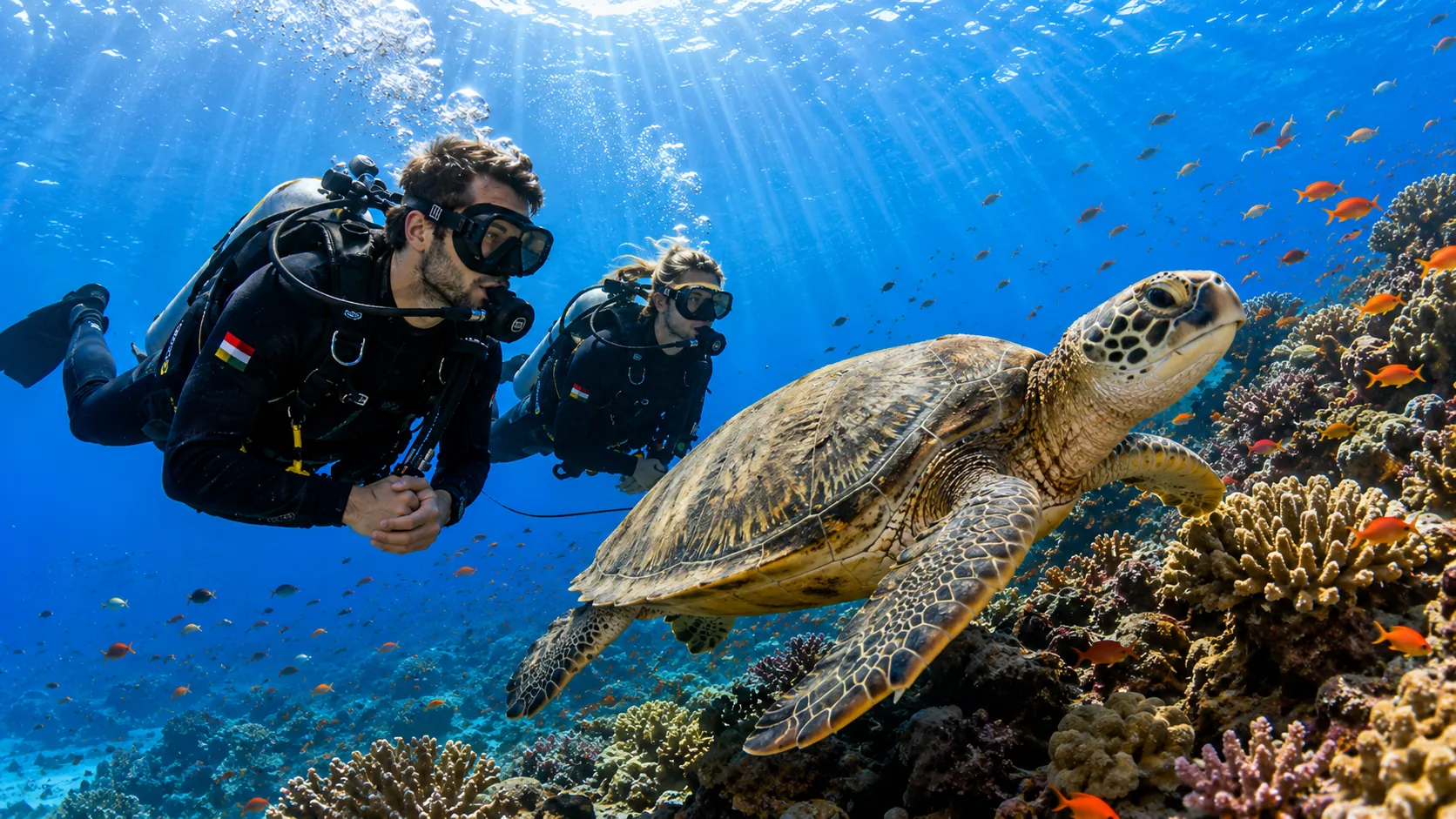
A long reef ridge barely half an hour from the marina: a gentle wall, blue-spotted rays and seagrass patches with turtles.
- Depth
- 6–25m
- Boat
- 30min
- Species
- 5
Giftun-szigetek
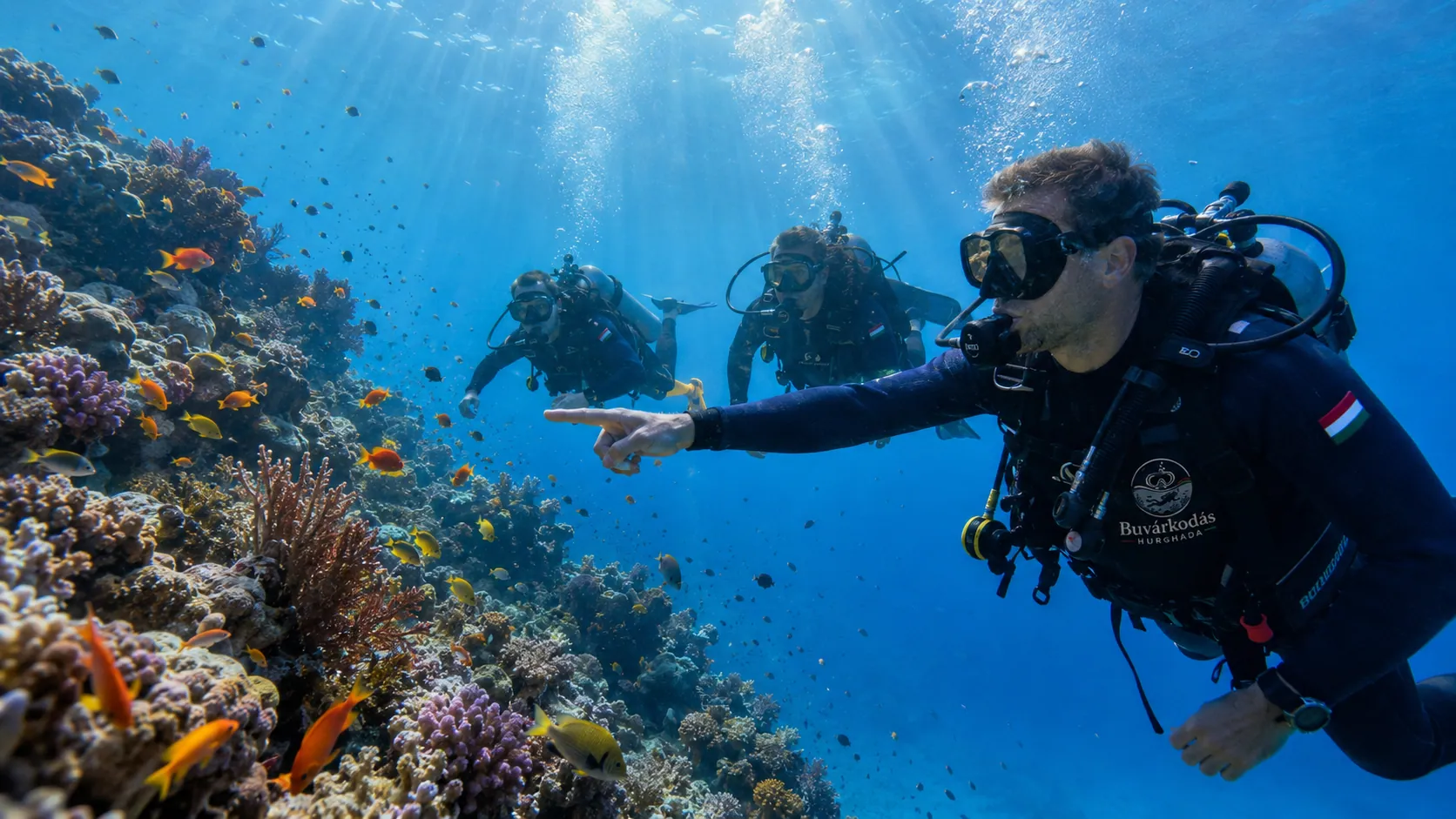
A national park island pair with a dozen dive sites: coral gardens, turtles and perhaps the richest fish life in the area.
- Depth
- 5–25m
- Boat
- 45min
- Species
- 6
Abu Hashish-fok
A quiet southern cape with seagrass meadows and an atmospheric cavern – turtles almost for sure, a dugong with some luck.
- Depth
- 5–20m
- Boat
- 60min
- Species
- 5
The Red Sea will not wait forever.
Book today – seats on the boat are limited, your excitement is not.