Galaxy coral
Galaxea fascicularis
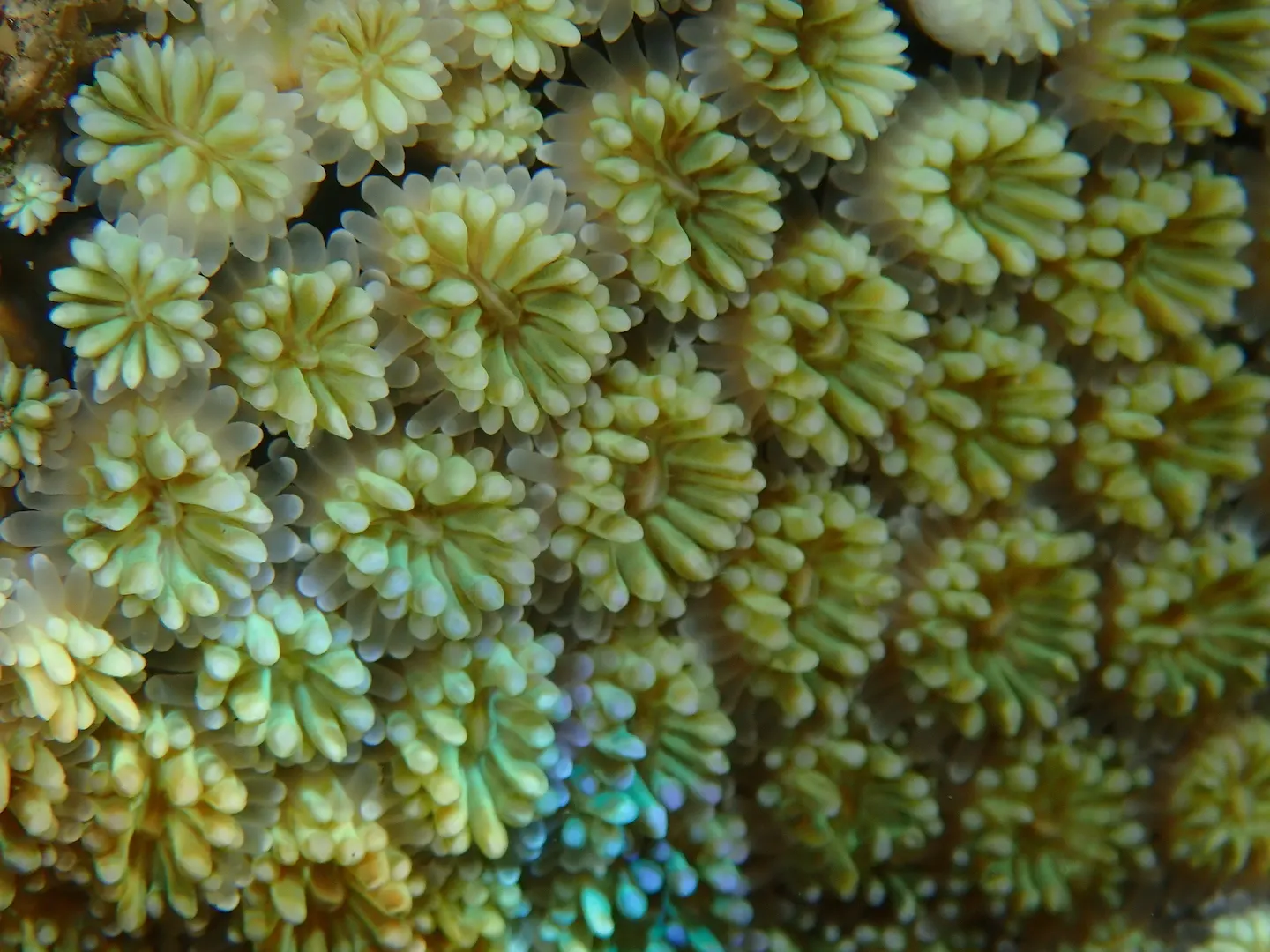
A starry sky on the reef: the galaxy coral's crystalline, white-tipped polyps sparkle like a galaxy that moved underwater.
The galaxy coral (Galaxea fascicularis) did not get its name from marketing people: the surface of its cushion- or dome-shaped, 30–60 cm colonies is covered in small cups reminiscent of starbursts, with glassy, crystalline blades – septa – radiating out of them. What's more, it often keeps its polyps extended by day: the greenish, brownish or greyish tentacles have white tips, so the whole colony looks like a sparkling field of stars. Once seen, never confused with anything else.
The glittering exterior hides a warrior: the galaxy coral is one of the reef's most territorial residents. At night it grows "sweeper tentacles" several centimetres long, armed with stinging cells, which it uses to sting and kill neighbouring corals that dare grow too close – securing living space on the crowded reef. Meanwhile it draws its energy from a more peaceful source, the photosynthesis of its zooxanthellae algae, and at night it also snatches plankton with its tentacles.
Around Hurghada, look for it in calmer, sheltered spots: fine colonies grow on the coral heads of the Abu Hashish lagoon, among the towers of El Aruk and in the garden of Gota Abu Ramada, typically at 3–15 metres. It is a rewarding subject for photographers: up close, the crystal structure of the cups is mesmerising. But that is exactly why the rule matters: the brittle, sharp cups shatter at a careless touch, and the coral's stinging cells can sting your skin too – distance protects you both.
Did you know?
The galaxy coral is one of the most combative residents of the reef: at night it "lances" neighbouring corals with sweeper tentacles stretched to many times their normal length – the peacefully sparkling star field is actually a well-armed border guard.
Where can you meet it?
It lives on the calmer, sheltered parts of the reefs: the finest colonies are in the Abu Hashish lagoon, on the El Aruk coral towers and in the Gota Abu Ramada garden.
Frequently asked questions
An animal: a colony of many tiny stinging polyps, fed by the algae living inside it using sunlight. The crystalline cups are glass-brittle and the stinging cells do sting – touching means injury for the coral and an unpleasant itch for you. Stick to watching; it is well worth it.
The galaxy coral is an exception: it often keeps its polyps extended in daylight, probably because they gather more light for its algae while also picking food from the water. For divers this is a jackpot – it is what makes the colony sparkle like a star field.
Yes – on a reef, space is life, and the galaxy coral defends its own fiercely. With special extra-long sweeper tentacles it stings encroaching neighbours, which is why you often see a narrow, bare "no man's land" strip around it. This silent war is part of everyday reef life.
Best sites for Galaxy coral
Abu Hashish-fok
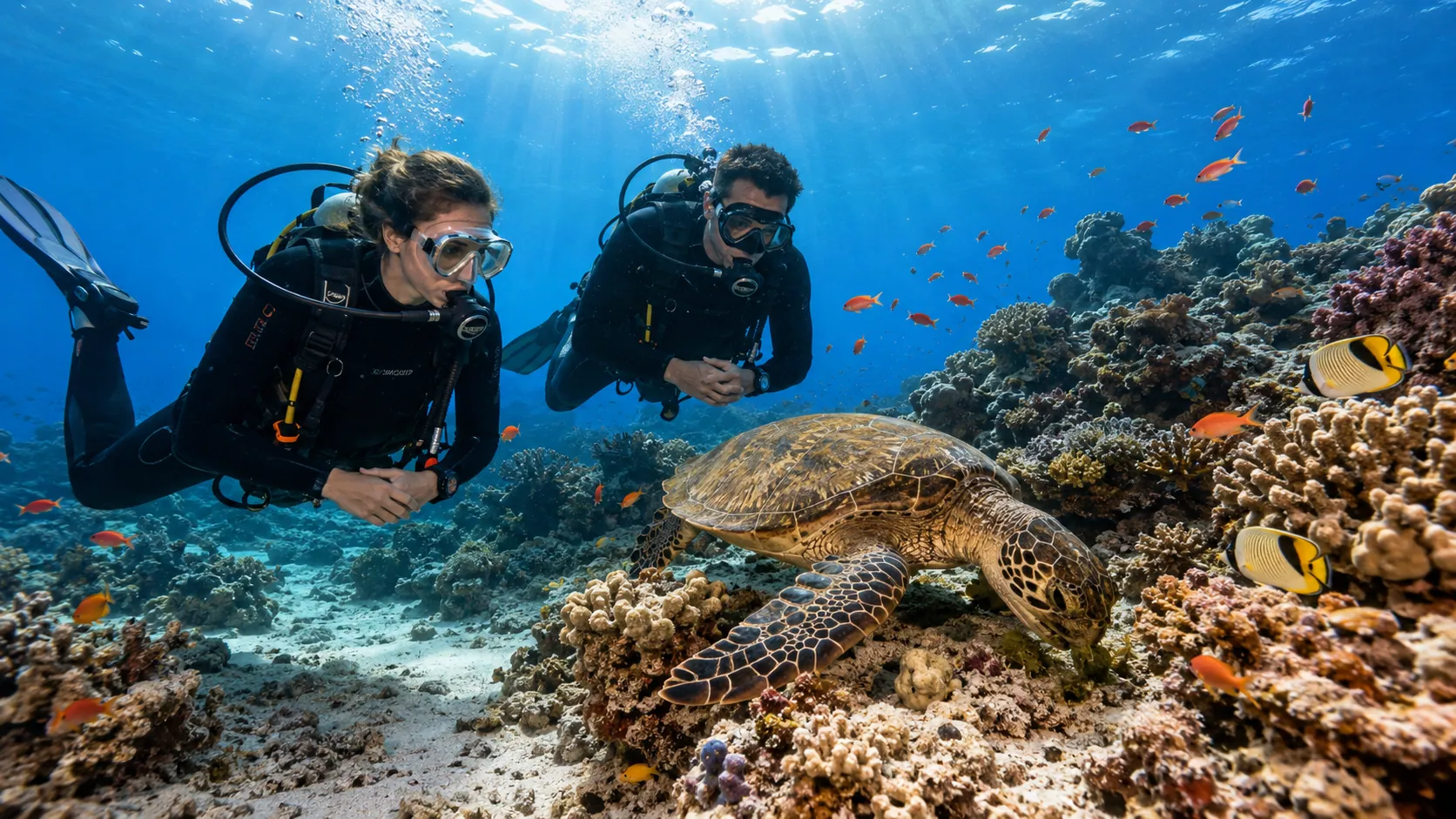
A quiet southern cape with seagrass meadows and an atmospheric cavern – turtles almost for sure, a dugong with some luck.
- Depth
- 5–20m
- Boat
- 60min
- Species
- 5
El Aruk (Gigi)
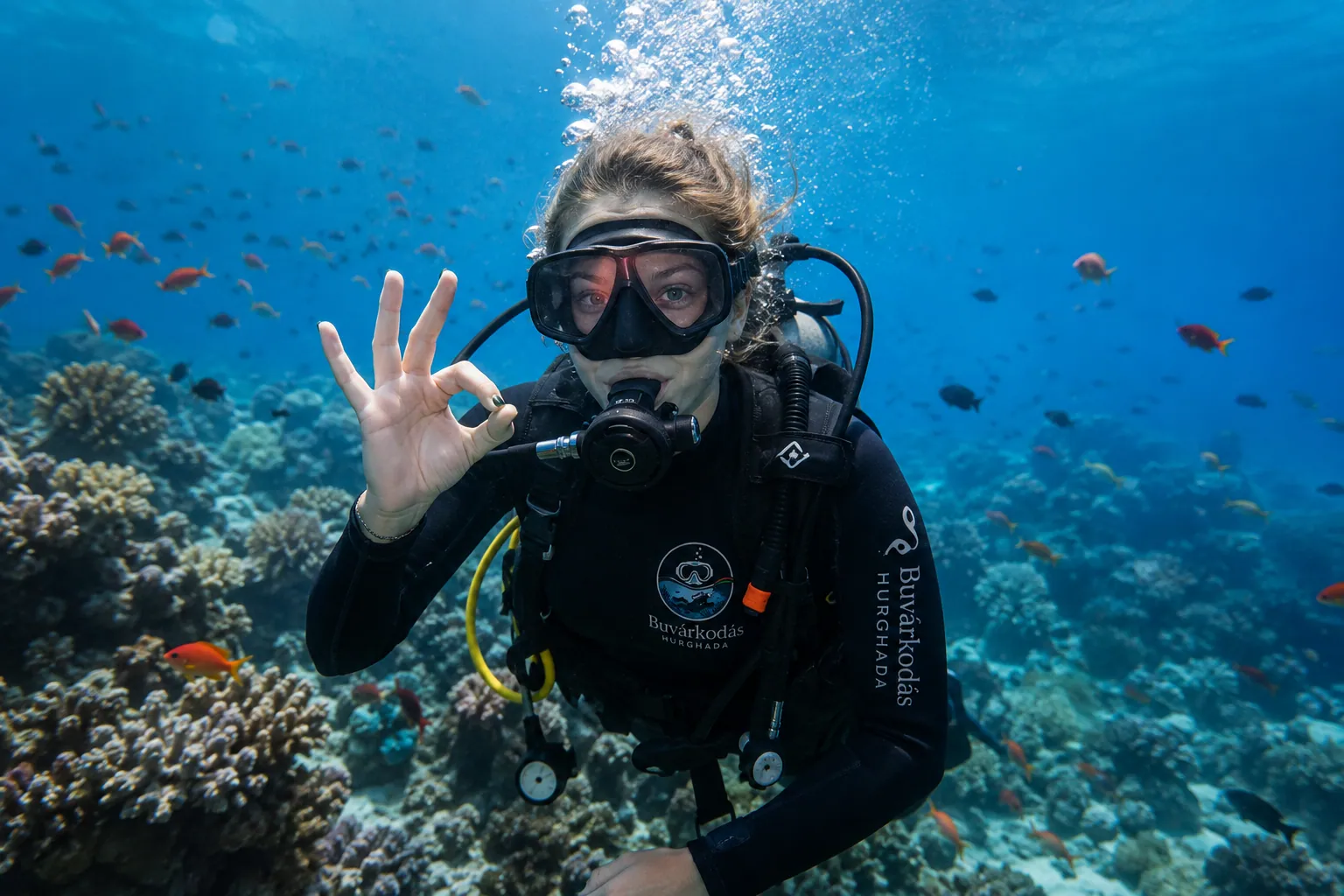
A playground of coral towers on white sand: easy navigation, clouds of glassfish and light made for photography.
- Depth
- 5–14m
- Boat
- 35min
- Species
- 5
Gota Abu Ramada
A shallow oval reef with a sandy bottom and schools of butterflyfish – perfect for training, second and night dives.
- Depth
- 4–14m
- Boat
- 55min
- Species
- 5
The Red Sea will not wait forever.
Book today – seats on the boat are limited, your excitement is not.