Giant moray
Gymnothorax javanicus
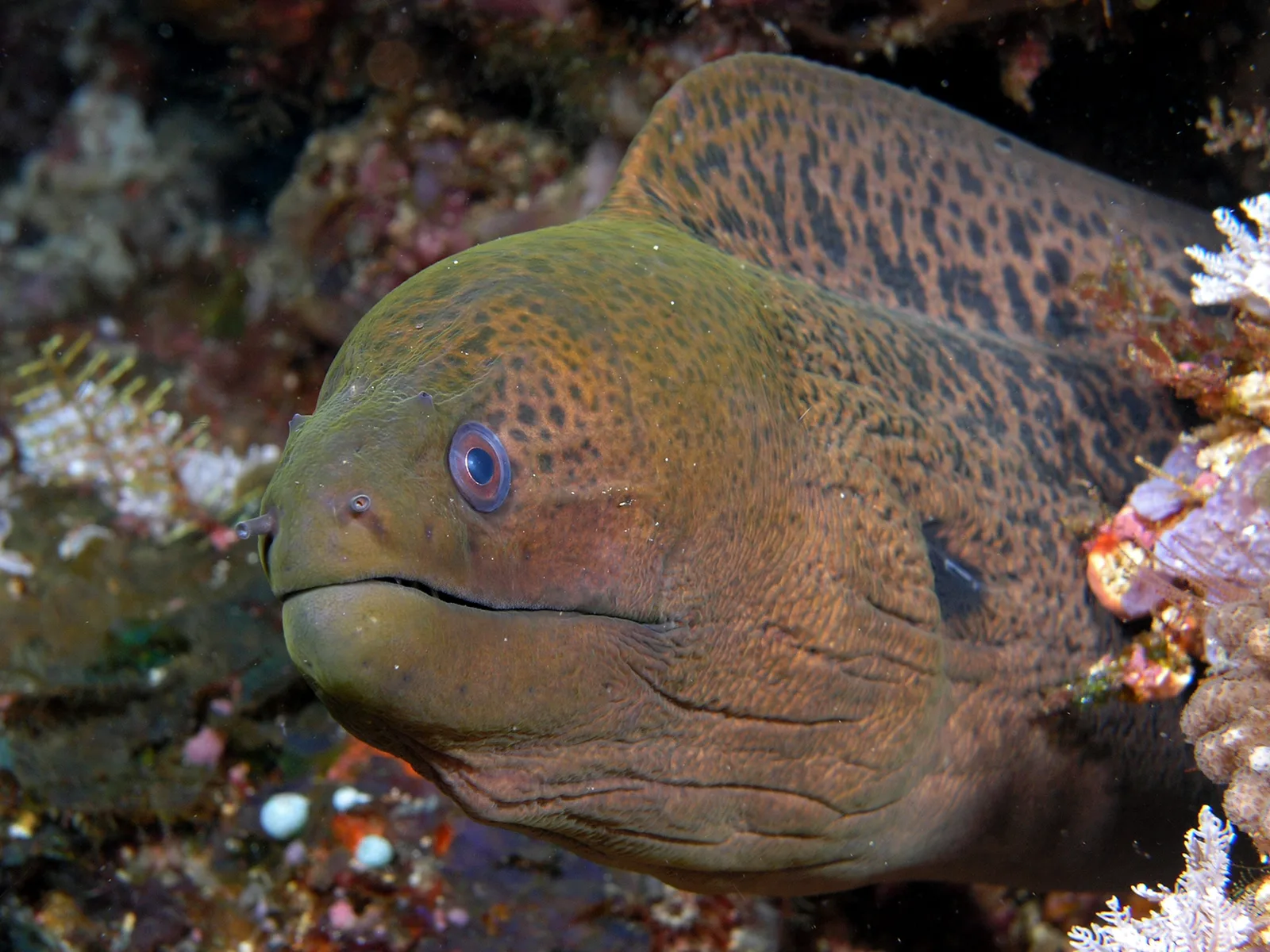
The giant moray watches from its reef hole with mouth agape – it looks menacing, but in truth it is only breathing.
The giant moray (Gymnothorax javanicus) is the largest moray species in the Red Sea, reaching 2.5 metres in length and up to 30 kg. Its snake-like body is covered not in scales but in a thick, protective layer of mucus. The constantly opening and closing mouth is not a threat: this is how it pumps water across its gills – it is simply breathing.
By day it rests in reef holes and under ledges, usually with only the head showing. It sets out to hunt at night, using its excellent sense of smell to find fish, octopus and crustaceans. The Red Sea is also where scientists first documented giant morays hunting cooperatively with a coral grouper: the grouper invites the moray to a crevice with a distinctive head-shake, and the two species share the flushed-out prey.
Around Hurghada it lives on nearly every reef, but Carless Reef is especially famous for its large, diver-accustomed morays. On a dive you can watch one calmly from one or two metres away: as long as you keep your hands away from its hole, it stays put. A free-swimming moray, visible in its full length, is a rarer and unforgettable sight – your best chance is on a night dive.
Did you know?
The moray has two sets of jaws: a second, so-called pharyngeal jaw sitting in its throat shoots forward in a flash, grabs the prey and drags it back towards the gullet – straight out of a sci-fi movie.
How to behave around it
A moray never attacks without reason: accidents almost always come from feeding or from hands reaching into holes. Never put your hands into holes or crevices, never feed one, and never corner a free-swimming moray – that is all it takes to keep the encounter completely safe.
Where can you meet it?
Carless Reef is the classic moray spot of Hurghada, but you will see one on almost every dive in the crevices of Umm Gamar and along the reef walls of the Giftun Islands too.
Frequently asked questions
It never attacks unprovoked: documented bites are almost all linked to feeding or to hands reaching into holes. Its eyesight is poor, so a hand thrust in front of its lair can be mistaken for prey. Keep one or two metres' distance, put your hands nowhere – and the moray becomes one of your most rewarding photo subjects.
It is not threatening you – it is breathing: by working its mouth it pumps water across its gills. A moray sitting in its hole has small gill openings and must actively move water through them – so the "snarl" is actually the moray's peaceful resting state.
The most famous, human-sized individuals live in the crevices of Carless Reef, but they are common along the walls of Umm Gamar and on the Giftun reefs as well. If you want to see one free-swimming at full length, join a night dive – that is when it goes hunting.
Best sites for Giant moray
Carless Reef
An offshore twin-erg reef famous for its legendary moray colony – for experienced divers, weather permitting.
- Depth
- 12–30m
- Boat
- 70min
- Species
- 5
Umm Gamar
An elongated island in the north: a plateau with three coral towers, small caves and big predators out in the blue.
- Depth
- 10–30m
- Boat
- 75min
- Species
- 5
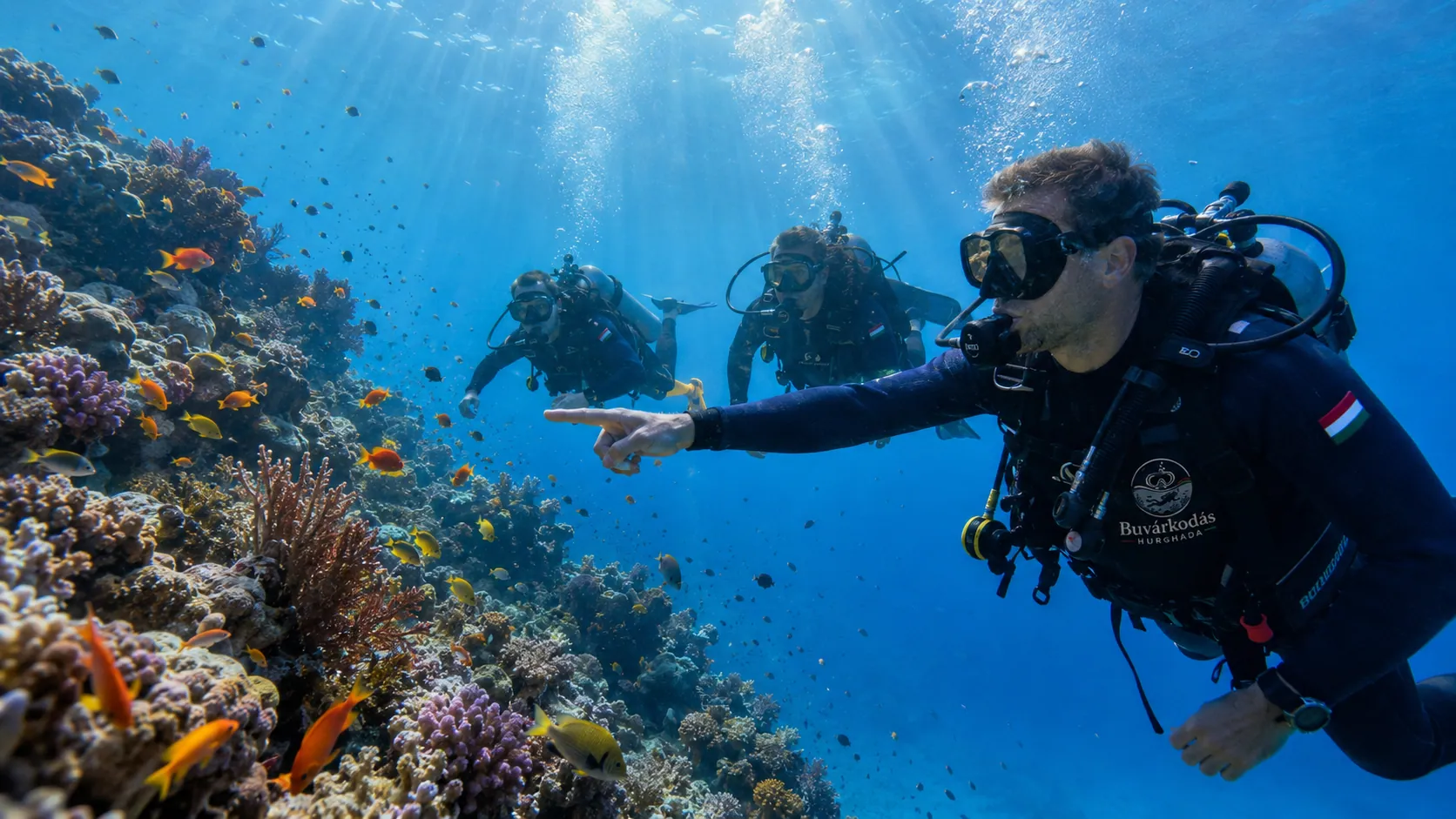
Giftun-szigetek
A national park island pair with a dozen dive sites: coral gardens, turtles and perhaps the richest fish life in the area.
- Depth
- 5–25m
- Boat
- 45min
- Species
- 6
The Red Sea will not wait forever.
Book today – seats on the boat are limited, your excitement is not.