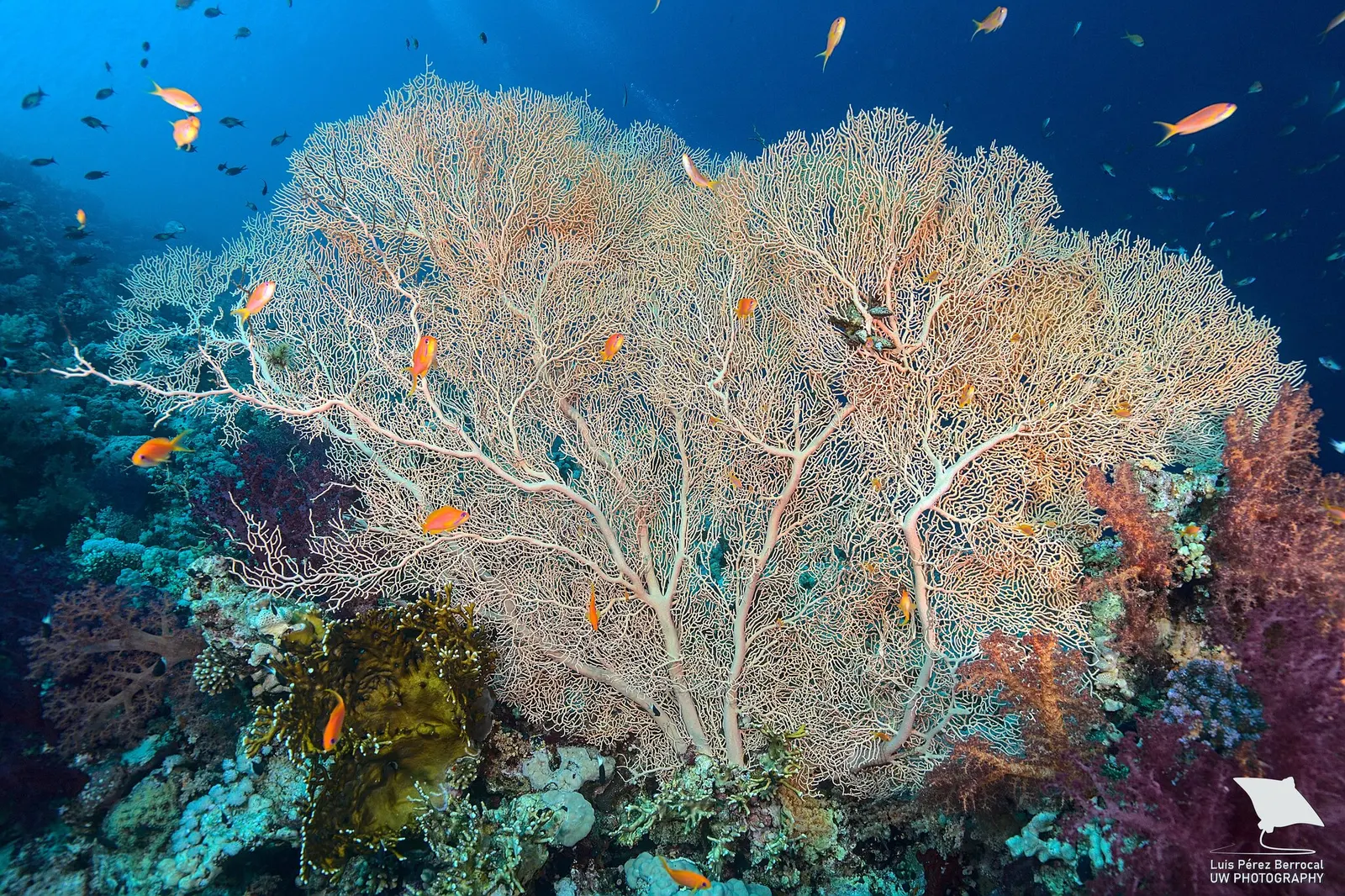
Giant sea fan
Annella mollis
A lace-fine fan bigger than a person on the deeper walls, turned into the current to strain the sea like a living net.
The giant sea fan (Annella mollis) is one of the most majestic sights a dive can offer: the cream-to-orange, finely meshed fan grows up to 2 metres and spreads in a single plane like a huge lace curtain. Up close the "lace" is really a dense network of branches covered by thousands of tiny polyps – at night and in strong current the fan looks almost furry with the mass of open polyps.
The flat shape is no accident: the fan always stands perpendicular to the prevailing current, straining the greatest possible volume of water. The giant sea fan does not live on sunlight – it has no symbiotic algae, and every meal is plankton snatched from the drifting water. That is why you typically find it below 15–20 metres, on current-swept walls and ridges where the "buffet" keeps arriving.
Around Hurghada, look for it on the walls of the deeper, current-exposed sites – and when you find one, inspect it carefully: longnose hawkfish, small crabs and shells hide among the branches. The colony grows only a few centimetres a year, so a two-metre specimen is a patriarch decades old – one careless fin kick or a dropped anchor can snap off decades of work. Keep a respectful distance, especially in current.
Did you know?
The fan always grows exactly perpendicular to the prevailing current – an experienced diver reads sea fans like a living compass to tell which way the water usually flows.
Where can you meet it?
It lives at Hurghada's deeper, current-swept sites: the finest specimens are around the pinnacles of Carless Reef, on the walls of Umm Gamar and near the El Mina wreck.
Frequently asked questions
Because it is a filter feeder: the flat shape, set perpendicular to the current, catches the most plankton for the least building material. It works like a sail – except it catches dinner, not wind.
Because it lives on plankton rather than light, and its fragile structure copes poorly with wave surge. Calm, current-swept deeper water is its true home – for the big specimens you need to dive below 15–20 metres.
Don't: the polyp layer covering the branches is damaged by touch, and one snapped branch tip erases decades of growth. Peer between the branches instead – chances are a longnose hawkfish is looking back at you.
Best sites for Giant sea fan
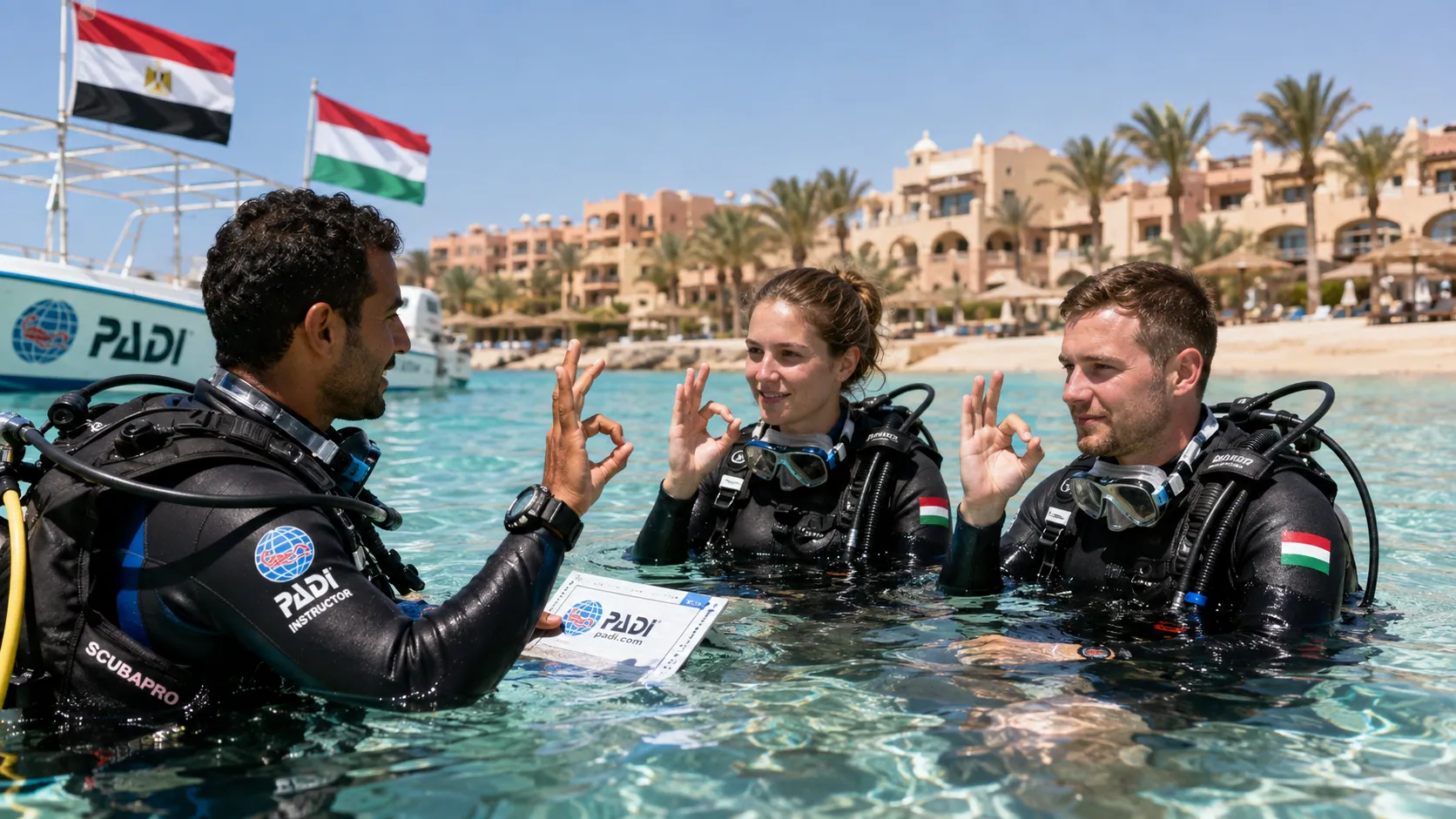
Carless Reef
An offshore twin-erg reef famous for its legendary moray colony – for experienced divers, weather permitting.
- Depth
- 12–30m
- Boat
- 70min
- Species
- 5
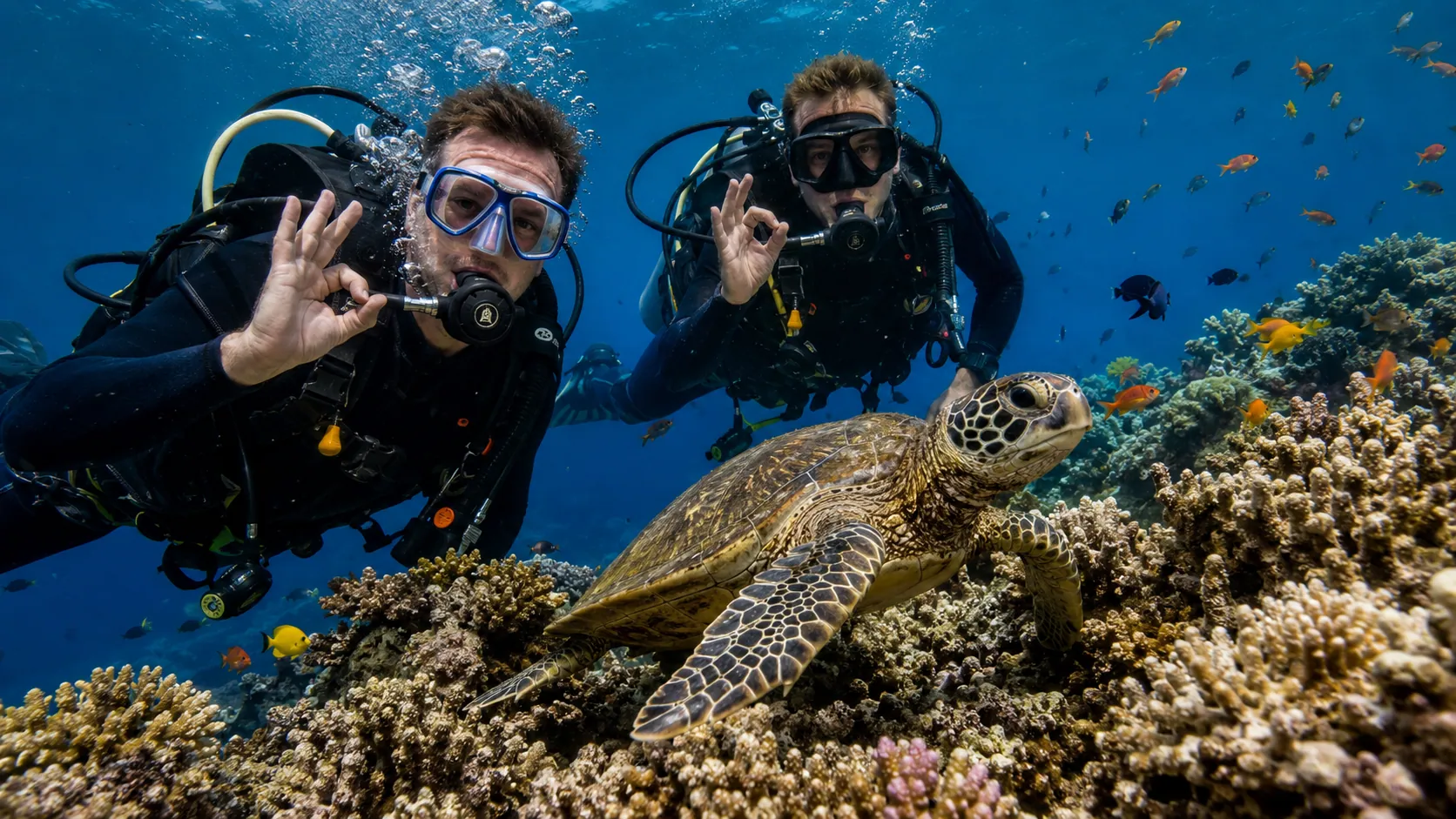
Umm Gamar
An elongated island in the north: a plateau with three coral towers, small caves and big predators out in the blue.
- Depth
- 10–30m
- Boat
- 75min
- Species
- 5
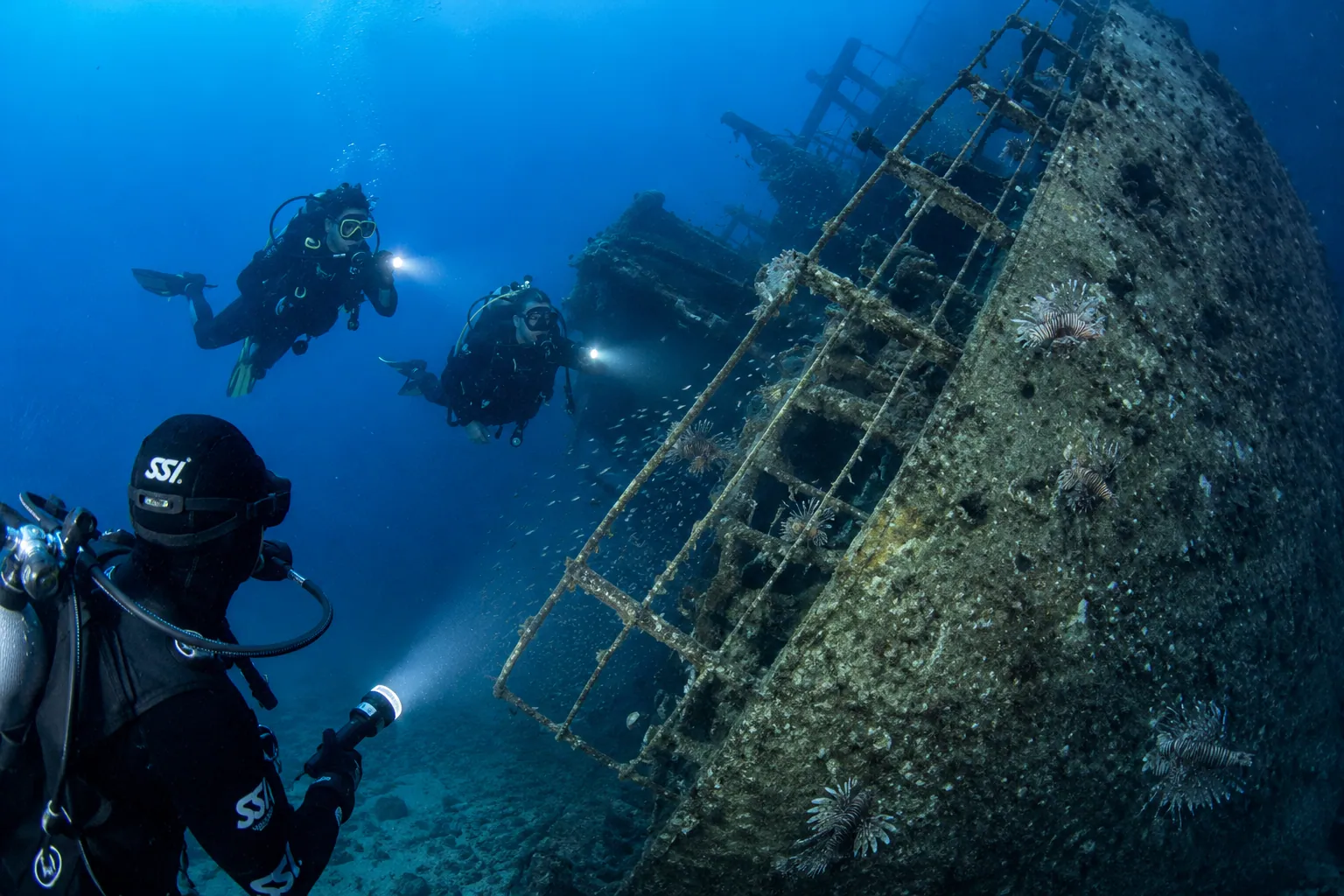
El Mina roncs
A genuine warship wreck 20 minutes from the marina: an Egyptian minesweeper sunk in 1969, resting on sand at 30 metres.
- Depth
- 16–30m
- Boat
- 20min
- Species
- 5
The Red Sea will not wait forever.
Book today – seats on the boat are limited, your excitement is not.