Green birdmouth wrasse
Gomphosus caeruleus
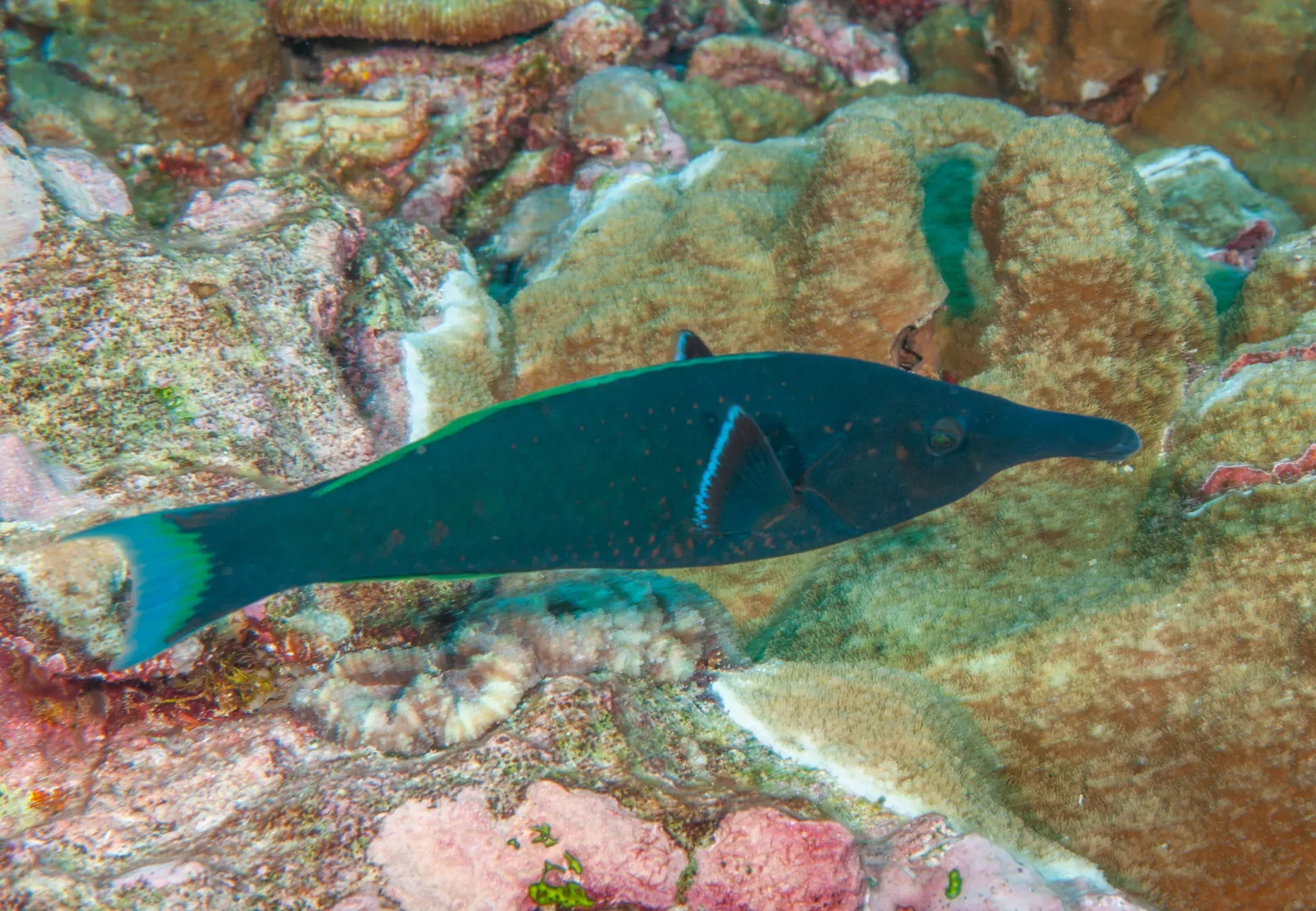
With its long curved beak of a snout and wing-beat swimming style, it looks like a blue hummingbird flitting among the corals.
The green birdmouth wrasse (Gomphosus caeruleus) has a name you cannot mistake: its long, down-curved snout looks exactly like a bird's beak. Adult males glow deep blue-green, while females are greyish yellow-brown with a dark stripe along the snout – so different that they were once described as two separate species. The Red Sea population forms its own subspecies, so at Hurghada you are watching a slightly "local edition" of the birdmouth wrasse.
The beak-like snout is not decoration but a precision tool: the fish uses it to pluck small crabs, snails and worms from between coral branches and out of narrow crevices that other fishes' mouths could never reach. Its swimming style is equally distinctive: it "rows" almost exclusively with its pectoral fins in rhythmic strokes, like a bird beating its wings – hence the other half of the name. Like most wrasses it is born female, and the largest individuals later transform into brilliant blue males.
It is very common on Hurghada's reefs but never stands still: it zigzags constantly between the coral heads, so the best way to watch it is to hover in one spot and let it pass you. In the shallow coral gardens – Giftun, El Fanadir, Gota Abu Ramada – you are almost guaranteed to meet it as a diver or a snorkeler, and the blue males shine from far away.
Did you know?
Every birdmouth wrasse is born female: the largest and boldest of the brownish females transforms into a brilliant blue male. The two "outfits" are so different that early naturalists described them as separate species.
Where can you meet it?
A permanent resident of Hurghada's shallow coral gardens: it turns up on nearly every dive and snorkel trip on the reef tops of the Giftun Islands, El Fanadir and Gota Abu Ramada.
Frequently asked questions
For two reasons: its long, curved snout resembles a bird's beak, and while swimming it "flaps" its pectoral fins like a bird beating its wings. Underwater it really does look like a blue hummingbird flitting among the corals.
Yes, it is one of the most common fish on Hurghada's shallow reef tops. It is not shy but never stops moving – the best tactic is to float in place and let it come close to you.
Yes: the brownish-yellow individuals are females, and the deep blue fish are mature males. Every individual starts as a female and only the largest turn blue – which is why you always see more brown ones than blue ones.
Best sites for Green birdmouth wrasse
Giftun-szigetek
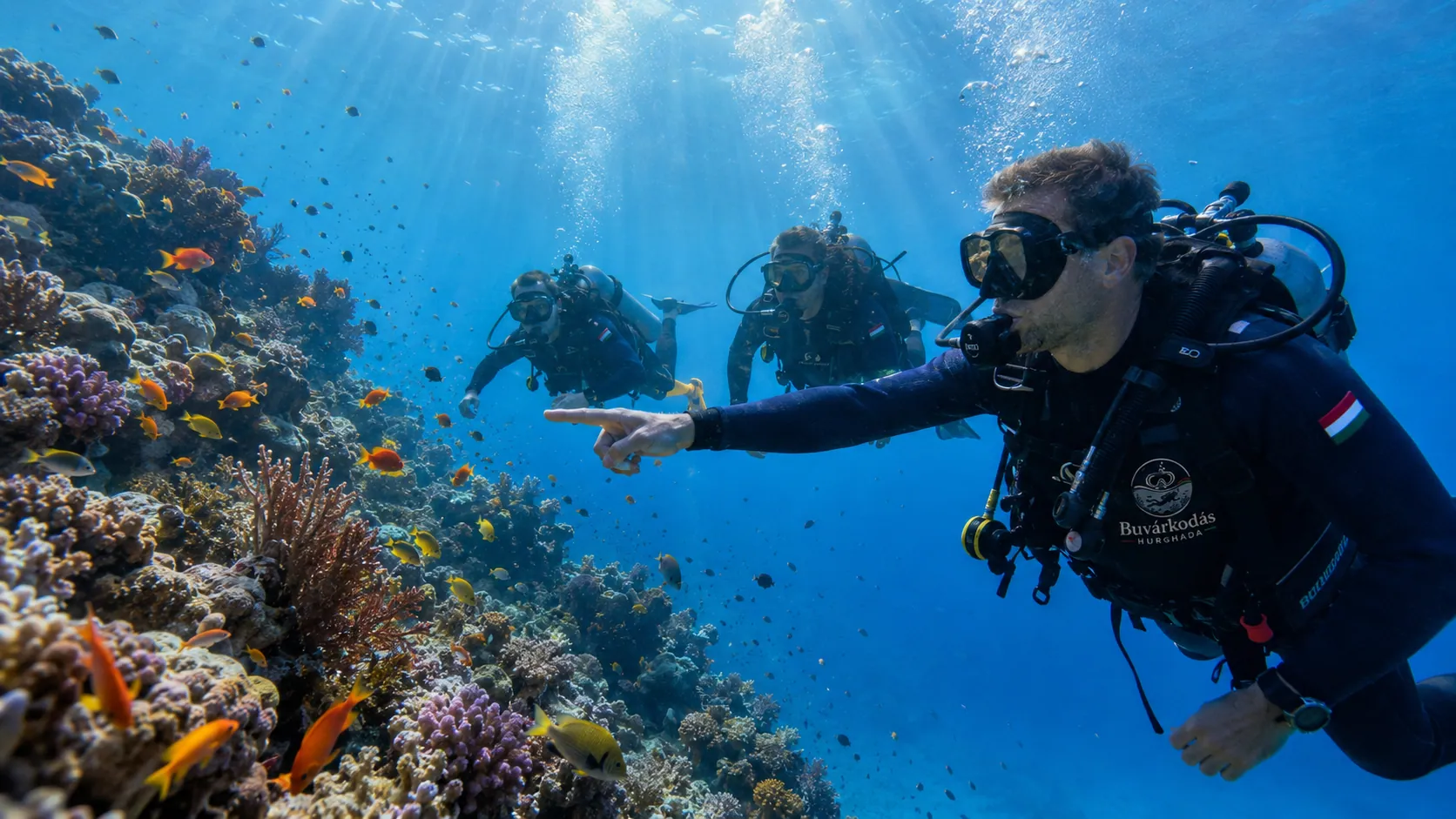
A national park island pair with a dozen dive sites: coral gardens, turtles and perhaps the richest fish life in the area.
- Depth
- 5–25m
- Boat
- 45min
- Species
- 6
El Fanadir
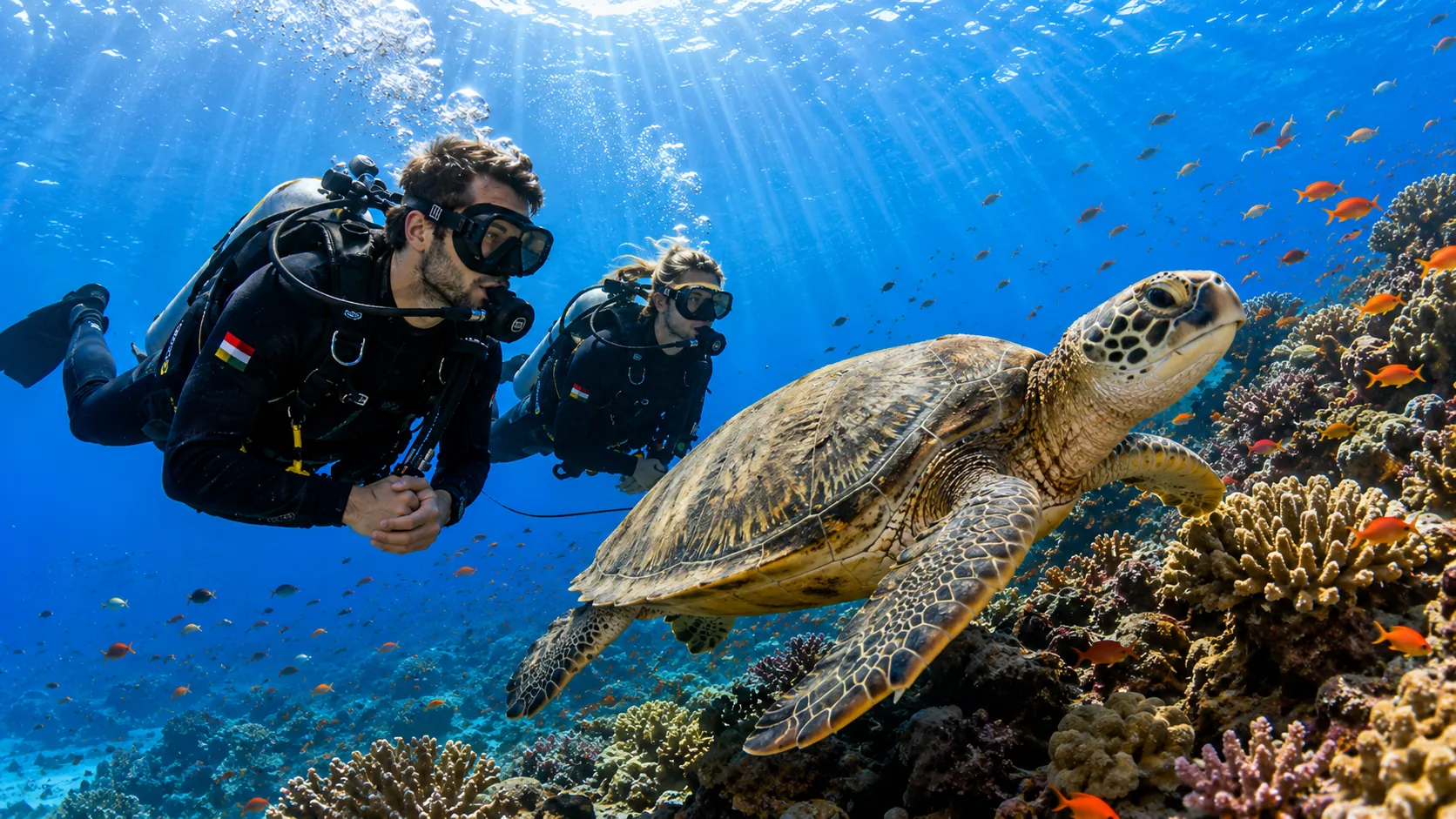
A long reef ridge barely half an hour from the marina: a gentle wall, blue-spotted rays and seagrass patches with turtles.
- Depth
- 6–25m
- Boat
- 30min
- Species
- 5
Gota Abu Ramada
A shallow oval reef with a sandy bottom and schools of butterflyfish – perfect for training, second and night dives.
- Depth
- 4–14m
- Boat
- 55min
- Species
- 5
The Red Sea will not wait forever.
Book today – seats on the boat are limited, your excitement is not.