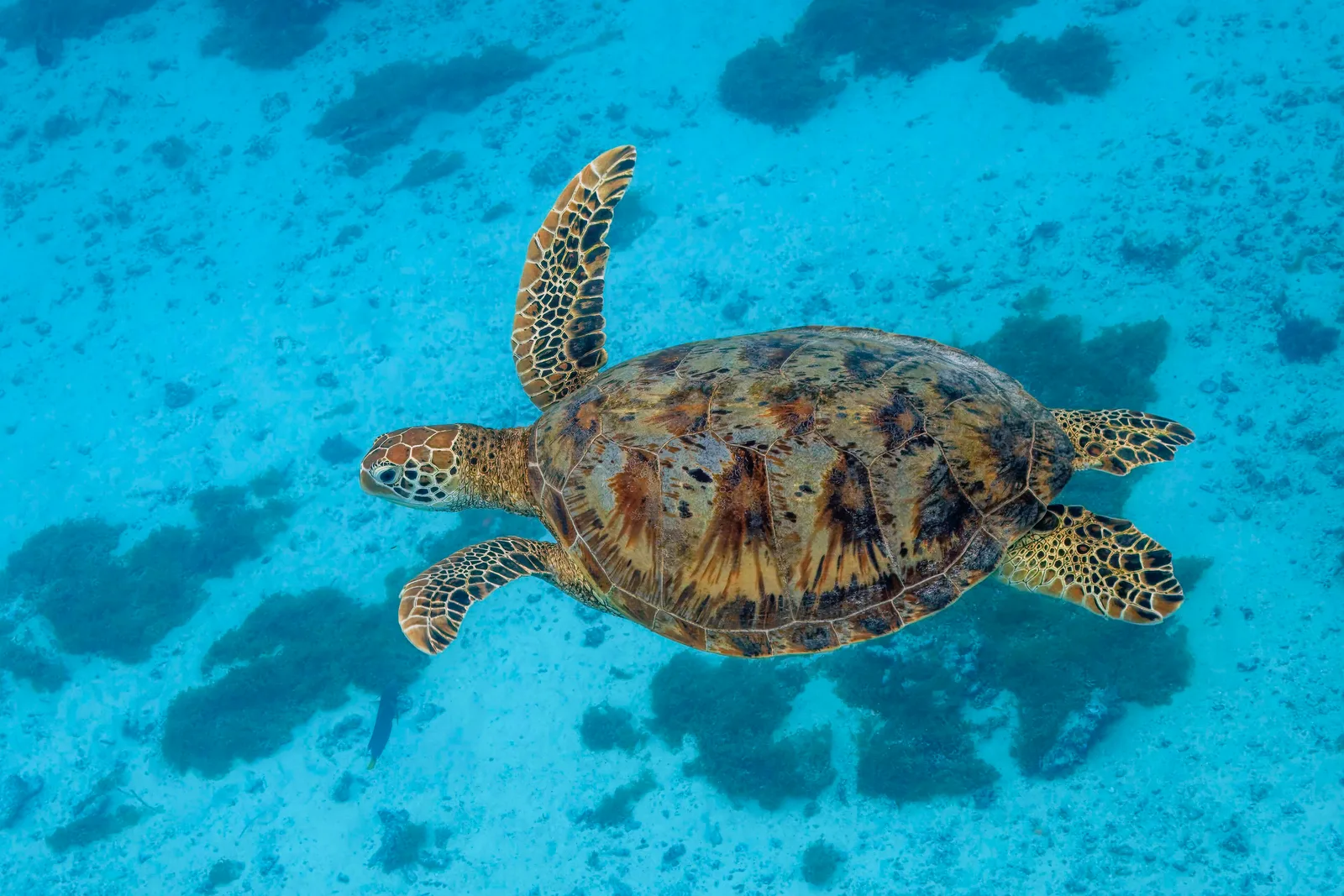
Green sea turtle
Chelonia mydas
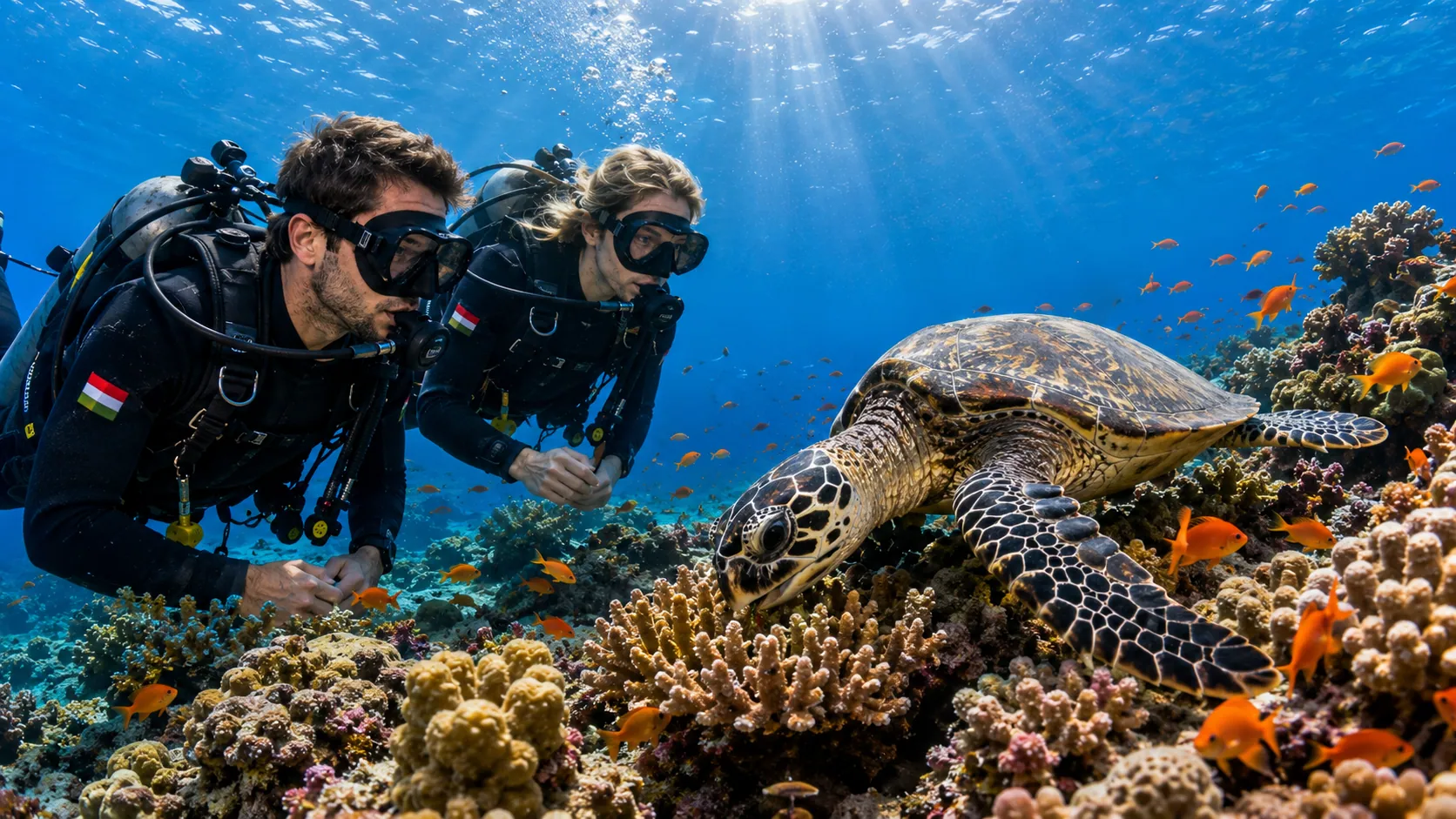
Hovering beside a calmly grazing sea turtle in the blue – few experiences in diving are more peaceful than this.
The green sea turtle (Chelonia mydas) is one of the largest sea turtle species in the world: its shell grows to 80–120 cm and it can weigh 150–200 kg. The name comes not from the shell but from the greenish colour of its body fat, a result of its plant-based diet. Adults feed almost exclusively on seagrass and algae and can live 60–80 years.
In the Red Sea, turtles graze the seagrass meadows of sandy bays and retreat under coral ledges to rest. As an air-breathing reptile it surfaces regularly: while actively grazing it breathes every 20–30 minutes, but at rest it can stay submerged for several hours at a time.
On a dive, a turtle usually just carries on with whatever it was doing: grazing, resting among the corals, or cruising leisurely up for a breath. Approach slowly from the side, avoid circling it, and it will often let you float within arm's reach. Around Hurghada snorkelers see them frequently too, grazing in the shallow, grassy lagoons.
Did you know?
Green sea turtles navigate by the Earth's magnetic field: decades later, and from thousands of kilometres away, females find their way back to the very beach where they hatched to lay their own eggs.
How to behave around it
Sea turtles are protected: do not touch or chase them, and never block their path to the surface – they are heading up to breathe. Keep a few metres' distance and the encounter stays relaxed for both of you.
Where can you meet it?
You will most often meet them in the seagrass lagoon of Abu Hashish bay, along the sandy edge of El Fanadir reef and around the Giftun Islands.
Frequently asked questions
The green sea turtle is a completely peaceful herbivore and poses no danger to people. Touching is forbidden though: it is a protected species, touching stresses the animal and damages the protective layer on its shell. Watch and photograph – always from a respectful distance.
You have a chance all year round, as the turtles do not migrate away from Hurghada's reefs. The most reliable spots are the grassy bay of Abu Hashish, the sandy edge of El Fanadir and the reefs of the Giftun Islands – grazing turtles are seen most often in the morning.
While swimming and grazing actively it breathes every 20–30 minutes, but at rest it slows its metabolism and can stay down for several hours. That is why you should never block its way up: when it heads for a breath, let it rise freely.
Best sites for Green sea turtle
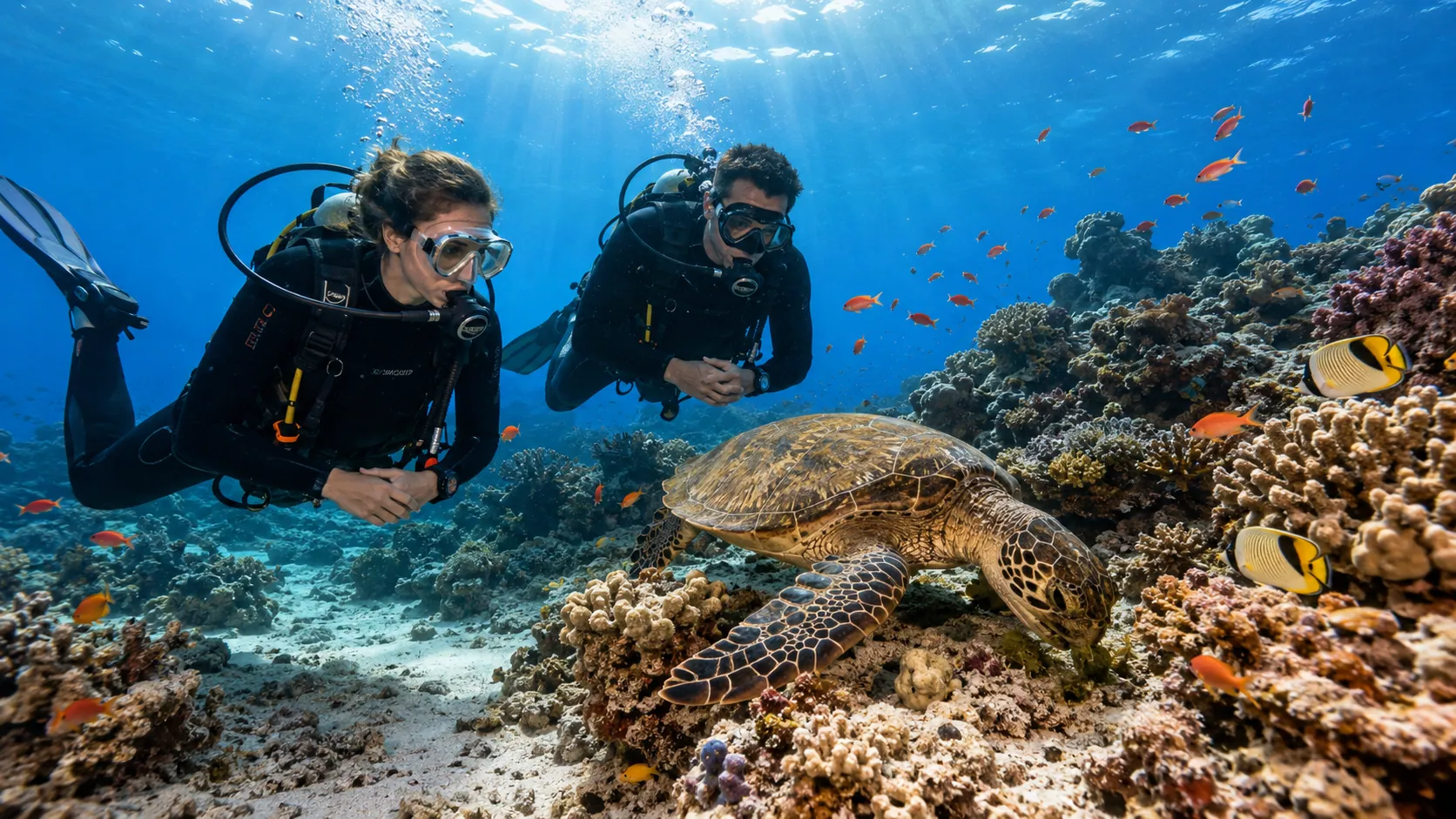
Abu Hashish-fok
A quiet southern cape with seagrass meadows and an atmospheric cavern – turtles almost for sure, a dugong with some luck.
- Depth
- 5–20m
- Boat
- 60min
- Species
- 5
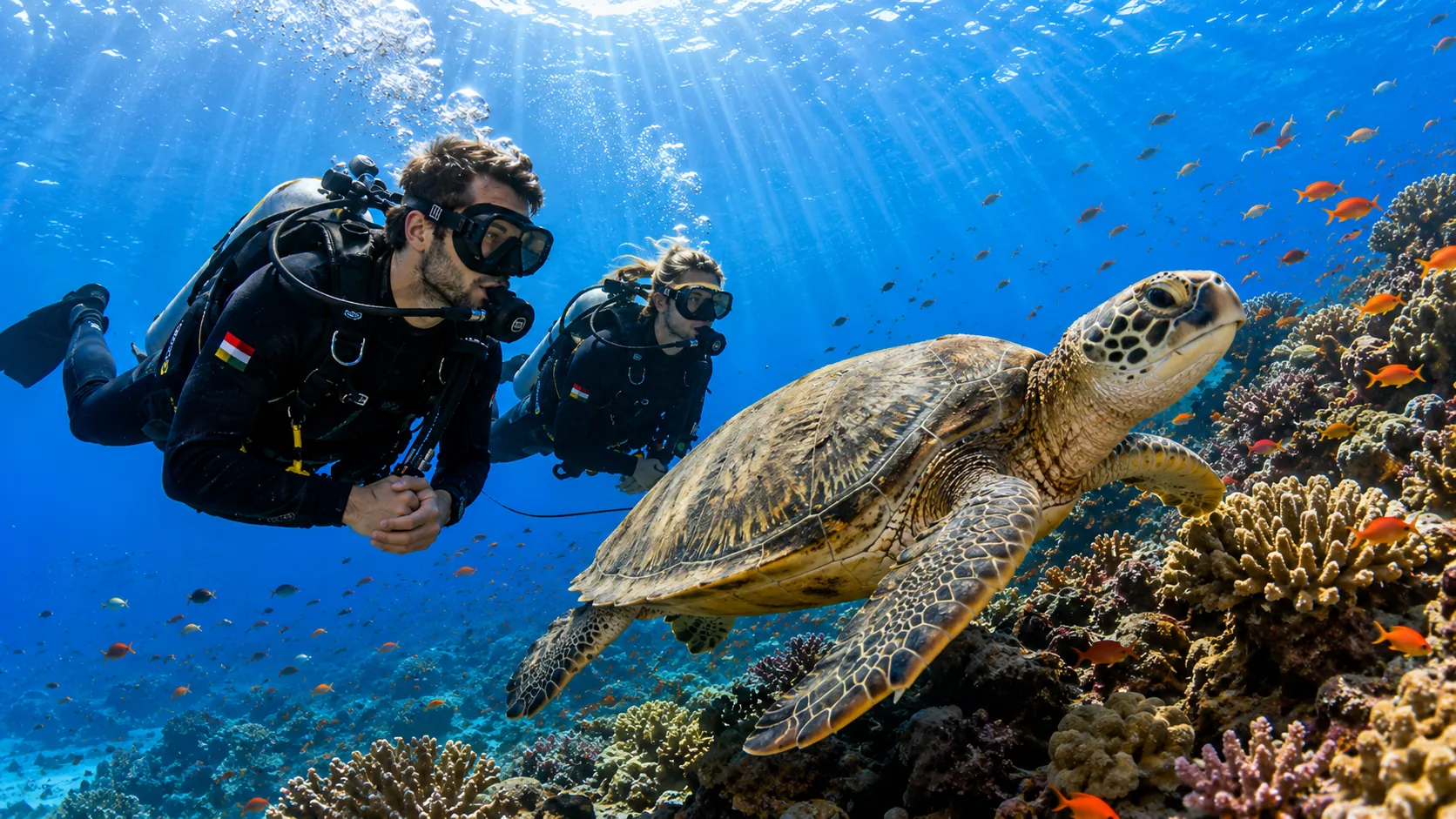
El Fanadir
A long reef ridge barely half an hour from the marina: a gentle wall, blue-spotted rays and seagrass patches with turtles.
- Depth
- 6–25m
- Boat
- 30min
- Species
- 5
Giftun-szigetek
A national park island pair with a dozen dive sites: coral gardens, turtles and perhaps the richest fish life in the area.
- Depth
- 5–25m
- Boat
- 45min
- Species
- 6
The Red Sea will not wait forever.
Book today – seats on the boat are limited, your excitement is not.