Grey reef shark
Carcharhinus amblyrhynchos
The embodiment of the classic shark silhouette: the grey reef shark rules the deep, current-swept reef corners – seeing one at Hurghada is hitting the jackpot.
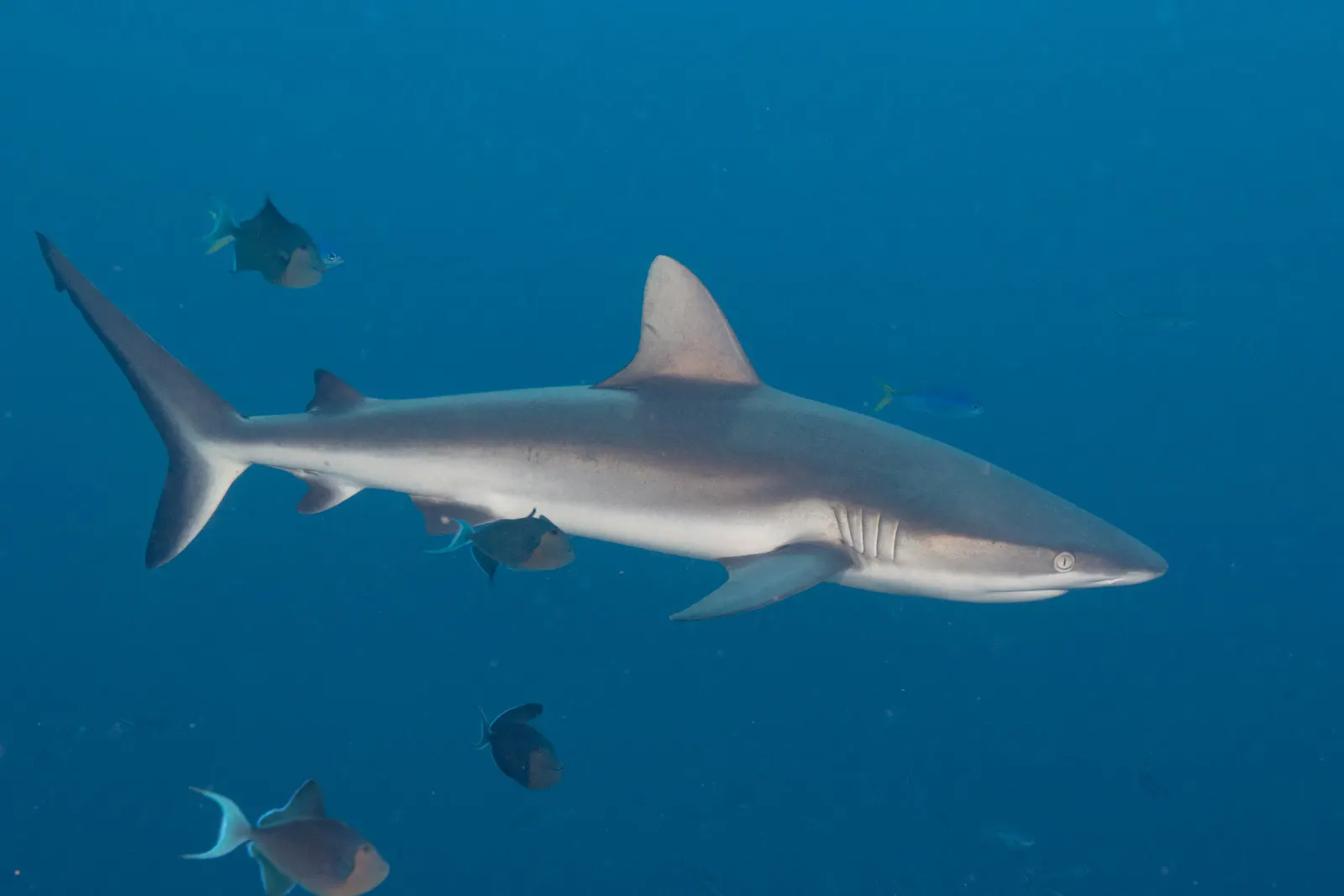
The grey reef shark (Carcharhinus amblyrhynchos) is what everyone pictures at the word "shark": a compact, muscular body, pointed snout, perfect streamlining. Its back is grey, its belly white, and the trailing edge of its tail fin is framed by a broad black band – the surest field mark. Growing to nearly two metres, this predator is one of the reef's most important guardians: by weeding out sick and weakened fish it keeps the reef's fish stocks healthy.
The species inhabits deep, current-exposed reef corners and steep walls. By day the sharks often hang in groups facing into the current at depth; by night they actively hunt fish and cephalopods. The grey reef shark is a favourite of behavioural scientists because it signals displeasure with unmistakable body language: arched back, lowered pectoral fins, an exaggerated, weaving swim. That is not an attack – it is a message. Respect it, calmly give ground, and the shark will leave your dive in peace.
Honestly, it is a rare sight on Hurghada's daily reefs: the species' true home is on the more distant, deep-water reefs. Your best odds come at the current-swept deep corners of Carless Reef and Umm Gamar on early-morning dives, when a patrolling silhouette may materialise out of the blue. If it happens, treasure it: the Red Sea's shark populations are a dwindling global treasure, and every sighting is proof of a reef in good health.
Did you know?
The grey reef shark is one of the most expressive "talking" sharks: its threat posture of arched back and lowered pectorals is performed so precisely and ritually that researchers have compiled a veritable dictionary of shark body language from it.
How to behave around it
The grey reef shark does not hunt humans and typically avoids divers from afar. If you do meet: never chase it, never corner it, and never place yourself between it and open water. If it swims with arched back and lowered fins, it is telling you that you are too close – ease back slowly and calmly toward the reef wall and the situation resolves itself.
Where can you meet it?
A rare guest at Hurghada: your best chances are at the deep, current-swept corners of Carless Reef and Umm Gamar on early-morning dives, when a patrolling individual may appear out of the blue.
Frequently asked questions
Sharks do live in the Red Sea, but they rarely show themselves at Hurghada's daily dive sites, and shark attacks are extraordinarily rare worldwide. Reef sharks are shy animals that avoid people – divers actively seek these encounters because they are the high point of any dive.
Stay calm, breathe evenly, remain with your group and close to the reef wall. Do not rush toward it and do not bolt in panic – just watch. Odds are the shark will vanish into the blue after one or two elegant circles.
Shark populations have declined worldwide, mainly due to overfishing. In Egypt sharks are protected, and every living shark is worth many times more to tourism than a caught one – which is why every sighting on our reefs is a cause for celebration.
Best sites for Grey reef shark
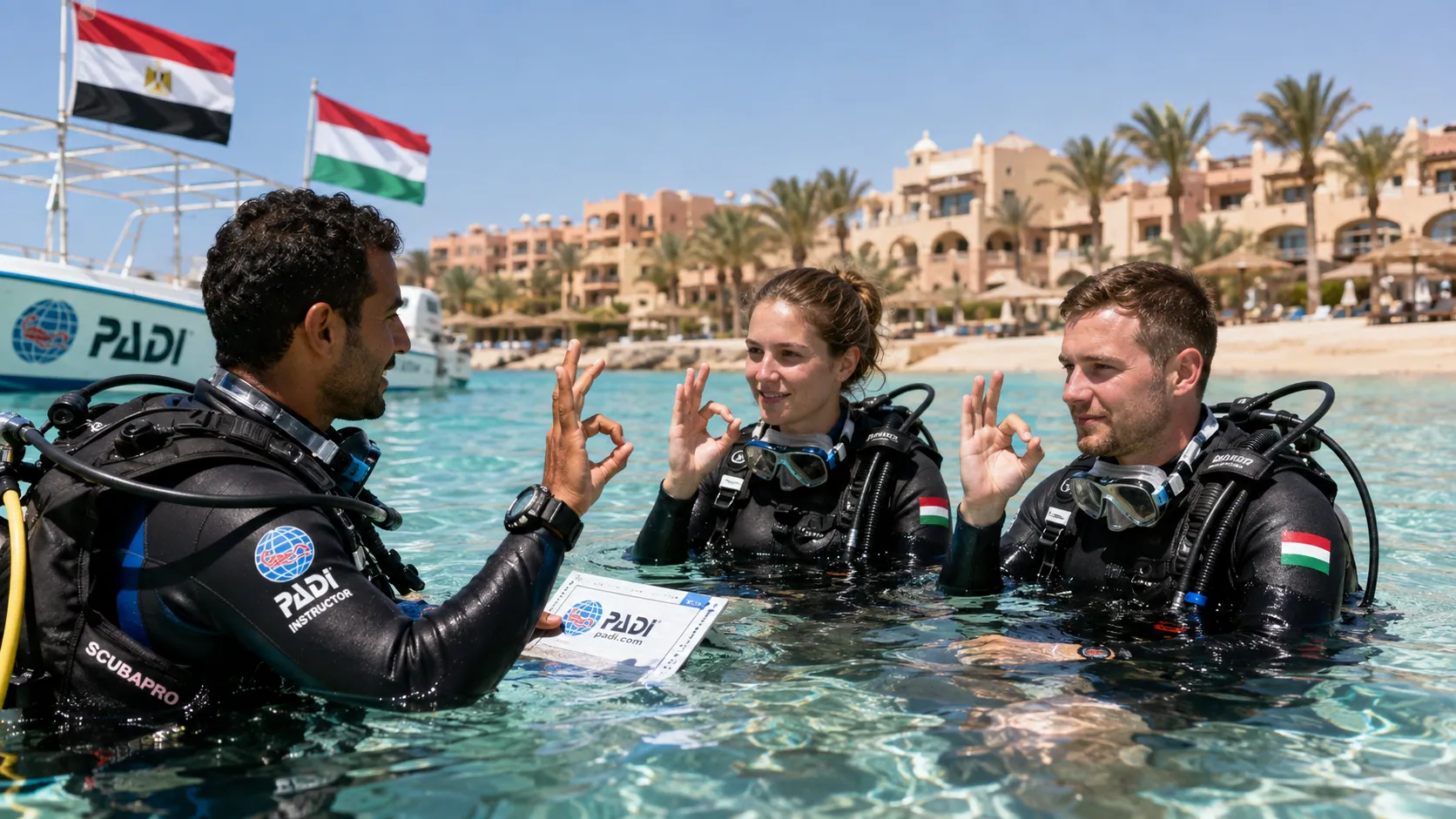
Carless Reef
An offshore twin-erg reef famous for its legendary moray colony – for experienced divers, weather permitting.
- Depth
- 12–30m
- Boat
- 70min
- Species
- 5
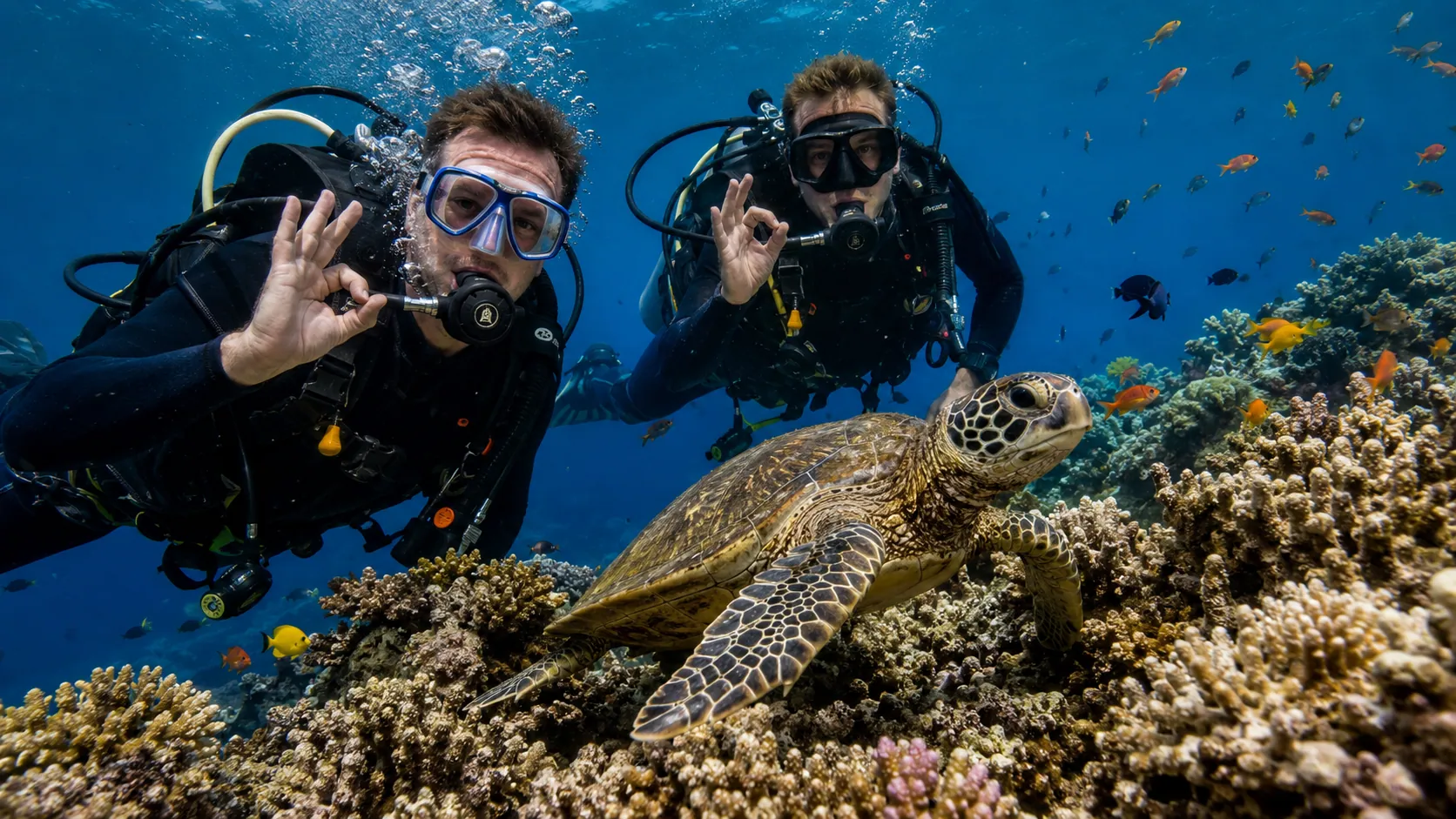
Umm Gamar
An elongated island in the north: a plateau with three coral towers, small caves and big predators out in the blue.
- Depth
- 10–30m
- Boat
- 75min
- Species
- 5
Small Giftun fal
Hurghada's classic drift dive: a sheer wall with gorgonian fans, eagle rays and a coral-tower plateau at 20–30 metres.
- Depth
- 8–30m
- Boat
- 50min
- Species
- 5
The Red Sea will not wait forever.
Book today – seats on the boat are limited, your excitement is not.