Hawksbill turtle
Eretmochelys imbricata
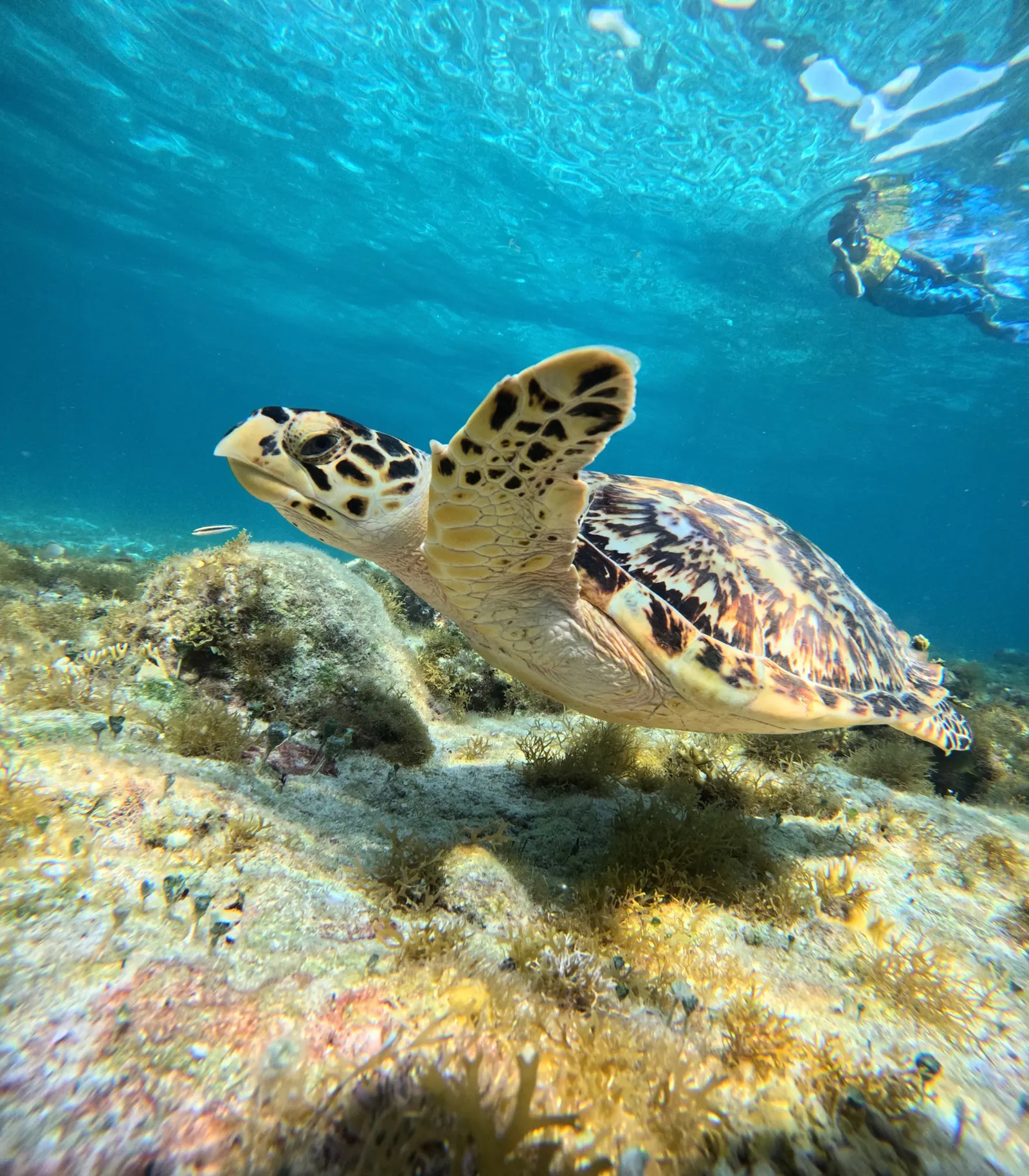
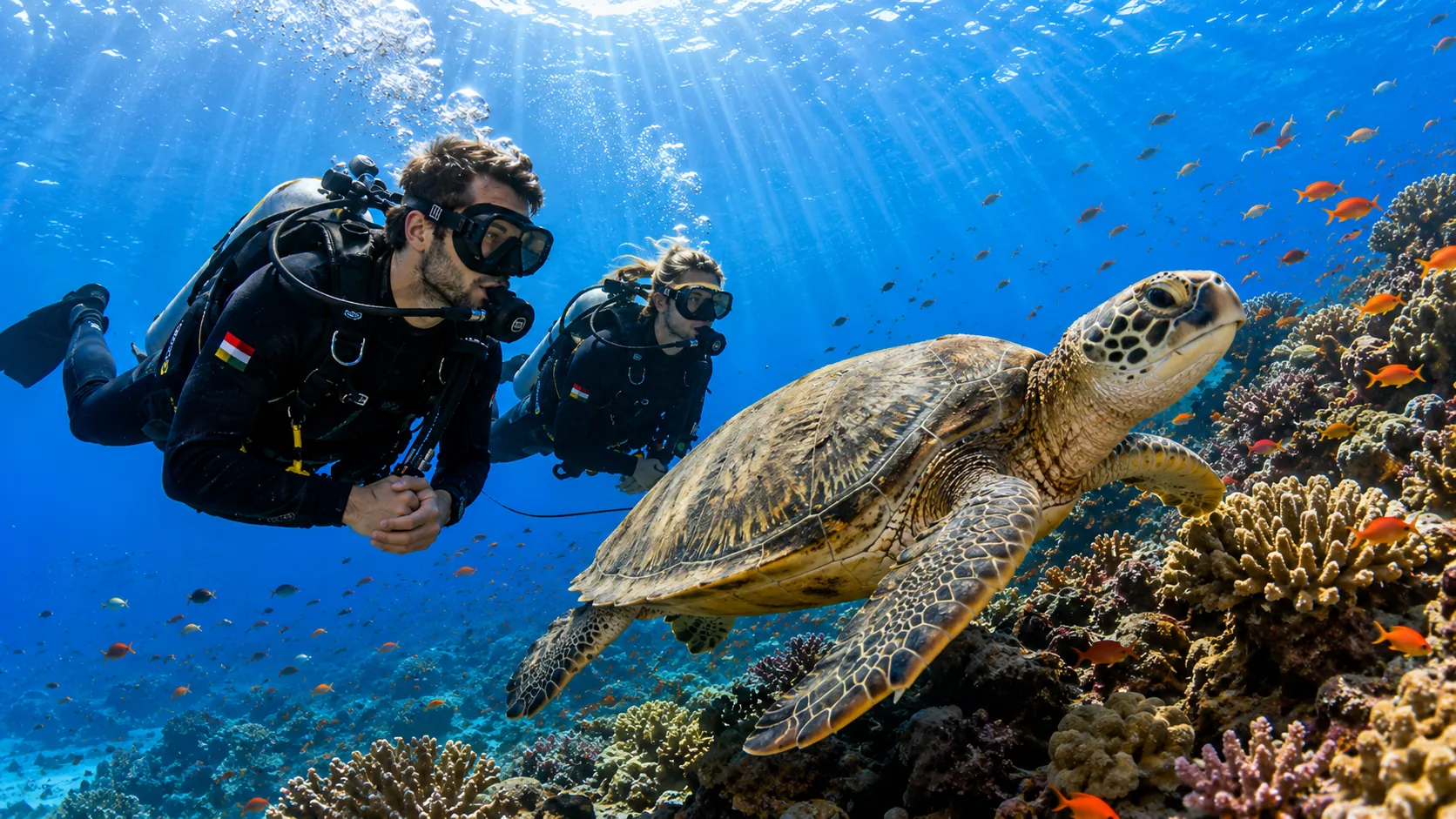
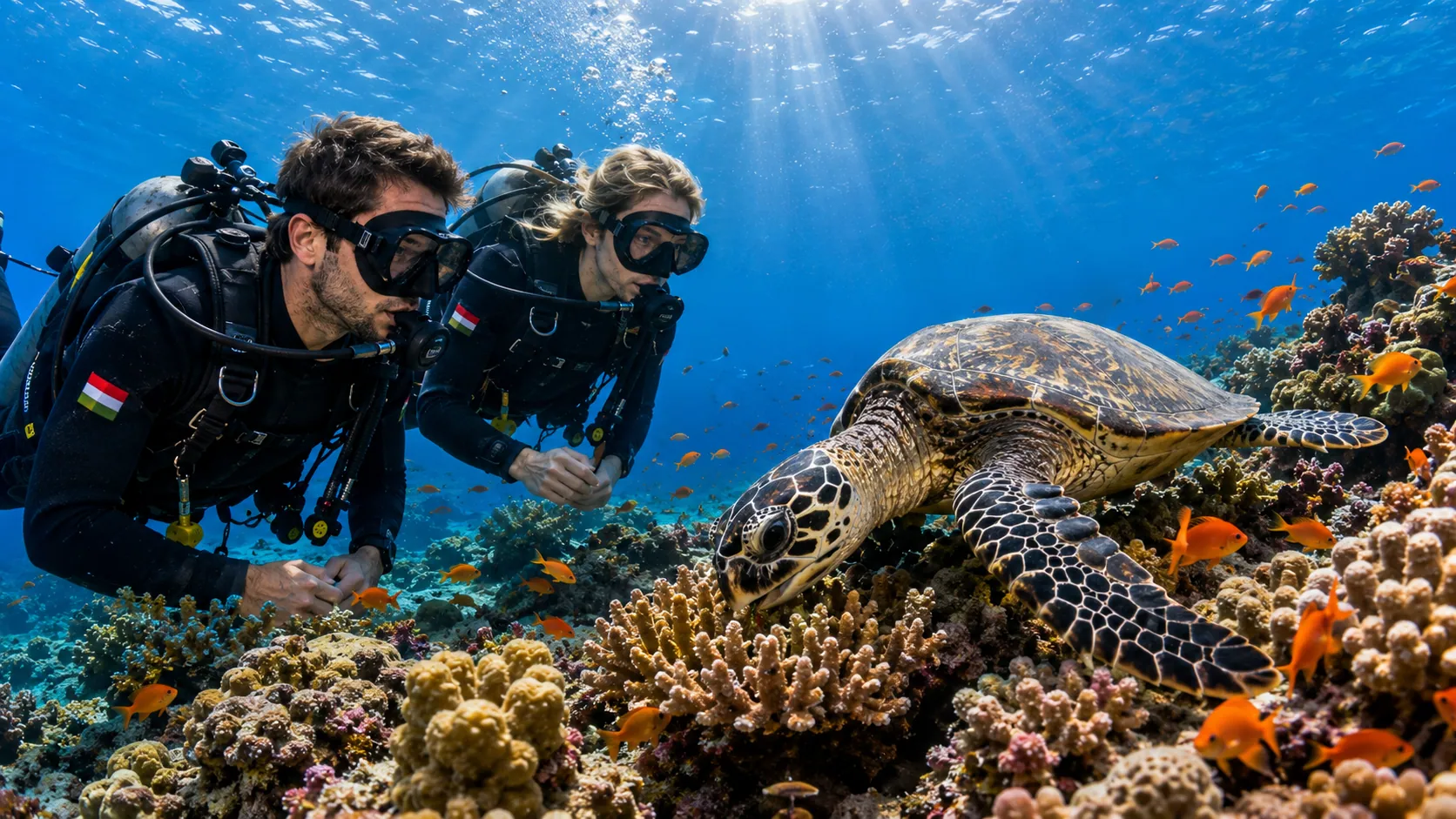
With its bird-like beak it nibbles sponges off the reef wall – the hawksbill is the coral reef's elegant gardener, and around Hurghada you see it more often than almost anywhere else.
The hawksbill turtle (Eretmochelys imbricata) takes its name from the shingle-like, overlapping horny plates of its shell, marbled in amber and brown – the very pattern the world knows as "tortoiseshell". Smaller and slimmer than the green sea turtle, its surest field mark is the head: a narrow, pointed, bird-of-prey beak that lets it reach into the tightest coral crevices.
And that beak is its secret: sponges make up most of the hawksbill's diet – food defended by glassy needles and toxins, which almost nothing else will eat. By grazing down the fast-growing sponges it performs an invaluable service to the reef, freeing up space for the slower-growing corals. The species is critically endangered worldwide – precisely because of the trade in its beautiful shell – which makes every encounter a gift.
On Hurghada's reefs it is fortunately still a regular sight: calmly grazing individuals turn up almost weekly in the coral gardens of the Giftun Islands, along the El Fanadir wall and on the Carless Reef plateau. If you find one, stay to the side and keep still: never block a turtle's path when it rises to breathe, and never touch it – a relaxed hawksbill will feast in one spot for half an hour, and few better photo subjects exist underwater. You can often meet it while snorkeling over the shallow reef tops too.
Did you know?
The adult hawksbill feeds mainly on toxic sponges – in such quantities that its own flesh can become poisonous to humans. Biology's irony: being inedible is partly what helps it survive.
Where can you meet it?
The coral gardens of the Giftun Islands, the El Fanadir wall and the Carless Reef plateau are its regular haunts – but it can appear at any sponge-rich reef wall around Hurghada.
Frequently asked questions
Three quick field marks: the hawksbill is smaller, its mouth is a pointed "hawk's beak", and its shell plates overlap like shingles, often with a serrated rear edge. The green turtle is larger, round-headed, with a smooth-edged shell – and while it grazes seagrass, the hawksbill picks sponges off the reef wall.
No – and not just out of politeness: the species is strictly protected, touching stresses it, disrupts its breathing rhythm and can damage the protective film on its shell. Besides, the rule works in reverse: the stiller you are, the closer it will graze towards you on its own. The best turtle photos are always born of patience.
Yes, with good odds: hawksbills regularly feed on the shallow reef tops at 2–10 metres, and they must surface to breathe a few times an hour anyway. On snorkeling trips around the Giftun Islands it is one of the most frequent "big encounters".
Best sites for Hawksbill turtle
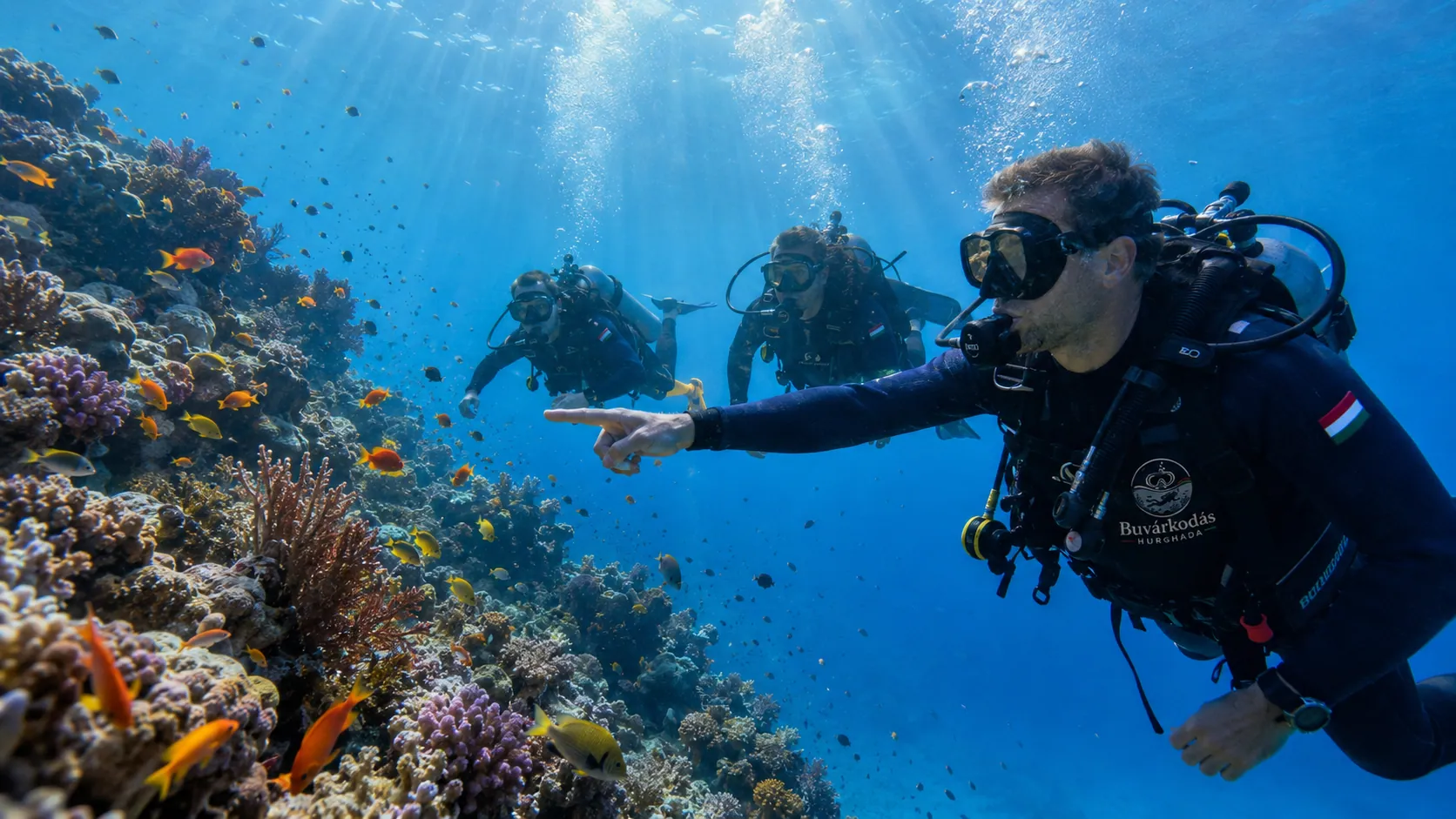
Giftun-szigetek
A national park island pair with a dozen dive sites: coral gardens, turtles and perhaps the richest fish life in the area.
- Depth
- 5–25m
- Boat
- 45min
- Species
- 6
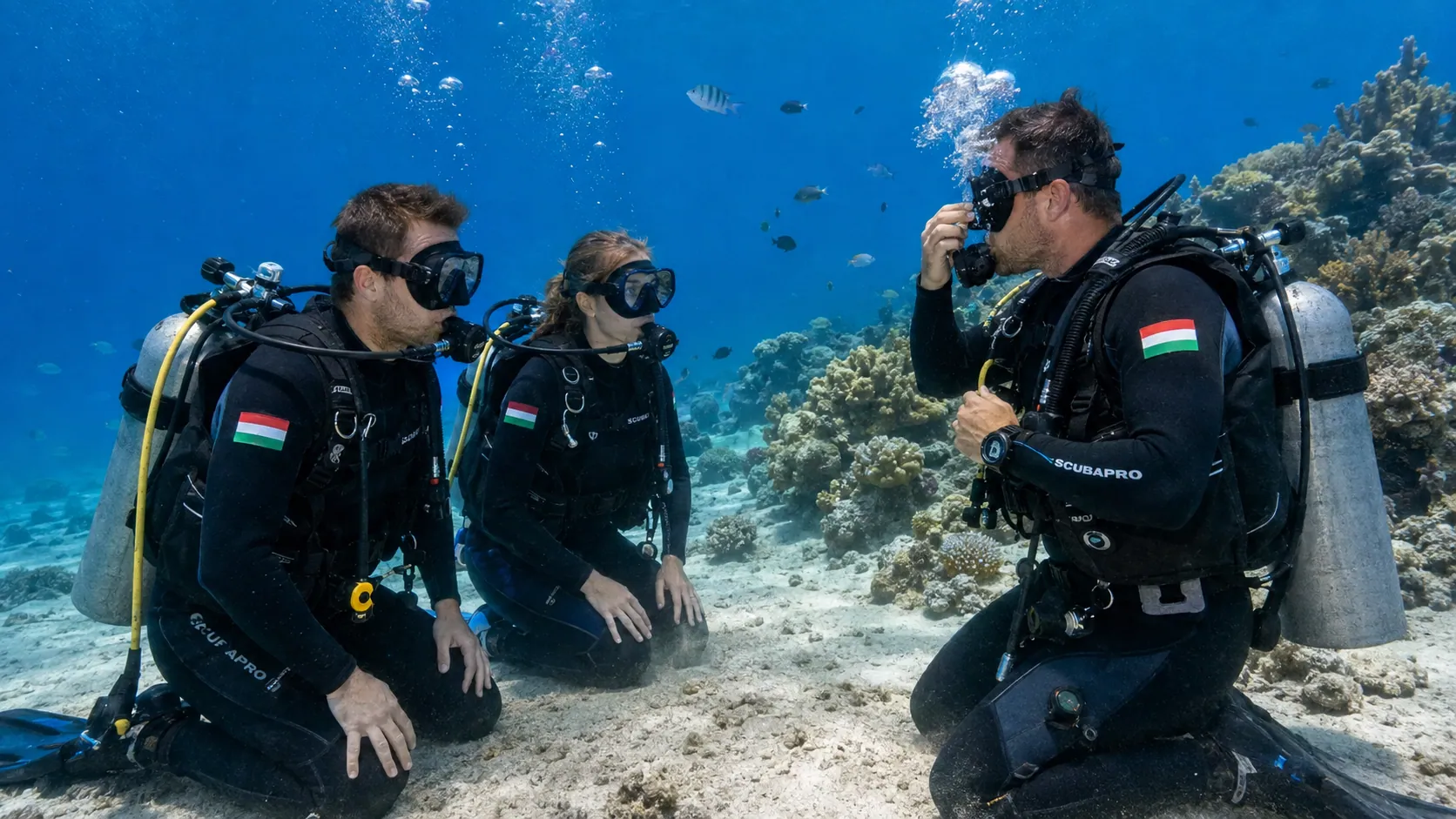
Small Giftun fal
Hurghada's classic drift dive: a sheer wall with gorgonian fans, eagle rays and a coral-tower plateau at 20–30 metres.
- Depth
- 8–30m
- Boat
- 50min
- Species
- 5
El Fanadir
A long reef ridge barely half an hour from the marina: a gentle wall, blue-spotted rays and seagrass patches with turtles.
- Depth
- 6–25m
- Boat
- 30min
- Species
- 5
The Red Sea will not wait forever.
Book today – seats on the boat are limited, your excitement is not.