Hedgehog coral
Echinopora gemmacea
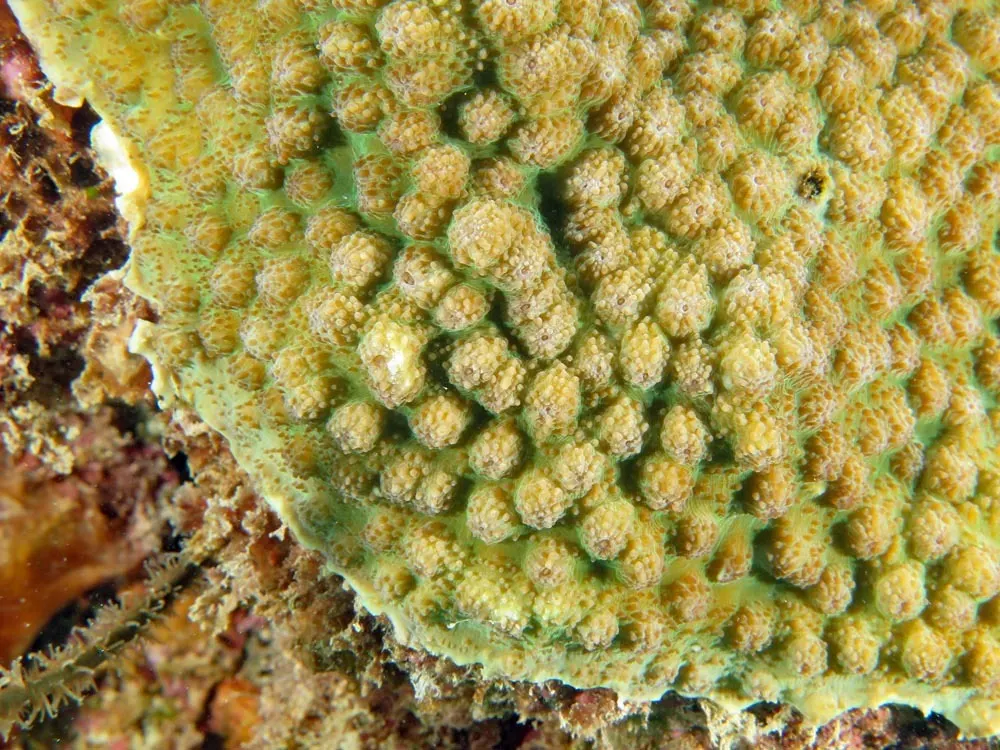
A prickly crust on the reef's flank: the hedgehog coral's cups bristle like the spines of a curled-up hedgehog.
The hedgehog coral (Echinopora gemmacea) takes its name from the rough-walled cups rising from its surface: the little tubes stick out of the colony like a hedgehog's spines. It is mostly brownish or greenish, and the cup rims are often paler, drawing a pretty speckled pattern across the colony. Up close, every "spine" is a polyp's fortress – at night tiny crowns of tentacles unfurl from them.
The species is a true master of shape-shifting: one and the same colony can spread as a crust over the rock, step down a slope in tiers of plates, and even sprout branches – often all three at once. This flexibility is adaptation: where space is tight it creeps as a crust, where light is needed it spreads a plate, where current flows it raises a branch. It fooled taxonomists for a long time – the different growth forms were once believed to be separate species.
Around Hurghada it lives on mid-depth slopes and reef edges, typically at 5–25 metres, though you can meet its encrusting colonies on shallow, light-flooded patches while snorkeling too. Its plate forms are fragile and sediment settles on them easily, so steady buoyancy is golden rule here as well – one stirred-up cloud of sand can darken the polyps' solar panels for days.
Did you know?
The hedgehog coral can be crust, plate and branch at once – on the same colony. Researchers long took its different forms for separate species, until it turned out one species simply dresses to match its surroundings.
Where can you meet it?
Look for it on the slopes of the open-water reefs: fine plating and encrusting colonies grow on the walls of Umm Gamar, the coral heads of Carless Reef and the rim of Abu Ramada.
Frequently asked questions
By its cups: the hedgehog coral's polyp cups protrude strikingly from the surface with rough, spiny walls – hence the name. Honeycomb and star coral cups, by contrast, are sunk into the colony surface.
It is named for its shape, not its weapon – it is harmless to humans. The spiny cups are sharp limestone, so a stray touch can graze you, but the bigger damage is always to the coral's delicate tissue. Stay an arm's length away.
Best sites for Hedgehog coral
Umm Gamar
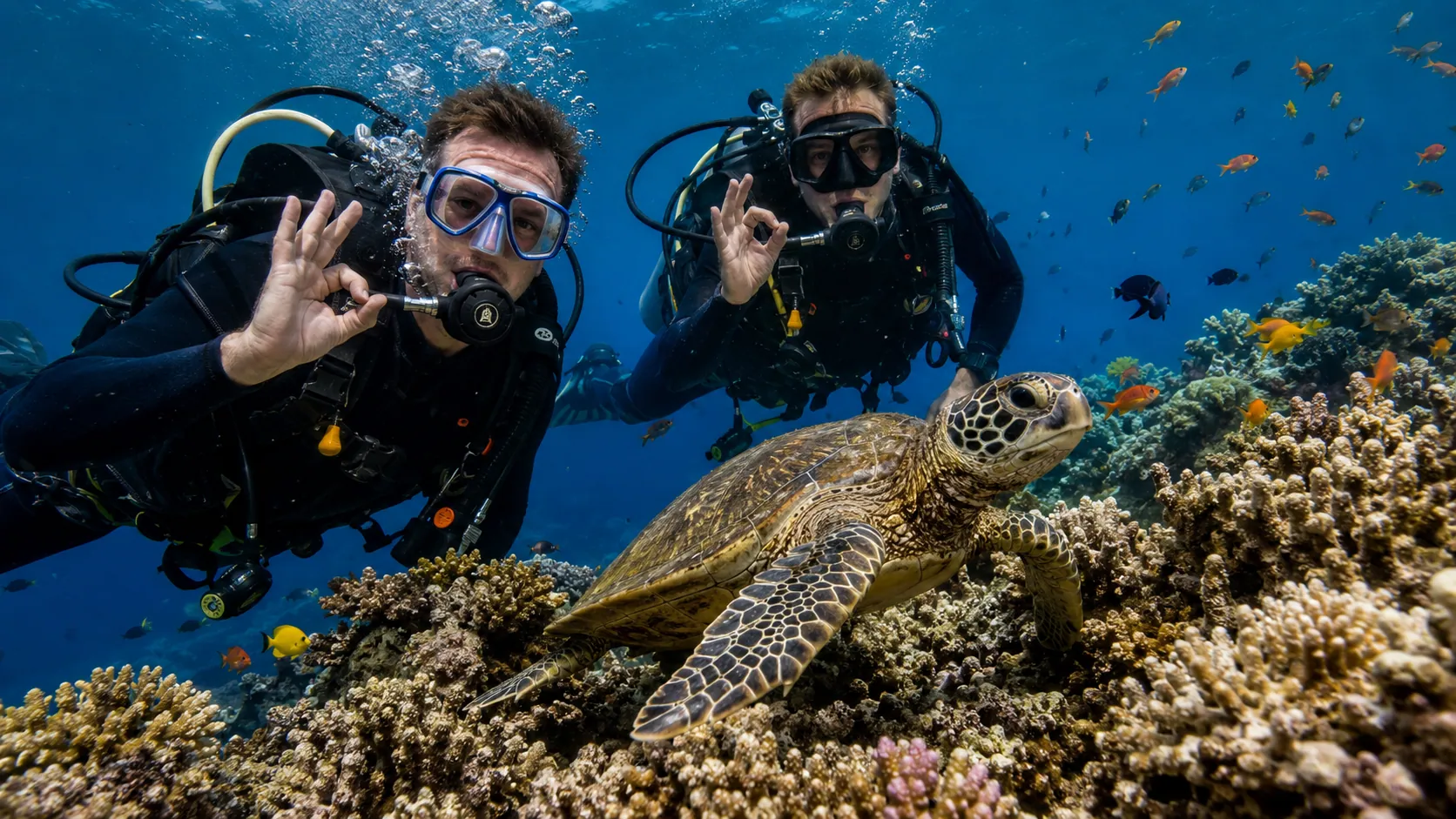
An elongated island in the north: a plateau with three coral towers, small caves and big predators out in the blue.
- Depth
- 10–30m
- Boat
- 75min
- Species
- 5
Carless Reef
An offshore twin-erg reef famous for its legendary moray colony – for experienced divers, weather permitting.
- Depth
- 12–30m
- Boat
- 70min
- Species
- 5
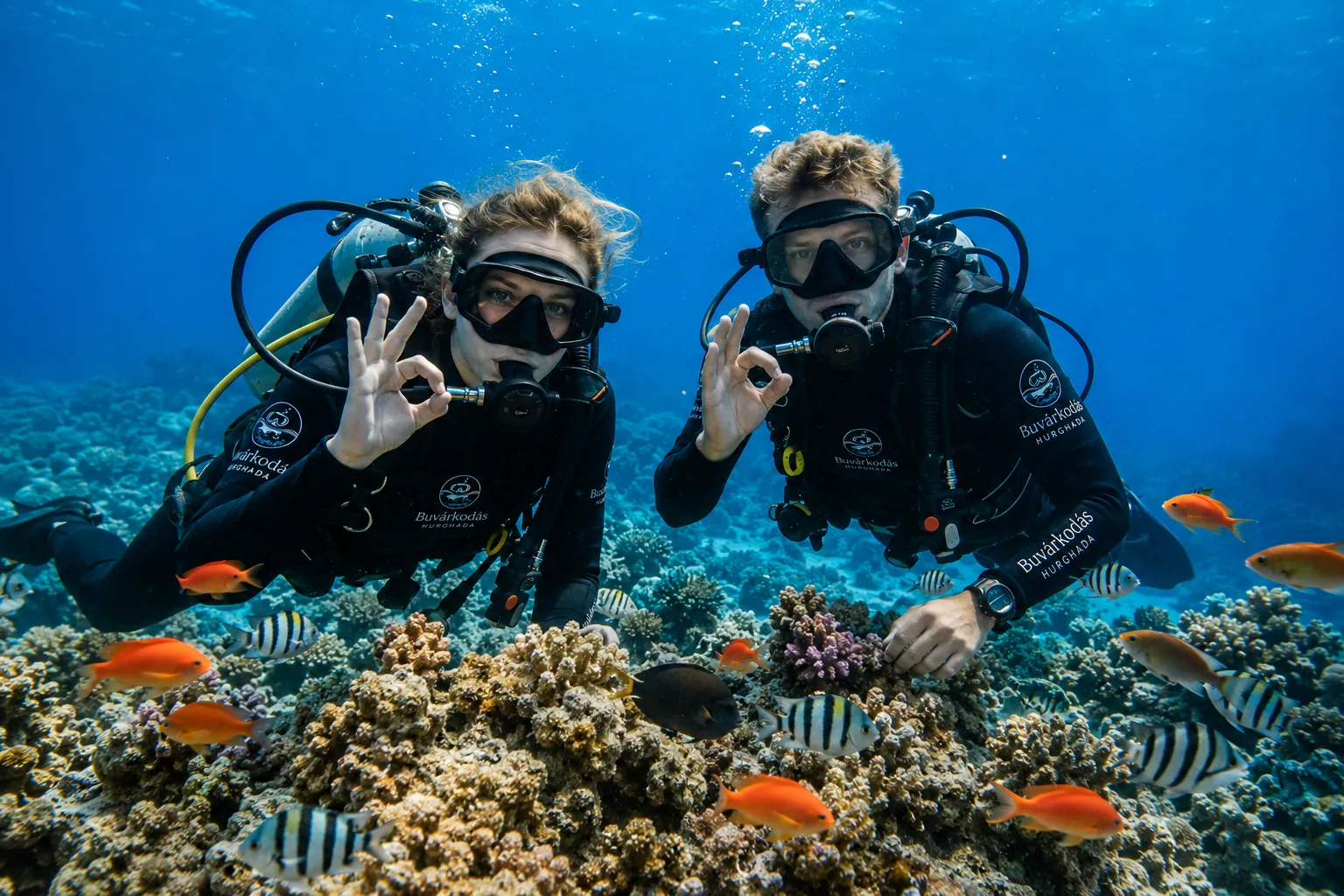
Abu Ramada („Az Akvárium”)
The Aquarium nickname is well earned: the fish schools swirling around the coral towers can be so dense you lose sight of the reef.
- Depth
- 6–26m
- Boat
- 50min
- Species
- 6
The Red Sea will not wait forever.
Book today – seats on the boat are limited, your excitement is not.