Honeycomb coral
Dipsastraea favus
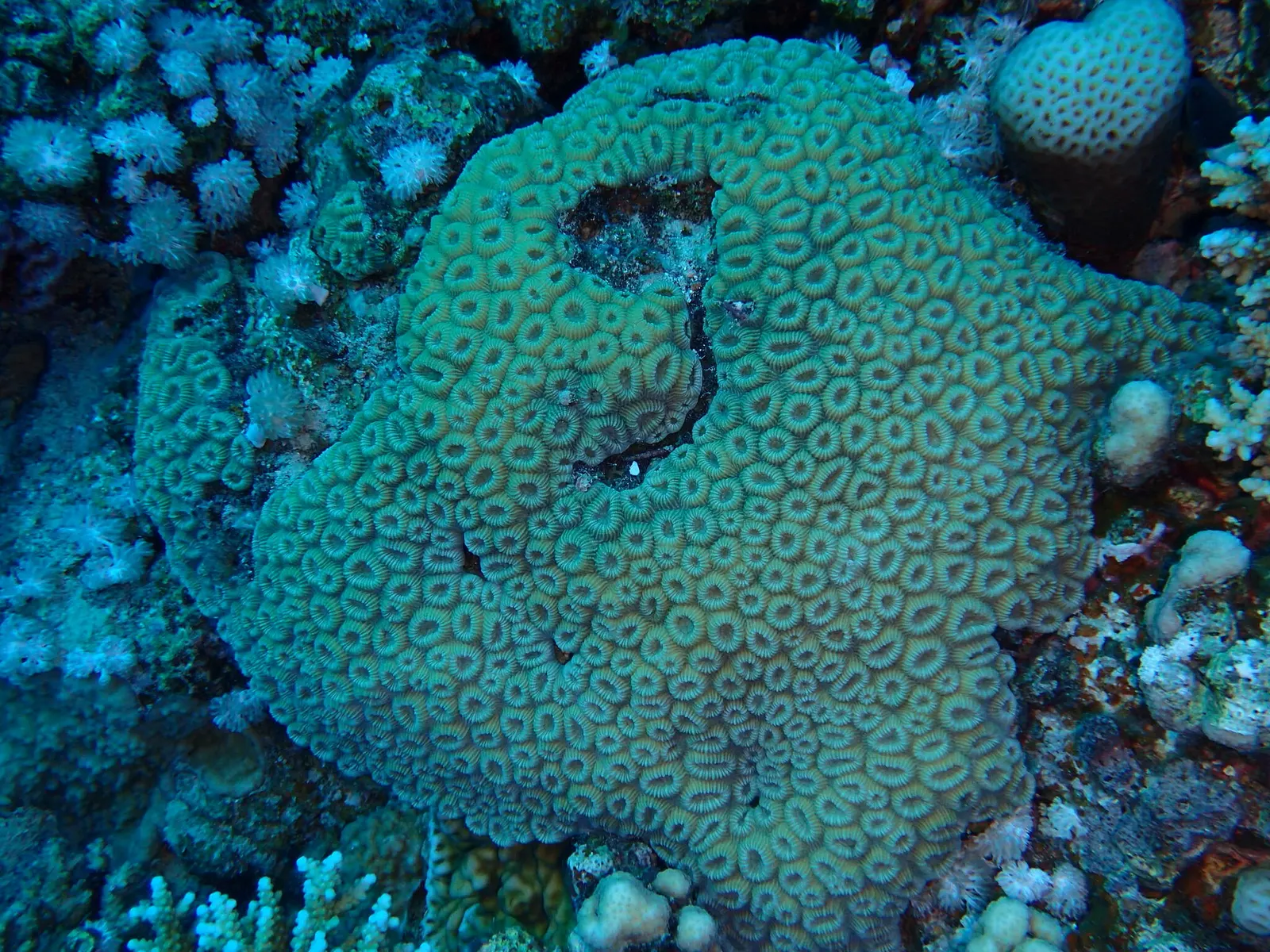
As if a giant beehive had turned to stone on the reef: each polygonal "cell" is home to a single coral polyp.
The honeycomb coral (Dipsastraea favus) lives up to its name: its rounded, cushion-like colony is covered in centimetre-wide polygonal cups that together look uncannily like the comb of a beehive. Each cup houses one polyp, and each has its own raised wall – the best way to tell it from the similar honeycomb star coral, whose neighbouring polyps share a common wall. Colours run greenish, brownish or greyish, and the insides of the cups often glow bright green.
By day the colony looks like a quiet stone cushion, but at night it transforms: every polyp extends its translucent crown of tentacles and the surface becomes a rippling, plankton-hunting carpet – on a night dive it shows a completely different face. Alongside its photosynthesising zooxanthellae algae, the polyps thus feed by active hunting too. The colony grows slowly, a few millimetres to a centimetre a year, and in summer after the full moon it releases its spawn into the water in synchrony with the other stony corals.
Around Hurghada you will meet it almost everywhere on the reef slopes and plateaus, from the shallows down to 20 metres – its trademark pattern shows clearly even while snorkeling. It is a tough, long-lived species, but its living tissue is as fragile as any coral's: touching it can bruise the polyps and transfer bacteria from your skin into the wound. Admire the honeycomb pattern up close – but only with your eyes and your camera.
Did you know?
Honeycomb coral produces fluorescent proteins that act as sunscreen against harmful UV radiation – shine a blue UV torch on it during a night dive and the colony lights up in an otherworldly neon green.
Where can you meet it?
Common on most Hurghada reefs: you will easily spot its distinctively patterned cushions on the plateaus of El Fanadir and Gota Abu Ramada and on the coral pinnacles of El Aruk.
Frequently asked questions
By day the polyps rest retracted in their cups, letting the zooxanthellae algae work for them using sunlight. They extend their tentacles after dark to catch plankton – on a night dive the very same coral "blooms".
A little of all three – but officially an animal. The colony of polyps builds the rock-hard limestone skeleton, and the algae living in their tissue provide the "plant" department. The honeycomb pattern you see is the shared home of thousands of living animals.
Yes: honeycomb coral is common on the shallow reef tops, and the distinctive comb pattern is easy to make out from the surface a few metres away – especially in late-morning overhead sunlight.
Best sites for Honeycomb coral
El Fanadir
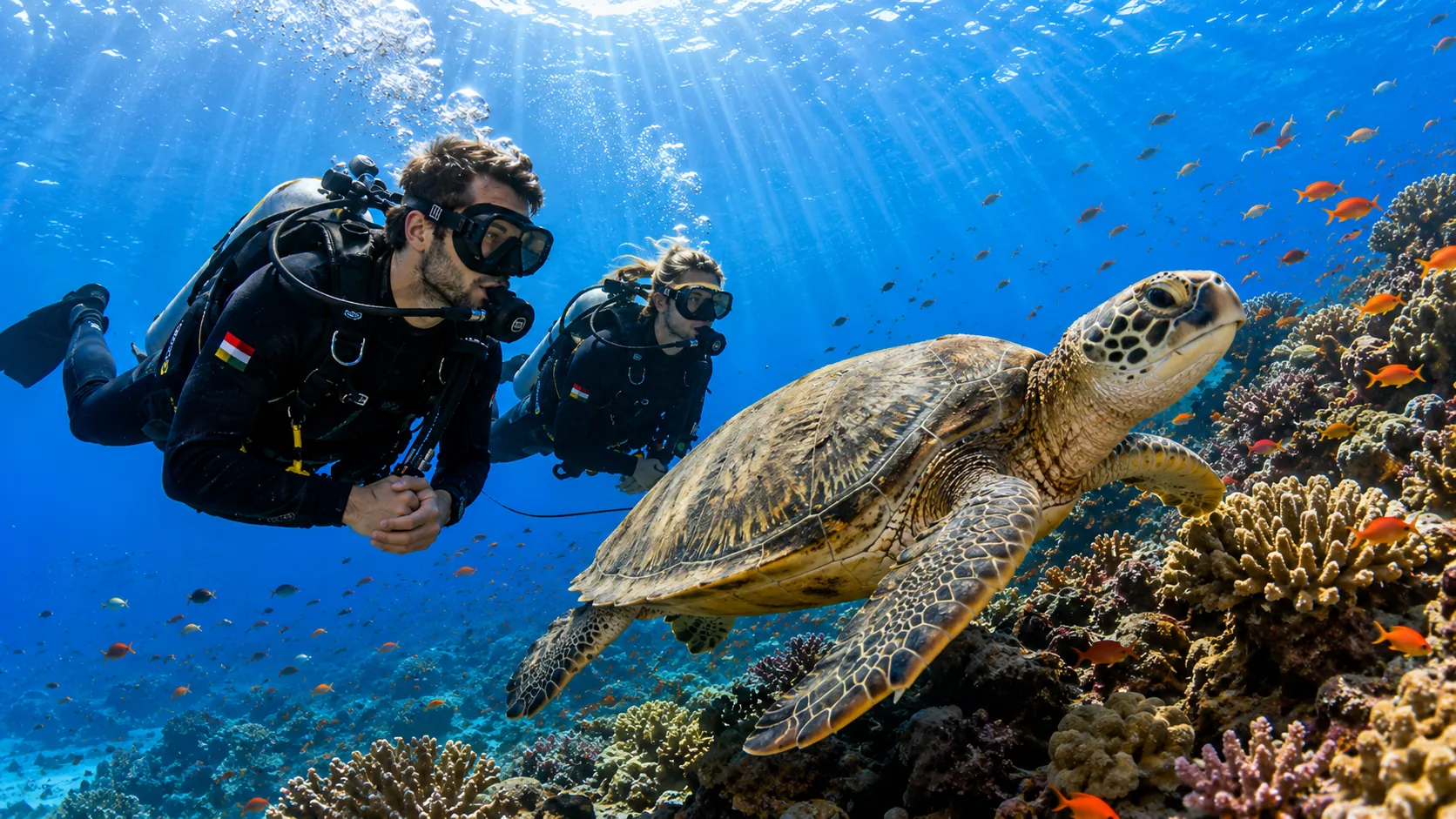
A long reef ridge barely half an hour from the marina: a gentle wall, blue-spotted rays and seagrass patches with turtles.
- Depth
- 6–25m
- Boat
- 30min
- Species
- 5
Gota Abu Ramada
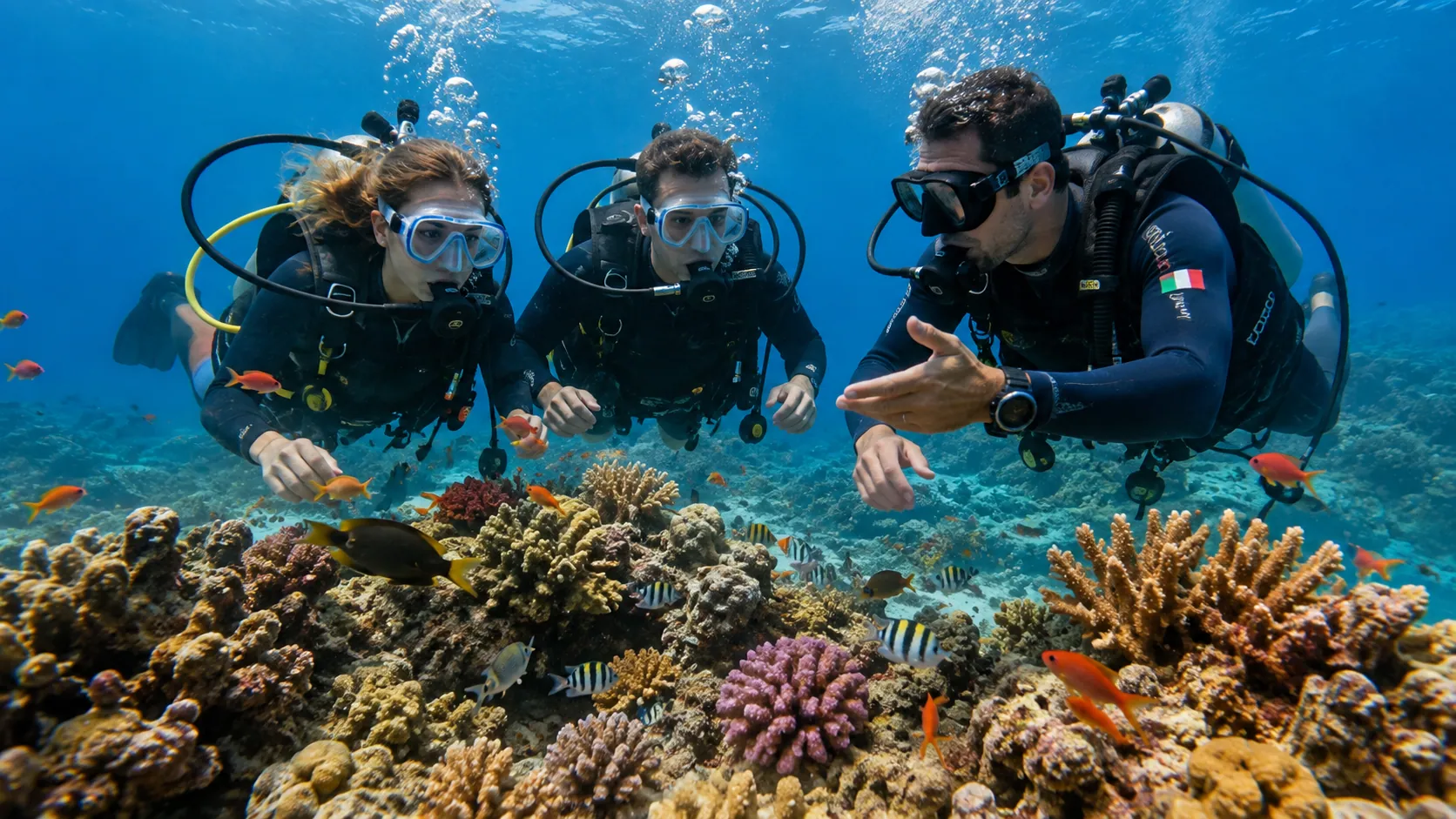
A shallow oval reef with a sandy bottom and schools of butterflyfish – perfect for training, second and night dives.
- Depth
- 4–14m
- Boat
- 55min
- Species
- 5
El Aruk (Gigi)
A playground of coral towers on white sand: easy navigation, clouds of glassfish and light made for photography.
- Depth
- 5–14m
- Boat
- 35min
- Species
- 5
The Red Sea will not wait forever.
Book today – seats on the boat are limited, your excitement is not.