Honeycomb dome coral
Diploastrea heliopora
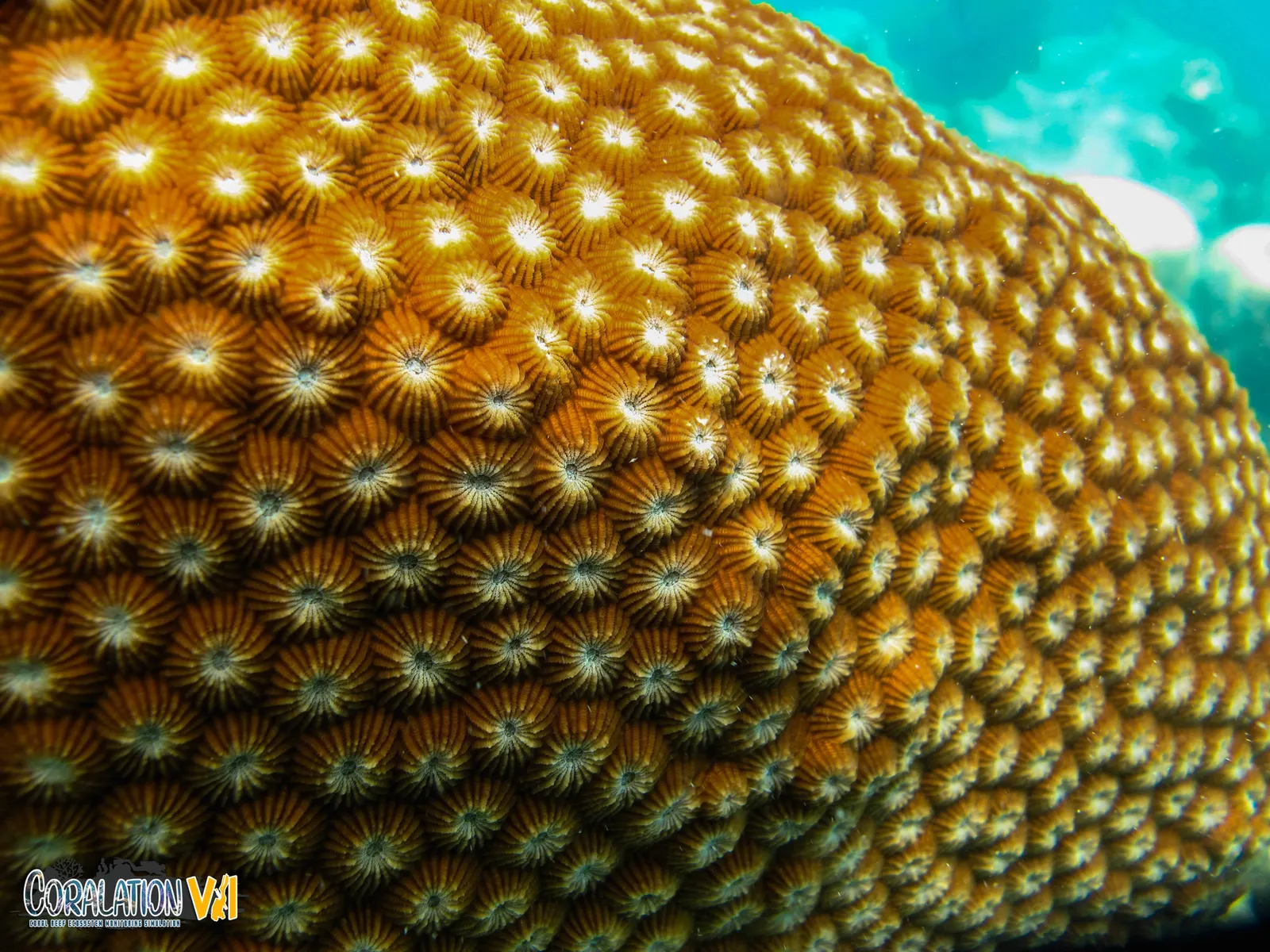
A perfect honeycomb-patterned stone dome on the reef – a single colony can be centuries old by the time it reaches human size.
You cannot mistake the honeycomb dome coral (Diploastrea heliopora): a regular, almost geometric half-sphere sits on the reef, its surface covered in perfectly uniform low cones, each with a tiny star-shaped opening at its centre. While most honeycomb corals have an irregular surface, this species is so even it looks machine-turned – underwater you recognise the greyish or greenish-brown dome from far away.
It is the only species in its genus and a true marathon runner of the coral world: it grows just a few millimetres per year, so a colony of one to two metres can easily be several hundred years old – older than any building in Hurghada. Its dense, massive skeleton makes it remarkably tough: it withstands storms and even bleaching events better than most branching corals. By day the polyps rest withdrawn; at night they extend short tentacles to hunt plankton.
Around Hurghada it appears on sheltered reef slopes and plateaus, typically between 5 and 20 metres – the finest colonies sit in the coral gardens of the Giftun Islands and Gota Abu Ramada. Hovering next to one of these domes, you are looking at a living monument: what took centuries to build can be scarred by one careless fin kick in seconds, so keep a respectful distance.
Did you know?
Researchers drill core samples from these colonies and read centuries of Red Sea temperature history from their tree-ring-like layers – the honeycomb dome coral is a living climate archive.
Where can you meet it?
The finest human-sized domes sit in the sheltered coral gardens of the Giftun Islands and Gota Abu Ramada, and on the slopes of El Fanadir.
Frequently asked questions
The surface gives it away: its cones are perfectly uniform and regularly arranged, while the cups of Dipsastraea and Favites species are irregular. The colony shape is also an almost geometric half-sphere – if the dome looks "too perfect", you are probably looking at Diploastrea.
Yes. The species grows only a few millimetres a year, so a dome of a metre and a half is comfortably centuries old. That is why every anchor drop or fin touch hurts: what you break off in a second took the coral several human lifetimes to build.
Yes, colonies sitting on the shallower plateaus are clearly visible from the surface – the regular dome shape is recognisable even while snorkeling. The largest specimens live deeper than 10 metres though, and those are worth a dive.
Best sites for Honeycomb dome coral
Giftun-szigetek
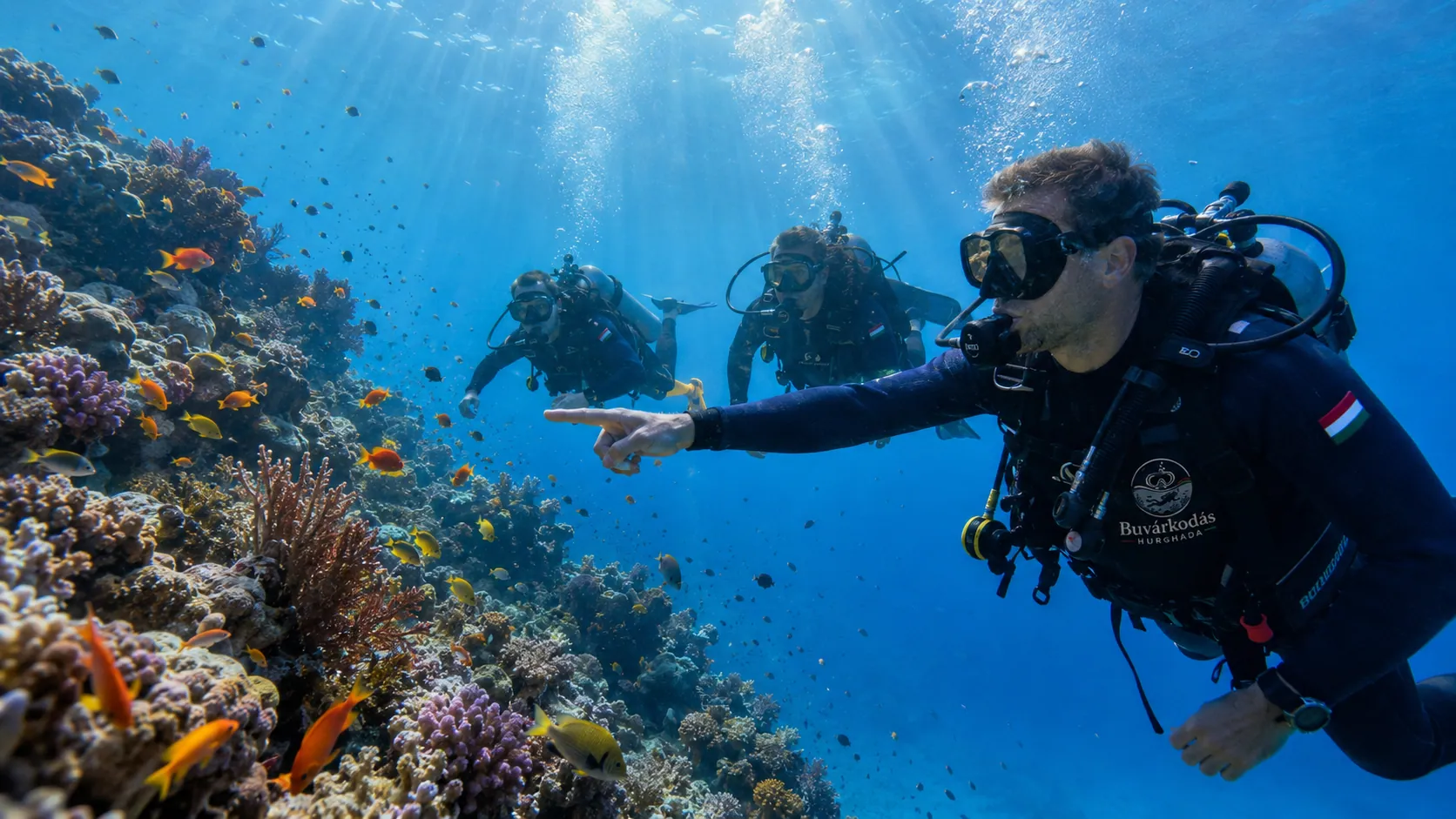
A national park island pair with a dozen dive sites: coral gardens, turtles and perhaps the richest fish life in the area.
- Depth
- 5–25m
- Boat
- 45min
- Species
- 6
Gota Abu Ramada
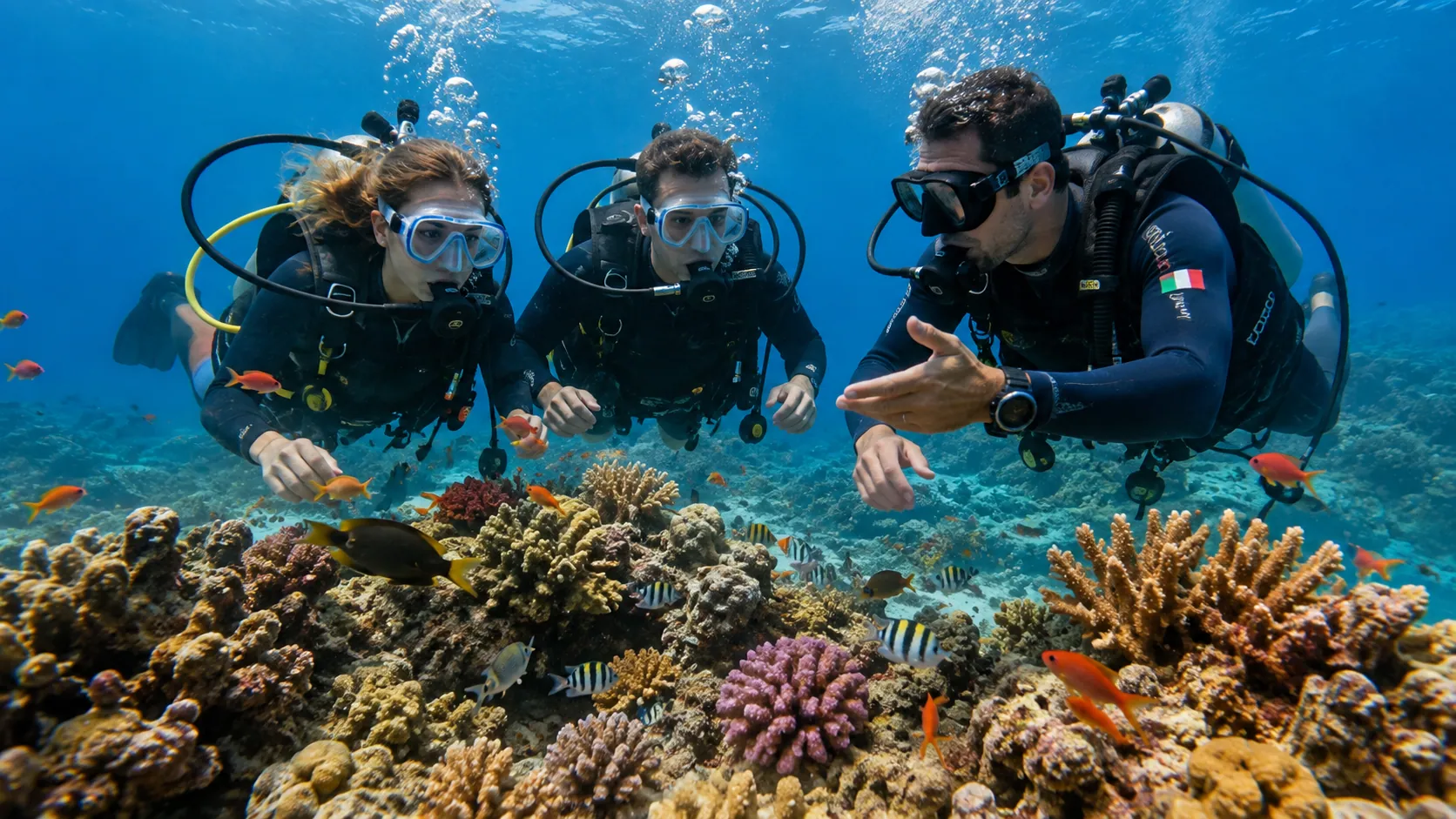
A shallow oval reef with a sandy bottom and schools of butterflyfish – perfect for training, second and night dives.
- Depth
- 4–14m
- Boat
- 55min
- Species
- 5
El Fanadir
A long reef ridge barely half an hour from the marina: a gentle wall, blue-spotted rays and seagrass patches with turtles.
- Depth
- 6–25m
- Boat
- 30min
- Species
- 5
The Red Sea will not wait forever.
Book today – seats on the boat are limited, your excitement is not.