Honeycomb star coral
Favites abdita
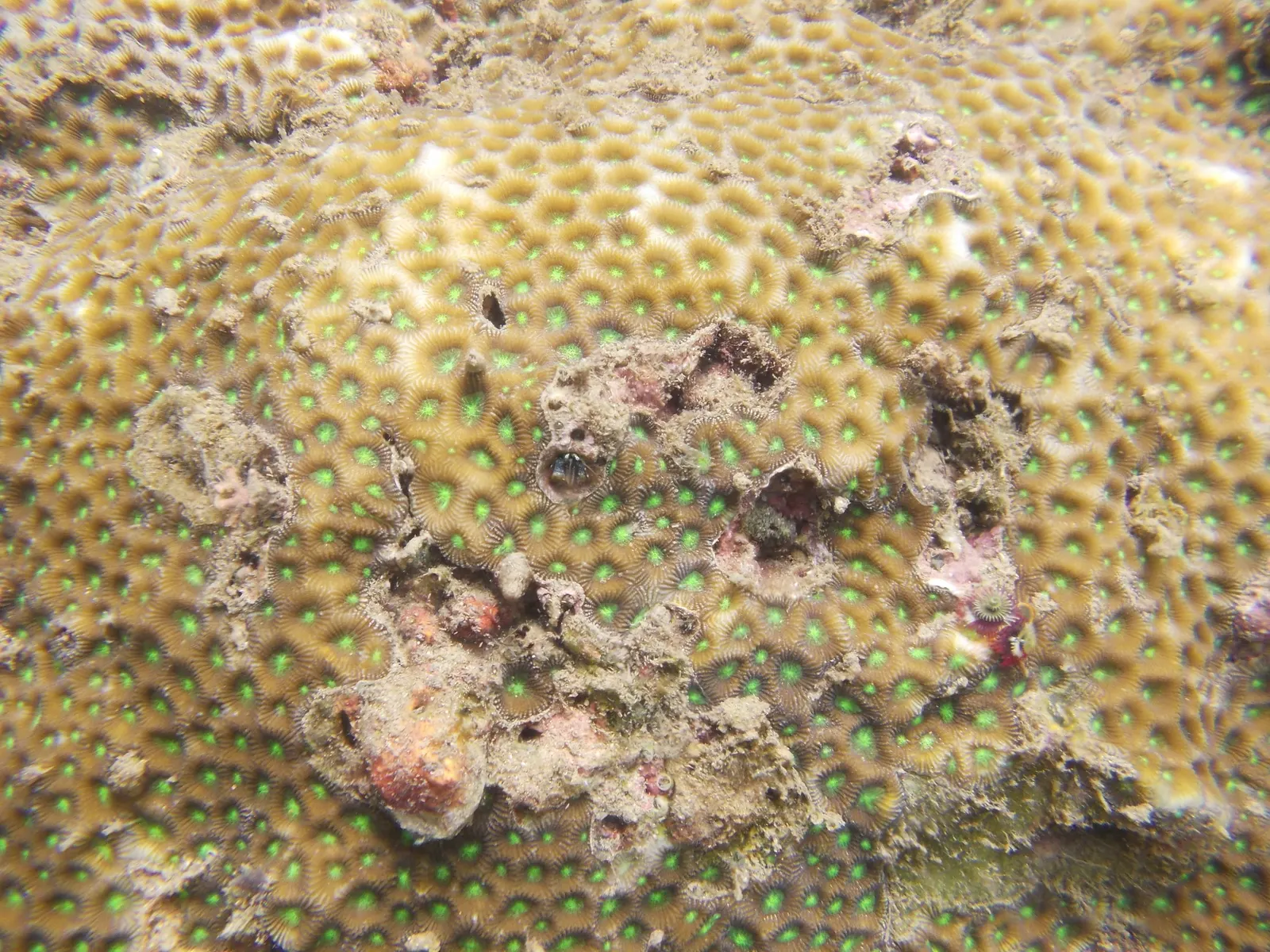
A stone cushion of tightly packed polygonal cells where neighbouring polyps share a common wall – the reef's true apartment block.
At first glance the honeycomb star coral (Favites abdita) looks like the honeycomb coral's twin: its rounded, cushiony colony is likewise covered in polygonal cups. The trick is in the walls: here neighbouring polyps do not build separate walls but share a single common one, so the cells fit tightly together without gaps, like the wax of a honeycomb. The cup rims are often paler – greenish or cream – with brownish centres, sprinkling the colony surface with a pattern of tiny stars.
By day the polyps rest withdrawn, living off the photosynthesis of the zooxanthellae algae in their tissue; by night they reach out with extended tentacles to catch plankton. Growth is slow, at most one or two centimetres a year, but in exchange the species is remarkably rugged: it tolerates strong light and wave action well, making it one of the most dependable building blocks of the reef top and upper slope. On summer nights after the full moon it spawns in synchrony with the other stony corals.
It is very common on Hurghada's reefs: you are almost certain to find its cushions on the plateaus, coral pinnacles and the top 15 metres of the slopes, even while snorkeling. Look closely at the walls and compare it with the honeycomb coral – good eye training, and along the way you learn why touching either is forbidden: the thin living tissue is damaged by every touch, and algae can take over where the wound is.
Did you know?
The peaceful-looking stone cushion is a territorial fighter by night: if a rival coral grows too close, Favites extends digestive filaments from its stomach and simply digests the neighbour's tissue – a slow-motion chemical war for space rages on the reef.
Where can you meet it?
You will run into its cushions at every turn on the coral pinnacles of El Aruk, in the shallow garden of Gota Abu Ramada and on the reef slopes of the Giftun Islands.
Frequently asked questions
Look at the walls: in honeycomb coral (Dipsastraea) every polyp has its own double wall with a small groove between them, while in honeycomb star coral neighbours share one common wall, so the cells meet with no gap. A favourite "can you tell them apart" game among divers.
The rock-hard skeleton is only the house – the residents, the polyps, cover its surface as a thin living layer. One touch can crush polyps and carry bacteria into the wound. And coral grows slowly: what you ruin with one movement took years to build.
Yes, just in slow motion: space and light are treasure on the reef, so neighbouring colonies attack each other with stinging cells and digestive filaments. If you see a bare "no man's land" strip between two colonies, you are probably looking at a front line.
Best sites for Honeycomb star coral
El Aruk (Gigi)
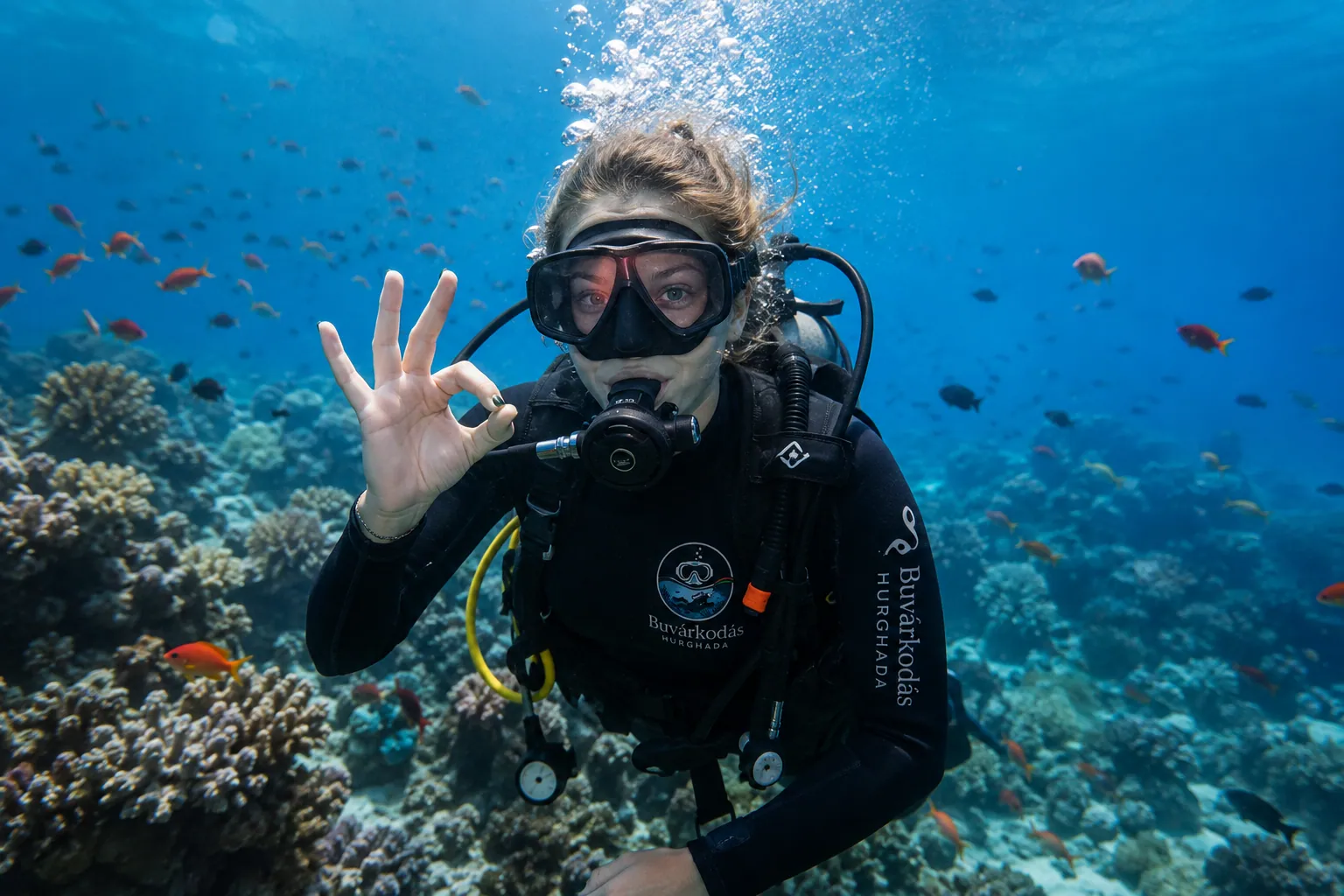
A playground of coral towers on white sand: easy navigation, clouds of glassfish and light made for photography.
- Depth
- 5–14m
- Boat
- 35min
- Species
- 5
Gota Abu Ramada
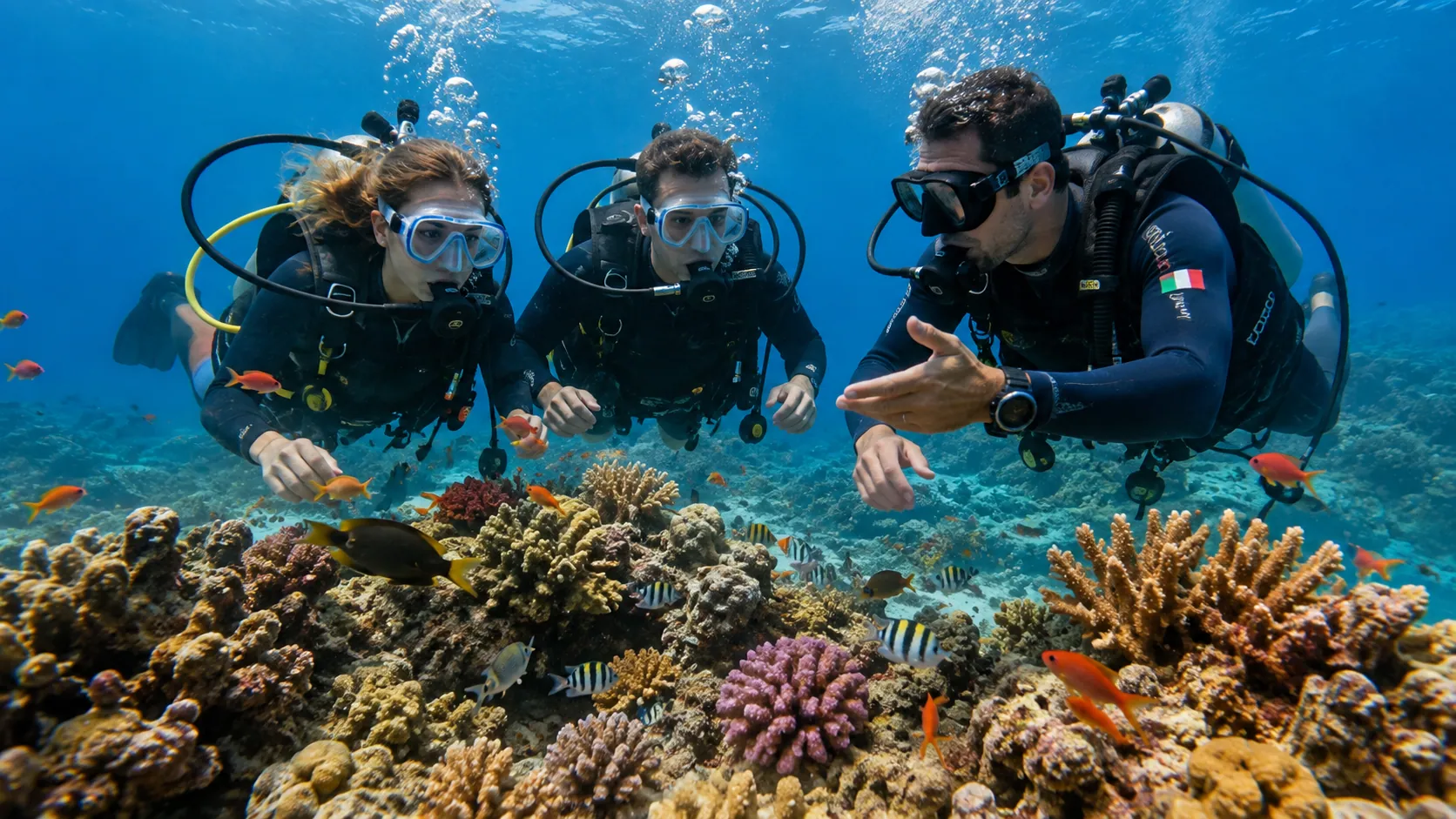
A shallow oval reef with a sandy bottom and schools of butterflyfish – perfect for training, second and night dives.
- Depth
- 4–14m
- Boat
- 55min
- Species
- 5
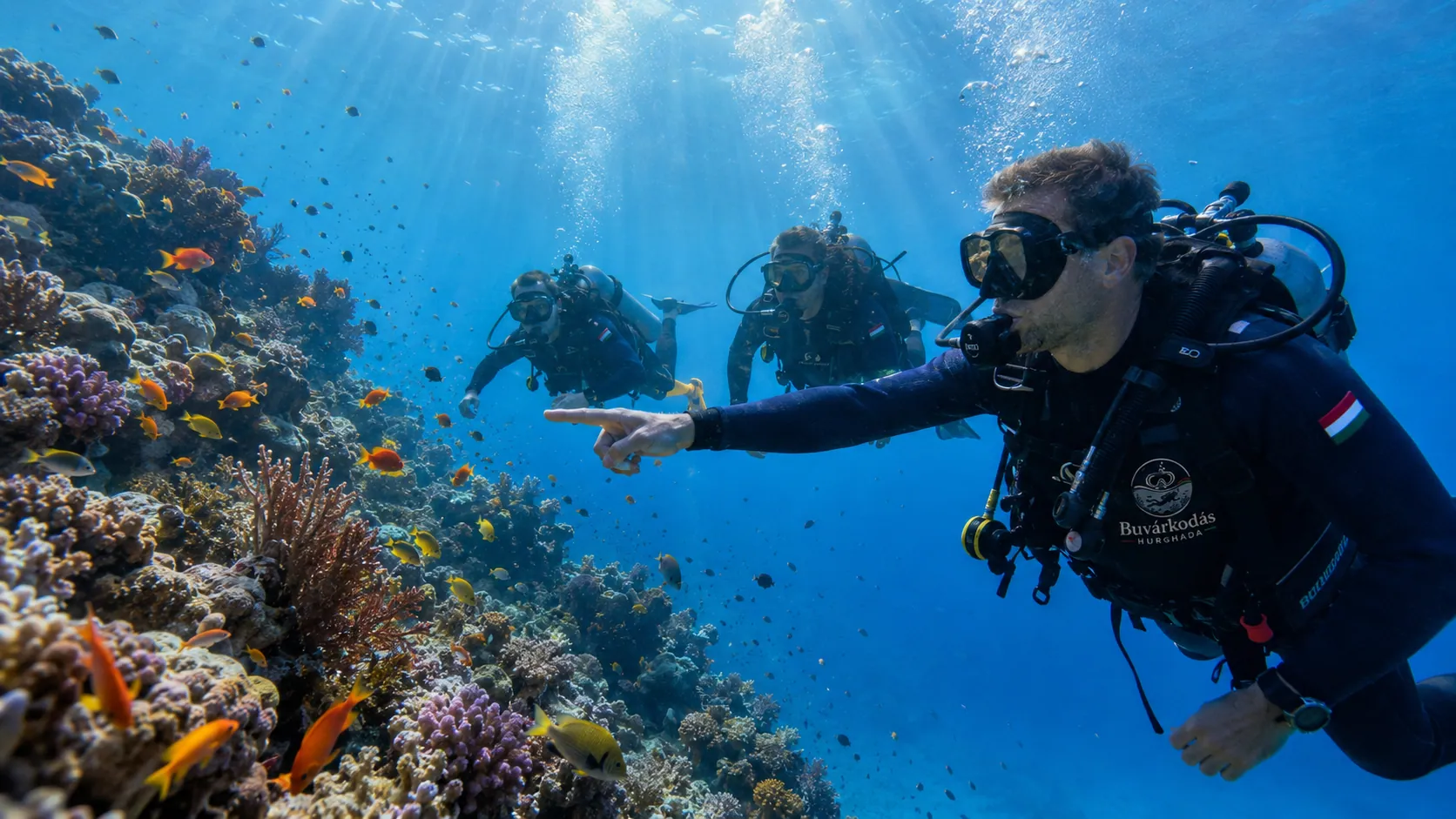
Giftun-szigetek
A national park island pair with a dozen dive sites: coral gardens, turtles and perhaps the richest fish life in the area.
- Depth
- 5–25m
- Boat
- 45min
- Species
- 6
The Red Sea will not wait forever.
Book today – seats on the boat are limited, your excitement is not.