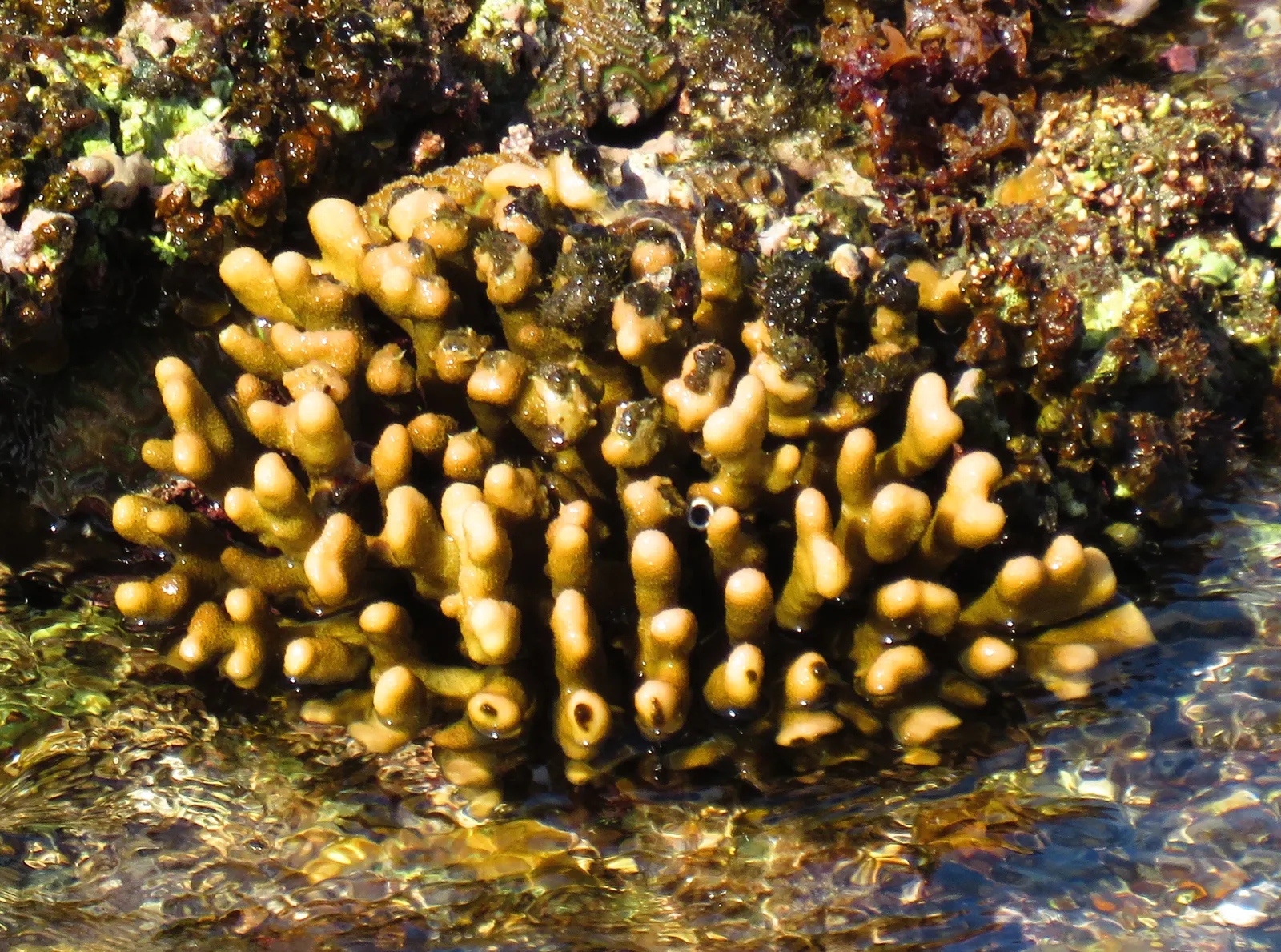
Hood coral
Stylophora pistillata
The "lab rat" of coral science: you will find its rounded, hood-tipped, often pink colonies on every shallow reef in Hurghada.
The hood coral (Stylophora pistillata) is one of the easiest stony corals to recognise: the branches of its compact, bushy, 20–40 cm colonies do not taper to points but end in characteristically rounded, club-like "hoods" – hence the name. Colours run from creamy white through pink and purple to greenish brown; on sunlit reef tops the pink and purple shades often dominate. It loves shallow, well-lit water, so you can admire it while snorkeling at just a few metres' depth.
This modest-looking coral is one of science's most important marine model organisms: so many laboratories study it worldwide that researchers simply call it the "lab rat of corals", and its full genome has been sequenced. Much of what we know today about the partnership between corals and zooxanthellae algae, about bleaching and about skeleton building was discovered on this species. Its reproduction is special too: instead of one annual spawning it releases ready-made larvae regularly over many months, making it an excellent recoloniser of damaged reefs.
Around Hurghada it is nearly impossible to find a shallow reef where it does not grow: the El Fanadir plateau, the coral gardens of the Giftun Islands, the towers of El Aruk and Gota Abu Ramada are all full of it. Tiny gobies, domino damselfish and guard crabs live among its branches. One important footnote: the hood corals of the northern Red Sea rank among the most heat-tolerant corals on Earth – but even the toughest coral has no defence against a fin kick or a touch, so the rule is eternal: look, photograph, never touch.
Did you know?
The hood coral is the most thoroughly studied coral in the world – its complete genome was sequenced in 2017. Researchers study it partly right here in the Red Sea, because local colonies survive heat that would be fatal elsewhere.
Where can you meet it?
Common on every shallow Hurghada reef: you are certain to meet it on the El Fanadir plateau, in the Giftun coral gardens, on the El Aruk towers and at Gota Abu Ramada.
Frequently asked questions
An animal: a colony of thousands of tiny polyps with a shared limestone skeleton, fed by the algae in their tissues using sunlight. A single touch damages the protective mucus layer and invites infection, and the brittle branch tips snap easily – so watch as long as you like, but hands off.
By the rounded, club-like branch tips: while most branching corals end in points, the hood coral's branches seem to wear little caps. Add a pinkish-purple colour on a shallow reef top and you can be almost certain of the ID.
The corals of the northern Red Sea – the hood coral among them – are the most heat-tolerant on the planet: studies show they endure water several degrees above their summer maximum without bleaching. That offers hope, but no free pass: only we can protect them from physical damage and pollution.
Best sites for Hood coral
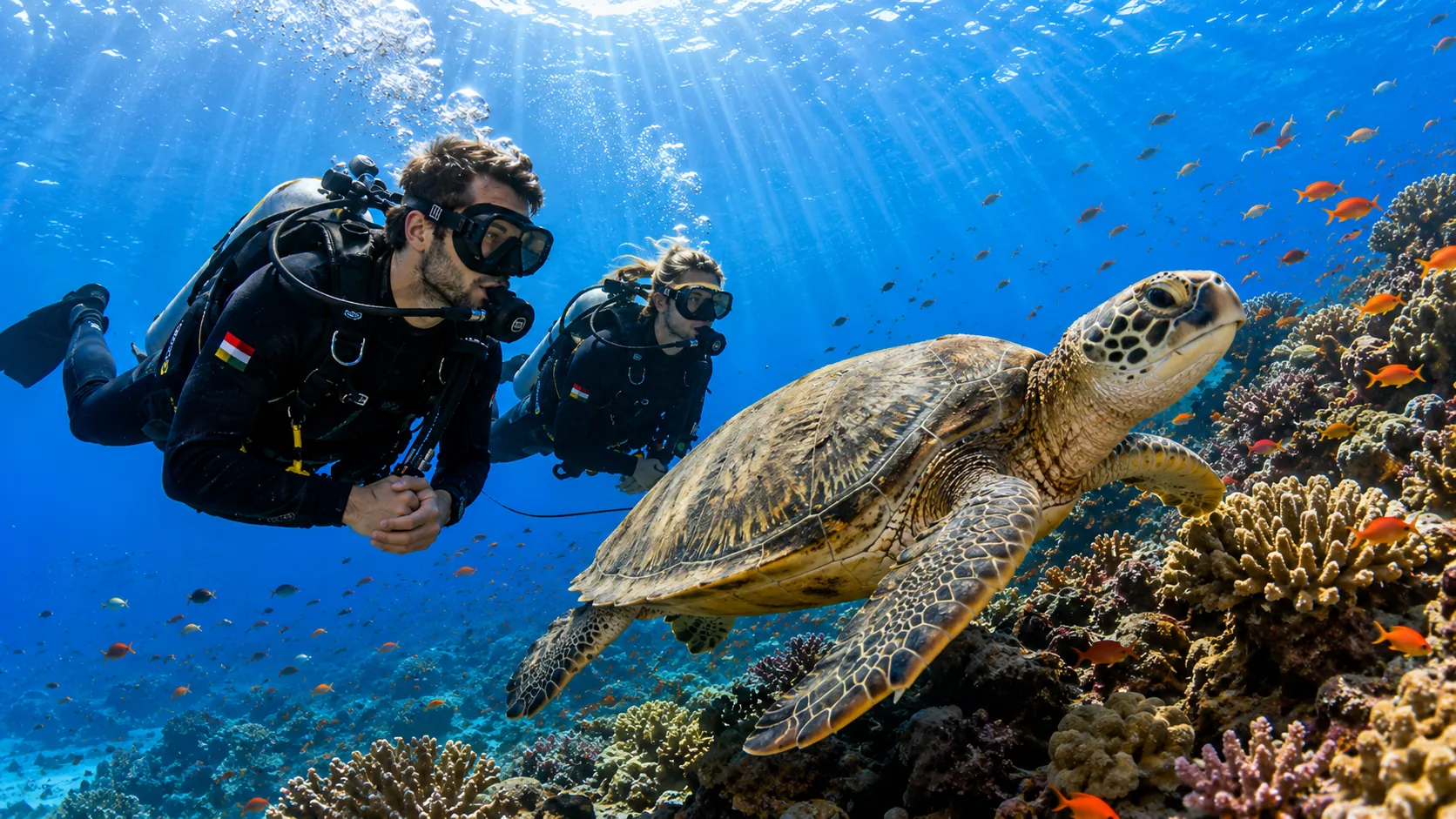
El Fanadir
A long reef ridge barely half an hour from the marina: a gentle wall, blue-spotted rays and seagrass patches with turtles.
- Depth
- 6–25m
- Boat
- 30min
- Species
- 5
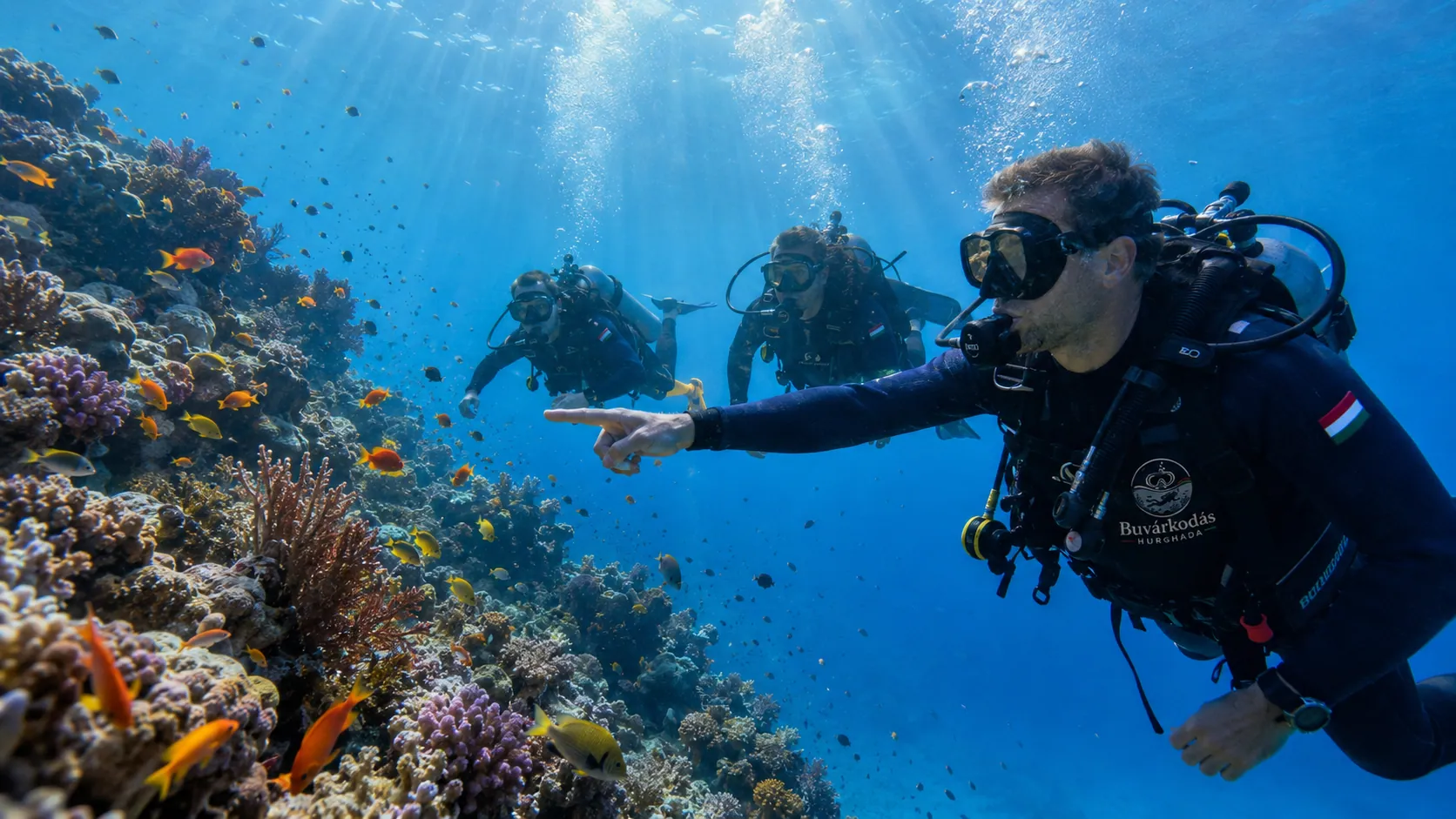
Giftun-szigetek
A national park island pair with a dozen dive sites: coral gardens, turtles and perhaps the richest fish life in the area.
- Depth
- 5–25m
- Boat
- 45min
- Species
- 6
El Aruk (Gigi)
A playground of coral towers on white sand: easy navigation, clouds of glassfish and light made for photography.
- Depth
- 5–14m
- Boat
- 35min
- Species
- 5
The Red Sea will not wait forever.
Book today – seats on the boat are limited, your excitement is not.