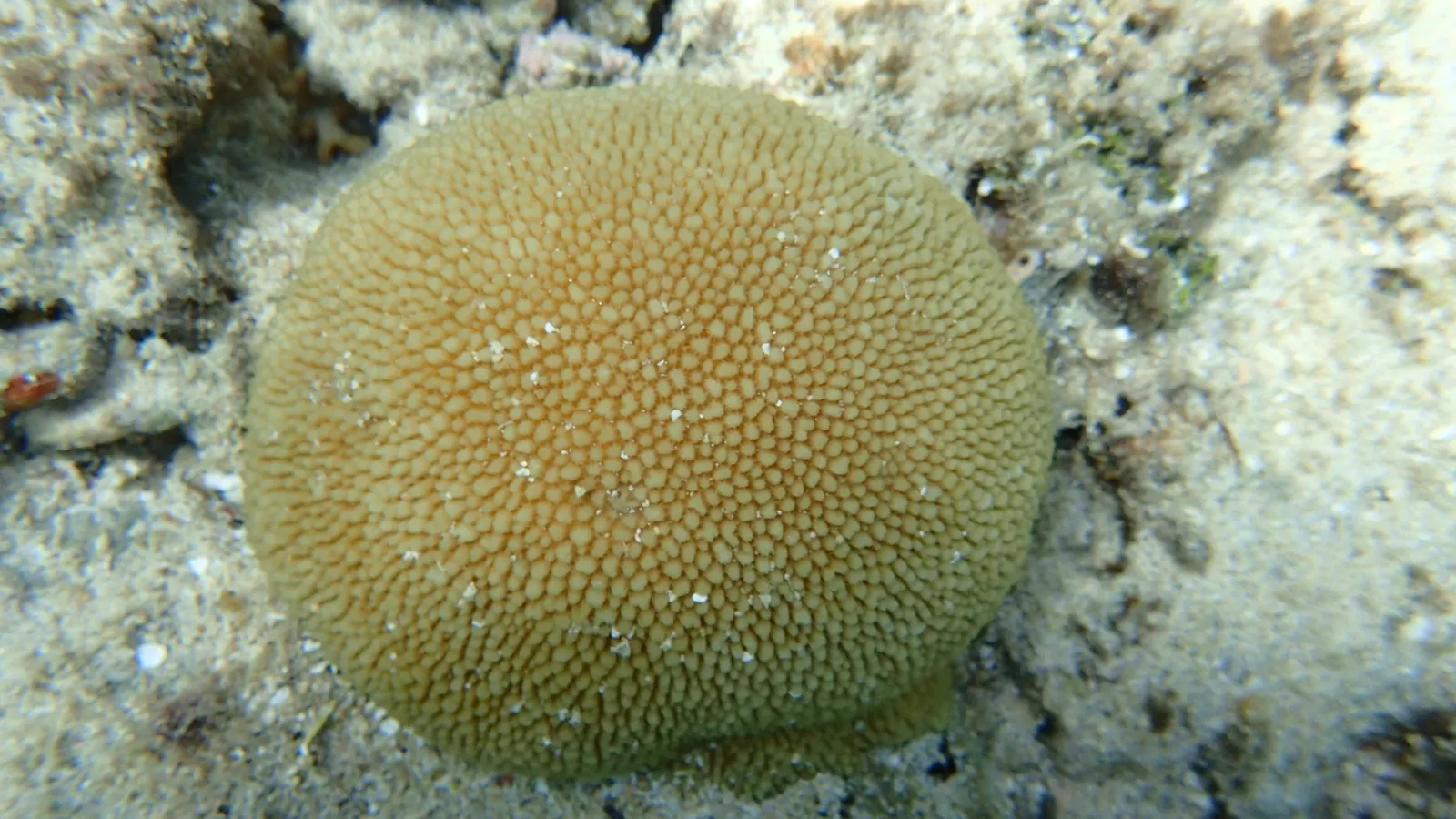
Horn coral
Hydnophora microconos
Its surface bristles with thousands of tiny pointed cones like pins pushed through green velvet – and it is one of the reef's most combative residents.
Underwater you recognise the horn coral (Hydnophora microconos) by its surface at first glance: the cushion-shaped or encrusting colony is covered in tiny, regular cones – so-called hydnophores – as if the whole thing had been textured with a fine rasp. It is most often pale green, cream or grey-green, and up close it looks almost velvety. Those cones are not the polyp cups: they form where the walls of neighbouring corallites fuse together, while the polyps sit in the valleys around the cones.
Like every reef-building hard coral, the horn coral lives in partnership with zooxanthellae: the single-celled algae housed in its tissues produce most of its energy through photosynthesis, receiving shelter and nutrients in return. The colony builds its limestone skeleton slowly, a few millimetres to centimetres a year, and reproduces by mass spawning: on summer nights it releases bundles of gametes into the water, where fertilisation takes place and the larvae settle on fresh reef surface. Hydnophora is also notoriously aggressive: at night it deploys long stinging sweeper tentacles to knock back neighbouring corals that grow too close, winning itself space on the crowded reef.
Around Hurghada you will find it on sunlit reef tops and upper slopes at roughly 1–15 metres – the coral gardens of the Giftun Islands and the El Fanadir plateau are good examples. It is easy to observe while snorkeling too, but as with every coral: never touch it and never stand on it. The coned surface is fragile, and a single fin kick can destroy decades of growth – hover above it with neutral buoyancy and the reef will still be there for you next time.
Did you know?
The signature cones are actually "fused walls": they form where the walls of neighbouring polyp cups grow together – so you will search the horn coral's surface in vain for classic round corallites, because the polyps hide in the valleys between the cones.
Where can you meet it?
Look for it on sunny reef tops: it appears regularly in the coral gardens of the Giftun Islands, on the El Fanadir plateau and in the shallows of Gota Abu Ramada.
Frequently asked questions
The surface gives it away: no other Hurghada coral is covered so densely in tiny pointed cones. If you see a greenish, velvety-looking cushion that up close seems studded with miniature mountain peaks, you have found a horn coral.
Yes, and quite fiercely. At night it grows long sweeper tentacles loaded with stinging cells and uses them to burn back corals that venture too close. On the reef, space is life – and the horn coral refuses to be crowded out.
Yes, you will often find it at just 1–3 metres on the reef top, so it is easy to watch with mask and snorkel. Just float calmly above it and never stand on the coral – the coned surface is extremely fragile.
Best sites for Horn coral
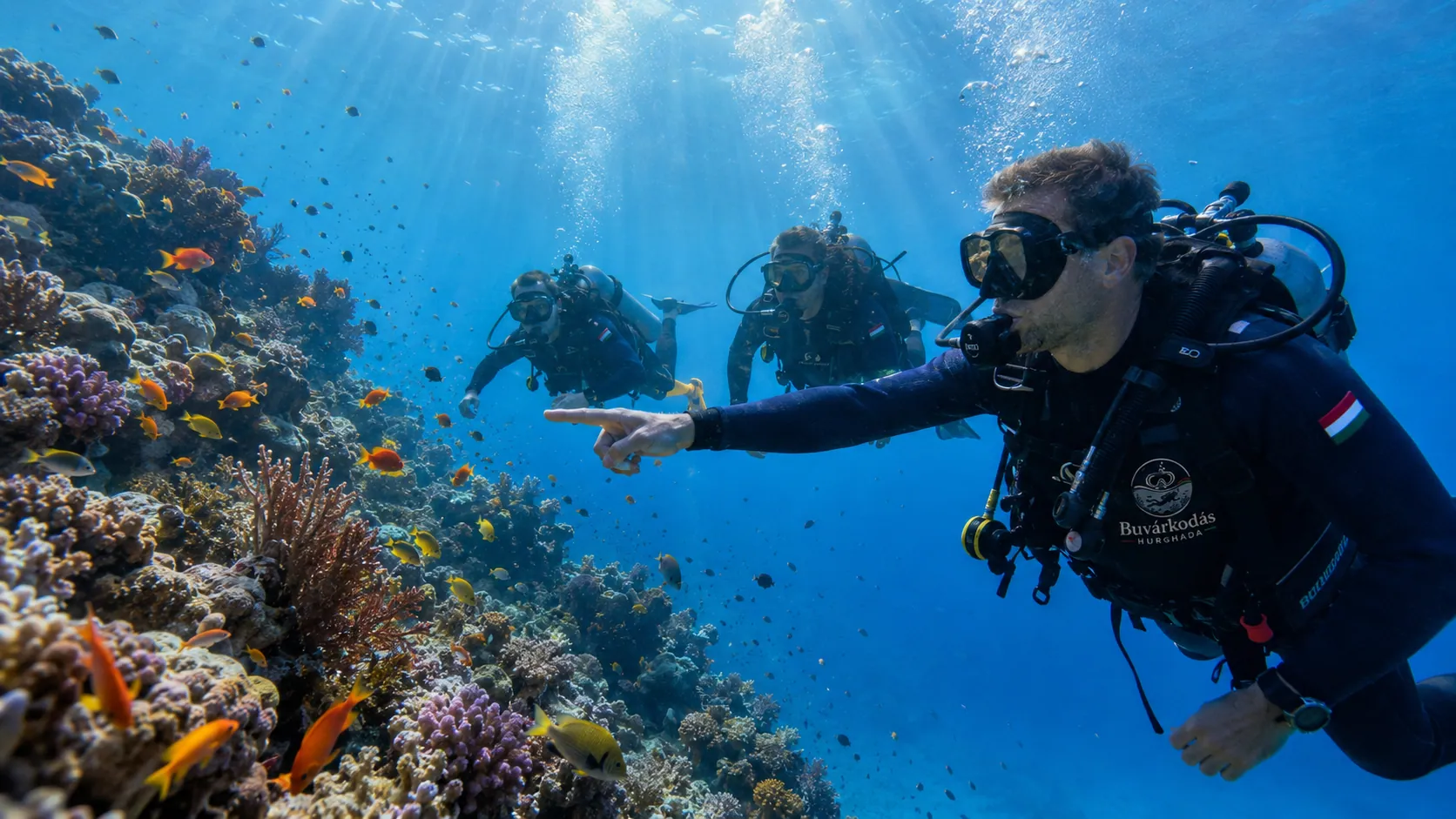
Giftun-szigetek
A national park island pair with a dozen dive sites: coral gardens, turtles and perhaps the richest fish life in the area.
- Depth
- 5–25m
- Boat
- 45min
- Species
- 6
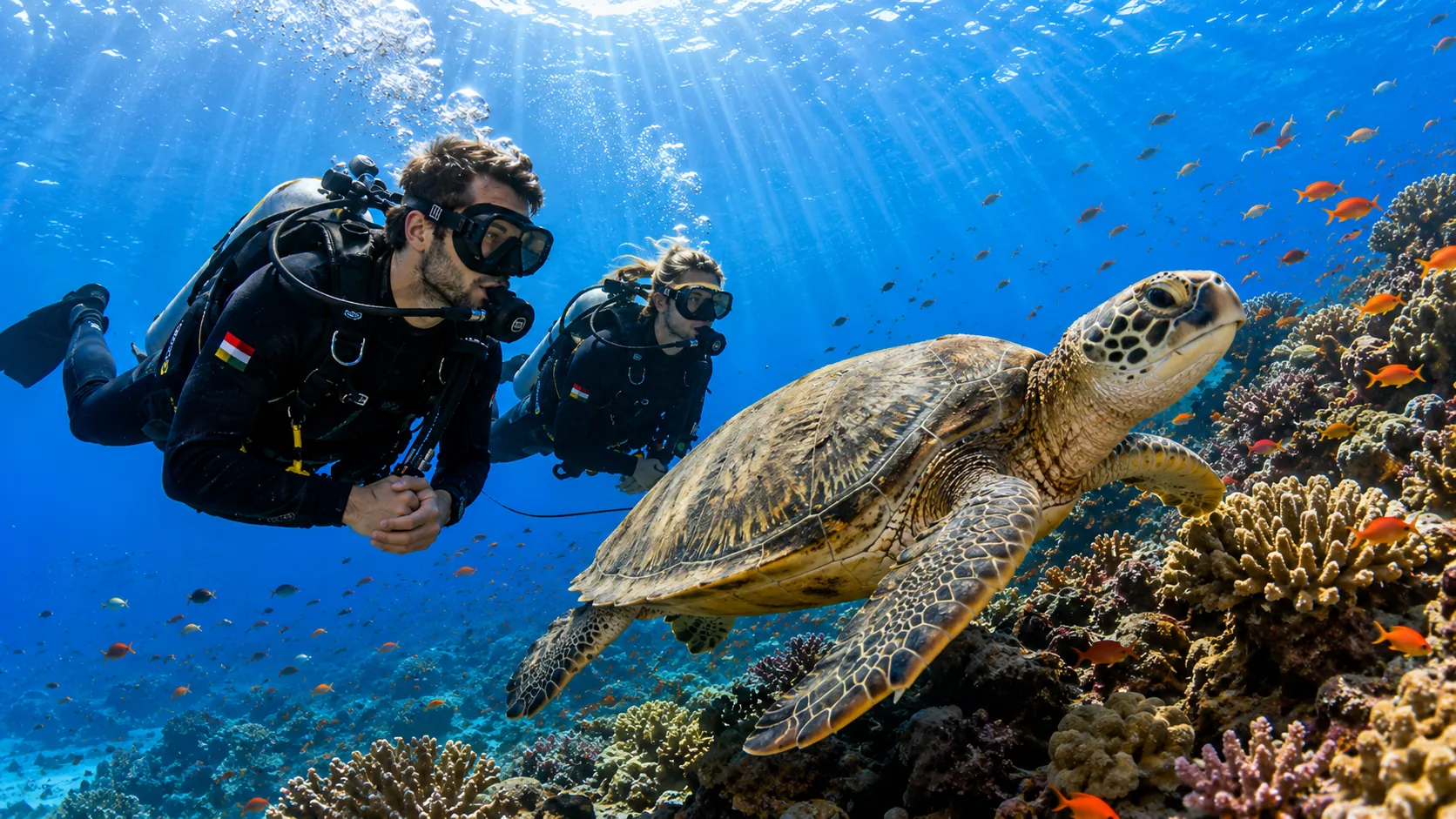
El Fanadir
A long reef ridge barely half an hour from the marina: a gentle wall, blue-spotted rays and seagrass patches with turtles.
- Depth
- 6–25m
- Boat
- 30min
- Species
- 5
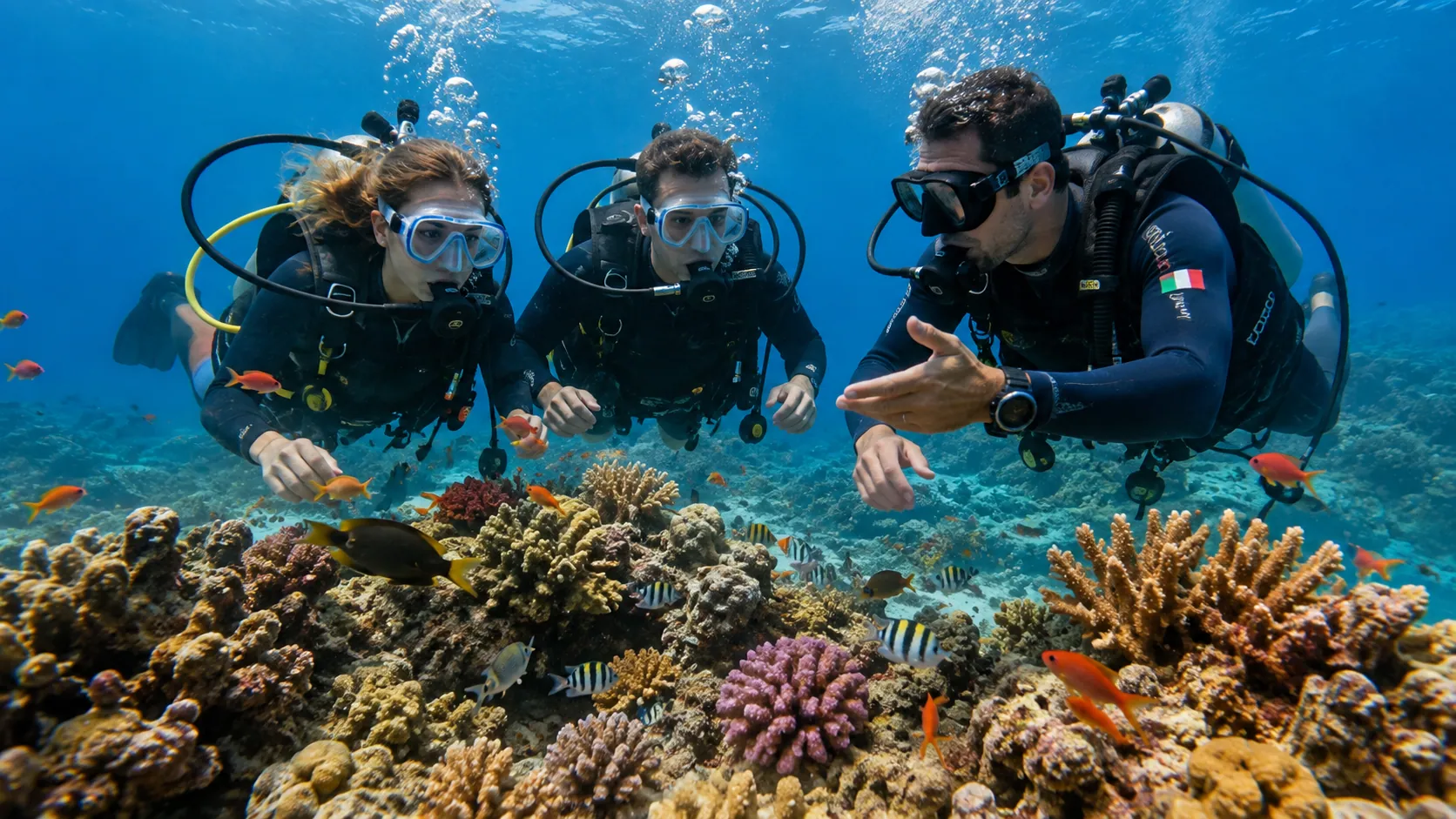
Gota Abu Ramada
A shallow oval reef with a sandy bottom and schools of butterflyfish – perfect for training, second and night dives.
- Depth
- 4–14m
- Boat
- 55min
- Species
- 5
The Red Sea will not wait forever.
Book today – seats on the boat are limited, your excitement is not.