Humbug dascyllus
Dascyllus aruanus
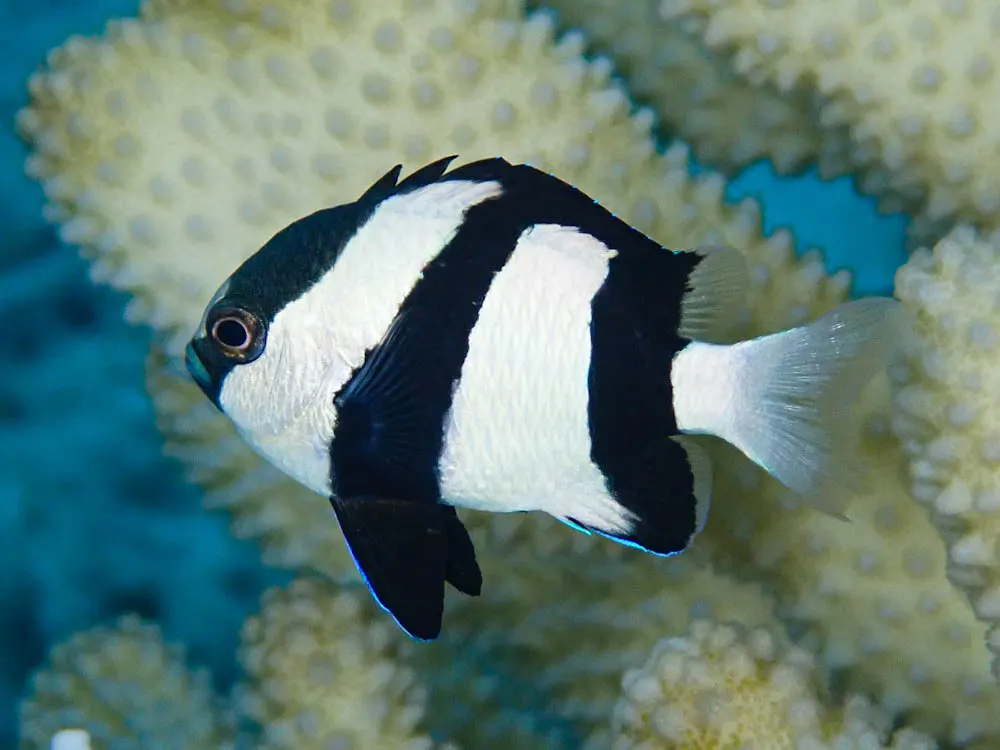
A tiny black-and-white striped reef dweller that spends its whole life in a single branching coral head – the coral is its castle, its refuge and its entire world.
The humbug dascyllus (Dascyllus aruanus) is barely the size of a matchbox, white with three broad black bars – hence the English name "humbug", after the striped candy. Its deep, laterally compressed body fits perfectly into the narrow gaps between coral branches. Small as it is, its pattern is so contrasty that a group hovering above a coral head is visible from far away, like scattered black-and-white confetti.
The species is a champion of site fidelity: each group adopts a single branching stony coral colony – typically an Acropora or Pocillopora head – and practically never strays more than half a metre from it. The group is organised in a strict hierarchy: the largest male rules the coral head, surrounded by smaller females and juveniles. At any threat the whole group vanishes among the branches in a single flash, where predators cannot follow – then re-emerges gradually, in order of rank.
You meet them at every turn in Hurghada's shallow coral gardens, and since they typically live at 1–10 metres, snorkelers can watch them perfectly. Pause beside a coral head for a few minutes and stay still: first one or two brave individuals appear, then slowly the whole group reclaims its station above the coral. For patient photographers they are a treat – the black-and-white pattern among the coral branches makes graphic, timeless images.
Did you know?
Humbugs are not just pretty, they are talkative: during courtship and rank disputes they produce clicking, popping sounds by snapping their teeth together – hover beside a busy coral head and this underwater morse code may even reach your ears.
Where can you meet it?
It lives on shallow reefs rich in branching coral: in the coral gardens of Shaab Sabina and El Aruk and on the shallow plateau of Gota Abu Ramada, nearly every healthy coral head has its own humbug crew.
Frequently asked questions
Yes, it is one of the most rewarding snorkeling species: common even in 1–3 metre coral gardens, and since it never leaves its coral head, you always know exactly where to look.
Essentially yes: once settled after its larval stage, the fish lives out its life within half a metre of its chosen coral head. This is one more reason never to touch the corals – a broken branch is somebody's home.
It is their defence strategy: the gaps between coral branches are too narrow for any predator. When a shadow falls on them – even yours – they dart inside in a single flash, then cautiously re-emerge in order of rank.
Best sites for Humbug dascyllus
Sha'ab Sabina
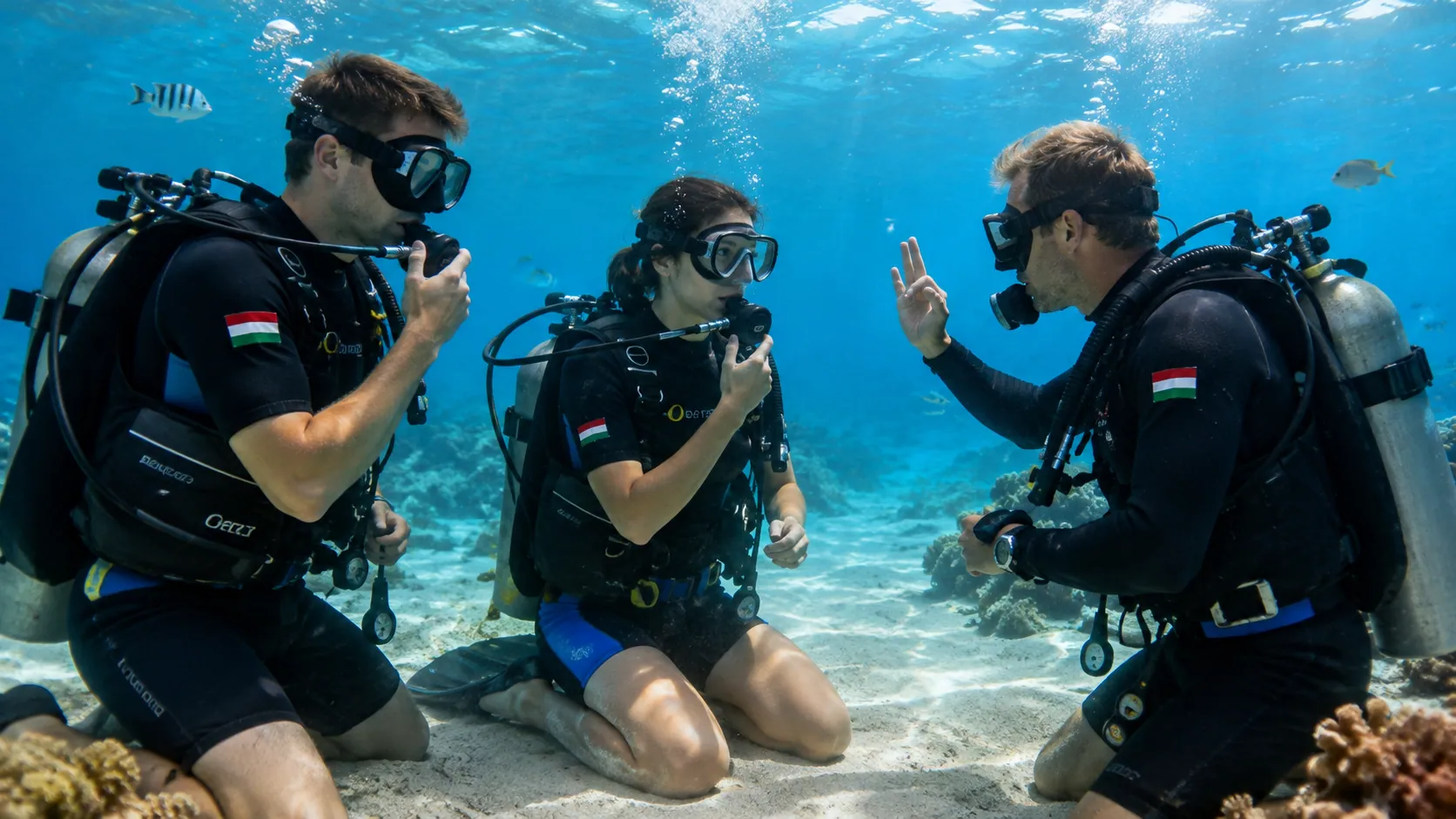
A sheltered shallow reef with a sandy lagoon – this is where most of our try dives and OWD skill sessions happen.
- Depth
- 4–12m
- Boat
- 40min
- Species
- 5
El Aruk (Gigi)
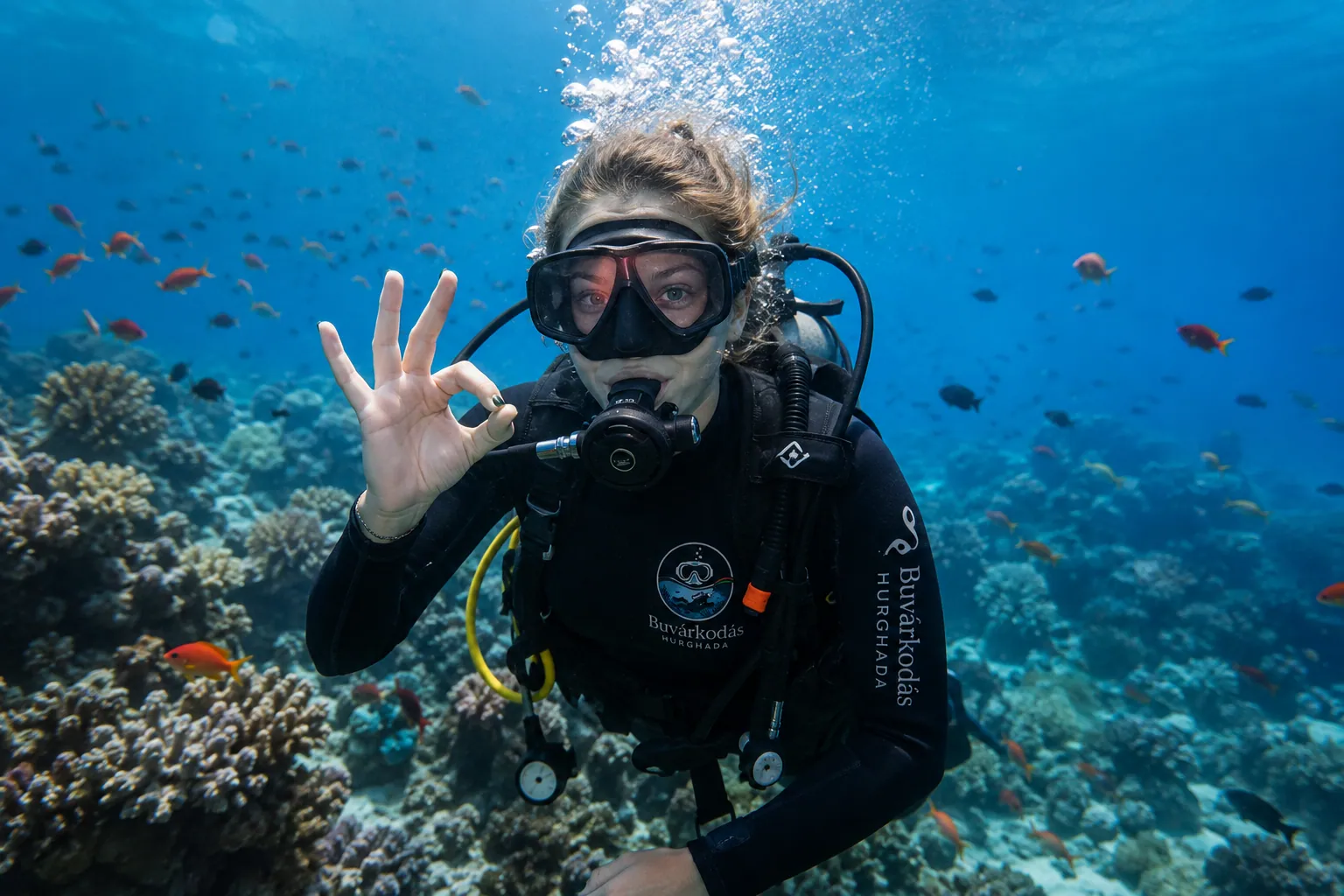
A playground of coral towers on white sand: easy navigation, clouds of glassfish and light made for photography.
- Depth
- 5–14m
- Boat
- 35min
- Species
- 5
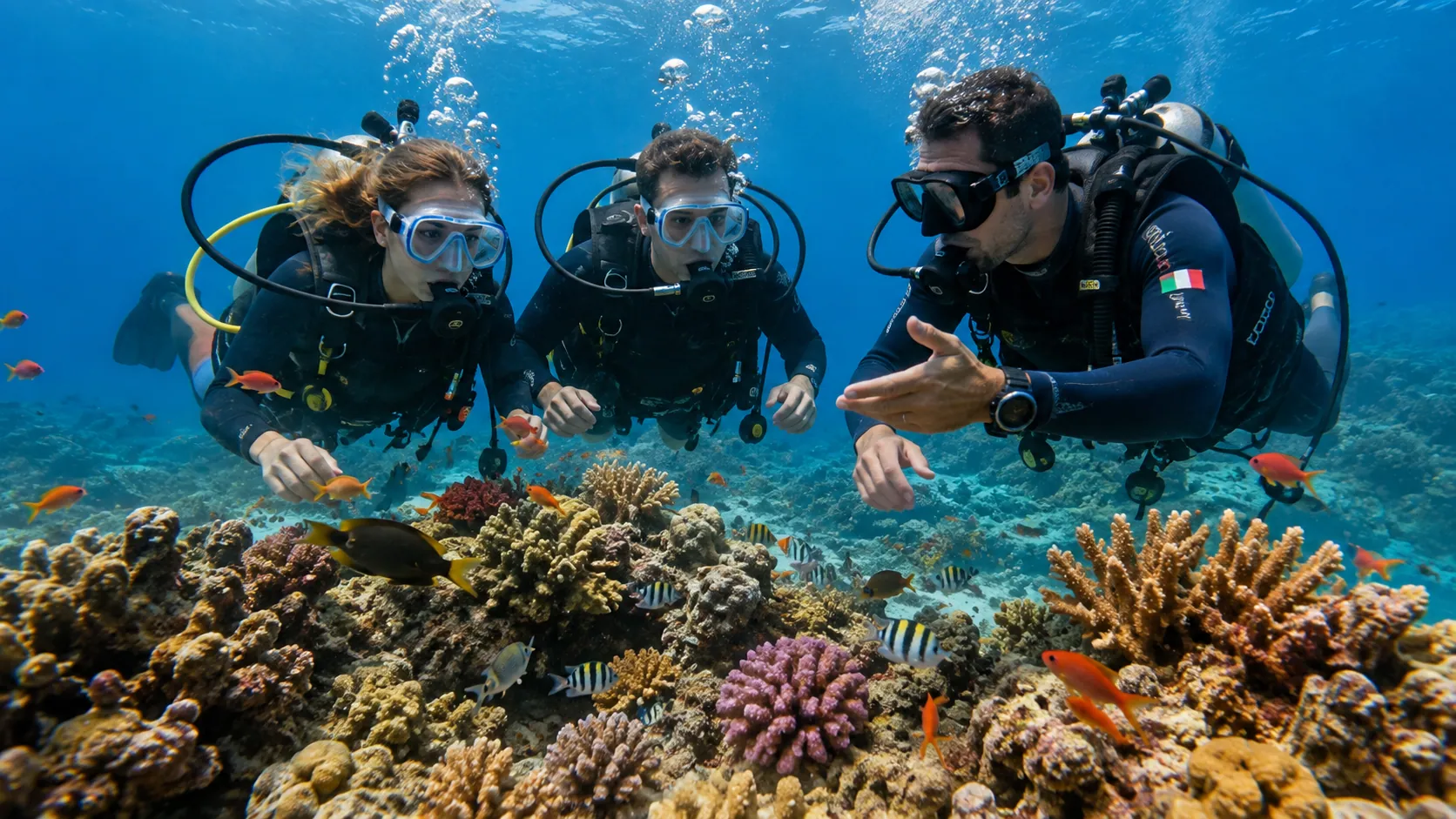
Gota Abu Ramada
A shallow oval reef with a sandy bottom and schools of butterflyfish – perfect for training, second and night dives.
- Depth
- 4–14m
- Boat
- 55min
- Species
- 5
The Red Sea will not wait forever.
Book today – seats on the boat are limited, your excitement is not.