Humpnose big-eye bream
Monotaxis grandoculis
A silvery reef fish with enormous eyes that hovers sleepily over the coral by day – and cracks sea urchins like hazelnuts at night.
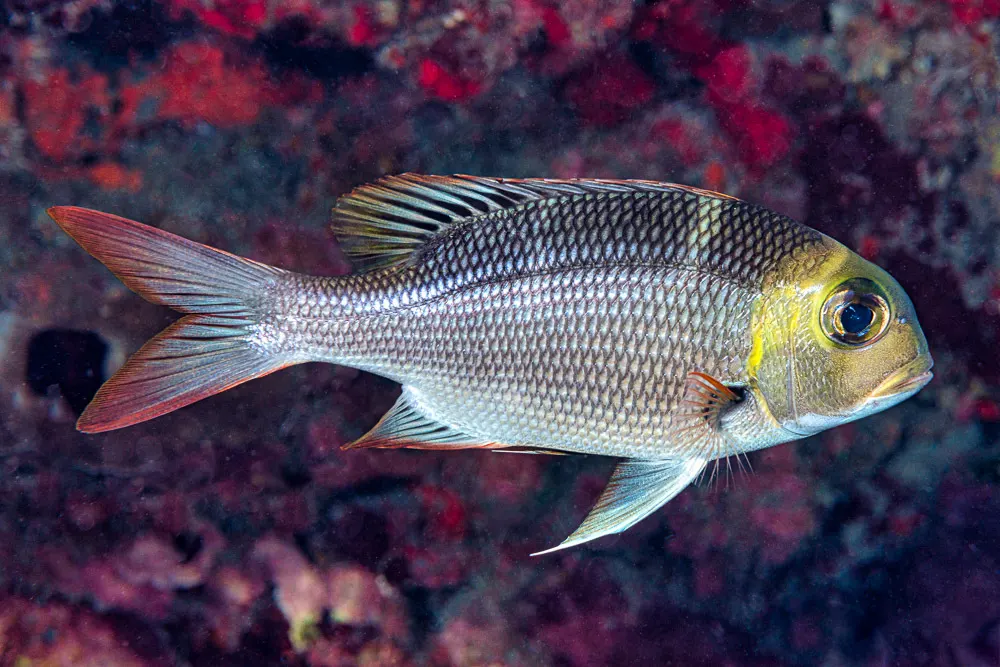
At first glance the humpnose big-eye bream (Monotaxis grandoculis) is an understated fish: a silvery-grey, high-backed body, a blunt "humped" snout – and two disproportionately huge eyes that gave it its name. Adults can flash dark saddle blotches on the back, with yellowish-pink tints at the fin bases. Juveniles, by contrast, are real lookers: their black-and-white banded outfit fools many people into thinking they are a different species altogether.
The big eyes are not decoration but equipment: the species feeds at night, when they pick out tell-tale silhouettes on the sand even in the faintest light. The menu is hard-shelled – sea urchins, snails, clams, hermit crabs – all simply crushed with its powerful, molar-like teeth. By day it hovers in small, loose groups above the reef edge, half in stand-by mode, and usually lets divers drift remarkably close.
Around Hurghada you will meet it on almost every reef, typically where the coral plateau meets the sand, hovering a few metres above the bottom. The daytime resting groups are a regular sight on the plateaus around the Giftun Islands, at El Fanadir and by the blocks of Gota Abu Ramada. Snorkelers get their share too: it lingers over shallow reef tops, and with those huge eyes it watches you at least as curiously as you watch it.
Did you know?
With its molar-like teeth the humpnose big-eye bream crushes even the spiny armour of sea urchins – routinely eating prey that most reef fish dare not touch.
Where can you meet it?
Small groups turn up on nearly every dive on the Giftun Island plateaus, along the reef edge of El Fanadir and around the blocks of Gota Abu Ramada.
Frequently asked questions
No, it is completely harmless – its powerful teeth are reserved for snails, clams and sea urchins. Around divers it stays calm, often letting people drift almost lazily close.
Yes – it often hovers where the shallow reef top meets the sand, so it is easy to watch from the surface. The silvery body and big dark eyes make it recognisable from a distance.
Because it is a night hunter: the huge eyes gather even the faintest light, letting it spot snails and urchins on the sand in the dark. The sleepy daytime hovering is really just rest before the next night shift.
Best sites for Humpnose big-eye bream
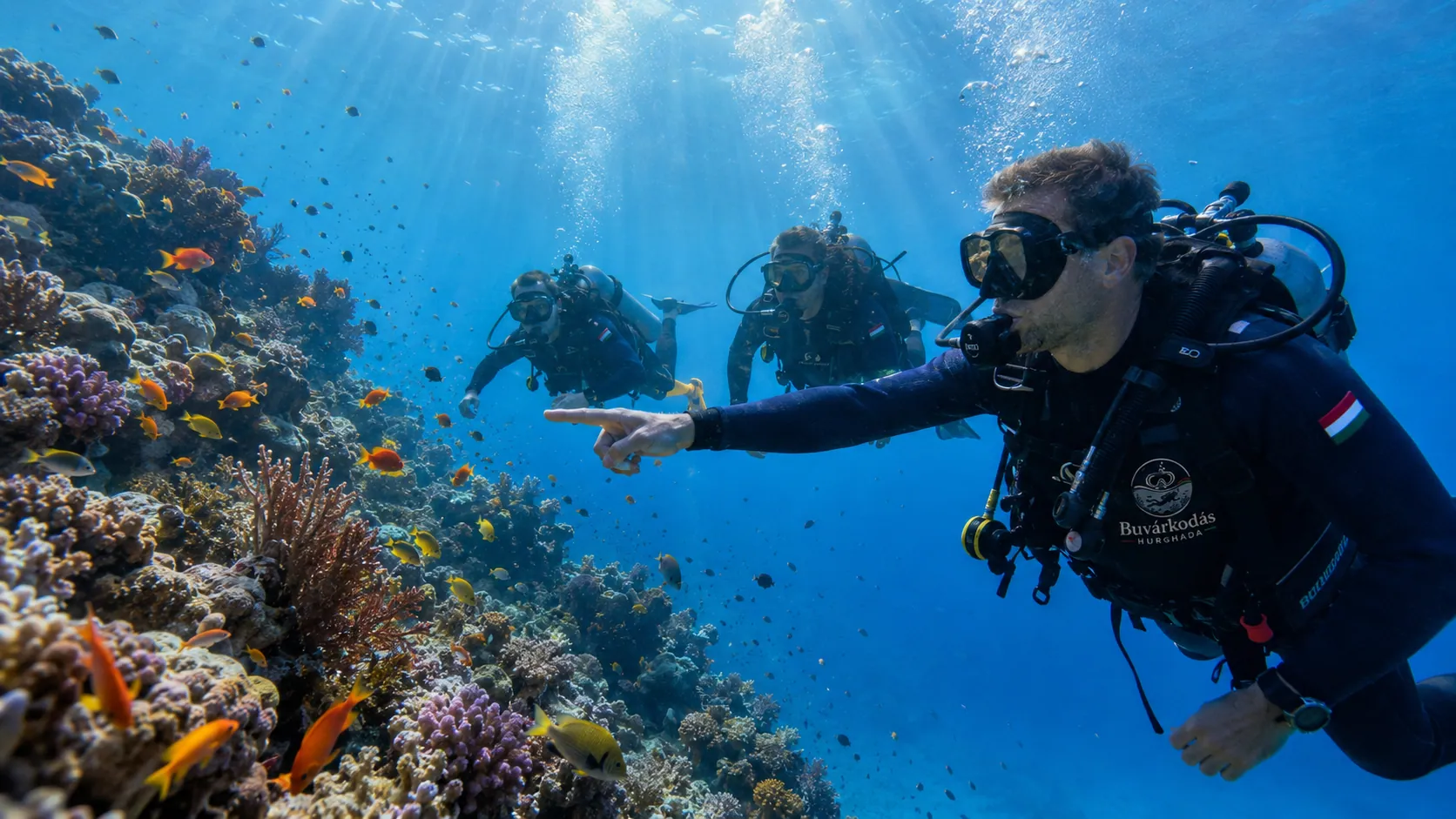
Giftun-szigetek
A national park island pair with a dozen dive sites: coral gardens, turtles and perhaps the richest fish life in the area.
- Depth
- 5–25m
- Boat
- 45min
- Species
- 6
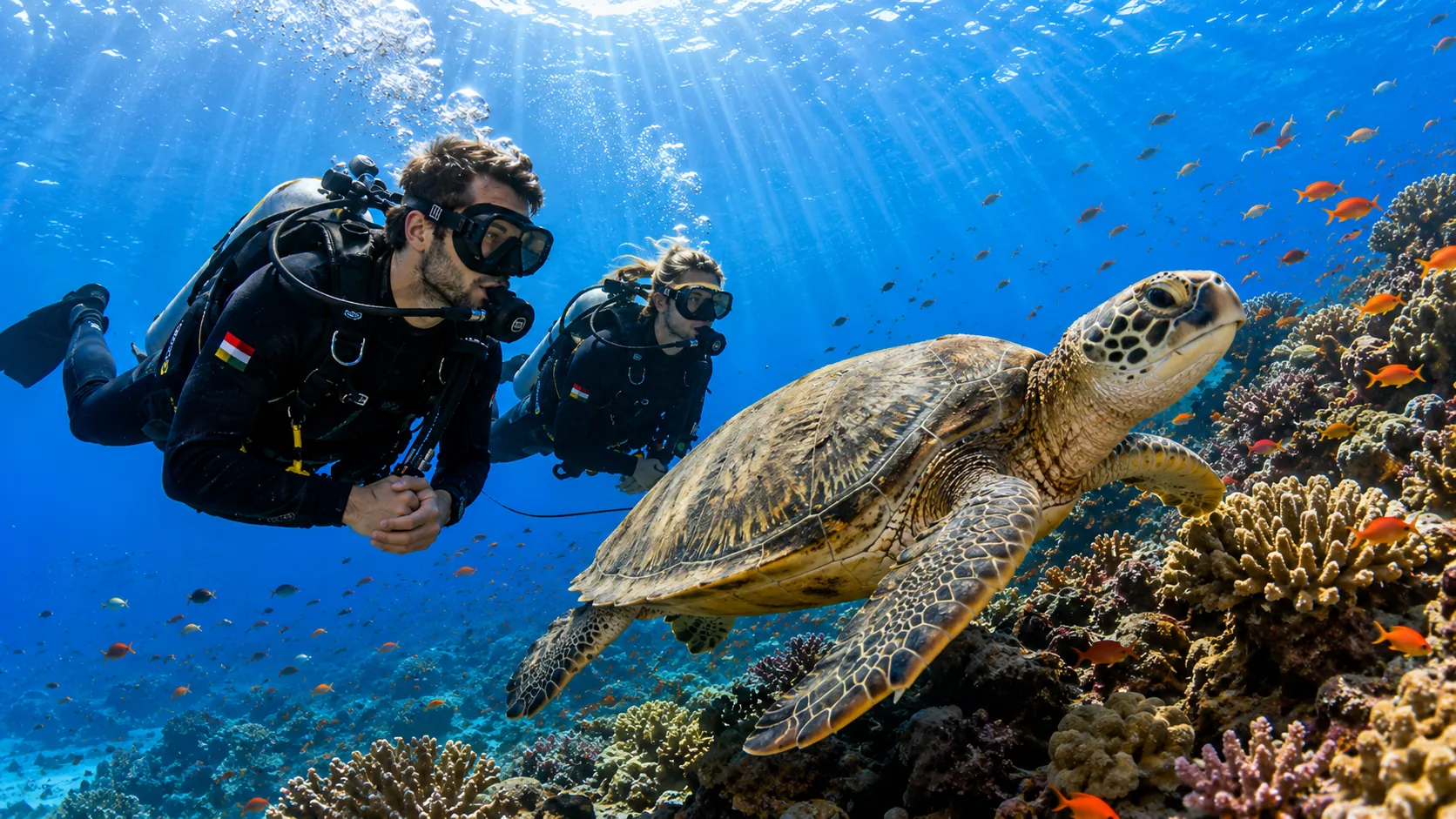
El Fanadir
A long reef ridge barely half an hour from the marina: a gentle wall, blue-spotted rays and seagrass patches with turtles.
- Depth
- 6–25m
- Boat
- 30min
- Species
- 5
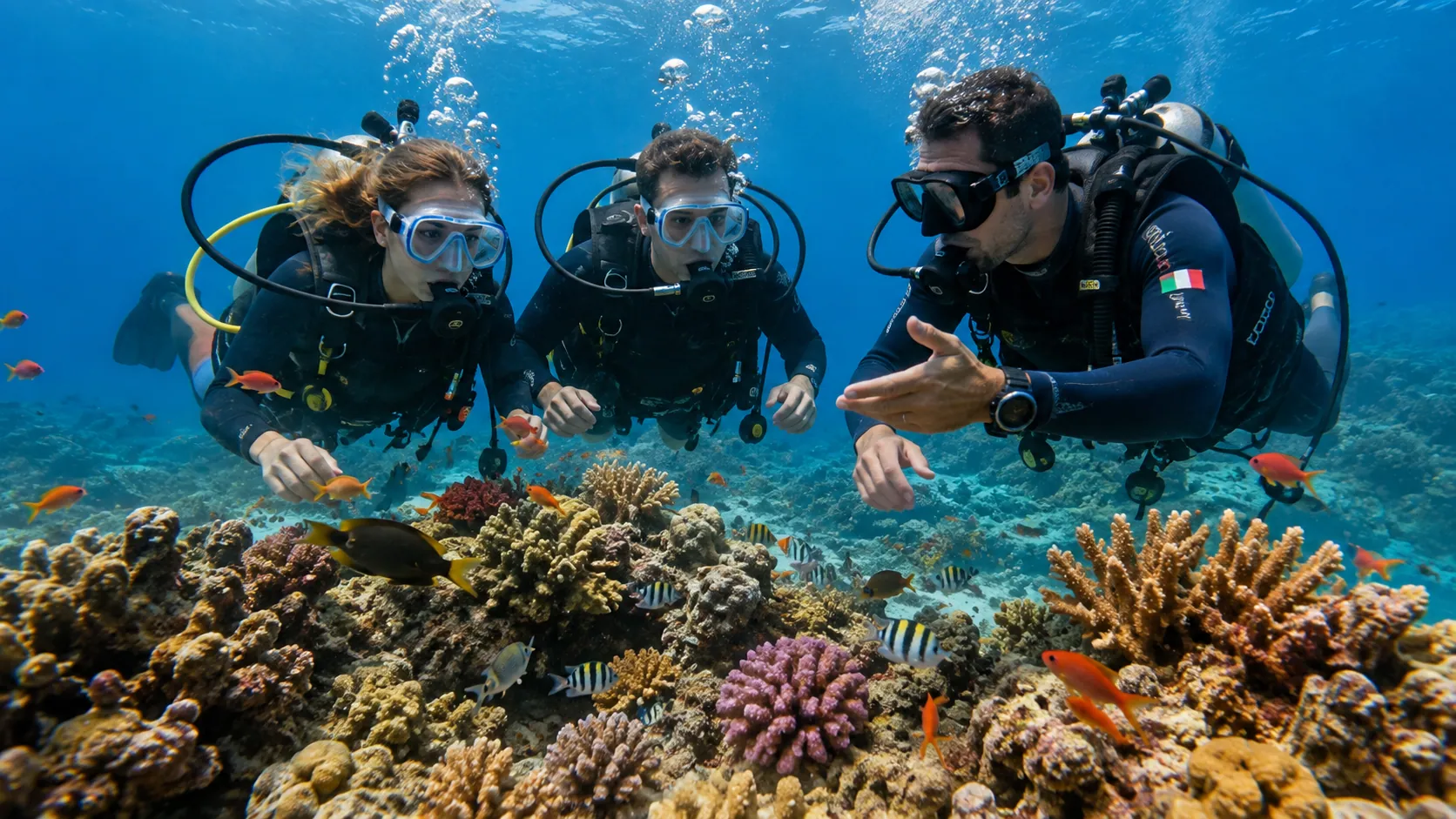
Gota Abu Ramada
A shallow oval reef with a sandy bottom and schools of butterflyfish – perfect for training, second and night dives.
- Depth
- 4–14m
- Boat
- 55min
- Species
- 5
The Red Sea will not wait forever.
Book today – seats on the boat are limited, your excitement is not.