Klunzinger's wrasse
Thalassoma rueppellii
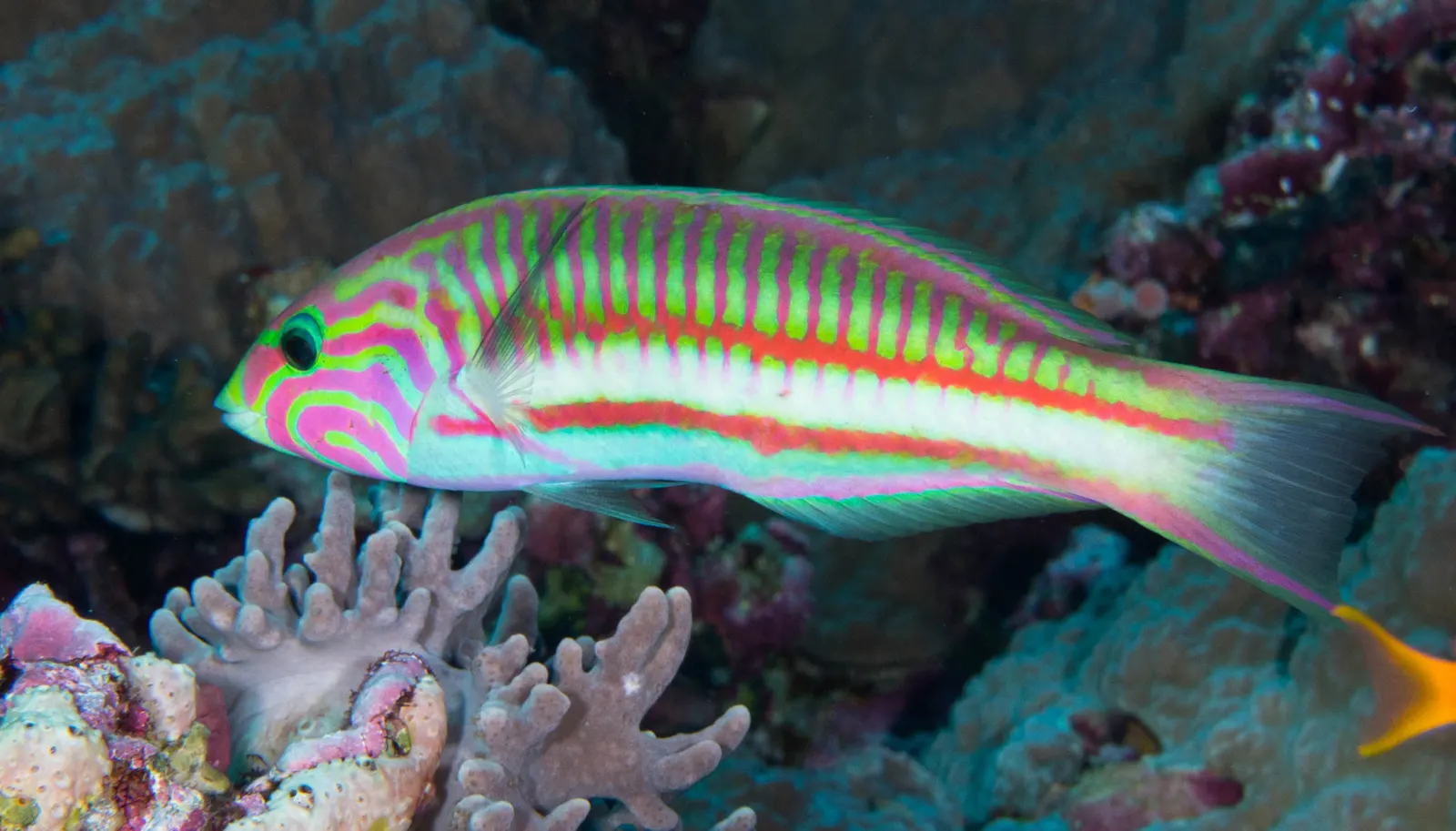
The nosiest fish on the reef: the turquoise-and-red endemic Klunzinger's wrasse is the first to swim up to you – and the last to say goodbye.
Klunzinger's wrasse (Thalassoma rueppellii) is endemic to the Red Sea and one of its most common, most conspicuous residents: a turquoise-green body overlaid with an irregular reddish-purple network, and red bands across the head like face paint. This spindle-shaped perpetual-motion machine rows with its pectoral fins, and that bouncy swimming style tells you from a distance you are looking at a wrasse.
Its personality is as loud as its outfit: fearlessly curious, it turns up wherever anything is happening. It feeds on small invertebrates, crustaceans and fish eggs, so it loves anything that stirs up the bottom – a foraging goatfish, a hunting octopus, or a diver's fin kick. Like other Thalassoma species it is a protogynous hermaphrodite: every fish starts life as a female, and the strongest later transform into gloriously coloured dominant males.
Around Hurghada it is simply unavoidable: it darts about everywhere from shallow reef tops to plateaus and often greets you right at the boat ladder. A grateful species for snorkelers, active even in a metre of water. Photographing it is another matter – it almost never stops. The trick is to stay put: its curiosity will eventually bring it in front of your lens.
Did you know?
It is named after Carl Benjamin Klunzinger, a German physician-zoologist who practised in the 1860s in Quseir, a Red Sea port south of Hurghada – and meanwhile documented the local fish life so thoroughly that his works remain reference classics today.
Where can you meet it?
Common on every Hurghada reef: an encounter is guaranteed in the shallow coral gardens of Shaab Sabina and El Aruk, on the Giftun plateaus and along the El Fanadir reef top.
Frequently asked questions
Because it has learned that movement means food: wherever a diver's fin stirs the bottom, tiny crustaceans and worms are exposed. It is not after you – it is after the snacks in your wake. Meanwhile it makes a great photo subject, so everybody wins.
Yes – it is one of the surest snorkeling encounters at Hurghada: active even in half a metre of water, with colours clearly visible from the surface. Odds are it will find you first.
Yes, Klunzinger's wrasse is endemic to the Red Sea. So even though it is one of the most common fish at Hurghada, on the scale of the world's oceans you are looking at a rarity – one of the Red Sea's lovely paradoxes.
Best sites for Klunzinger's wrasse
Sha'ab Sabina
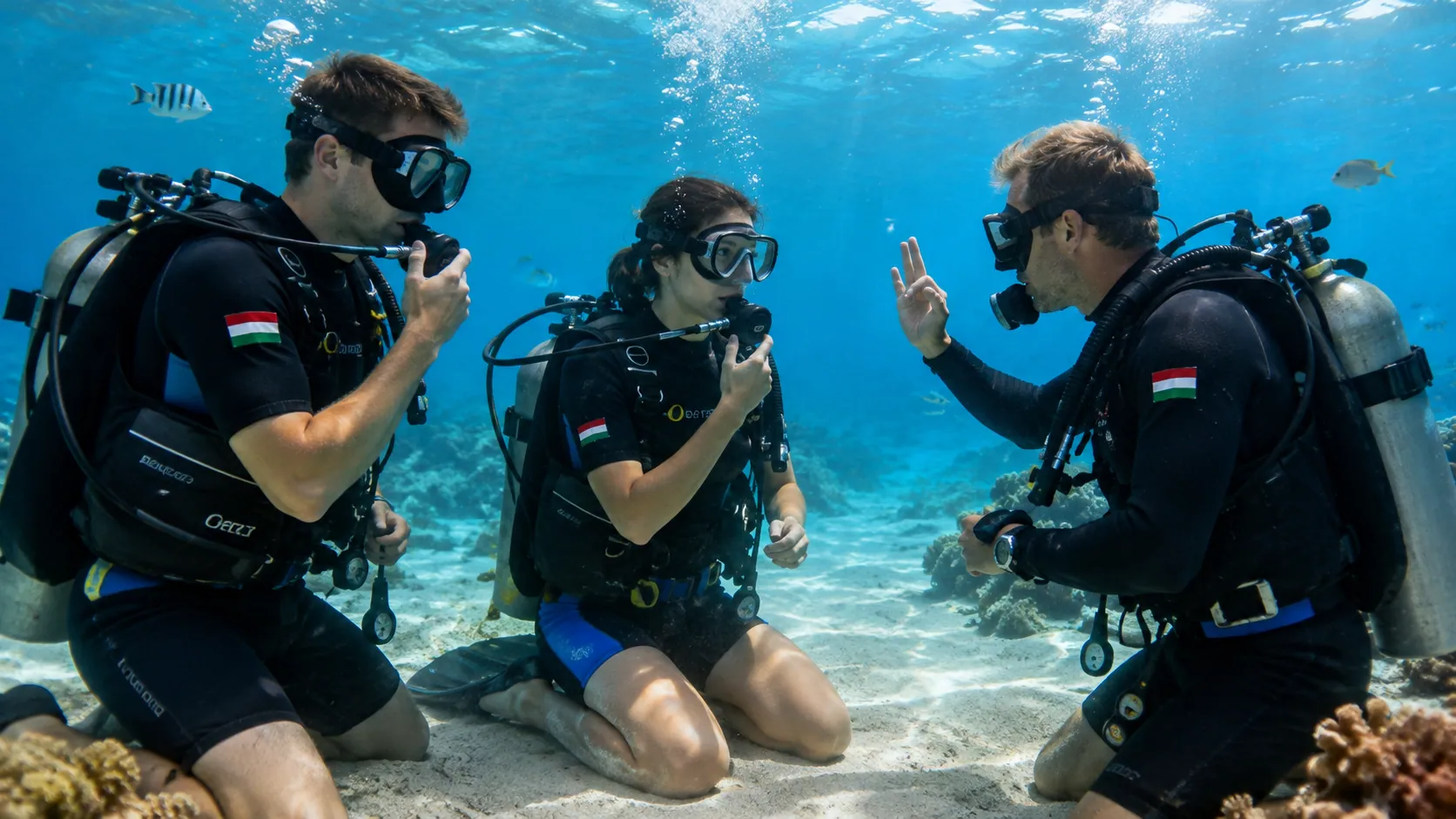
A sheltered shallow reef with a sandy lagoon – this is where most of our try dives and OWD skill sessions happen.
- Depth
- 4–12m
- Boat
- 40min
- Species
- 5
El Aruk (Gigi)
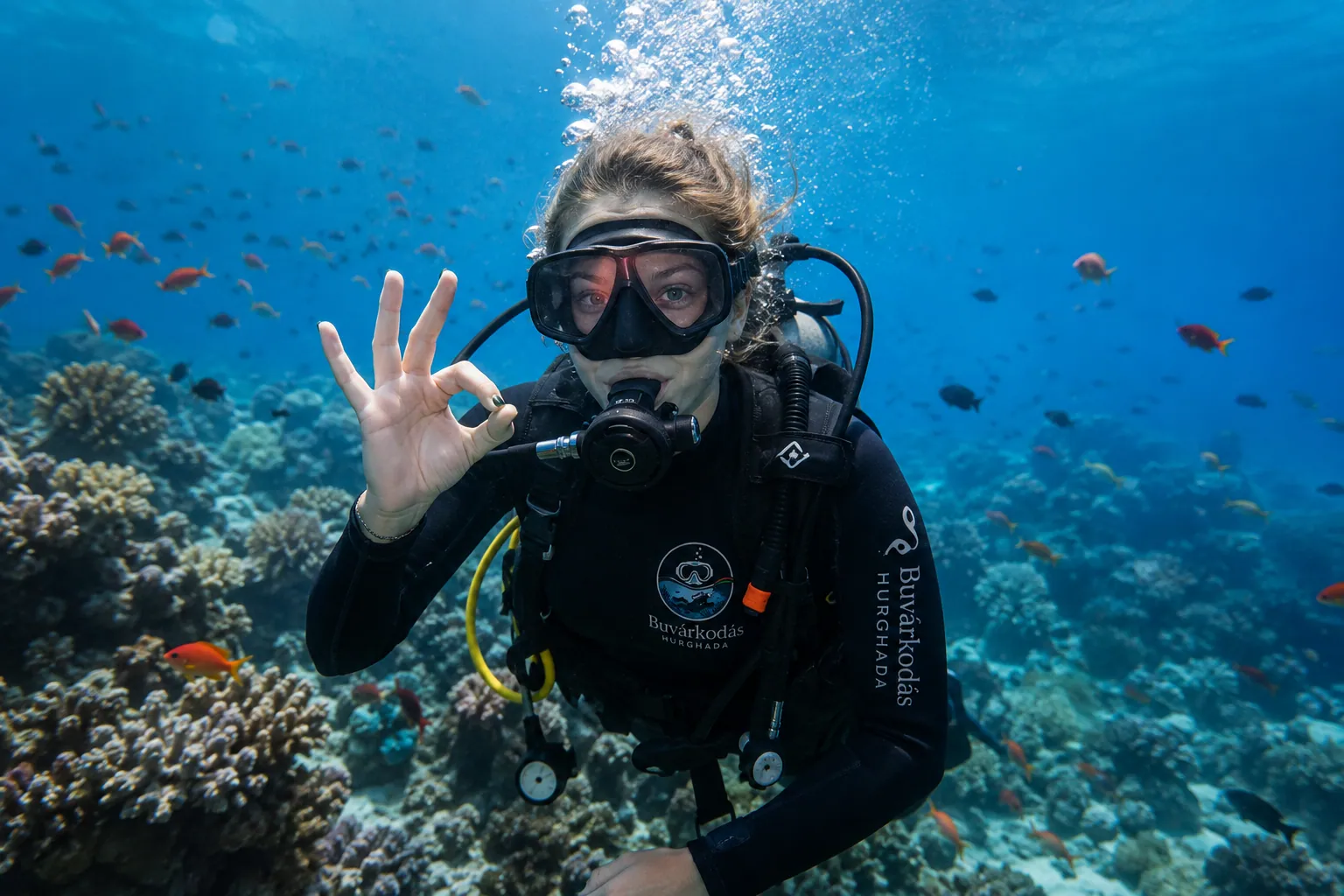
A playground of coral towers on white sand: easy navigation, clouds of glassfish and light made for photography.
- Depth
- 5–14m
- Boat
- 35min
- Species
- 5
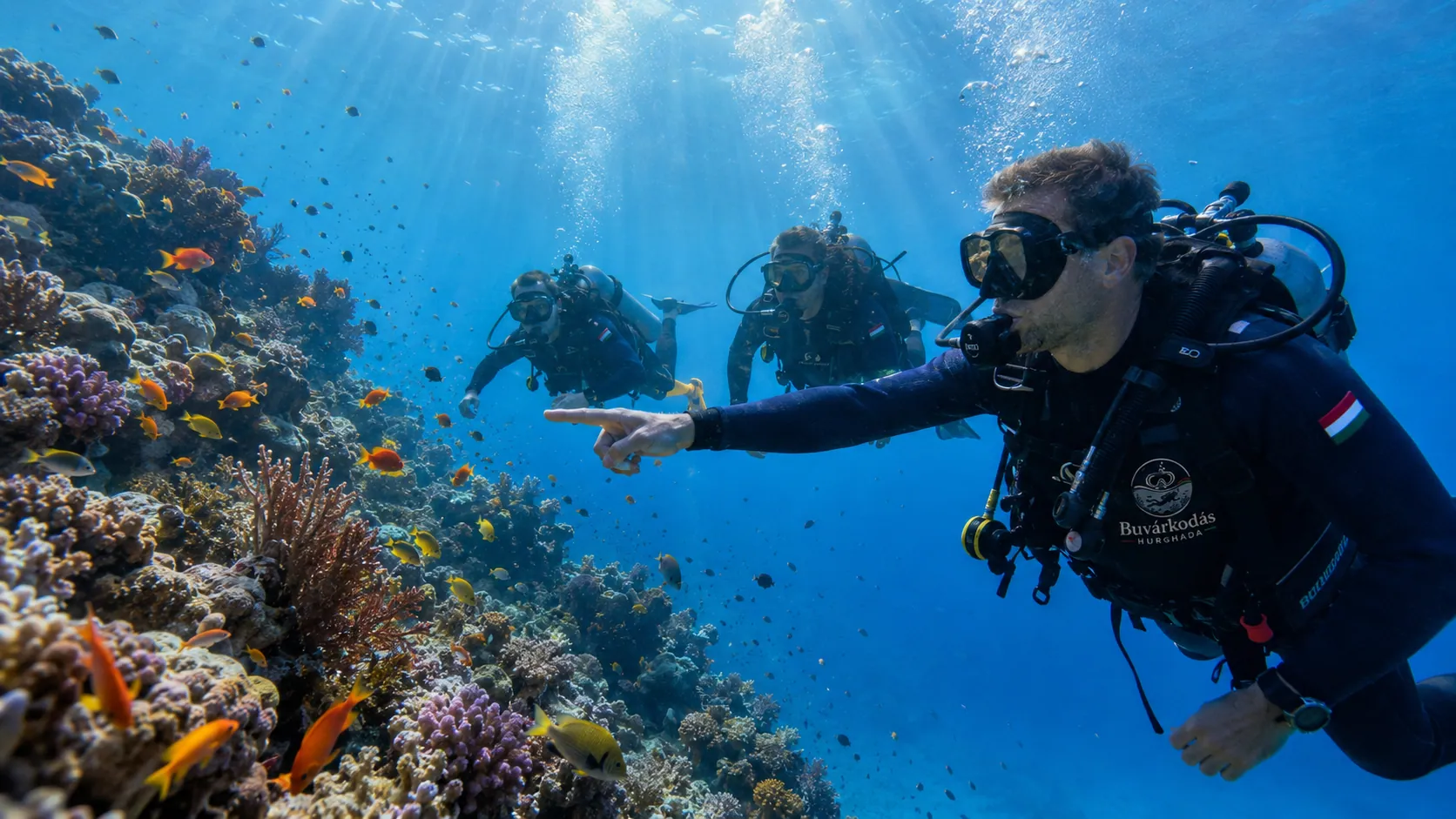
Giftun-szigetek
A national park island pair with a dozen dive sites: coral gardens, turtles and perhaps the richest fish life in the area.
- Depth
- 5–25m
- Boat
- 45min
- Species
- 6
The Red Sea will not wait forever.
Book today – seats on the boat are limited, your excitement is not.