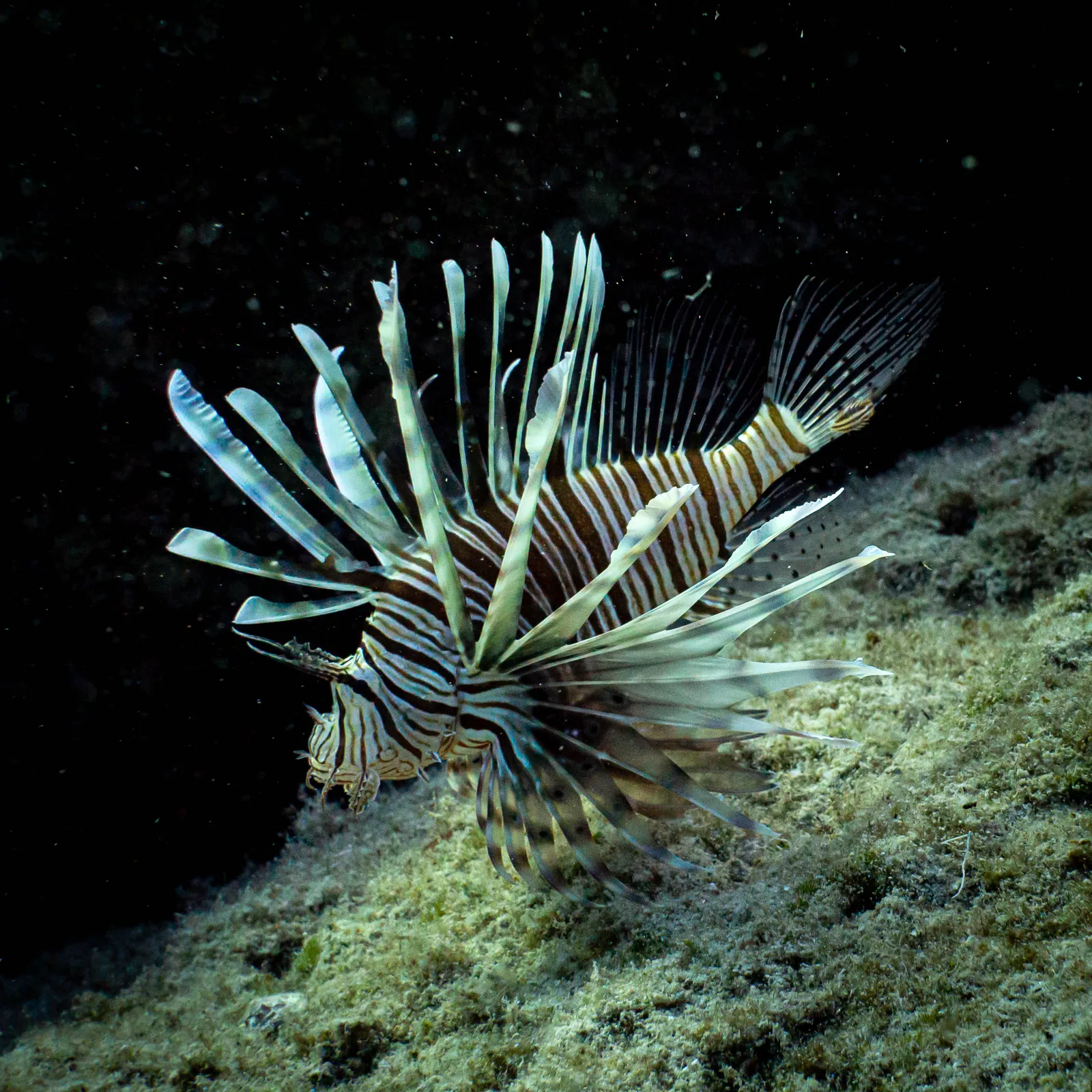
Common lionfish
Pterois miles
Slow, graceful and beautiful – but the lionfish's lacy fins conceal venomous spines, so admire it with your eyes only.
The lionfish (Pterois miles) is a native predator of the Red Sea. Its red-and-white striped body is adorned with long, fan-like pectoral and dorsal fins; a total of 18 spines on its back, belly and near the tail are connected to venom glands. The bold pattern is classic warning colouration: the lionfish has no need to flee from anyone, which is why it can afford to move with such unhurried elegance.
By day it often hangs upside down beneath an overhang or a wreck wall, resting almost motionless. It sets out to hunt at dusk, using its spread pectoral fins to herd small fish against the reef, then engulfing them whole with a lightning-fast suction strike. The attack is faster than the human eye can follow.
Around Hurghada you will meet it on nearly every reef and wreck – under the steel structure of the El Mina wreck, for example, several often hang side by side. The lionfish neither attacks nor flees: keep 1–2 metres' distance, watch your buoyancy, and you can photograph it calmly for minutes on end.
Did you know?
In the Red Sea the lionfish is a peaceful native, but in the Mediterranean and the Atlantic it has become a feared invasive species – with no natural enemies there, its populations explode.
How to behave around it
The lionfish never attacks – stings almost always happen through carelessness. Keep 1–2 metres' distance, mind your buoyancy – especially on wrecks and under overhangs – and never reach towards it. If you are stung, hot-water treatment breaks down the venom: tell your guide immediately.
Where can you meet it?
You will almost always find a few beneath the walls of the El Mina wreck, but it is an everyday sight on the ledges of El Fanadir and the reefs of Abu Ramada too.
Frequently asked questions
The sting is very painful but rarely life-threatening for a healthy adult. The venom is a heat-sensitive protein: immersing the wound in 40–45 °C water greatly reduces the pain. Tell your dive guide immediately and see a doctor if symptoms are severe.
Practically everywhere: the lionfish is one of Hurghada's most common predators. You will find the most impressive individuals in the shaded parts of the El Mina wreck and under the ledges of El Fanadir. On a dusk dive you can even watch one hunting.
Thanks to its venomous spines and warning colours it has almost no natural enemies on the reef, so it never evolved a flight reflex. That makes it one of the most rewarding photo subjects – and exactly why keeping a safe distance is your responsibility, not its.
Best sites for Common lionfish
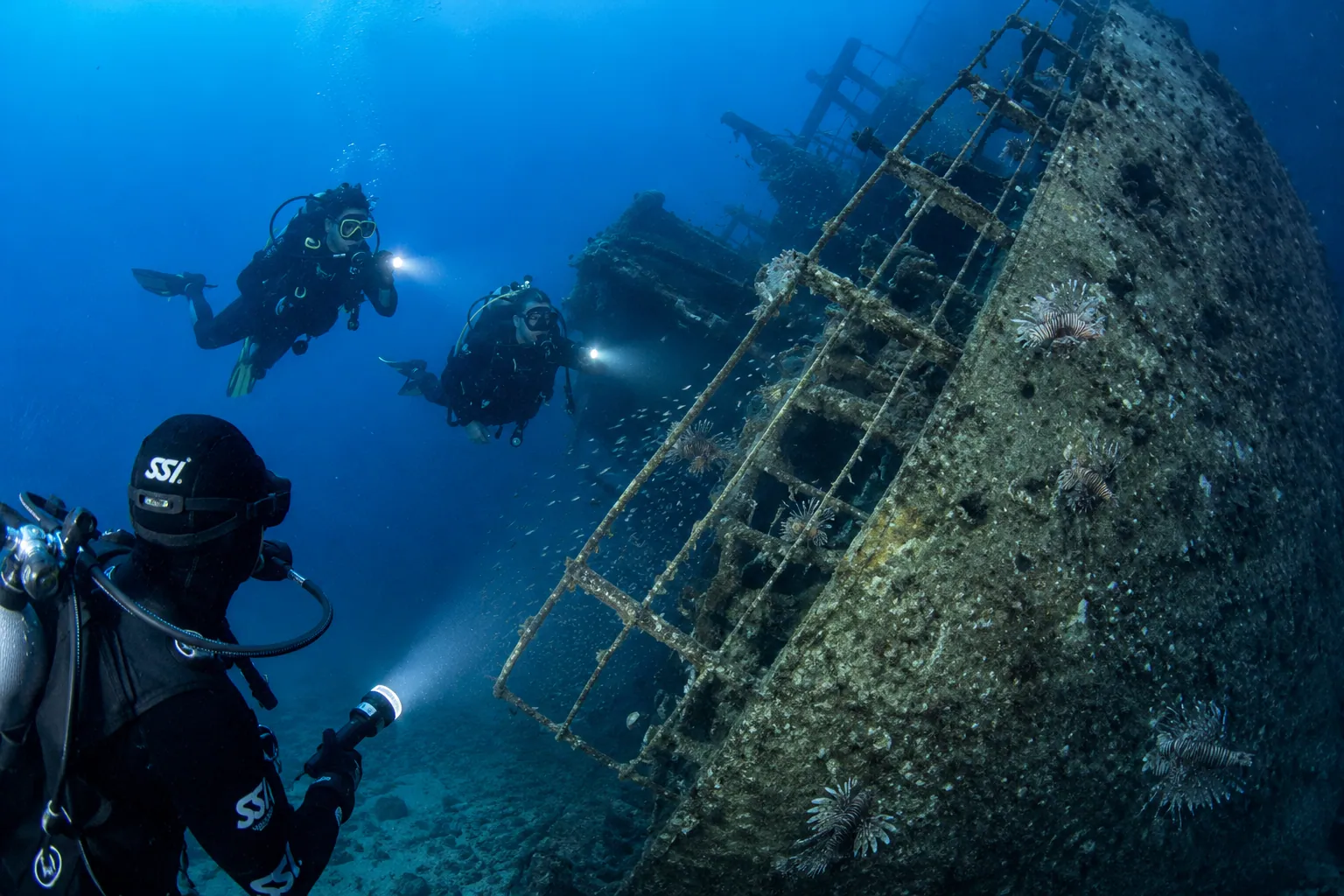
El Mina roncs
A genuine warship wreck 20 minutes from the marina: an Egyptian minesweeper sunk in 1969, resting on sand at 30 metres.
- Depth
- 16–30m
- Boat
- 20min
- Species
- 5
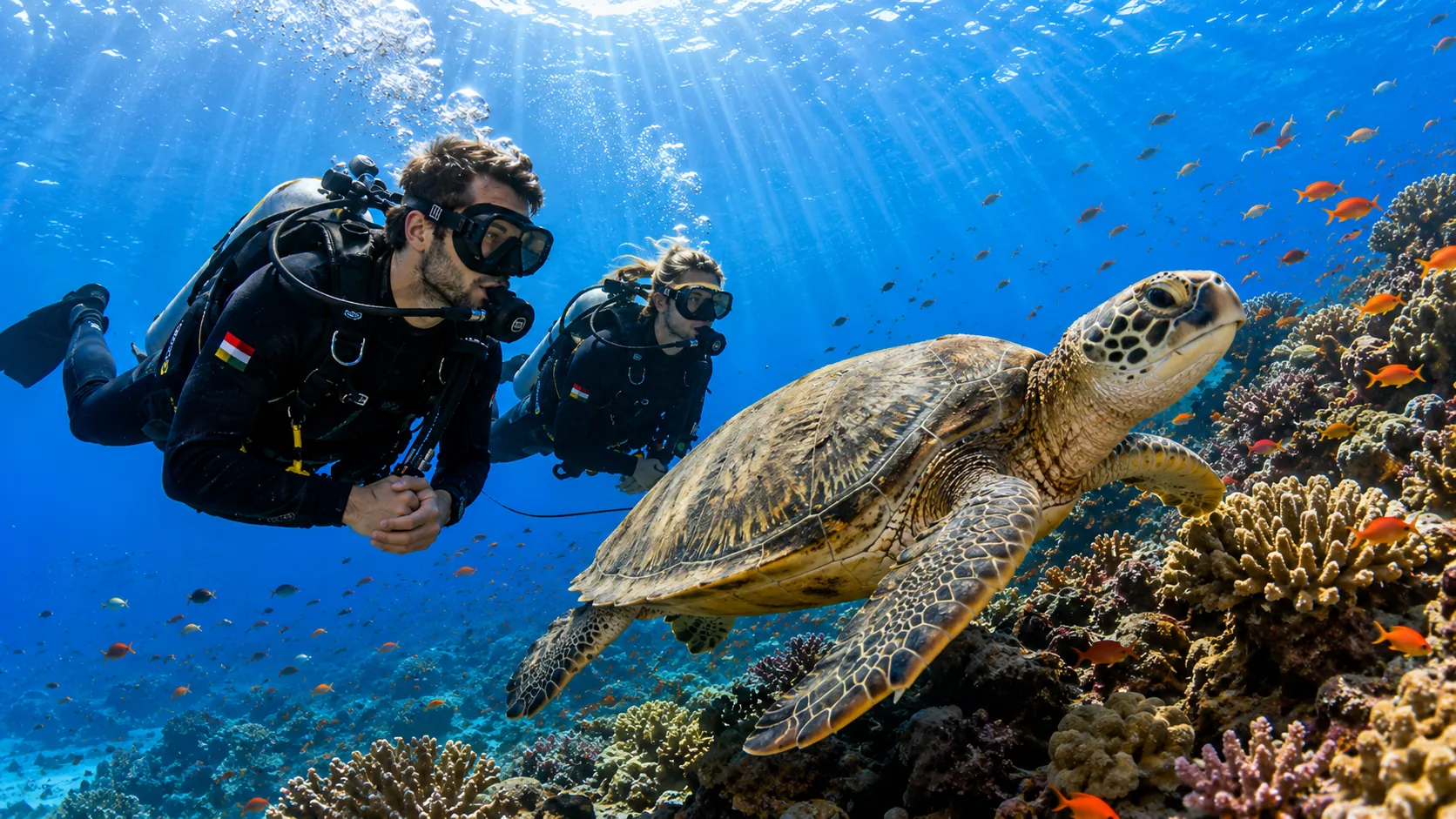
El Fanadir
A long reef ridge barely half an hour from the marina: a gentle wall, blue-spotted rays and seagrass patches with turtles.
- Depth
- 6–25m
- Boat
- 30min
- Species
- 5
Abu Ramada („Az Akvárium”)
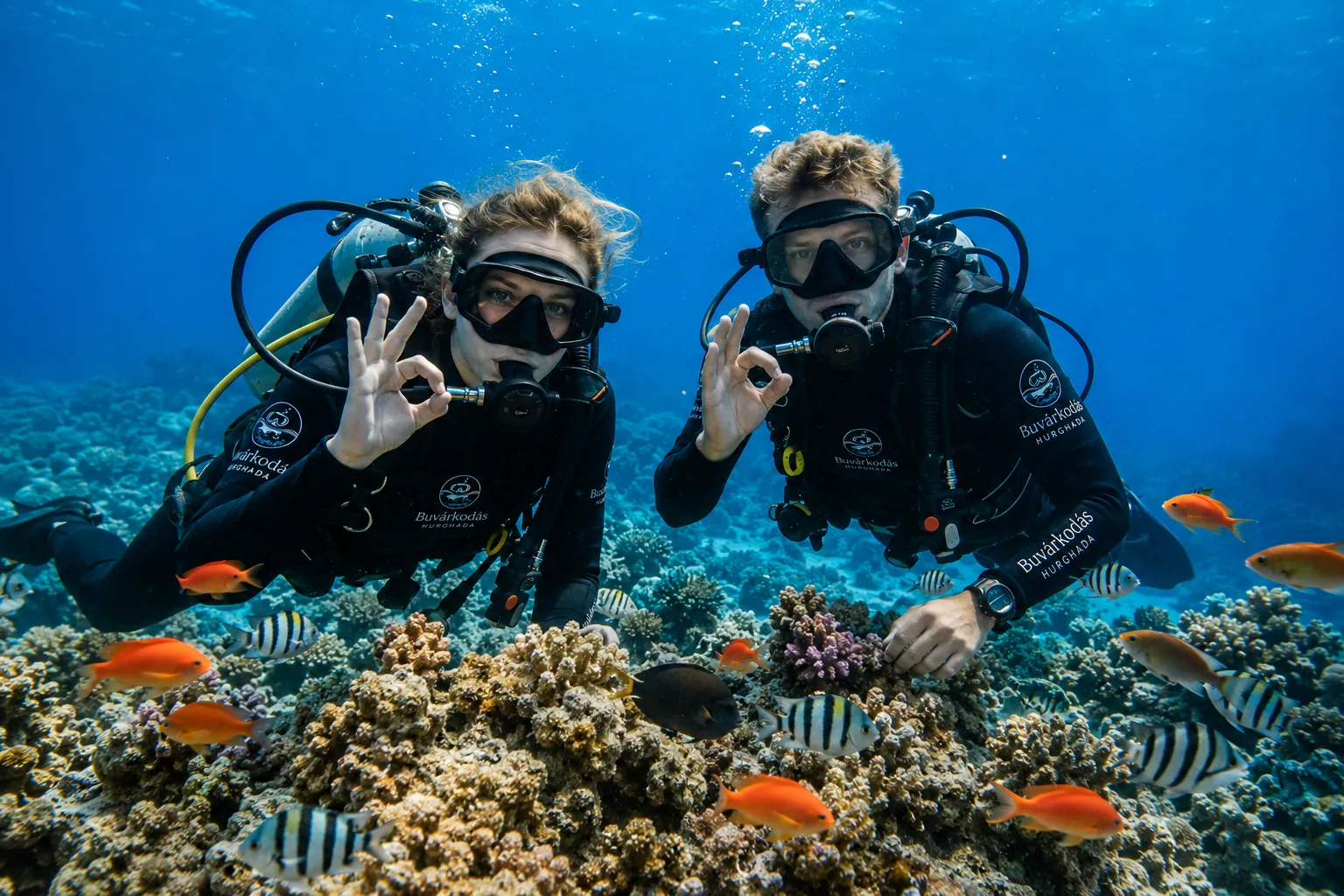
The Aquarium nickname is well earned: the fish schools swirling around the coral towers can be so dense you lose sight of the reef.
- Depth
- 6–26m
- Boat
- 50min
- Species
- 6
The Red Sea will not wait forever.
Book today – seats on the boat are limited, your excitement is not.